Top 10 Screw Compressor Manufacturers Worldwide?
Choosing the right screw compressor manufacturer is rarely a simple ranking exercise. Plant managers compare efficiency, uptime, service coverage, noise levels, and lifetime operating costs. A machine may look affordable on a quotation sheet, yet consume more electricity every hour. That difference becomes significant in a busy factory running multiple shifts.
Ron Marshall, a respected compressed-air auditor and educator, has observed, “Compressed air is one of the most expensive forms of energy in a plant.” His point deserves attention. A screw compressor converts electrical power into stable airflow, but heat, pressure loss, leaks, and poor controls can waste much of that investment. The strongest manufacturers therefore design complete systems, not merely compressor packages. Their solutions may include variable-speed drives, oil-injected or oil-free technology, intelligent sequencing, dryers, filters, and remote monitoring.
This guide examines ten leading screw compressor manufacturers worldwide. It considers engineering experience, product reliability, global support, energy performance, and suitability for different industries. Food processing, automotive production, electronics, mining, and general manufacturing do not demand identical systems. A compact workshop unit cannot be judged like a high-capacity oil-free installation. That seems obvious, but many comparisons still treat every compressor as interchangeable.
The ranking is not absolute. Regional service quality can change the practical result. Pricing also shifts with currency, installation conditions, and maintenance agreements. Some manufacturers provide excellent technology, yet their local response may disappoint. That limitation matters. Readers should verify airflow requirements, pressure levels, duty cycles, lifecycle costs, and available technical support before making a final decision. A reliable screw compressor is not simply purchased. It is matched, installed, monitored, and maintained over time.
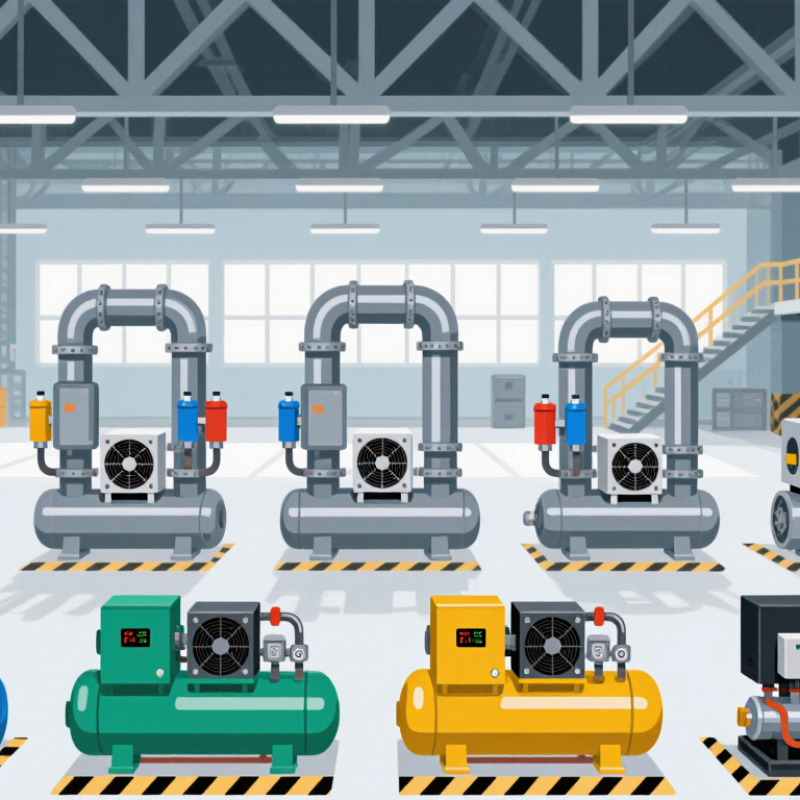
What Is a Screw Compressor and How Does It Work?
What Is a Screw Compressor and How Does It Work?
A screw compressor is a positive-displacement machine that produces compressed air or gas. Inside its housing, two helical rotors turn with extremely small clearances. One rotor drives the other without direct metal contact. As the rotors spin, air enters through an inlet port and fills the spaces between their threads. The trapped air moves forward while those spaces become smaller. Pressure rises continuously. This process delivers a steady flow with less pulsation than many reciprocating designs.
Many industrial models use injected oil to seal gaps, lubricate bearings, and remove heat. A separator then removes oil from the compressed air before discharge. Oil-free designs use different sealing and cooling methods, but they demand careful temperature control. Filters, aftercoolers, drains, and sensors support reliable operation. Small details matter.
In practical service work, unusual noise or rising discharge temperature often signals trouble before a breakdown. A technician may check inlet filters, oil level, rotor clearance, and cooler cleanliness. Poor ventilation can quietly reduce efficiency. The basic principle looks simple, yet real installations are less tidy. Pressure losses in pipes, changing demand, and incorrect controls can waste substantial energy. I would not judge a compressor by its nameplate alone. Operating data, maintenance records, and measured air demand provide a more trustworthy picture.
| Rank |
Anonymous Manufacturer Profile |
Core Screw Technology |
Lubrication Design |
Typical Motor Range |
Typical Pressure Range |
Common Air-End Configuration |
Primary Industry Applications |
Key Technical Strength |
| 1 |
Global Profile A |
Rotary twin-screw compressors |
Oil-injected |
7.5–315 kW |
7–13 bar(g) |
Fixed-speed and variable-speed drive |
General manufacturing, automotive, workshops |
Broad product coverage and efficient load matching |
| 2 |
Global Profile B |
Rotary twin-screw compressors |
Oil-injected |
15–500 kW |
7–15 bar(g) |
Single-stage compression with integrated controls |
Metalworking, machinery, assembly plants |
Reliable continuous-duty operation |
| 3 |
Global Profile C |
Oil-free rotary screw compressors |
Oil-free compression |
30–450 kW |
4–10 bar(g) |
Two-stage air-end design |
Food and beverage, pharmaceuticals, electronics |
Clean compressed air for sensitive processes |
| 4 |
Global Profile D |
Rotary screw compressors |
Oil-injected |
5.5–250 kW |
7–12.5 bar(g) |
Compact packaged air system |
Small factories, construction, service operations |
Space-efficient installation and simple maintenance |
| 5 |
Global Profile E |
Variable-speed rotary screw compressors |
Oil-injected |
11–315 kW |
7–13 bar(g) |
Permanent-magnet or inverter-driven package |
Facilities with fluctuating air demand |
Reduced unloaded running and energy optimization |
| 6 |
Global Profile F |
Oil-free rotary screw compressors |
Oil-free compression |
18–355 kW |
4–9 bar(g) |
Water-cooled or air-cooled two-stage air end |
Medical air, cleanroom production, laboratories |
Low risk of lubricant contamination |
| 7 |
Global Profile G |
Heavy-duty rotary twin-screw compressors |
Oil-injected |
75–900 kW |
7–14 bar(g) |
Industrial package with separate air receiver options |
Steel, cement, mining, large process plants |
High-flow output and robust continuous operation |
| 8 |
Global Profile H |
Compact rotary screw compressors |
Oil-injected |
2.2–75 kW |
7–10 bar(g) |
Belt-driven and direct-drive configurations |
Workshops, woodworking, garages, small production lines |
Low installation complexity and accessible servicing |
| 9 |
Global Profile I |
High-pressure rotary screw compressors |
Oil-injected or oil-free |
30–630 kW |
15–40 bar(g) |
Multi-stage compression system |
PET processing, instrumentation, specialized production |
Stable delivery at elevated discharge pressure |
| 10 |
Global Profile J |
Integrated compressed-air systems |
Application-dependent |
7.5–400 kW |
7–13 bar(g) |
Compressor, dryer, filtration, and control integration |
Automated factories, packaging, process industries |
System-level energy management and air treatment |
How Are Global Screw Compressor Manufacturers Evaluated?
How Are Global Screw Compressor Manufacturers Evaluated?
Global screw compressor manufacturers are judged by more than production volume or catalogue size. Plant engineers examine measured air delivery, specific power, noise, heat recovery, and maintenance access. ISO 1217 provides testing methods for compressor performance, while ISO 11011 supports compressed-air system energy assessments. These standards make comparisons more reliable, although site conditions can still distort results.
Energy use deserves close attention. The U.S. Department of Energy’s Improving Compressed Air System Performance sourcebook reports that compressed air may consume 10–15% of industrial electricity. A small efficiency gap becomes expensive when a compressor runs continuously. Buyers should compare specific power at realistic pressure levels, not only headline horsepower. Controls matter too. Variable-speed operation can reduce waste during changing demand, but poor sequencing may cancel the benefit.
Service evidence separates serious suppliers from polished brochures. Analysts should review documented uptime, spare-parts availability, response times, and technician coverage near the installation site. Air quality is equally important. ISO 8573-1 classifications help match filtration and drying performance with production needs. A low purchase price can still mislead. Lifecycle cost usually includes electricity, oil, filters, cooling, and downtime. Market reports offer useful rankings, but their methods differ. I would treat rankings as a starting point, not proof. On-site measurements remain harder to ignore.
Profiles of the Top 10 Screw Compressor Manufacturers Worldwide
The top ten screw compressor manufacturers worldwide represent different strengths, production cultures, and engineering priorities.
Some specialize in oil-injected systems for factories, while others focus on oil-free equipment for food, pharmaceutical, and electronics production. Their profiles usually reveal more than product size. They show testing methods, service coverage, energy monitoring, and spare-parts planning. A reliable manufacturer publishes airflow data under clear conditions. It also explains noise levels, cooling requirements, and maintenance intervals.
Several established manufacturers invest heavily in variable-speed technology. This can reduce wasted electricity when demand changes during a shift. Others build compact compressors for workshops with limited floor space.
Large industrial producers may offer customized packages, remote monitoring, and heat recovery systems. Field experience matters here. A compressor can appear efficient in a brochure but perform differently in dusty rooms or hot climates. Published data is useful, but independent verification remains important. No profile is perfect.
Tips: Compare measured performance, not only headline horsepower. Check service response times, filter costs, and local technician training. Ask for references from facilities with similar pressure demands. Inspect the control panel layout before purchase. Small details matter. I would also review warranty exclusions carefully, because overlooked conditions can create expensive disputes later. A practical trial run may reveal vibration, heat, or installation problems that specifications never mention.
How Do the Leading Manufacturers Compare in Technology and Applications?
Comparing the top ten screw compressor manufacturers requires more than checking advertised output. Their strongest differences appear in control systems, air quality, energy use, and service support. Oil-injected models often suit general factories because they deliver stable pressure at a practical cost. Oil-free designs serve food processing, pharmaceutical production, and electronics assembly, where even minor contamination can damage products. The right technology depends on the air standard, duty cycle, and operating environment.
Variable-speed drives can reduce energy waste when demand changes during a shift. Fixed-speed machines may perform better under constant, heavy loads. Two-stage compression can improve efficiency at higher pressures, while advanced controllers coordinate multiple units across a plant. I have found that heat recovery also deserves attention. Warm compressor discharge air can support water heating or nearby process needs. Small details matter.
Applications expose weaknesses that brochures may hide. A dusty workshop needs strong filtration and accessible maintenance points. A clean production room needs quiet operation, controlled oil carryover, and documented testing. Buyers should examine service response times, spare-parts availability, warranty conditions, and verified performance data. Installation quality matters just as much as machine design. A poorly sized receiver or restricted intake can erase expected savings.
No ranking is permanent. Technology changes quickly. Some comparisons also rely too heavily on laboratory figures, while real factories face leaks, heat, and uneven demand. Careful trials and measured operating data remain more reliable than confident claims.
What Should Buyers Consider When Selecting a Manufacturer?
Top 10 Screw Compressor Manufacturers Worldwide? Buyers should examine performance beyond rankings. A reliable manufacturer should provide verified airflow, pressure, noise, and power data. ISO 1217 testing offers a useful basis for comparing delivered performance. Brochures often highlight motor efficiency, but lifecycle cost deserves more attention. The U.S. Department of Energy reports that compressed-air leaks may waste 20% to 30% of compressor output. Therefore, service support and leak-management tools matter greatly. A cheap machine can become expensive.
Experience also shows that operating conditions change the decision. A dusty workshop needs effective filtration and accessible coolers. A food-processing site may require oil-free air and documented hygiene controls. Buyers should request references from facilities with similar temperatures, duty cycles, and production pressures. The International Energy Agency identifies motor-driven systems as major industrial electricity users, making energy monitoring essential. Ask for specific energy figures, measured in kilowatts per cubic metre. Some suppliers provide estimates instead. That is a weakness worth questioning.
Tips: Compare total cost over ten years, not only the invoice. Check response times, spare-parts locations, technician training, and warranty exclusions. Require an independent performance test when the project is large. Also inspect the control strategy for multiple compressors. Poor sequencing can create unnecessary unloaded running. I would not select a manufacturer from a ranking alone. Rankings simplify decisions, sometimes too much. A practical trial, clear data, and honest service records reveal more.
Top 10 Screw Compressor Manufacturers Worldwide? What Should Buyers Consider When Selecting a Manufacturer?
For industrial screw compressors, energy efficiency and lifecycle cost generally matter more than the initial purchase price. Buyers should compare total cost of ownership, service capability, reliability, controls, and compliance before selecting a manufacturer.
Illustrative lifecycle-cost planning benchmark: energy is typically the dominant cost component, while acquisition and maintenance costs represent smaller but important parts of the overall investment. Actual values vary by load profile, operating hours, pressure, installation, and service conditions.

 24 Hour Service