Top Rotary Compressor Manufacturers and Suppliers
Choosing among the top rotary compressor manufacturers and suppliers requires more than comparing catalog prices. A reliable rotary compressor must match your air demand, pressure range, duty cycle, installation space, and maintenance capability. A unit that looks efficient on paper may perform poorly in a dusty workshop or a humid production hall.
Compressed-air specialist Ron Marshall often emphasizes, “You cannot manage what you do not measure.” That principle fits rotary compressor selection closely. Buyers should examine measured flow, specific power, oil carryover, noise levels, service intervals, and warranty terms. They should also ask how manufacturers verify performance under real operating conditions. Laboratory figures alone can mislead.
Look beyond the brand name.
Leading suppliers usually provide clear technical documentation, lifecycle support, spare-parts availability, and trained service technicians. Their proposals should explain control methods, cooling design, filtration, and expected energy use. Site references can reveal practical details, such as oil stains near a drain, excessive vibration, or repeated alarm resets. Those details matter.
Still, no manufacturer is perfect. Some product pages simplify complex performance claims. Some suppliers provide impressive efficiency numbers without explaining test conditions. This is where careful comparison becomes essential. A responsible review should consider both strengths and weaknesses, including installation failures, delayed maintenance, and regional support gaps. The best choice is not always the cheapest compressor. It is the machine that delivers stable air, predictable operating costs, and dependable support throughout its working life. Yet even this conclusion needs review, because demand patterns change. A careful buyer measures first, questions assumptions, and selects a supplier that can prove its promises.
Rotary Compressor Basics and Operating Principles
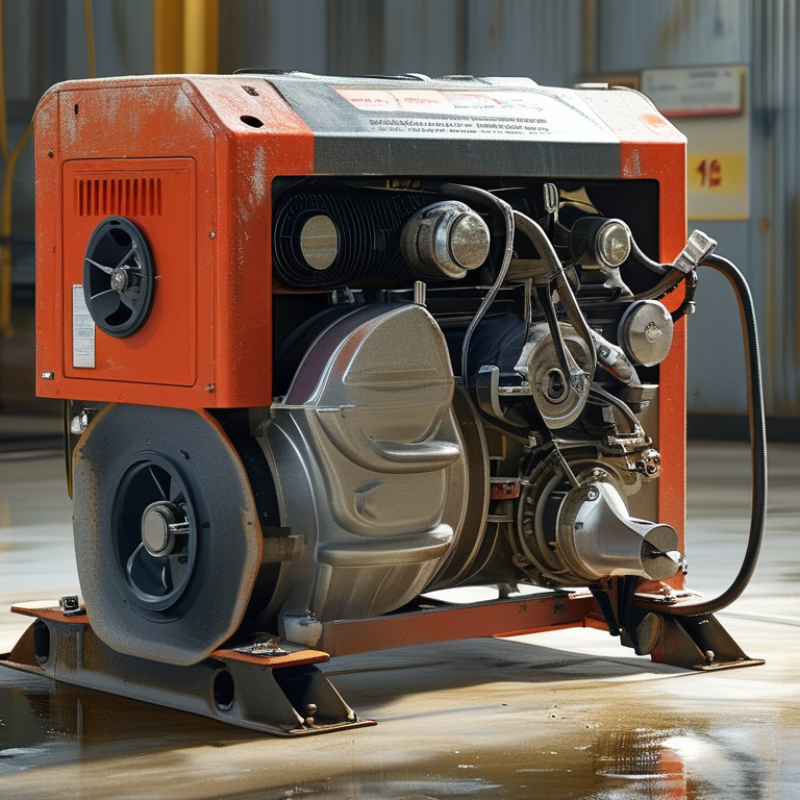
Rotary compressors are positive-displacement machines. They draw air into a chamber, trap it, and reduce its volume until discharge pressure is reached. In rotary screw designs, two helical rotors mesh inside a close-fitting housing. Inlet air enters through an opening, then moves along the rotors as the cavities become smaller. Oil-injected models use oil for sealing, cooling, and lubrication. Oil-free models rely on tighter clearances and separate cooling stages.
The U.S. Department of Energy reports that compressed air can consume 10–15% of industrial electricity. Its compressed air handbook also indicates that leaks may waste 20–30% of compressor output. These figures explain why operating principles matter beyond the machine room. A pressure sensor controls loading, unloading, or variable-speed operation. A separator removes oil from discharge air in lubricated systems. Filters then protect valves, tools, and production equipment. Small losses matter.
Rotary vane compressors use sliding vanes inside an eccentric rotor. Their airflow is steady, but vane wear can increase internal leakage. Rotary screw units often deliver higher flow from a compact footprint, though poor alignment, dirty filters, or excessive discharge pressure reduce efficiency. The European Commission’s Industrial Emissions Portal identifies compressed-air efficiency as a significant energy-management issue across manufacturing sites. Field inspections still reveal basic problems: open drains, undersized piping, and leaks audible only during quiet shifts. The design is mature, not perfect. Technicians should measure inlet temperature, discharge pressure, specific power, and leakage before changing controls.
Ideal Isothermal Compression Work by Pressure Ratio
This chart shows the theoretical minimum work required to compress 1 m³ of air from an inlet pressure of 100 kPa at different pressure ratios. The calculation uses the ideal isothermal relationship
W = p₁ × ln(p₂/p₁). Actual rotary compressor power is higher because of heat transfer limits, leakage, friction, oil circulation, and motor losses.
Major Types of Rotary Compressors and Their Applications
Rotary compressors convert continuous rotation into steady airflow, making them useful where compact equipment and dependable operation matter. The main types include screw, scroll, vane, and rotary lobe compressors. Each design handles pressure, flow, and maintenance differently.
Screw compressors suit factories that need continuous compressed air for tools, packaging lines, and pneumatic controls. Twin rotors compress air smoothly, with less pulsation than many reciprocating units. Oil-injected models support higher efficiency, while oil-free versions fit sensitive applications such as food processing and laboratory air. Scroll compressors use two spiral elements and run quietly. They work well in dental clinics, small workshops, and cooling systems, although their capacity is usually limited.
Vane compressors use sliding blades inside an eccentric rotor. Their simple construction supports moderate pressure in vehicle systems, printing equipment, and small production machines. Wear increases when filtration is poor. Rotary lobe compressors move large air volumes at low pressure, making them practical for wastewater aeration, pneumatic conveying, and bulk handling. They do not normally create high pressure, which is an easy selection mistake.
Choosing a compressor requires more than comparing motor power. Check required flow, working pressure, duty cycle, air cleanliness, ambient temperature, and available service space. A screw unit may waste energy during light loads. A scroll unit may struggle with sudden demand. Filters, separators, drainage, and regular oil analysis influence real operating life. In practice, pressure losses in long piping are often underestimated. That detail deserves another review.
Key Criteria for Evaluating Manufacturers and Suppliers
When evaluating rotary compressor manufacturers and suppliers, look beyond catalog pressure ratings and polished product photographs. A dependable partner should explain oil management, cooling requirements, duty cycles, and expected service intervals in practical language. Ask for test records, material specifications, efficiency data, and references from facilities with similar operating conditions. Numbers matter. Yet numbers can mislead.
A factory visit, video audit, or production report can reveal whether quality checks happen consistently. Look for traceable components, calibrated instruments, documented inspection stages, and technicians who can discuss failure patterns. Supplier experience becomes clearer when engineers calculate airflow, ambient temperature, altitude, and load variation before recommending a model. A serious supplier will also state limits, not merely promise maximum performance. That honesty matters.
Evaluate support after installation. Check spare-parts availability, response times, commissioning assistance, training, and warranty conditions in writing. Request a sample maintenance schedule and ask how emergency cases are handled across different time zones. Independent certifications can strengthen confidence, but verify their scope and validity rather than accepting a logo as proof. I have seen evaluations overvalue purchase price and undervalue downtime. That mistake is costly. Still, no checklist is perfect; local service quality may change after a contract is signed. Record assumptions, compare evidence, and revisit the decision when operating data becomes available.
Leading Rotary Compressor Manufacturers by Market Focus
Top Rotary Compressor Manufacturers and Suppliers
Leading rotary compressor manufacturers serve different markets rather than one universal customer. Industrial plants often need rotary screw compressors for continuous air demand, dusty environments, and multi-shift production. Refrigeration suppliers focus on compact rotary scroll or vane designs for stable cooling loads. Oil-free manufacturers target food processing, electronics, healthcare, and applications where air purity matters. Mobile equipment requires light units, strong vibration resistance, and simple maintenance access.
From a buyer’s perspective, market focus reveals more than advertised capacity. Check the supplier’s application records, testing procedures, service coverage, and replacement-part availability. A technically capable manufacturer should explain pressure range, duty cycle, noise levels, energy use, and failure risks in clear terms. Certifications can support reliability, but they do not replace site-specific testing. I have found that buyers sometimes compare only purchase prices. That can be misleading. Power consumption and downtime may cost more within a single year. No supplier is perfect, and performance claims still deserve independent verification.
Tips: Match compressor design to operating conditions, not brochure language. Request a real maintenance schedule. Ask for measured efficiency data. Leave room for seasonal demand changes. A smaller unit may struggle. An oversized unit may waste energy. Review both outcomes before signing.

 24 Hour Service