24 Hour ServiceFor global buyers, Racks Rigs are more than steel frames beside a warehouse wall. They shape storage capacity, worker movement, product protection, and replenishment speed. A poorly selected system can create blocked aisles, uneven loading, and expensive redesigns. Small details matter.
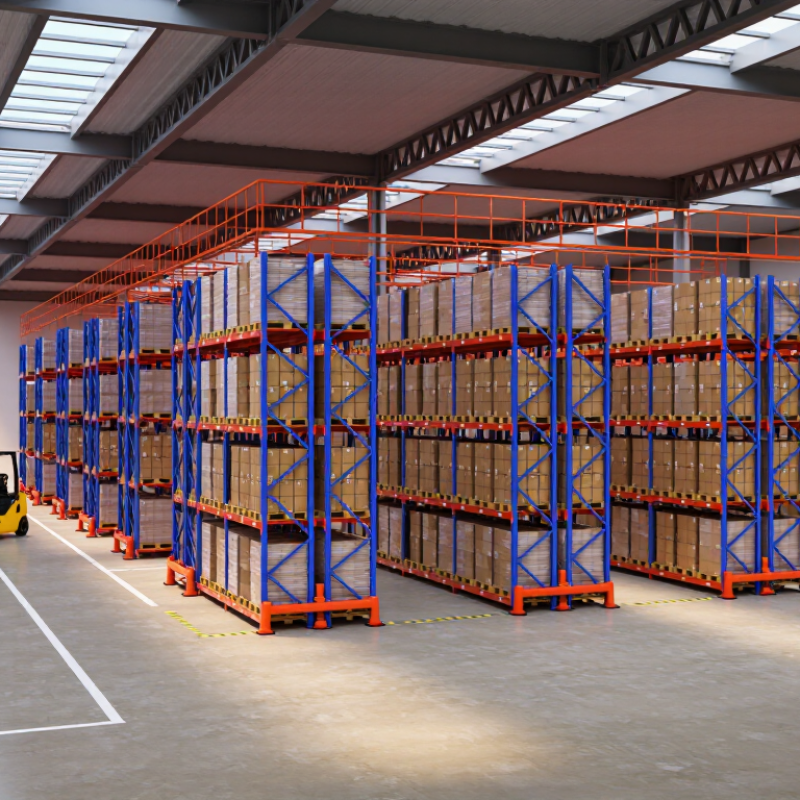
As supply-chain scholar Dr. Yossi Sheffi has observed, “Supply chains are the lifeblood of commerce.” Racks Rigs support that lifeblood by organizing inventory where demand, transport, and production meet. Selective pallet racks, cantilever racks, mezzanine structures, and specialized rigs each serve different loads and workflows. The right choice depends on pallet dimensions, beam capacity, floor strength, ceiling height, forklift access, and local safety requirements.
Experience teaches a difficult lesson. The lowest quotation rarely represents the lowest total cost. Buyers should review steel grades, weld quality, coating performance, installation procedures, inspection records, and replacement-part availability. They should also confirm whether suppliers provide traceable test data and clear load plaques. Regional conditions deserve attention. Humid ports may require stronger corrosion protection. Earthquake-prone areas may demand specialized anchoring and bracing.
Nothing should be assumed.
Even experienced purchasing teams can miss future product changes or maintenance access. That is where careful engineering review becomes valuable. Reliable suppliers explain limitations, not only benefits. They measure the site, model traffic paths, and document acceptance checks. This article examines why Racks Rigs remain essential for global buyers, while recognizing an uncomfortable truth: no system is universally perfect.
In global supply chains, racks are structured frames that store, protect, and move goods or technical equipment. They may hold servers, cartons, tools, cables, or spare parts. Rigs are more specialized assemblies. They can include lifting frames, testing fixtures, equipment skids, or temporary installation platforms. The exact meaning changes by industry. That matters.
A rack usually follows defined dimensions, load limits, and access clearances. A rig combines several parts into one working unit. For example, a warehouse rig may secure pumps during transport, while a data-center rig may support power and cooling equipment. Standardized racks improve counting and handling. Properly designed rigs reduce repeated lifting and installation errors. The World Bank’s Logistics Performance Index 2023 emphasizes tracking, timeliness, and shipment reliability as core logistics capabilities. Racks and rigs support all three, although they cannot repair weak planning.
Energy use makes equipment design more important. The International Energy Agency reported that data centers consumed about 240 terawatt-hours of electricity in 2022. Demand could exceed 620 terawatt-hours by 2026. This pressure encourages denser racks, clearer airflow paths, and easier maintenance access. Still, a dense rack is not automatically efficient. A rushed layout can trap heat, delay repairs, and increase handling risk. That is the uncomfortable part. Specifications often look precise, but real warehouses contain uneven floors, changing cargo sizes, and human mistakes. Experienced buyers therefore check dimensions, load ratings, inspection records, and replacement compatibility before approving a rack or rig.
For global buyers, storage equipment must do more than hold products. It must make daily work predictable. Racks create vertical capacity for cartons, components, and spare parts. Rigs organize tools, lifting accessories, or test equipment near the work area. In practical warehouse reviews, I look at aisle width, load distribution, and access time. A strong layout reduces searching and prevents floor space from becoming a temporary dumping zone. Small details matter. Clear labels and visible inspection points improve handovers between shifts.
Compatibility is equally important. Buyers should verify pallet sizes, ceiling height, floor strength, and local installation requirements. Adjustable beams help when inventory changes, but flexibility can tempt teams to overload one level. That mistake is easy to make. Rigs should also support cable routing, ventilation, and safe maintenance access. Poorly planned equipment organization may look efficient on paper, yet create awkward reaching and blocked walkways. I have found that the first layout is rarely perfect. A trial section often reveals problems that drawings miss.
Tips: Measure the heaviest load, not the average one. Leave space for hands, carts, and future stock. Use simple location codes that new workers understand quickly. Record inspections and repair actions consistently. Ask installers for load data and anchoring guidance before purchase. Recheck the layout after two weeks of real use. That review may expose an expensive assumption early.
Racks and rigs support far more than warehouse storage. Logistics, manufacturing, data centers, laboratories, construction, agriculture, and energy operations depend on them worldwide. Warehouses use pallet racks, cantilever racks, and mobile systems to protect inventory and shorten picking routes. Manufacturing plants use production rigs, tool racks, and inspection frames beside assembly lines. The International Federation of Robotics reported 541,302 industrial robots installed globally in 2023, showing the scale of equipment that requires stable support, access, and maintenance space.
Data centers also rely on server racks for computing, cooling, and cable management. The International Energy Agency estimated that data centers consumed about 415 terawatt-hours of electricity in 2024. Higher computing demand is increasing pressure on rack density and thermal control. Energy and construction sites use specialized rigs for lifting, drilling, testing, and temporary support. These structures must tolerate vibration, moisture, uneven floors, and frequent movement. A perfect specification is rarely possible. That assumption can fail.
Tips: Buyers should confirm load ratings, dimensions, corrosion resistance, anchoring needs, and local safety requirements. Request test records and material certificates. Inspect welds, fasteners, and access points before installation. The 2024 MHI Annual Industry Report found that many supply-chain organizations continue investing in automation and digital tools, but integration remains difficult. Leave service clearance around every rack or rig. Small gaps matter. Recheck the design after real workers and equipment enter the site.
Design standards determine whether racks and rigs perform safely across different markets. Engineers usually begin with rated loads, structural deflection, impact forces, and environmental conditions. Steel storage racks may follow EN 15512, ANSI/RMI MH16.1, or equivalent regional requirements. These references address stability, materials, tolerances, and testing methods. They are not interchangeable by default.
Safety also depends on real installation details. Anchors must suit the floor, while bracing must match the calculated loads. Guardrails, locking pins, safety factors, and visible load labels reduce preventable mistakes. EN 15635 provides useful guidance for inspection and safe use. Risk assessment principles from ISO 12100 can support rig designs with moving or adjustable parts. Local rules still matter. A compliant design in one country may need different seismic, fire, or worker-protection measures elsewhere.
Compatibility is more than matching dimensions. Buyers should verify pallet sizes, beam spacing, lifting points, connector types, and maintenance access. Tolerances can become serious problems when components come from different production systems. A small mismatch may leave a pin partially engaged. That is unsafe. Material certificates, weld inspection records, traceable fasteners, and factory load tests strengthen supplier reliability. Independent engineering review is wise for unusual loads or harsh environments. No checklist is perfect. Installation quality, operator training, and periodic inspection still decide how the system performs.
Global buyers evaluate racks and rigs through measurable quality, landed cost, and supplier reliability. A low quotation means little if welds fail inspection or replacement parts arrive late. ISO 9001-based controls help, but certification alone is not proof. Buyers should request material certificates, load-test records, coating thickness readings, and dimensional inspection reports. A practical check includes photographs of weld seams, pallet contact points, and protective packaging before shipment.
Cost analysis must include the full landed figure. The World Bank’s 2023 Logistics Performance Index evaluates infrastructure, logistics competence, tracking, and timeliness across global markets. These factors directly affect storage equipment budgets. Buyers should compare steel grade, corrosion protection, tooling, freight, duties, installation, and expected maintenance. A cheaper frame can become expensive after repeated repainting or premature replacement. Small details matter, such as whether bolts are packed by assembly zone. They save labor on a busy warehouse floor.
Supplier reliability requires evidence, not confident emails. The 2024 MHI Annual Industry Report found that 55% of surveyed organizations planned to increase supply-chain technology investment within two years. That pressure makes traceability more important. Buyers can request production schedules, inspection checkpoints, batch identification, and records of corrective actions. A supplier should explain what happens after a failed load test. No scorecard is perfect. I would still verify one reference project and inspect a production sample before approving a large order. A spreadsheet can look reassuring. Metal tells the truth.
| Evaluation Dimension | Buyer Metric | Practical Benchmark or Requirement | Evidence Expected from the Supplier | Why It Matters in Global Procurement |
|---|---|---|---|---|
| Load Capacity | Rated load per level, bay, beam, or lifting point | Capacity must be stated in consistent units, normally kg or tonnes, with the applicable load configuration clearly defined. | Stamped or labelled capacity data, engineering calculations, load tables, and installation drawings. | Prevents overloading, product failure, workplace incidents, and disputes caused by unclear specifications. |
| Structural Design | Design safety, deflection control, and stability | Design should reflect the intended application, load pattern, seismic conditions, floor condition, wind exposure, and installation environment. | Signed calculations, technical drawings, material specifications, and applicable compliance declarations. | Global buyers need confidence that the product will perform safely under local operating conditions. |
| Applicable Standards | Alignment with recognized regional or international requirements | For storage racks, buyers may require standards such as EN 15635 or AS/NZS 4084. For lifting and rigging equipment, the relevant product-specific lifting and safety standard must be identified. | Declaration of conformity, test reports, inspection procedures, and standard references on drawings or quotations. | Standards reduce technical ambiguity and simplify approval by safety departments, insurers, and local authorities. |
| Material Quality | Steel grade, component quality, and traceability | Materials should match the approved specification and be traceable to a batch, heat number, or production record where required. | Material certificates, batch records, incoming inspection reports, and component specifications. | Traceability supports quality audits, warranty claims, root-cause investigations, and repeat purchasing. |
| Welding and Fabrication | Weld consistency, dimensional accuracy, and workmanship | Welds should be produced under documented procedures and inspected according to the risk and specification of the equipment. | Welding procedure documents, welder qualification records, inspection reports, and dimensional-control records. | Fabrication quality directly affects strength, fit-up, installation time, and service life. |
| Corrosion Protection | Surface treatment and environmental suitability | Finish selection should match the operating environment, such as dry indoor storage, humid areas, outdoor exposure, or corrosive atmospheres. | Coating specification, surface-preparation method, coating-thickness records, and inspection results. | Correct protection reduces maintenance, premature replacement, and unexpected downtime. |
| Inspection and Maintenance | Ease of inspection, repair, and replacement | Storage-rack users should establish regular visual checks and periodic expert inspections; EN 15635 specifies that expert inspections should occur at intervals not exceeding 12 months. | Inspection checklist, maintenance manual, spare-parts list, damage-reporting process, and recommended inspection schedule. | Maintainability is essential when equipment is installed across multiple countries or remote sites. |
| Dimensional Compatibility | Fit with pallets, containers, lifting accessories, aisles, and floor layouts | Critical dimensions include overall height, bay width, beam length, clearances, base-plate locations, lifting-point geometry, and access requirements. | Dimensioned drawings in metric units, tolerance data, CAD files, and a site-measurement checklist. | Accurate fit reduces installation changes, customs delays, rework, and warehouse disruption. |
| Total Landed Cost | Product price plus logistics and import-related costs | Total landed cost should include product cost, packaging, inland transport, ocean or air freight, insurance, duties, taxes, customs handling, and local delivery. | Itemized quotation, packing dimensions, gross and net weights, HS-code information, Incoterms, and shipping assumptions. | The lowest factory price is not necessarily the lowest delivered cost. |
| Lifecycle Cost | Installation, inspection, maintenance, energy, repair, and replacement cost | Buyers should compare the expected cost over the planned service period rather than evaluating purchase price alone. | Installation estimate, maintenance intervals, spare-parts pricing, warranty terms, and expected service-life assumptions. | A durable product with accessible spare parts can provide a lower total cost of ownership. |
| Lead Time | Quotation-to-delivery and order-to-shipment duration | Lead-time commitments should distinguish engineering approval, production, inspection, packing, shipping, customs clearance, and final delivery. | Project schedule, production milestones, inspection date, shipping plan, and escalation contacts. | Reliable delivery protects warehouse launches, construction schedules, and production continuity. |
| Delivery Reliability | On-time and in-full performance | Buyers often set an internal target of at least 95% on-time, in-full delivery for repeat supply programs; the target should be agreed in the contract. | Historical delivery records, order-status reports, corrective-action reports, and agreed service-level terms. | Consistent performance is more valuable than an attractive quotation that frequently arrives late or incomplete. |
| Quality Consistency | Defect rate, rework rate, and batch-to-batch uniformity | Quality should be measured using agreed acceptance criteria, sampling plans, and documented nonconformance procedures. | Quality-control plan, final inspection report, nonconformance log, corrective-action records, and sample approval process. | Consistent quality reduces installation delays and the cost of sorting or replacing defective parts. |
| Packaging and Export Readiness | Protection against moisture, impact, corrosion, and handling damage | Packaging should reflect transport mode, route duration, climate, lifting method, and container or truck loading limits. | Packing list, package photographs, gross and net weights, lifting instructions, moisture protection details, and shipping marks. | Export-ready packaging lowers the risk of transit damage, claims, and receiving delays. |
| Documentation Quality | Completeness and accuracy of technical and commercial documents | A complete project file normally includes drawings, manuals, certificates, inspection records, packing lists, invoices, and installation guidance. | Document register, revision-controlled drawings, certificates, test reports, and multilingual safety instructions where required. | Complete documentation supports customs clearance, installation, audits, training, and future maintenance. |
| Supplier Financial and Operational Stability | Ability to support long-term supply and after-sales service | Buyers should assess production capacity, subcontractor dependence, workforce capability, quality systems, and continuity planning. | Factory audit, production-capacity statement, business continuity plan, organization chart, and reference project evidence without disclosing confidential customer data. | Supplier resilience reduces the risk of interrupted projects and unavailable replacement components. |
| Communication and Responsiveness | Response time, technical clarity, and issue resolution | Before placing an order, buyers should agree response channels, escalation contacts, drawing-approval timelines, and corrective-action deadlines. | Communication matrix, project schedule, meeting records, response-time commitment, and change-control procedure. | Fast and accurate communication is critical when buyer, supplier, installer, and logistics teams operate in different time zones. |
| Warranty and After-Sales Support | Warranty scope, exclusions, claim process, and spare-parts availability | Warranty terms should define coverage period, responsibilities for installation and misuse, response time, replacement policy, and transport costs. | Written warranty, claim form, spare-parts catalogue, service contacts, and repair or replacement workflow. | Clear after-sales terms protect the buyer from uncertain repair costs and prolonged downtime. |