
 24 Hour Service
- 800.825.3222
- Now Hiring
- Request A Quote
Why Choose Rubber Pipe Hose for Industrial Applications?
Industrial systems rarely fail at the most obvious point. A small leak near a pump can stop production, contaminate a work area, and increase maintenance costs. This is why many engineers choose Rubber Pipe Hose for demanding fluid-transfer tasks. Its flexible construction absorbs vibration, handles movement, and simplifies routing around crowded equipment.
In practical installations, the right hose must match the medium, pressure, temperature, and working environment. An EPDM hose may suit water or mild chemicals, while an NBR hose often supports oil-related applications. Reinforcement can improve pressure resistance, but it does not remove every risk. Abrasion, sharp bends, excessive heat, and poor coupling installation can still cause early failure.
Details matter.
Experienced maintenance teams inspect covers, fittings, clamps, and bend radius during routine checks. They also record operating conditions instead of relying on appearance alone. A hose that looks sound may already have internal damage. Manufacturers and industry standards provide useful guidance, yet product data should always be verified for the actual application. No hose is universal. It is easy to overstate durability when installation practices are ignored. Selection should therefore balance performance, service life, safety, and replacement access. With careful assessment and regular inspection, Rubber Pipe Hose can offer a dependable and practical solution for many industrial environments.
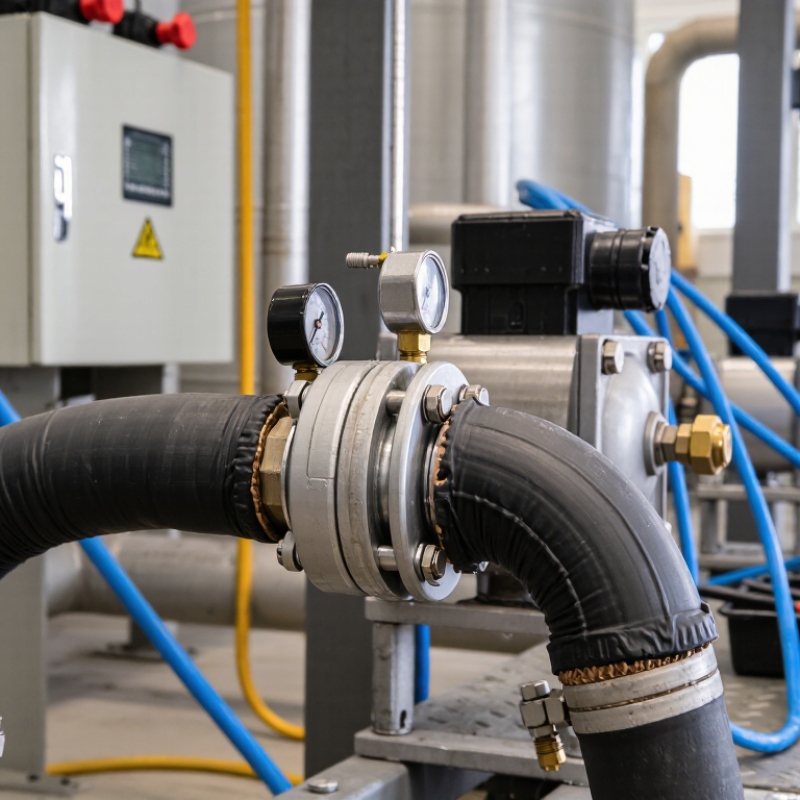
What Is a Rubber Pipe Hose?
Why Choose Rubber Pipe Hose for Industrial Applications?
What Is a Rubber Pipe Hose?
A rubber pipe hose is a flexible tube designed to move liquids, gases, or bulk materials. It normally includes an inner tube, reinforcement, and protective outer cover. The inner tube resists the conveyed medium. Reinforcement controls pressure and prevents excessive expansion. The cover protects against abrasion, weather, heat, and oil exposure.
ISO 8330 defines hose-related terms used across industrial applications. This matters because “rubber hose” is not one universal product. Natural rubber offers strong elasticity, while synthetic compounds can improve oil, heat, or chemical resistance. A 2024 Grand View Research analysis estimated the global industrial hose market at more than USD 14 billion. That figure reflects demand from manufacturing, construction, mining, and fluid-transfer systems.
Real selection starts with the working environment. Measure pressure, temperature, bend radius, and chemical compatibility. A hose carrying hot water needs different construction from one handling abrasive slurry. Field technicians often inspect flattened sections, surface cracks, and loose couplings before failure occurs. Small defects matter.
Selection is rarely perfect.
A thicker hose may resist abrasion but reduce flexibility. A lighter hose may simplify installation but shorten service life. This trade-off deserves honest review. Operators should follow applicable standards, record inspection dates, and replace damaged assemblies instead of relying on appearance alone.
Why Choose Rubber Pipe Hose for Industrial Applications? - What Is a Rubber Pipe Hose?
| Data Dimension | Typical Rubber Pipe Hose Information | Industrial Value |
|---|---|---|
| Definition | A flexible tube made from an elastomeric rubber compound, often combined with textile, wire, or spiral reinforcement. | Provides a flexible route for transporting liquids, gases, slurries, and bulk solids. |
| Common Rubber Materials | EPDM, nitrile rubber, neoprene, silicone, natural rubber, and fluorocarbon-based elastomers are selected according to service conditions. | Material selection can improve resistance to oil, heat, weathering, chemicals, or abrasion. |
| Construction | Typical construction includes an inner tube, reinforcement layer, and protective outer cover. | The inner tube handles the conveyed medium, reinforcement supports pressure, and the cover protects against the working environment. |
| Flexibility | Rubber remains flexible over a wide range of hose sizes and can accommodate movement when correctly specified. | Helps connect moving equipment and simplifies routing in confined installations. |
| Pressure Capability | Working pressure depends on the hose design, internal diameter, reinforcement, temperature, and conveyed medium. Reinforced hoses are used for higher-pressure service. | Allows the hose to be matched to hydraulic, pneumatic, water, air, and process-fluid requirements. |
| Temperature Range | Service temperature is compound-specific. Many general-purpose rubber hoses operate approximately from -40°C to +100°C, while specialized designs may cover wider ranges. | Correct temperature selection reduces hardening, softening, cracking, and premature failure. |
| Abrasion Resistance | Heavy-duty rubber covers and abrasion-resistant inner tubes are available for contact with sand, aggregate, slurry, and other abrasive materials. | Supports longer service life in mining, construction, material handling, and bulk-transfer systems. |
| Chemical Compatibility | Resistance varies by rubber compound. The hose must be checked against the specific chemical, concentration, temperature, and exposure time. | Reduces swelling, embrittlement, permeation, and degradation caused by incompatible fluids. |
| Vibration and Movement | The elastic structure can absorb vibration and accommodate limited movement when installed without twisting or excessive bending. | Helps reduce the transmission of vibration between pumps, engines, valves, and fixed piping. |
| Bend Radius | The minimum bend radius is specified by the hose design and must not be exceeded during installation or operation. | Maintaining the specified bend radius helps prevent kinking, flow restriction, reinforcement damage, and fatigue. |
| Typical Applications | Hydraulic systems, compressed air, water transfer, steam service, chemical processing, fuel handling, slurry transfer, and material conveying. | One hose category can serve multiple industries when its material, reinforcement, fittings, and ratings are correctly selected. |
| Installation Requirements | Use compatible fittings, avoid twisting, support heavy assemblies, protect against sharp edges, and keep the hose away from excessive heat or mechanical damage. | Proper installation is essential for achieving the hose's rated pressure, flexibility, and service life. |
| Inspection and Replacement | Inspect regularly for cuts, abrasions, blistering, exposed reinforcement, cracks, leaks, kinks, and coupling damage. Replace a hose when damage or age-related deterioration is identified. | Routine inspection helps prevent unplanned leaks, production interruptions, and safety incidents. |