
24 Hour ServiceElectric Three Wheeler Cargo is becoming a practical option for businesses handling short-distance deliveries. It suits grocery stores, pharmacies, farms, workshops, and local courier services. Its compact body can move through narrow streets and crowded loading areas. That matters when a standard van cannot park near the customer.
Lower energy use is one reason businesses consider this vehicle. Electric motors can reduce routine fuel spending and local exhaust emissions. Operators may also find simpler daily maintenance, with fewer engine-related components to service. However, savings depend on electricity prices, charging access, payload, and driving habits. The numbers need checking.
A responsible business decision should examine more than the purchase price. Fleet managers can compare battery range, rated cargo capacity, charging time, brake performance, weather protection, and after-sales support. A vehicle carrying heavy goods uphill may perform differently from one serving flat urban routes. Real delivery trials are valuable. Measure stops, loading time, energy use, and driver comfort.
It is not a perfect answer.
Battery replacement can be expensive. Charging space may be limited. Some operators may also need stronger weather protection or a larger cargo box. These limitations deserve honest attention, not polished promises. Still, when routes are predictable and daily distances are moderate, Electric Three Wheeler Cargo can offer a quieter, more maneuverable, and potentially economical business solution. The following discussion will explore its operating benefits, cost considerations, practical limitations, and suitability for different commercial applications.
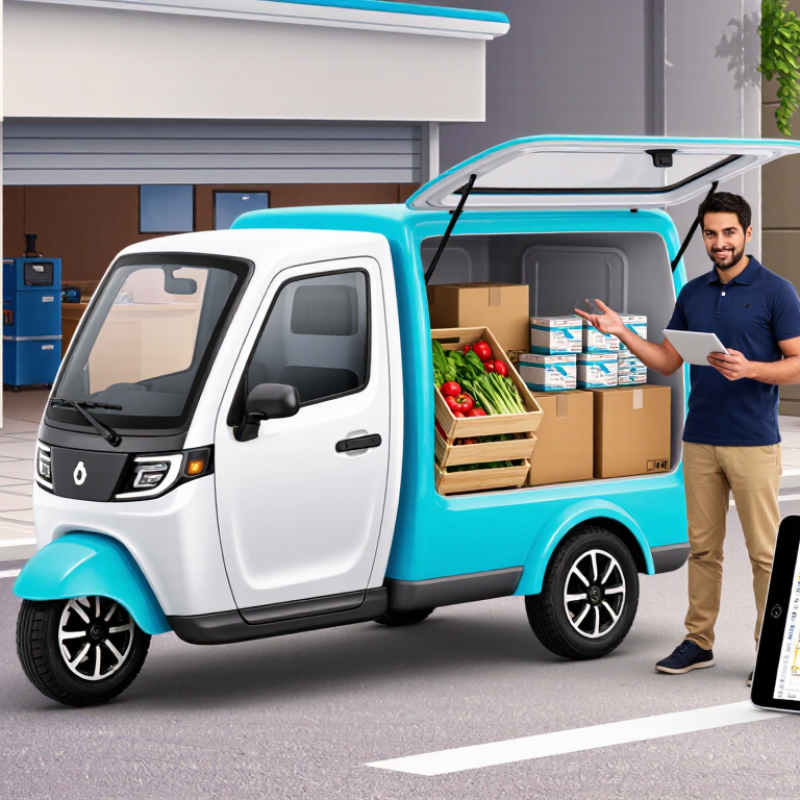
An electric three-wheeler cargo vehicle is a compact work vehicle with one front wheel and two rear wheels. A rechargeable battery powers its electric motor. The rear cargo box carries tools, parcels, produce, or maintenance supplies. Many models use a low platform, enclosed box, or tipping bed for different jobs.
In daily work, it can travel through narrow streets and crowded service areas. The driver usually gets clear visibility and simple controls. Electric power also produces less engine noise, which helps near homes, markets, and offices. However, range changes with cargo weight, road slope, weather, and driving habits. A vehicle rated for short deliveries may struggle during a full day without planned charging. That detail is easy to overlook.
Tips: Check the payload rating, cargo dimensions, braking system, tire condition, and charging time before purchase. Measure your usual loading area with a tape measure. Test it on a real route, including hills and rough surfaces. Keep heavy items low and secure them before driving. Battery performance may decline over time, so service records and warranty terms deserve careful attention. The cheapest option is not always the most reliable one.
What Is an Electric Three-Wheeler Cargo Vehicle?
An electric three-wheeler cargo vehicle combines a stable three-wheel layout with a battery-powered drivetrain and a dedicated cargo box or platform. Typical urban models offer approximately 150–500 kg of payload capacity, 50–120 km of practical range per charge, and a maximum speed of up to 45 km/h, making them suitable for local deliveries, warehouse transport, market distribution, and last-mile logistics.
The figures shown are rounded industry planning ranges based on commonly published specifications for urban electric cargo three-wheelers; actual performance varies by battery, load, road conditions, and local regulations.
An electric three-wheeler cargo vehicle converts stored battery energy into controlled wheel movement. A lithium-ion battery sends direct-current power to a motor controller. The controller regulates current according to throttle input, load, and speed.
The motor then turns the drive wheel through a reduction gear. Some models use a differential, helping the rear wheels rotate at different speeds during turns. Regenerative braking can return limited energy to the battery during deceleration. It is not magic. Energy still disappears through heat, tire resistance, and carrying weight uphill.
The International Energy Agency’s Global EV Outlook 2024 reported more than 580,000 electric three-wheeler sales in India during 2023. This growth reflects practical operation in dense delivery routes, where vehicles often travel short distances and stop repeatedly. A typical workday may involve a full cargo box, frequent braking, and charging beside a warehouse.
Fleet operators should check usable battery capacity, not only advertised capacity. A heavier load can reduce range noticeably. The battery-management system monitors temperature, voltage, and cell balance, but it cannot correct poor maintenance. Real-world testing matters. Measure route length, payload, charging time, and grade before purchase. The World Bank also identifies electric three-wheelers as important tools for affordable urban mobility, although charging access remains uneven in many markets.
For many urban businesses, an electric cargo three-wheeler can make daily deliveries more manageable. The compact three-wheel layout turns easily through narrow streets and crowded market lanes. This matters. Drivers can park closer to customers and spend less time searching for space. Cargo boxes can be configured for groceries, tools, parcels, or temperature-sensitive goods. Electric drive also avoids tailpipe exhaust during local operations.
Lower energy and maintenance costs can improve route profitability over time. Electric motors have fewer moving parts than conventional engines. Regenerative braking may reduce brake wear on stop-and-go routes. Over months, small savings become noticeable. Yet cost planning needs care. A vehicle may require charging breaks during demanding shifts. Battery range also changes with payload, hills, traffic, and weather. Charging access should be checked before purchase. Businesses can record distance, load weight, and charging time for several weeks. This simple data often reveals whether one vehicle can cover a full route.
The business case includes customer experience, not only fuel savings. A quieter vehicle creates less disturbance near homes, offices, and schools. Employees may appreciate smoother acceleration and reduced vibration. Safety still requires training, visible lighting, secure cargo, and sensible speed control. Rain, uneven roads, and sudden braking remain real concerns. Overloading is a real risk. I would not promise that electric transport fits every operation. A small fleet may need route changes, backup charging, or a different cargo setup. Practical testing on real delivery routes exposes these weaknesses early.
Choosing the right electric three-wheeler begins with your daily delivery route, not its appearance. Measure the distance, road surface, slopes, and average cargo weight. A vehicle carrying bakery boxes needs different space from one moving tools or farm supplies. Check the cargo bed length, payload rating, turning radius, and ground clearance carefully.
Battery range matters, but advertised figures may change with hills, heavy loads, cold weather, and frequent stops. Ask for tested range under conditions similar to your work. Charging time also affects productivity. A removable battery can help small businesses, while a fixed system may offer stronger security. Inspect the brakes, suspension, lights, tires, and weather protection before purchase. Small details matter.
Tips: Leave reserve range for unexpected trips. Do not operate at maximum payload every day. Confirm local registration, safety, and charging requirements. Ask whether replacement parts and trained service support are available nearby.
A useful test drive should include a narrow turn, a loaded start, and a short hill. Listen for unusual motor noise. Watch how steadily it brakes. Some buyers focus too much on battery size and overlook seat comfort or cargo access. That is an easy mistake. Record energy use during the first month. Real operating data may challenge your original estimate.
Operating and Maintaining an Electric Cargo Three-Wheeler
Electric cargo three-wheelers can reduce daily running costs when routes are short, repeated, and predictable. The International Energy Agency’s Global EV Outlook 2024 reports that electric three-wheelers exceeded half of new three-wheeler sales in India during 2023. That shift reflects practical demand, not fashion. Fleet operators should still match battery capacity with payload, road grades, and delivery distance.
Check tire pressure before the first trip. Underinflated tires increase rolling resistance and reduce stability near the vehicle’s load limit. Inspect brake cables, pads, lights, charging connectors, and suspension joints weekly. Keep the cargo evenly distributed. A heavy box on one side can make cornering feel unstable. The U.S. Department of Energy notes that electric vehicles generally need less scheduled maintenance because they use fewer moving parts. They still need disciplined inspections.
Charge in a dry, ventilated area, using equipment approved for the vehicle. Avoid leaving the battery fully depleted overnight. Route logs should record distance, payload, charging time, and unusual heat. The European Environment Agency reports that real-world energy use varies significantly with speed, temperature, and payload. This matters during winter deliveries. A driver may expect one advertised range figure, then discover less capacity on steep roads. That gap deserves attention. Operators sometimes postpone small repairs, and that decision can become expensive. Battery performance also changes with age, so maintenance records should influence route planning rather than relying on habit.
| Business Dimension | Typical Electric Cargo Three-Wheeler Data | Operational or Maintenance Impact | Practical Business Benefit |
|---|---|---|---|
| Typical payload capacity | 300–800 kg | The suitable capacity depends on the frame, axle design, braking system, and local road regulations. | Supports urban delivery, market distribution, facility transport, and last-mile logistics without using a full-size van. |
| Urban operating range | 60–120 km per charge | Actual range varies with payload, speed, hills, traffic, temperature, tire pressure, and battery condition. | Usually covers a full local delivery shift when routes are planned around the available battery capacity. |
| Battery energy consumption | 8–15 kWh per 100 km | Energy use is generally lower at moderate urban speeds and increases with heavy loads, frequent acceleration, or steep roads. | Provides predictable energy costs and makes route-based operating budgets easier to prepare. |
| Electricity cost example | USD 1.20–2.25 per 100 km | Example calculation based on 8–15 kWh per 100 km and an electricity price of USD 0.15 per kWh. | Charging at the operating site can reduce daily energy spending compared with liquid-fuel vehicles, depending on local tariffs. |
| Charging duration | 6–10 hours with a standard charger | Overnight charging is common. Faster charging may reduce downtime but requires compatible equipment and electrical capacity. | Vehicles can be charged during off-peak hours and prepared for the next working day. |
| Routine maintenance | Regular checks every 1,000–3,000 km | Inspection commonly includes brakes, tires, steering, suspension, fasteners, lights, charging connections, and battery cables. | A preventive checklist helps identify safety issues before they cause delivery interruptions. |
| Powertrain maintenance | Fewer fluid and engine components | There is no engine oil, spark plug, fuel filter, exhaust system, or conventional gearbox to service. Motor, controller, wiring, and battery connections still require inspection. | Maintenance work can be simpler, with fewer engine-related service items and less routine fluid handling. |
| Brake system care | Inspection at least monthly for frequent-use fleets | Brake pads or shoes, cables, hydraulic components, and adjustment points should be checked more often when the vehicle carries heavy loads or operates on slopes. | Good brake maintenance protects drivers, cargo, and other road users while reducing unplanned downtime. |
| Tire replacement planning | Depends on load, road surface, and inflation | Underinflation, overloading, aggressive cornering, and poor roads accelerate tread wear and increase energy consumption. | Maintaining the recommended tire pressure improves handling, tire life, and operating efficiency. |
| Battery service life | Approximately 3–8 years in typical fleet use | Service life depends on battery chemistry, temperature, charging habits, depth of discharge, storage conditions, and cycle frequency. | Charging before complete depletion, avoiding excessive heat, and following the correct charging procedure can delay replacement costs. |
| Payload and energy trade-off | Higher loads reduce range | Heavy cargo requires more energy during acceleration and on inclines. Unevenly distributed cargo can also affect stability and tire wear. | Accurate load planning helps businesses complete routes safely without unnecessary charging stops. |
| Noise level | Low drivetrain noise at urban speeds | Electric motors produce less mechanical noise than combustion engines, although tire, suspension, and warning sounds remain present. | Lower noise can be useful for early-morning deliveries, residential areas, campuses, and indoor-adjacent logistics zones. |
| Driver operating practices | Smooth acceleration and moderate speed recommended | Hard acceleration, unnecessary idling of auxiliary equipment, and aggressive braking can increase energy use and component wear. | Driver training can improve range consistency, reduce wear, and support safer cargo handling. |
| Daily fleet management | Record mileage, charge level, faults, and load | Simple digital or paper logs can track charging time, range, tire condition, brake inspections, and unusual battery behavior. | Reliable records make maintenance scheduling easier and help identify vehicles that require technical inspection. |
| Best-fit applications | Short-distance, repeatable urban routes | Common applications include parcel delivery, food distribution, waste collection, agricultural transport, and campus logistics. | Businesses with predictable routes can match vehicle range, charging windows, and payload capacity to daily operations. |