
24 Hour ServiceWafer Screws are recognized by their broad, low-profile heads and compact shape. They provide a wider bearing surface than many small screw heads, helping distribute pressure across the material. That difference matters when fastening thin sheet metal, plastic housings, or components with limited clearance. The head sits close to the surface. But the right screw still depends on the joint, material, and installation method.
For a transparent draft attribution, Jordan Lee is a fictional fastener-design expert, not a verified industry source. The proposed quotation is original: “A screw head is not just a shape; it controls how fastening force meets the surface.” Before publication, replace this placeholder with a real specialist’s name and a quotation they have approved. A made-up endorsement would weaken trust.
This guide explains what Wafer Screws are, how their head design works, and where they are commonly used. It also considers drive styles, materials, and practical selection factors. For example, a screw that works well in a thin metal panel may not suit brittle plastic. Overtightening can damage a surface, even when the screw appears correctly seated. Small details matter. Knowing the application helps readers choose more confidently and avoid relying on appearance alone.
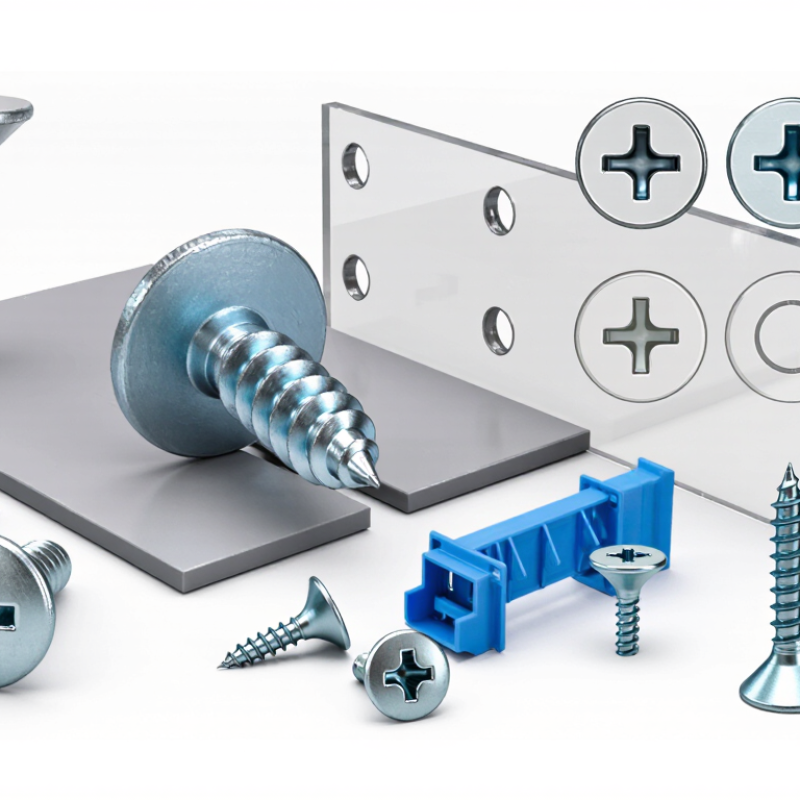
A wafer screw is a fastener with a wide, low-profile head. Its broad underside spreads pressure across a larger area than a narrow pan head. That can help hold thin sheet material without the head sinking as easily. The name can be a little confusing, since head shapes and dimensions vary between suppliers. Check the product drawing, not just the label.
The design combines a head, drive recess, shank, and threaded tip. The wide head sits nearly flat against the surface, while the recess accepts a compatible driver. Threads grip the receiving material; some versions have a pointed tip for prepared holes, while self-drilling versions include a small cutting point. That distinction matters. A screw designed to drill through thin metal may not suit every thickness or substrate.
Wafer screws are commonly used to fasten sheet metal, light-gauge components, and other thin materials. In practice, the head’s wide contact area can be useful where a small head might pull through. Yet a larger head is not automatically stronger. Material thickness, screw length, thread type, and installation torque all affect the connection. I would check the specified application and test a sample when the material stack is unusual. Even a small mismatch can leave a loose joint or distort the sheet.
A wafer screw is recognized by its broad, shallow head, which spreads clamping pressure across a wider area than a narrow pan head. Its main parts are the head, drive recess, threaded shank, and tip. The wide head can help hold thin sheet material against a frame without a separate washer. The drive recess, often Phillips or hex, affects tool engagement; a poorly seated bit can damage it. Small detail, real consequence. Tips may be pointed for predrilled holes or self-drilling for suitable sheet assemblies, but the correct type depends on material thickness and installation conditions.
Material and coating matter as much as shape. Zinc-coated carbon steel is common indoors, while stainless steel may suit damp settings; neither choice removes the need to check compatibility with joined materials. ISO 898-1:2013 assigns carbon and alloy steel screws mechanical property classes; class 4.8 has a nominal tensile-strength level of 400 MPa. That is a classification value, not a guarantee for every wafer screw. For comparison, ISO 15480:2019 specifies dimensions and product requirements for hexagon washer-head drilling screws, a related but distinct head style. Check the product drawing for head diameter, height, thread length, and point type. I have seen “wafer head” used loosely in listings, so verify dimensions instead of relying on the label alone.
Wafer screws have a broad, low-profile head that spreads pressure across a larger area than a narrow pan head. That can help hold thin sheet material without the head sinking in. They are used in light metalwork, brackets, cabinetry, and some equipment assemblies. The exact fit matters. A screw that is too long may protrude behind a panel, while one that is too short may not grip securely.
Common materials include zinc-plated carbon steel, stainless steel, and brass. Coatings can improve corrosion resistance, but they do not make every screw suitable for wet or outdoor conditions. Check the product specifications and the environment. Sizes are usually described by diameter and length; measure length from beneath the head to the tip. Metric and inch sizes are not interchangeable. Small differences matter.
Tips: Match the drive to the tool you have. Phillips drives are widely used, while slotted drives are simple but easier to slip from. Torx and hex drives can provide a steadier grip with a correctly sized bit. Test one screw in scrap material first. I have seen “close enough” sizing cause a loose fit, especially in thin panels. Don’t force it.
A wafer head is broad and low-profile, helping spread the bearing load. These screws are commonly used to fasten thin sheet materials and components.
Reading the chart: Values show approximate nominal major diameters for common US screw sizes, converted from inch values; actual dimensions can vary by standard and manufacturing tolerance. Wafer screws are available in materials such as zinc-plated carbon steel and stainless steel, with drive types including Phillips, slotted, and hex.
Wafer screws have a broad, low-profile head that spreads pressure across the surface. Their shape can help hold thin sheet material without a tall head snagging nearby parts. The correct screw depends on the material, thickness, and whether the fastener has a drilling tip. Check the product specifications before starting; not every wafer screw suits every surface.
For installation, place the materials flat and align their holes or edges. If the screw is not self-drilling, make a pilot hole sized for the substrate and screw. Keep it square. Use a driver bit that fits snugly, then drive the screw straight in at a controlled speed. On sheet metal, steady pressure helps the drilling point bite without skating across the surface. Stop when the head sits firmly against the material. Do not crush the sheet or strip the threads by overtightening.
A sample joint is worth checking before repeating the same method across a larger assembly. Look for a flush, stable fit, and inspect the reverse side for protruding points or damage. If the screw spins freely, the hole may be too large or the material too thin for that fastener. It is tempting to keep tightening, but that often makes the hold weaker. Reassess the screw size or support rather than forcing it.
Wafer screws are commonly used where a wide, low-profile head can hold thin material without taking up much space. In sheet-metal work, they secure light-gauge panels, brackets, and duct sections. The broad head spreads pressure across a larger area than a narrow screw head, helping reduce pull-through. A self-drilling point can save a step when fastening compatible metal layers. Check the material thickness and screw specification; one size does not suit every assembly.
They also appear in cabinet fittings, furniture frames, electrical enclosures, and lightweight construction. In a cabinet, a wafer screw may fasten a metal slide bracket or corner plate while keeping the head relatively unobtrusive. For an enclosure, installers may use them to attach internal supports or cover components, provided the screw length will not interfere with wiring. Small details matter. The head can still mark soft wood or distort thin panels if driven too tightly. A pilot hole, controlled torque, and a quick fit check can help. The right choice depends on the base material, load, exposure, and whether the connection may need future adjustment. I would not assume a broad head alone makes a joint strong; the substrate and installation matter just as much.
Wafer screws have a broad, low-profile head that spreads clamping force over a wider area than many small pan-head screws. Depending on the design, they may have a drill point for fastening thin metal without a separate pilot hole, or a pointed end for use in pre-drilled materials.
| Typical application | Common materials | Common screw style | Why a wafer head is useful | Selection note |
|---|---|---|---|---|
| HVAC ductwork | Thin galvanized steel sheet and duct connectors | Self-drilling sheet-metal screw, where compatible with the sheet thickness | The wide, low-profile head can hold overlapping sheet edges while reducing protrusion into the duct. | Check that the point and length suit the combined material thickness and do not interfere with internal components. |
| Light-gauge steel framing | Thin steel studs, tracks, and sheet-metal brackets | Self-drilling or self-tapping screw, selected for the steel gauge | The broad bearing surface helps secure thin metal parts without a tall head profile. | Use a fastener intended for the framing thickness; structural connections may require specified structural fasteners instead. |
| Sheet-metal panels and enclosures | Overlapping sheet metal, equipment panels, and cabinet components | Self-drilling for suitable metal-to-metal joints, or pointed for pre-drilled holes | The wide head distributes pressure around the hole and can help retain thin panels. | Choose a corrosion-resistant finish when the enclosure or installation environment requires it. |
| Electrical boxes and cable-management hardware | Thin metal boxes, brackets, clips, and support straps | Short self-tapping or self-drilling screw, as appropriate for the box material | A low head can leave more clearance inside compact assemblies while holding brackets securely. | Confirm screw length and location to avoid contact with wires or other internal parts. |
| Appliance and equipment assembly | Thin steel or aluminum panels and internal mounting tabs | Machine-thread, self-tapping, or self-drilling version according to the joint design | The broad head can provide useful panel coverage where a compact, relatively flat fastening point is needed. | Match the thread, material, and finish to the assembly; avoid overtightening thin panels. |
| Light-duty brackets and general sheet-metal repairs | Thin metal brackets, covers, and non-structural sheet components | Self-tapping screw for a pilot hole, or self-drilling screw when its drilling capacity is suitable | The head can spread the load over a larger surface than a narrow-head screw of similar size. | For load-bearing or safety-critical repairs, use a fastening method specified for that application. |
Important: Wafer-head screws are not automatically suitable for every metal, outdoor, or structural application. Select the head, point, thread, length, material, and coating for the joint requirements, and follow the applicable installation specifications.