
Blog

What Are the Top Types of Electric Bike Scooters?

Choosing among Electric Bike Scooters can feel confusing, especially when similar models share the same small wheels and quiet motors. Their designs serve different daily needs. A lightweight commuter model may suit a train station, while a fat-tire version handles loose gravel and uneven paths more confidently. Folding models save storage space. Seated scooters can provide extra comfort during longer rides.

The most useful comparison begins with real riding conditions. Consider motor assistance, battery range, braking performance, tire width, frame weight, and riding posture. A rider carrying groceries may value a stable deck and strong brakes more than peak speed. Someone living in a small apartment may prefer a compact folding frame, even if it sacrifices some ride comfort. These details often matter more than attractive screens or marketing claims.

No model fits everyone.

This guide examines the top types of Electric Bike Scooters and explains where each design performs best. It also considers common compromises, including charging time, maintenance, weather resistance, and carrying weight upstairs. Manufacturer specifications provide a starting point, but practical testing can reveal a different experience. Range may fall on hills, in cold weather, or under heavier loads. That limitation deserves honest attention. A trustworthy choice should match the rider’s route, physical comfort, storage space, and local riding requirements. Safety equipment, visible lighting, and regular brake checks remain essential, regardless of the category selected.
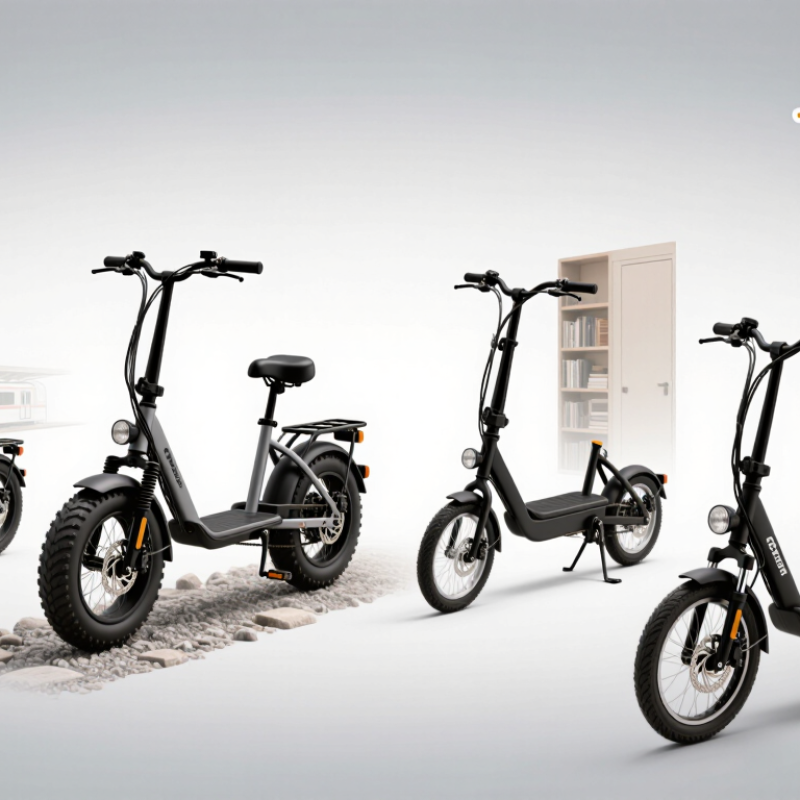
What Are the Top Types of Electric Bike Scooters?

What Defines an Electric Bike Scooter?

An electric bike scooter sits between a pedal bicycle and a standing electric scooter. It uses a rechargeable battery and motor for assisted movement. Many models include pedals, a saddle, wide handlebars, and a scooter-style frame. Others have a flat deck and no useful pedaling system. That overlap makes the category flexible. The name alone can mislead.

In practical use, the defining feature is the riding system. Pedal-assist models respond when the rider turns the cranks. Throttle-controlled models move through a handlebar control. Some combine both systems. A small display may show speed, battery level, and assistance settings. The motor usually sits near a wheel or inside the frame. Battery weight affects steering, braking, and carrying comfort. I have found that low-step frames feel easier during short urban trips. However, heavier batteries can make stairs surprisingly difficult.

Electric bike scooters also appear in folding, commuter, cargo, and off-road forms. Folding versions fit beside a desk but may feel less stable. Cargo versions carry groceries with stronger frames and larger brakes. Off-road designs use wider tires and higher ground clearance. These differences matter more than colorful styling. The boundary remains imperfect, and product labels vary by region. I would check the manufacturer’s specifications and local requirements before riding. A test ride can reveal awkward balance, delayed braking, or uncomfortable controls that photos cannot show.

Pedal-Assist Electric Bike Scooters

Pedal-assist electric bike scooters combine human effort with controlled motor support. The motor responds when you turn the pedals, so the ride still feels active. Assistance levels usually range from gentle help to stronger support for steep streets. A lower setting feels natural and saves battery power. Higher settings make hills easier but can drain the battery quickly.

Real riding reveals small differences. A torque sensor often feels smoother because it measures how hard you pedal. A cadence sensor may start more suddenly, especially in crowded areas. Test both carefully if possible. Watch the battery display before long trips. Cold weather, heavy loads, and frequent hills can reduce the expected range. I have found that advertised distance can feel optimistic, so planning a reserve is wiser.

Tips: Set the seat high enough for a slight knee bend. Begin with low assistance in an empty space. Check tire pressure every week. Keep both hands ready near the brakes. Wear a properly fitted helmet. Inspect the motor cable and charging port for damage. Local rules may limit speed, equipment, or where these scooters can operate, so check official guidance before riding. A short practice ride can reveal handling problems that a showroom test misses.

Throttle-Controlled Electric Bike Scooters

Throttle-controlled electric bike scooters start with a simple hand movement. Twist or press the control, and the motor responds without pedaling. This suits short commutes, steep streets, and riders carrying groceries. I have found the control especially useful at crowded intersections, where steady acceleration matters. However, throttle response can feel abrupt on cheaper systems. Smoothness is not guaranteed.

PeopleForBikes reported more than one million e-bikes sold in the United States during 2022. That figure shows strong demand for compact electric transport, although it does not measure throttle-equipped models separately. The National Association of City Transportation Officials recorded 157 million shared micromobility trips in the United States during 2023. These figures support growing urban interest, but product categories remain confusing. A throttle scooter is not automatically a pedal-assist bicycle. Local classification, speed limits, and equipment rules can differ.

Tips: Test the throttle in an empty parking area. Start with the lowest assistance setting. Check whether braking cuts motor power immediately. Keep both hands on the handlebars near pedestrians. Examine tire width, brake quality, battery certification, and maximum rider load. A range claim may shrink in cold weather, hills, or heavy traffic. That detail is easy to miss. Personally, I would value predictable braking over extra speed, though some riders may disagree.

Folding and Portable Electric Bike Scooters

Folding electric bike scooters suit commuters who face stairs, crowded trains, or limited storage. Their value is practical, not decorative. A compact frame can fit beneath a desk or inside a vehicle. The U.S. Federal Highway Administration reports that 45% of daily trips are three miles or less, based on the 2017 National Household Travel Survey. That distance matches many short urban journeys.

Wheel size changes the riding experience. Smaller wheels fold easily and feel responsive on smooth pavement. Larger wheels usually roll more steadily over cracks, but they increase folded size. A useful portable model should include a secure folding latch, a manageable carrying weight, and visible battery information. Real handling matters. Lift it with one hand before buying.

Battery capacity also deserves careful attention. The 2024 Global Electric Scooter Market report from IMARC Group identifies battery development as a major market trend. However, advertised range can fall with cold weather, hills, heavy loads, and frequent starts. I would not trust a single laboratory figure. Test results need context.

Portable design has compromises. Folding joints may add weight or require regular inspection. Tiny wheels can feel unstable on broken pavement. Storage under a seat may sound convenient, yet the folded height can still cause problems. Riders should check braking performance, lighting, charging protection, and recognized electrical safety testing. These details are less exciting, but they affect daily reliability.

Off-Road and Performance Electric Bike Scooters

Off-road and performance electric bike scooters are built for rough ground, steep climbs, and quick changes in pace. They usually pair wider, knobby tires with stronger frames, responsive brakes, and suspension that absorbs rocks and ruts. On a gravel trail, those features matter more than a flashy top-speed claim. Riders should check payload limits, braking feel, and real-world range before choosing a model. Mud changes everything.

The International Energy Agency’s Global EV Outlook 2024 reports that electric two- and three-wheeler sales reached about 10 million in 2023, with sales concentrated in China. That figure shows the scale of electrified small vehicles, but it does not isolate off-road scooters. Buyers should treat broad market numbers as context, not proof of trail performance. A steep route drains batteries faster, and cold weather can reduce usable range. I would plan a reserve rather than trust the maximum range printed in a listing. That estimate can be optimistic. Check tire pressure, inspect suspension seals, and test the brakes on a short, familiar route before riding farther.

What Are the Top Types of Electric Bike Scooters? — Off-Road and Performance Electric Bike Scooters

Type Typical Design Common Motor Setup Typical Range per Charge Best For Key Trade-Off
Off-Road Fat-Tire E-Bike Wide, knobby tires, a sturdy frame, and often a front suspension fork Usually one hub or mid-drive motor; output varies by model and local regulations Approximately 25–60 miles (40–97 km), depending on battery, terrain, assist level, and rider load Gravel paths, packed dirt, sand, and uneven trails Wide tires and reinforced components can add weight and rolling resistance
Full-Suspension Trail E-Bike Front and rear suspension, mountain-bike geometry, and trail-oriented tires Commonly a centrally mounted mid-drive motor Approximately 20–60 miles (32–97 km); steep climbs and high assist use can shorten the ride Technical trails, repeated climbs, and rough descents Typically costs more and requires suspension maintenance
Dual-Motor Performance E-Bike Often fitted with two hub motors, reinforced components, and a high-capacity battery One motor in each wheel; advertised peak output can be substantially higher than continuous output Approximately 20–50 miles (32–80 km), with wide variation by power use and terrain Riders seeking strong acceleration or extra traction on private land and suitable routes High power can increase energy use; legal limits and access rules vary by location
Long-Range Touring E-Bike Comfort-oriented frame, efficient tires, and space for racks or luggage Usually one efficient mid-drive or hub motor, sometimes paired with a large or auxiliary battery Approximately 40–100 miles (64–161 km) under favorable conditions Long commutes and multi-day trips on paved roads or maintained paths Extra battery capacity and luggage increase purchase cost and total weight
Folding E-Bike Hinged frame and compact wheels designed for storage or mixed-mode travel Most commonly a rear hub motor Approximately 15–45 miles (24–72 km), depending on battery size and riding conditions Short urban trips, small storage spaces, and public-transport connections Smaller wheels may feel less stable on rough surfaces than full-size wheels
Moped-Style E-Bike Step-through or compact frame, broad seat, and often a throttle-equipped design Typically one hub motor; exact operating modes and limits vary by model and jurisdiction Approximately 20–60 miles (32–97 km), depending on battery capacity and use Relaxed neighborhood rides and short-to-medium urban trips Can be heavy and bulky; classification, helmet, and road-use requirements vary by location
Range figures are broad illustrative estimates, not guarantees. Actual range depends on battery capacity, rider and cargo weight, speed, temperature, terrain, tire pressure, and assist or throttle use.