What Are the Top Types of CNC Laser Cutting Machines?
Choosing the right Cnc Laser Cutting Machine begins with understanding how each laser source performs in real production conditions. A fiber laser suits many metalworking applications, especially stainless steel, mild steel, aluminum, and brass. It delivers fast cutting speeds and supports clean, narrow kerfs. CO2 laser machines remain useful for nonmetal materials, including acrylic, wood, textiles, and certain plastics. Their longer wavelengths interact differently with reflective metals. Nd:YAG and other solid-state systems can serve specialized cutting and marking tasks, although their maintenance demands may influence operating costs.
The machine type is only part of the decision. Power rating, bed size, autofocus control, assist gas, software compatibility, and extraction equipment all affect results. A 3-kilowatt fiber system may cut a thin steel sheet rapidly, while thicker plate requires slower movement and carefully adjusted oxygen or nitrogen. Small workshops often value flexible loading and simple controls more than maximum speed. Large manufacturers may prioritize automation, nesting software, and repeatable tolerances.
Real experience matters here. Material samples should be tested before purchase. Marketing figures can describe ideal conditions, not everyday production. There is no universal winner. Even an efficient machine can disappoint when operators lack training or maintenance schedules are ignored. This guide compares the top types of CNC laser cutting machines, explains their strengths and limitations, and connects technical specifications with practical workshop needs. The goal is a reliable choice, not an impressive brochure.
What Is a CNC Laser Cutting Machine?
What Is a CNC Laser Cutting Machine?
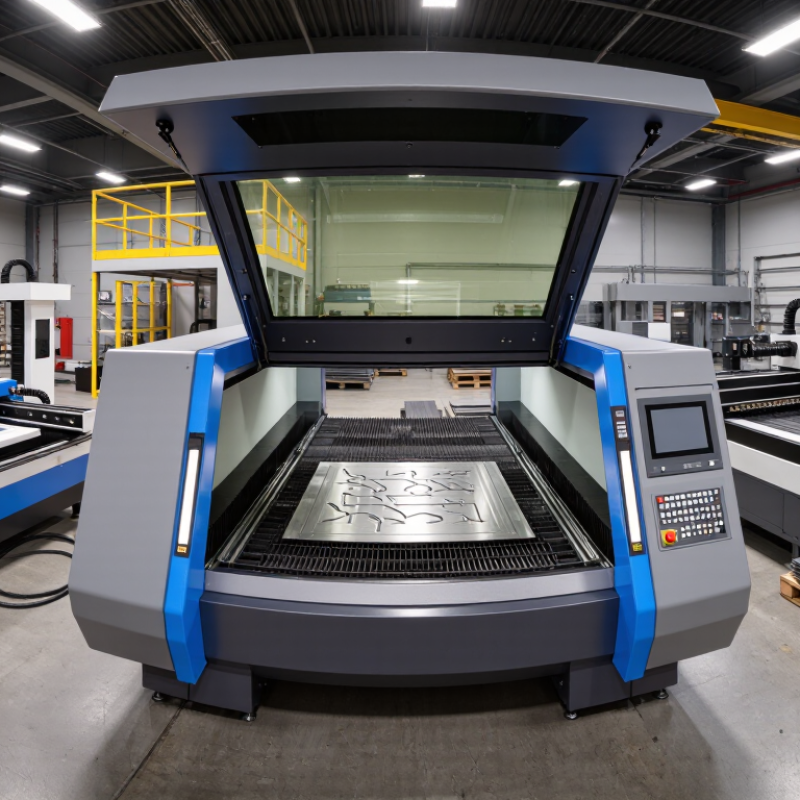
A CNC laser cutting machine uses computer-controlled motion to guide a focused beam across sheet material. The beam heats a small area until the material melts, burns, or vaporizes, while assist gas clears debris from the cut. CNC means the machine follows programmed coordinates, so it can repeat a shape with consistent positioning. The result depends on more than the laser: material type, thickness, focus, speed, and power all matter. A narrow kerf can produce fine details, but it does not guarantee a clean edge. Settings need testing.
On a typical job, an operator prepares a digital drawing, checks the material, and sets cutting parameters. The machine then moves the cutting head along the programmed path. Sensors and routine inspections help detect issues such as nozzle wear or an incorrectly focused beam. Even so, a perfect-looking file can produce rough edges if the sheet is warped or the settings are poorly matched. That part is easy to underestimate.
Tips: Keep the lens and nozzle clean, secure the sheet flat, and run a small test cut before production. Check the finished edge under good light. If it shows heavy discoloration or burrs, review the focus, gas flow, and speed rather than assuming the machine is at fault.
What Are the Top Types of CNC Laser Cutting Machines?
How to read this chart: It compares representative laser wavelengths, measured in micrometers (μm). CO₂ lasers commonly operate at 10.6 μm; fiber and Nd:YAG lasers operate near 1.06 μm; diode laser wavelengths vary, so 0.9 μm is shown as an approximate example. Wavelength is one factor in material suitability—power, machine design, and material thickness also matter.
How Do CO₂ Laser Cutting Machines Work?
A CO₂ laser cutting machine creates light inside a sealed tube containing a gas mixture, usually including carbon dioxide, nitrogen, and helium. An electrical discharge energizes the gas molecules. Their energy produces infrared light, which reflects between mirrors inside the resonator and builds into a concentrated beam. The beam then travels through guided optics to a focusing lens.
At the cutting head, the lens concentrates the beam onto a small spot. The intense heat melts or vaporizes material along the programmed path. Assist gas, delivered through a nozzle, clears molten debris and can affect the cut edge. CO₂ systems commonly process nonmetal materials such as wood, acrylic, and fabric; some configurations can cut thin metals. Results depend on material, thickness, focus, power, and speed. Small setup errors matter.
Tips: Keep the lens and mirrors clean, and check focus before a job. Use a test cut on a scrap piece, especially when changing material thickness. Watch the kerf: a wider-than-expected line may indicate poor focus or unsuitable settings. It is easy to blame the machine too quickly; sometimes the material itself varies.
What Makes Fiber Laser Cutters Different?
Fiber laser cutters create light in an optical fiber doped with rare-earth elements, then deliver it to the cutting head through a flexible fiber-optic cable. This differs from CO2 machines, which guide light through mirrors and often require a longer, carefully aligned beam path. In practical terms, the fiber system can fit into a compact machine cell, with fewer optical components to keep clean and aligned. Less fuss, though not zero maintenance.
The wavelength also matters. Fiber lasers typically couple energy efficiently into metals such as mild steel, stainless steel, and aluminum, making them well suited to sheet-metal work. A narrow kerf can leave a clean edge, but speed and finish still depend on material thickness, assist gas, and setup. I’ve seen impressive cuts spoiled by a poor nozzle gap; the machine alone cannot fix that.
Market data reflects the technology’s growing role, but should not be mistaken for a performance guarantee. Grand View Research estimated the global laser cutting machine market at about US$5.4 billion in 2023. Its market report tracks rising adoption, while actual productivity depends on the application. Buyers should compare usable cutting speed, energy use, consumables, and service needs on their own material samples—not just headline wattage.
When Are Crystal Laser Cutting Machines Used?
Crystal laser cutting machines use a solid crystal medium to produce a focused beam. They are often selected for fine work on metals, especially where small features and narrow kerfs matter. In a workshop, this may mean cutting thin stainless-steel parts, intricate brackets, or components with tight detail. Some crystal systems can also process certain non-metal materials, but results depend on the material and machine setup.
They are useful when precision and controlled energy delivery matter more than very high cutting speed. Pulsed operation can help limit heat input on delicate parts, reducing distortion in suitable applications. Still, crystal lasers are not the best choice for every job. Thick sheets may call for another laser type, and reflective metals require careful process settings. I’d test a sample first; material charts do not tell the whole story.
Tips: Check the machine’s wavelength, power, and pulse options against your material. Use a small test piece to inspect edge quality, discoloration, and burrs. Keep extraction and protective enclosures in good condition. Small setup changes matter. A slightly slower pass may produce a cleaner edge, though that depends on the part and production needs.
What Are the Top Types of CNC Laser Cutting Machines? - When Are Crystal Laser Cutting Machines Used?
| Machine type | Typical laser source | Common materials | Typical strengths | Common considerations |
| CO₂ laser | Gas laser, typically emitting infrared light near 10.6 μm | Wood, acrylic, paper, textiles, and some plastics; suitable configurations can also cut thin non-ferrous metals | Versatile for many non-metal sheet materials and can produce clean edges on acrylic | Many metals reflect or poorly absorb its wavelength; optics and gas components require maintenance |
| Fiber laser | Solid-state fiber laser, commonly near 1.06–1.08 μm | Carbon steel, stainless steel, aluminum, copper, and other metals, subject to machine power and process setup | High efficiency and fast processing of many metal sheets; typically requires less routine source maintenance than a CO₂ system | Not generally the first choice for cutting thick wood or clear acrylic; reflective metals require suitable equipment and settings |
| Crystal laser | Solid-state crystal laser, commonly Nd:YAG or Nd:YVO₄, often near 1.06 μm | Metals and selected non-metal materials, depending on wavelength, pulse characteristics, and machine configuration | Can provide focused, precise processing; pulsed systems are useful for fine features and thin-material work | Crystal and lamp-pumped systems may need more maintenance and have shorter component life than many fiber systems; suitability depends strongly on the application |
| Direct-diode laser | Semiconductor diode laser; wavelength varies by system | Selected metals and non-metals, depending on wavelength, power, and process design | Compact design and potentially high electrical efficiency in applications matched to its output | Cutting capability and edge quality vary significantly by wavelength and system; compare verified material and thickness specifications |
When Are Crystal Laser Cutting Machines Used?
Crystal laser machines are considered when the required wavelength and operating mode suit the material and job. They can be appropriate for precise cutting or micro-processing of thin materials, small components, and selected metals. Their suitability depends on factors such as laser power, continuous-wave or pulsed operation, material thickness, required edge quality, and production volume.
For high-volume metal-sheet production, fiber lasers are often evaluated; for wood, acrylic, and many other non-metals, CO₂ lasers are commonly used. Confirm the machine’s tested material and thickness range before selecting a system.
How Should You Choose the Right CNC Laser Cutter?
What Are the Top Types of CNC Laser Cutting Machines?
How Should You Choose the Right CNC Laser Cutter?
Start with the material and its thickness, not the machine’s headline power. Fiber lasers suit many metals, while CO₂ systems can handle some nonmetals. Check the actual cut-quality chart for your material, including edge finish and permitted thickness. A thick plate may cut, but slowly, with more finishing required. That detail matters.
Next, compare the machine’s working area, cutting speed, and expected daily hours with your real production mix. MarketsandMarkets estimated the global laser cutting machine market at about US$5.8 billion in 2023, with projected growth through 2028. This signals wider adoption, not a guarantee that a particular machine will pay for itself. Ask suppliers for sample cuts using your own material, then inspect burrs, heat marks, and dimensional accuracy. Bring a ruler. Check the corners.
Also budget for extraction, assist gas, maintenance, operator training, and downtime—not just the purchase price. Review the manufacturer’s stated power consumption and service requirements, and confirm that replacement parts are available locally. A faster cutter can still be the wrong choice if your jobs are mostly small batches or frequent material changes. I would compare total cost per finished part, though predicting that figure precisely is difficult. Leave room for error.

 24 Hour Service