
Blog

Top 10 Slitting and Rewinding Machine Manufacturers Worldwide

A slitting and rewinding machine can shape production quality long before a finished roll reaches the customer. Clean cuts, steady tension, and accurate rewinding help reduce waste and keep downstream processes moving. Yet machine performance depends on more than a brochure’s speed figure. Film, paper, foil, and laminate behave differently under pressure, and a line that handles one material well may need careful adjustment for another.

This guide introduces ten manufacturers serving markets around the world. It considers practical factors such as machine range, automation options, changeover time, safety features, technical support, and experience with different web materials. These details matter on the factory floor: an operator may need to change slit widths between jobs, manage a delicate film, or replace a blade during a tight production schedule. Small design choices can make those tasks easier—or more frustrating.

No ranking can suit every plant. A compact converter and a high-volume packaging facility may need very different equipment. Buyers should verify specifications, request material-specific trials, and ask how service is delivered in their region. A strong reputation is useful, but it does not replace a clear evaluation of the application. Some comparisons are imperfect, too; published data is not always presented in the same way. That is worth remembering. The manufacturers profiled here offer a starting point for informed research, not a substitute for checking real production needs.
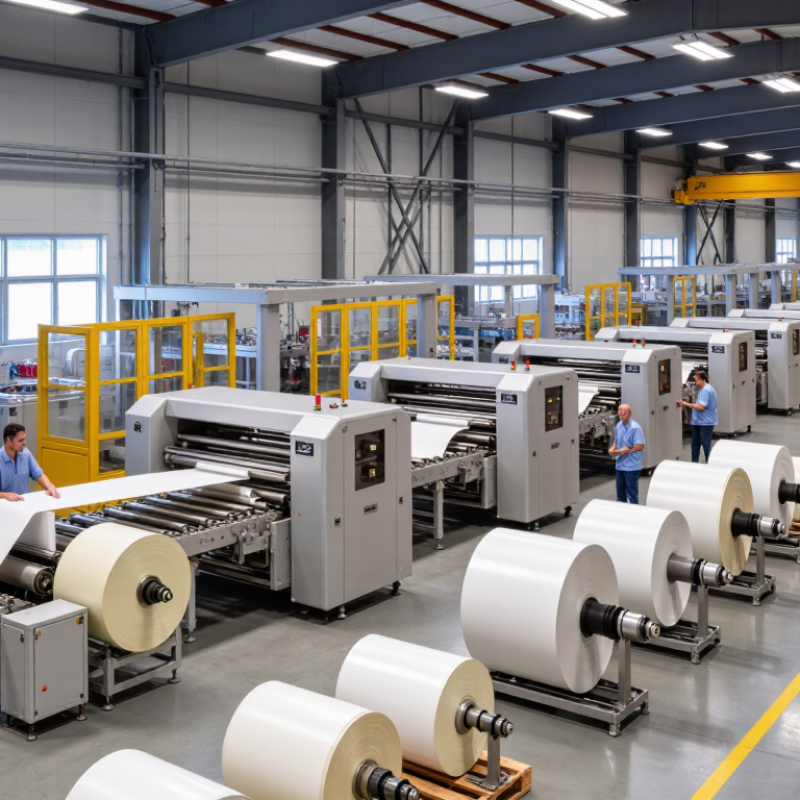
Top 10 Slitting and Rewinding Machine Manufacturers Worldwide

Slitting and Rewinding Machines: Operating Principles and Core Components

Slitting and rewinding machines turn wide rolls of film, paper, foil, or nonwoven material into narrower rolls. The web unwinds from a core and travels through rollers that guide and stabilize it. Tension must stay controlled: too little can cause wrinkles, while too much may stretch or tear delicate stock. Small changes matter.

Slitting happens along the web’s width. Rotary shear knives cut with overlapping circular blades, while razor systems suit some thinner materials. The choice depends on material, thickness, edge quality, and production conditions. The slit lanes then pass to rewind shafts, where cores collect the finished rolls. Sensors can monitor web position and tension, and operators adjust settings when readings drift.

The core components include the unwind stand, guiding rollers, slitting assembly, tension controls, and rewind section. Each affects the others. A blade may be sharp, yet poor alignment can leave rough edges or uneven lanes. In practice, the web rarely behaves as neatly as a diagram suggests. Dust, roll hardness, and changing material thickness can complicate setup. There is no single tension setting that works for every job; trial runs and careful inspection remain important.

Slitting and Rewinding Machine: Operating Sequence

The chart shows a typical web path from unwinding to rewinding. Edge guiding and tension control help keep the material aligned and stable as it passes the slitting knives; trim handling and rewind controls support clean, consistent rolls. Bar length indicates sequence position only, not machine performance.

Key Performance Data: 300–1,000 m/min Speeds, Web Width, and Slit Tolerance

A slitting and rewinding machine’s speed rating can range from 300 to 1,000 m/min, but the top number rarely tells the whole story. Thin film, paper, and foil behave differently under tension. At high speed, even a small unwind fluctuation can cause wrinkles or drifting edges. Compare rated speed with stable production speed for your actual material and roll diameter. Fast is useful only when the finished roll stays consistent.

Web width determines how the machine fits your production plan. Check the maximum width, usable width, and minimum slit width—not just the headline specification. Slit tolerance also needs context: ask how it is measured, on which material, and at what running speed. There is no single tolerance that suits every job. A specification without test conditions is hard to judge. That detail is easy to overlook.

Tips: Request a trial using your own substrate and target speed. Inspect edge quality, roll hardness, and width variation across several finished rolls. Keep the knife setup and measurement method consistent. Small differences can matter. Record results before comparing machines; memory is not a reliable gauge. Even a clean trial may not predict every production shift, so leave room for follow-up testing.

Machine Types and Uses for Film, Paper, Foil, and Nonwovens

Slitting and rewinding machines convert wide parent rolls into narrower rolls for packaging, printing, laminating, and other converting work. Center-driven rewinders control torque through the core, making them useful for delicate films and foil. Surface-driven systems apply force at the roll surface and often suit paper or thicker webs. Turret winders can reduce changeover delays when production runs require frequent roll changes. A clean cut matters.

Blade choice depends on material thickness, coatings, and required edge quality. Thin film can stretch under excess tension; foil may wrinkle or pick up marks. Paper needs stable winding to limit telescoping, while nonwovens can compress or distort if nip pressure is too high. Operators often adjust tension by feel and measurement, but the right setting may take trial runs. There is no universal recipe.

Tips: Match the machine’s tension range and cutting method to the material, not just the target speed. Check finished rolls for loose edges, wrinkles, and uneven hardness. Record settings for each job, then verify them when material or humidity changes. Small differences matter. A test roll can reveal problems before a full run.

Top 10 Global Manufacturers: Product Portfolios and Market Strengths

Global slitting and rewinding manufacturers serve converters working with paper, film, foil, labels, and flexible packaging. Their portfolios often range from compact inspection rewinders to high-speed, wide-web slitter rewinders. Common options include automatic knife positioning, differential shafts, edge guiding, and tension control. These details matter on the factory floor: a small tension variation can wrinkle thin film, while a poorly managed trim edge can interrupt a long production run.

Across the top ten, market strengths differ. Some suppliers focus on narrow-web label converting and quick changeovers; others build heavy-duty lines for wide rolls and higher output. A few offer custom layouts, automation upgrades, and integration with upstream coating or printing equipment. Regional service coverage also matters. Fast access to technicians and spare parts may be more useful than an impressive maximum speed on a specification sheet. Precision matters.

Buyers should compare usable web width, material range, finished-roll diameter, and demonstrated operating speed—not just headline capacity. Ask how the machine handles a specific substrate and whether operators can repeat settings between jobs. Not every line. Product descriptions rarely reveal the full cost of setup time, maintenance, or training. A global ranking is never perfectly clean, either; performance depends on application, installation, and support. One overlooked detail can change the decision.

How Buyers Compare Capacity, Tension Control, Safety, and Total Cost

Top 10 Slitting and Rewinding Machine Manufacturers Worldwide
How Buyers Compare Capacity, Tension Control, Safety, and Total Cost

A manufacturer’s rated speed can look impressive, but it rarely tells the whole story. Compare usable output with your actual material, roll width, and changeover frequency. Ask for a trial using a representative substrate. Watch for wrinkles, edge variation, and downtime during roll changes. Numbers need context. Tension control matters just as much. Check how the machine handles acceleration, narrow webs, and changing roll diameters. A stable web should unwind and rewind without loose edges or crushed cores.

Safety features deserve a close inspection, not a quick checklist. Look at guarding around shafts and knives, accessible emergency stops, and safe threading procedures. Ask operators how routine cleaning and blade changes are performed. Small details can shape daily risk. Total cost includes more than the purchase price. Consider installation, training, spare parts, energy use, and expected maintenance. Request clear service terms and realistic delivery estimates. Compare the same scope across suppliers; otherwise, a low quote may leave essential equipment or support out.

Tips: Bring sample material and a written production target to supplier discussions. Ask for measured results, not only catalogue figures. Check whether the proposed configuration fits your floor space and operator workflow. One point is easy to miss: forecasts change, and extra capacity is not always worth its cost.

Top 10 Slitting and Rewinding Machine Manufacturers Worldwide - How Buyers Compare Capacity, Tension Control, Safety, and Total Cost
Buyer comparison guide: The entries below describe ten common supplier and machine specializations, not a verified manufacturer ranking or named-company specifications. Capacity ranges are indicative market ranges; actual performance depends on material, roll dimensions, configuration, and operating conditions. Confirm specifications and applicable safety requirements with each supplier.
Supplier / machine specialization Typical materials Indicative web width Indicative line speed Tension-control considerations Safety items to verify Main total-cost drivers
1. Flexible-packaging film specialists Printed and unprinted plastic films, laminates About 1,000–2,000 mm About 300–800 m/min Closed-loop control is valuable for thin, extensible films and changing roll diameters. Verify guarded nip points, interlocked access, emergency stops, and safe threading procedures. Automation level, changeover time, trim handling, energy use, and service availability.
2. Paper and board converting specialists Paper, carton stock, lightweight board About 1,000–3,500 mm About 300–1,200 m/min Stable unwind and rewind control helps limit wrinkles, telescoping, and roll hardness variation. Check roll-handling provisions, guarding around shafts, and safe access for heavy parent rolls. Machine width, roll-handling equipment, blade changes, waste removal, and maintenance downtime.
3. Aluminum foil and metal-foil specialists Thin aluminum foil and other non-ferrous foil About 500–2,000 mm About 100–600 m/min Low, accurately controlled tension and suitable roll geometry help prevent stretching and edge damage. Assess sharp-edge exposure, guarding, safe coil loading, and procedures for handling finished rolls. Precision requirements, roll surface protection, scrap recovery, tooling, and operator training.
4. Labelstock and narrow-web specialists Pressure-sensitive labelstock, paper, film, laminates About 300–1,600 mm About 100–500 m/min Consistent low tension is important for thin facestock, liners, and narrow finished rolls. Verify safe access to knives, guarding of moving rollers, and emergency-stop coverage along the line. Job-change frequency, inspection options, slitting accuracy, tooling, and setup labor.
5. Tissue and hygiene-paper specialists Tissue, towel, and other lightweight paper grades About 1,000–3,500 mm About 500–1,500 m/min Gentle web handling and controlled winding help maintain roll formation without crushing delicate stock. Review guarding, dust management, safe roll discharge, and access for cleaning and maintenance. Throughput, uptime, dust control, roll handling, consumables, and maintenance access.
6. Nonwoven-material specialists Spunbond, nonwoven fabric, wipes, technical webs About 1,000–3,500 mm About 200–800 m/min Recipe-based control can help manage variable stretch, thickness, and roll-build requirements. Check guarding, safe threading, dust or fiber management, and access to unwind and rewind stations. Material flexibility, changeover time, edge trim handling, line integration, and spare-part lead times.
7. Rubber, adhesive, and technical-web specialists Adhesive-coated webs, rubber sheet, technical laminates About 500–2,000 mm About 50–300 m/min Control must suit tacky, compressible, or high-friction materials; test with production-grade samples. Verify pinch-point protection, safe cleaning and threading access, and material-specific risk controls. Cleaning, roll-surface protection, custom tooling, process trials, and specialist maintenance.
8. Heavy-duty and wide-web converters Wide paper, film, and industrial web materials About 2,000–5,000 mm About 200–1,000 m/min Load-cell or other feedback-based systems may be used; verify performance at the intended width and roll load. Assess foundations, roll-lifting systems, perimeter guarding, and safe access for large rolls. Civil works, installation, lifting equipment, power demand, and the cost of production interruptions.
9. Compact and modular machine specialists Small-batch films, paper, laminates, and coated webs About 300–1,600 mm About 50–500 m/min Look for adjustable recipes and accessible controls suited to frequent changes in material and roll size. Confirm safeguarding and risk assessment for the exact machine layout and intended operating mode. Purchase price, upgrade options, operator time, tooling, and the ability to meet future capacity needs.
10. High-automation production-line specialists Films, paper, foil, and mixed-material converting lines About 1,000–4,000 mm About 300–1,500 m/min Automated recipes and closed-loop zones can reduce manual adjustment; validate results across the full material range. Review safety functions, interlocks, access modes, emergency stops, and documentation for the complete line. Controls integration, commissioning, software support, training, energy use, and long-term service contracts.
How to compare total cost: Compare the delivered and installed price together with tooling, operator hours, changeover losses, scrap, energy, maintenance, spare parts, training, and expected downtime. Request a production trial using your own material and agreed acceptance criteria. Safety compliance depends on the machine design, installation, jurisdiction, and intended use; verify the applicable standards and documentation for the specific offer.