Top Rotary Screw Air Compressor Manufacturers Worldwide?
A rotary screw air compressor rarely attracts attention until production slows, pressure drops, or energy bills climb. Yet compressed air supports essential work across factories, workshops, food processing, and other industries. Choosing a manufacturer is therefore more than comparing catalog prices. Buyers need to assess efficiency, service access, controls, and equipment fit.
The U.S. Department of Energy’s Improving Compressed Air System Performance: A Sourcebook for Industry reports that compressed air can represent a significant share of industrial electricity use. The exact burden varies by facility, system design, and operating conditions. That matters. A small efficiency difference can become costly when a compressor runs for long shifts. Manufacturer claims deserve careful review against measured power, airflow, and pressure requirements.
This overview examines leading rotary screw air compressor manufacturers worldwide and the factors that distinguish their offerings. It considers product ranges, oil-injected and oil-free options, variable-speed models, global support networks, and application needs. No brand is best for every plant. A compact machine may suit a repair shop, while a large facility may need staged capacity and dependable local service. Published specifications help, but they do not tell the whole story. Installation quality, maintenance habits, and real operating data matter too. Some comparisons remain imperfect because manufacturers report performance under different test conditions. Readers should treat rankings as a starting point, then verify claims with technical documentation and qualified system assessments.
Rotary Screw Compressor Types: Oil-Injected and Oil-Free Designs
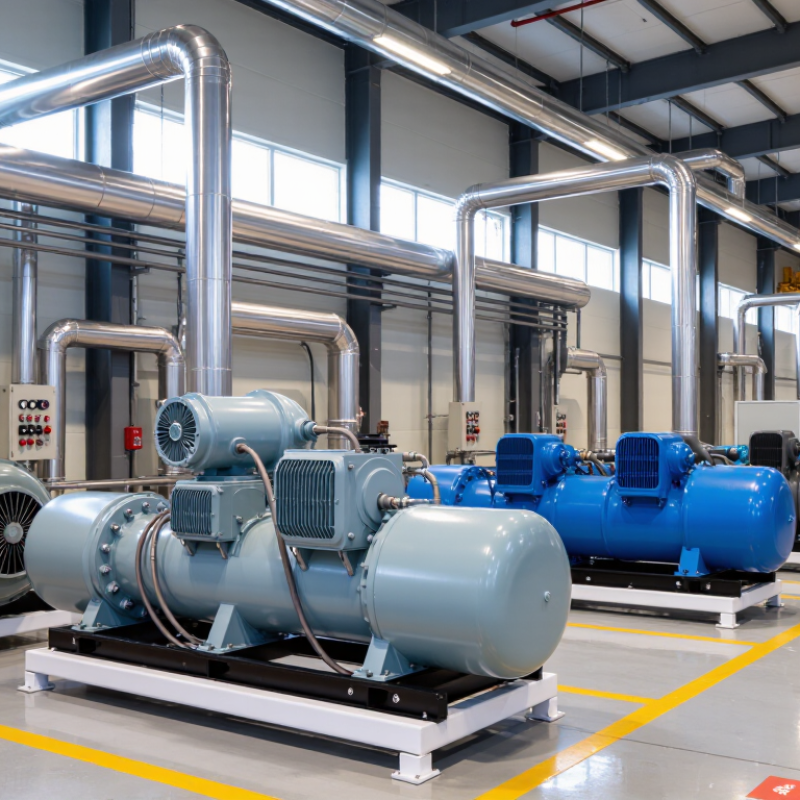
Rotary screw compressors are commonly built in oil-injected and oil-free designs. Both use rotating screws to compress air, but they manage heat and lubrication differently. In an oil-injected unit, oil enters the compression chamber to lubricate moving parts, seal clearances, and carry away heat. A separator then removes most of the oil before air reaches the outlet. Small traces may remain, so downstream filtration can matter.
Oil-free designs keep lubricating oil out of the compression chamber. Depending on the design, timing gears or other components synchronize the rotors, while separate cooling systems control operating temperatures. These machines can suit processes with strict air-purity requirements, such as certain food, pharmaceutical, or electronics applications. “Oil-free” describes the compression process, not necessarily every part of the air system; intake air, piping, and maintenance still affect air quality.
The practical choice depends on the required air specification, duty cycle, energy use, and maintenance conditions. Oil-injected compressors are often selected for general industrial work, where appropriate treatment can meet the application’s air-quality needs. Oil-free equipment may reduce the risk of oil carryover, but it can involve different purchase and service costs. Check the stated air-quality class and test conditions, not just the product label. The decision is rarely obvious. Even a clean-looking line can hide moisture or particles, and that detail is easy to overlook.
Global Manufacturers: Atlas Copco, Ingersoll Rand, Kaeser, Sullair, and ELGi
Rotary screw compressor buyers often compare established manufacturers across Europe, North America, and India. Their product ranges may include fixed-speed and variable-speed models, oil-injected and oil-free designs, and different service networks. The right choice depends less on reputation alone than on airflow demand, operating hours, pressure stability, and local maintenance support. Small details matter. The U.S. Department of Energy’s Improving Compressed Air System Performance guide estimates that compressed-air systems use about 10% of industrial electricity, with the share varying by facility. That makes part-load efficiency and leak control worth checking alongside purchase price.
Compare models using measured performance, not headline motor power. Request flow and specific-power data at your actual operating pressure, and check whether test conditions follow ISO 1217. The Compressed Air and Gas Institute’s performance verification resources can help buyers interpret published performance data. Also compare controls, sound levels, parts availability, and service response times.
A limitation remains: laboratory figures cannot fully predict performance in a plant with fluctuating demand or poor piping.
Tips: Record pressure and flow during a normal production shift before requesting quotes. Ask for lifecycle-cost estimates that include energy, maintenance, and downtime. A variable-speed unit may suit changing demand, but it is not automatically the most efficient option; confirm the load profile first. Recheck filters and leaks after installation, because even a well-selected compressor can disappoint when system conditions are overlooked.
Performance Comparisons: ISO 1217 Testing and 7–13 bar Operating Pressures
ISO 1217 Testing at 7–13 bar: Comparing Rotary Screw Compressors
A fair compressor comparison starts with matching pressure, capacity, and test conditions. ISO 1217 specifies acceptance tests for displacement compressors, including airflow and power measurements. Results taken at different pressures should not be compared as if they describe identical service. Small differences in inlet temperature, humidity, and measurement setup matter.
Check the declared flow and package input power at each operating point, not only the headline efficiency. At 7 bar, a unit may deliver more air per kilowatt than at 13 bar, but actual performance depends on its design and controls. CAGI’s compressor performance verification program uses standardized data sheets and independent verification, offering a useful model for side-by-side checks.
Look for specific power at the stated pressure. Then confirm whether the test represents full-load operation or another condition.
The system matters, too. The U.S. Department of Energy’s Improving Compressed Air System Performance guide notes that compressed air can account for about 10% of industrial electricity use. That makes pressure settings and leaks worth measuring, not guessing. A shop running tools near 7 bar may waste energy by maintaining 13 bar across the whole network. Yet a tidy specification table can still mislead; real demand fluctuates, and I would want logged operating data before choosing.
Lifecycle Costs: Why Energy Can Account for About 70% of Compressor Costs
For many rotary screw air compressors, electricity is the largest lifetime expense. In some operating conditions, energy can account for about 70% of total compressor costs. The exact share varies with duty cycle, local power prices, system design, and service life. A machine running near-continuously may consume far more over time than its purchase price suggests.
Look beyond the rated motor size. Record operating hours, pressure, and power draw during a typical production shift. A pressure setting only slightly above process needs can increase energy use, while leaks hiss quietly through overnight shutdowns.
That sound is easy to ignore.
Check filters, separators, and cooling surfaces too; restricted airflow can make the compressor work harder. Variable demand may also leave a fixed-speed unit cycling inefficiently, though the best solution depends on actual load data.
I have seen estimates become misleading when they assume perfect maintenance or constant production. That is a flaw worth admitting. Compare machines using measured consumption and realistic service assumptions, not purchase price alone.
Air Quality and Service: ISO 8573-1 Classes and Worldwide Support Networks
Comparing rotary screw air compressor manufacturers worldwide means looking beyond rated flow and energy use. ISO 8573-1 describes compressed-air purity through separate classes for particles, water, and total oil; it does not certify a compressor by itself. The required class should come from the tools or process, then guide dryer and filter selection. A paint line may need a low pressure dew point, while general workshop air may not. That distinction matters. Measure air quality at the point of use, not only beside the compressor. A clean reading near the treatment equipment can hide moisture or oil farther down a cool, long pipe.
Worldwide service coverage sounds reassuring, but response times and parts availability vary by region. Ask whether local technicians can test dew point, check filter condition, and document oil carryover—not just replace components. Confirm that common service parts are stocked nearby, especially if production cannot pause for international shipping. I would treat coverage maps cautiously; they rarely show travel delays or the skills available at a specific site. Support quality is practical: a technician who understands the application can help maintain the required ISO class without adding unnecessary treatment stages. That can take a little investigation.

 24 Hour Service