
Blog

Top 10 RF Coaxial Connector Types for Global Buyers?

Choosing the right Rf Coaxial Connector can determine whether a wireless system performs reliably or struggles with signal loss. Global buyers often compare familiar names, yet the correct choice depends on frequency, impedance, power, environment, and installation method. A connector used inside a laboratory may fail quickly on a vibrating rooftop. Small details matter.

This guide introduces ten widely used RF coaxial connector types, including SMA, N, BNC, TNC, UHF, and MCX designs. Each type serves different equipment, cable sizes, and operating conditions. The comparison focuses on practical buying factors, such as mating durability, weather resistance, shielding, return loss, and availability across international supply chains. It also considers inspection habits that experienced engineers use before approval: checking plating quality, verifying the datasheet, confirming cable compatibility, and testing assemblies under realistic conditions. A low-cost connector is not always economical. Neither is the most expensive option automatically better.

Specifications can vary between manufacturers. That deserves attention. Buyers should confirm current drawings, test reports, material declarations, and applicable regional requirements before placing large orders. Supplier reputation also matters, especially when connectors support medical equipment, industrial controls, communication networks, or measurement systems. This overview is designed to support informed comparison, not replace engineering validation. Field conditions can expose weaknesses that catalog pages miss. The right Rf Coaxial Connector is the one that matches the application, survives its environment, and remains consistently available.
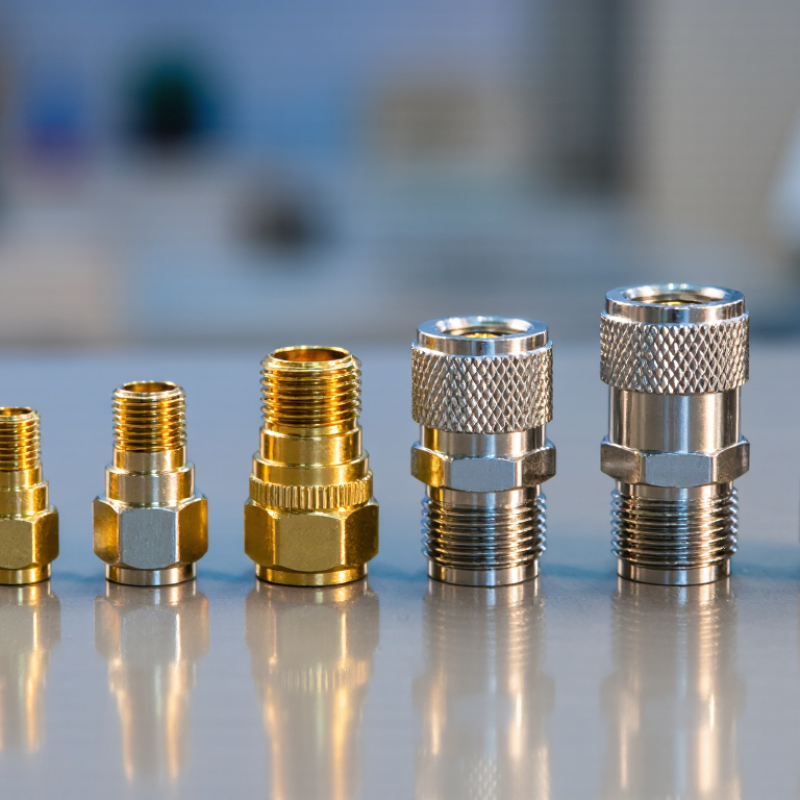
Top 10 RF Coaxial Connector Types for Global Buyers?

RF Coaxial Connector Basics and Global Buyer Selection Criteria

RF Coaxial Connector Basics and Global Buyer Selection Criteria

RF coaxial connectors maintain a controlled path for high-frequency signals. Their design affects impedance, insertion loss, shielding, and durability. Common choices include SMA, SMB, SMC, BNC, TNC, N, F, UHF, MCX, and MMCX types. Each serves different equipment and installation conditions.

Global buyers should match the connector with cable size, operating frequency, interface gender, and expected mating cycles. A 50-ohm system needs compatible components throughout the signal chain. Television applications often use 75-ohm interfaces. Confusing these values can create avoidable signal loss.

Small details matter.

Check the datasheet, not only the product photograph. Confirm plating, contact material, temperature range, vibration resistance, and weather protection. Outdoor assemblies may require sealing structures and strain relief. Indoor laboratory setups may prioritize repeatability and low insertion loss.

Field experience shows that installation quality often decides performance. Excessive torque can damage threads. Loose coupling can increase reflection. Clean contacts matter. Very much.

Buyers should also review sample inspection methods, test reports, packaging, and traceability.

Global shipping adds risks from moisture, impact, and mixed cable standards. Ask for dimensional drawings before placing large orders. A connector may fit mechanically but fail electrically. That mistake is easy to make.

Global shipping adds risks from moisture, impact, and mixed cable standards.

Selection is not always perfect.

Cost, availability, and performance can conflict. A cheaper connector may increase replacement work later. Careful evaluation remains more reliable than choosing by appearance or habit.

The Top 10 RF Coaxial Connector Types by Design and Frequency Range

Top 10 RF Coaxial Connector Types for Global Buyers

The Top 10 RF Coaxial Connector Types by Design and Frequency Range

RF coaxial connectors differ by structure, impedance, size, and operating frequency. Common choices include N, SMA, SMB, SMC, SMC? Need avoid duplicate. Let's list N, SMA, SMB, SMC, TNC, BNC, F, UHF, MCX, and MMCX. N connectors often support outdoor systems up to about 11 GHz. SMA connectors suit compact equipment and commonly reach 18 GHz. TNC adds threaded stability for vibration. BNC uses a bayonet design and often serves systems below 4 GHz. F connectors usually support 75-ohm television and broadband applications. UHF connectors fit lower-frequency equipment, but their performance varies significantly. Smaller MCX and MMCX types save space while supporting many applications up to several GHz.

Design details matter more than a catalog label. Threaded connections resist movement, while snap-on designs speed installation. Board-mounted versions reduce cable length and signal loss. Right-angle bodies help inside crowded enclosures. I have seen poor results caused by mismatched 50-ohm and 75-ohm parts, not defective hardware. Frequency ratings also depend on cable quality, plating, tolerance, and assembly skill. A connector rated for 18 GHz may perform poorly after careless crimping.

Tips: Confirm impedance, mating style, cable size, and maximum frequency before ordering. Check return loss data, not only the headline frequency. For outdoor use, inspect sealing and corrosion resistance. Leave room for torque tools. Small connectors are convenient, but they can be fragile. Recheck the design before mass purchasing.

Key Performance Differences Among RF Connector Families

Top 10 RF Coaxial Connector Types for Global Buyers

RF connector families differ in frequency range, impedance, size, durability, and installation speed. The common ten include SMA, N, BNC, TNC, QMA, SMB, MCX, MMCX, F, and 2.92 mm connectors. SMA supports compact, high-frequency assemblies, while N connectors offer stronger outdoor performance. BNC uses a fast bayonet lock. TNC adds a threaded interface for improved vibration resistance. F connectors suit 75-ohm broadcast and communication systems.

Small snap-on types, such as SMB, MCX, and MMCX, save space but usually tolerate less mechanical stress. QMA connectors simplify maintenance where repeated access matters. Precision 2.92 mm designs can reach higher microwave frequencies than many general-purpose types. However, frequency ratings alone can mislead buyers. Cable quality, plating, return loss, and mating accuracy also shape real performance. I have seen compact connectors fail early when installers ignored cable bend limits.

Tips: Confirm 50-ohm or 75-ohm impedance before ordering. Check the complete operating frequency, not only the connector label. For outdoor use, inspect sealing, torque requirements, and corrosion resistance. Measure return loss after assembly when signal quality matters. A connector may look perfect and still perform poorly. Also, avoid mixing similar interfaces without verified compatibility; small dimensional differences can create large RF losses.

Top 10 RF Coaxial Connector Types for Global Buyers

Key performance differences among RF connector families

The chart compares representative maximum operating frequencies for widely used RF coaxial connector families. Smaller precision connectors generally support higher frequencies, while larger threaded or general-purpose connectors typically provide greater mechanical robustness and easier handling. Actual performance depends on connector construction, cable assembly quality, mating condition, return loss, and environmental requirements.

Values are representative industry-standard upper frequency ratings for common connector variants and are intended for comparative selection, not as universal limits for every product configuration.

Choosing Connectors for Cables, Equipment, and Installation Environments

Top 10 RF Coaxial Connector Types for Global Buyers

Choosing Connectors for Cables, Equipment, and Installation Environments

Start with the cable, not the connector. RG-58 usually suits BNC, TNC, and N-type connections. Smaller semi-rigid cables often need SMA, SMB, SMC, or MCX connectors. F-type connectors fit many 75-ohm cables used in video and distribution systems. UHF connectors remain practical for low-frequency equipment, although they are not constant-impedance designs. For larger outdoor cables, 7/16 DIN connectors provide strong mechanical stability and reliable high-power performance.

Equipment ports also control the choice. SMA supports compact microwave assemblies, while N-type connectors handle outdoor antennas and harsher exposure. TNC adds a threaded coupling, which helps resist vibration. BNC offers quick bayonet locking during testing and maintenance. Check the cable diameter, impedance, operating frequency, and mating interface before ordering. A connector can look correct and still create excessive return loss. That mistake is easy to miss.

Installation conditions deserve equal attention. Outdoor systems need sealed interfaces, suitable gaskets, and corrosion-resistant materials. Indoor test benches may prioritize quick access instead. Avoid sharp cable bends near the connector body. Use the manufacturer’s recommended torque, but recheck it during commissioning. In field inspections, loose fittings often cause more trouble than poor component quality. Selection charts help, but they are not perfect. Confirm the actual equipment port, cable construction, and environmental rating before final purchase.

Top 10 RF Coaxial Connector Types for Global Buyers? - Choosing Connectors for Cables, Equipment, and Installation Environments

A practical comparison of common RF coaxial connector interfaces for cables, equipment, and installation conditions

No. Connector Type Typical Impedance Typical Frequency Range Coupling / Locking Method Common Cable or Equipment Use Installation Environment Typical Ingress Protection Main Selection Advantage
1 SMA 50 Ω DC–18 GHz
(common standard versions)
Threaded screw coupling RF test cables, antennas, wireless modules, instrumentation, and microwave assemblies Indoor equipment, laboratory systems, and protected outdoor assemblies IP rating depends on assembly High-frequency performance and secure mechanical retention
2 BNC 50 Ω or 75 Ω DC–4 GHz
(typical versions)
Bayonet twist-lock Oscilloscopes, test instruments, video systems, control equipment, and general RF cables Indoor benches, control cabinets, and moderate-duty field connections IP rating depends on sealed version Fast connection with broad global availability
3 TNC 50 Ω DC–11 GHz
(typical versions)
Threaded screw coupling Mobile radios, antennas, navigation equipment, and vibration-sensitive RF systems Outdoor, mobile, and high-vibration installations Often available in weather-resistant versions Better vibration resistance than bayonet-style interfaces
4 Type N 50 Ω or 75 Ω DC–11 GHz
(common 50 Ω versions)
Threaded screw coupling Base-station antennas, wireless infrastructure, feeder cables, and outdoor RF equipment Outdoor towers, rooftops, industrial sites, and demanding field installations Sealed versions commonly available Robust construction and good environmental sealing potential
5 7/16 DIN 50 Ω DC–7.5 GHz
(typical versions)
Large threaded screw coupling High-power mobile infrastructure, broadcast systems, and large feeder cables Outdoor towers, high-power transmit sites, and harsh industrial locations Commonly supplied with weatherproof sealing High power handling, low passive intermodulation potential, and ruggedness
6 SMB 50 Ω or 75 Ω DC–4 GHz
(typical versions)
Snap-on push coupling Internal equipment wiring, GPS modules, telecommunications hardware, and compact RF assemblies Protected indoor equipment and space-constrained enclosures Generally requires enclosure protection Compact size and quick installation
7 SMC 50 Ω DC–10 GHz
(typical versions)
Threaded screw coupling Avionics, industrial controls, measurement equipment, and compact RF modules Indoor, mobile, and vibration-prone equipment where a small threaded connector is preferred Usually requires enclosure protection Small footprint with stronger retention than snap-on types
8 MCX 50 Ω or 75 Ω DC–6 GHz
(typical versions)
Snap-on push coupling Navigation devices, vehicle electronics, wireless modules, and miniature coaxial cables Compact indoor equipment and protected automotive or portable systems Typically needs enclosure or cable sealing Small size with practical high-frequency capability
9 MMCX 50 Ω DC–6 GHz
(typical versions)
Snap-on push coupling with rotational freedom Wearable electronics, compact navigation products, embedded wireless devices, and miniature cable assemblies Highly space-constrained indoor or enclosed electronic products Requires product-level environmental protection Very compact interface for embedded RF designs
10 F-Type 75 Ω DC–1 GHz
(common versions; higher-frequency variants exist)
Threaded screw coupling; center conductor commonly formed by the cable Cable television, satellite reception, broadband distribution, and 75 Ω coaxial networks Residential, commercial, and protected outdoor broadband installations Outdoor compression and sealing versions available Low-cost installation for 75 Ω distribution systems
Technical note: Frequency limits, voltage standing wave ratio, power handling, mating cycles, and ingress protection vary by connector design, cable size, plating, termination method, and manufacturer specification. Confirm the applicable international standard and product datasheet before final procurement.

International Standards, Sourcing Factors, and Quality Verification

Top 10 RF coaxial connector types include SMA, SMB, SMC, BNC, TNC, N, F, UHF, MCX, and MMCX. Each serves different frequency, size, and installation needs. SMA suits compact, high-frequency assemblies, while N connectors support outdoor systems with stronger environmental protection. BNC offers quick bayonet coupling, and F connectors remain common in 75-ohm broadcast and communication equipment.

Global sourcing requires more than matching a connector name. Confirm impedance, operating frequency, interface dimensions, plating, cable size, and mating cycles. Check applicable IEC 61169 specifications and request clear mechanical drawings. Regional requirements may also involve material declarations, traceability records, and restricted-substance documentation. Customs descriptions should match the actual product.

In practical inspections, I compare samples with drawings using gauges and calibrated measurement tools. I also verify return loss, insertion loss, insulation resistance, and voltage withstand performance. Sealing tests matter for outdoor N and TNC assemblies. A datasheet can still hide tolerance problems. I have seen acceptable-looking connectors fail after repeated mating. Ask for batch-level inspection reports, not only a general certificate. Photos of packaging, contact surfaces, and lot markings provide useful evidence. Do not overlook cable termination quality; a perfect connector can perform poorly after careless crimping. Some suppliers offer impressive test data, yet the sampling method is unclear. That deserves a second review.