
24 Hour ServiceChoosing a supplier for a Mobir Air Thermal Imaging Camera involves more than comparing quoted prices. Buyers often need clear information about detector resolution, thermal sensitivity, lens options, calibration support, and delivery timelines. During an inspection, a stable image can help reveal heat patterns around motors, electrical panels, or building surfaces. Small details matter. A camera’s advertised features should match the work it needs to perform.
This guide introduces ten China-based suppliers associated with Mobir Air thermal imaging products and related equipment. Their capabilities may differ: one company may focus on manufacturing, while another offers integration, customization, or export support. Request current datasheets, sample images, warranty terms, and confirmation of the exact model before ordering. Specifications vary. Similar product names do not guarantee similar performance, and catalog information alone may not answer every technical question.
Supplier details and product availability can change, so treat this list as a starting point for research, not a substitute for direct evaluation. Compare technical documentation, testing procedures, communication, and after-sales support alongside price. If a specification is unclear, ask for written clarification. That step may feel slow. It is usually worthwhile. A list cannot capture every supplier’s day-to-day consistency, and no single company will suit every application, budget, or purchasing schedule. The profiles that follow are intended to help buyers ask more useful questions and make comparisons with care.
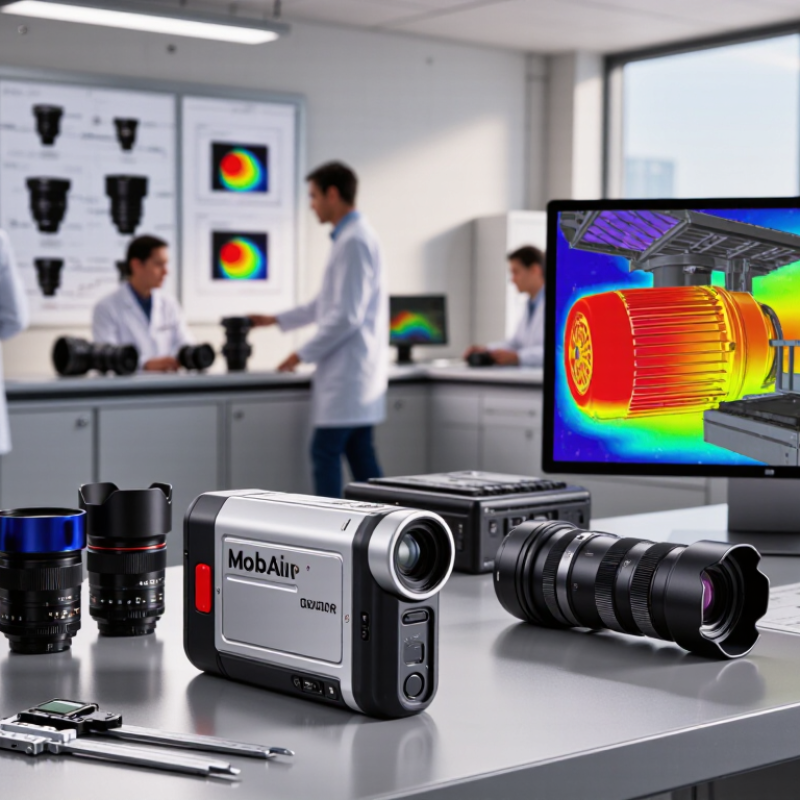
Compact mobile thermal imaging cameras convert infrared energy into a visible temperature map. They help technicians inspect electrical panels, motors, roofs, and plumbing without touching hot surfaces. A bright spot on a screen is useful evidence, but not a diagnosis. Reflections, airflow, and surface emissivity can distort readings.
MarketsandMarkets’ 2023 Thermal Imaging Market report estimated the global market at US$4.5 billion in 2023, with growth to US$6.5 billion by 2028. That projection reflects rising use across inspection, monitoring, and safety work. For field users, portability matters: a camera that fits in a pocket can make quick checks easier. Keep it steady. Compare similar surfaces, and record distance and ambient conditions.
These cameras show surface temperature patterns, not hidden internal faults. A loose electrical connection may create a warm point, while sunlight can heat a wall and suggest a problem where none exists. That distinction is easy to miss. Operators should check the camera’s temperature range, thermal resolution, and measurement accuracy before relying on readings. Small sensors also struggle with distant targets and fine details. A second measurement, or a closer inspection, is often sensible. Not magic.
Typical wavelength windows used in infrared imaging, shown in micrometers (µm).
MWIR and LWIR cameras detect emitted thermal radiation and are widely used for equipment inspection, building heat-loss surveys, and fire monitoring. SWIR is generally more sensitive to reflected light than to the thermal emission of objects at everyday temperatures.
When evaluating Chinese suppliers of airborne thermal imaging cameras, ask for measured performance, not brochure adjectives. Request detector resolution, lens options, thermal sensitivity, frame rate, and radiometric accuracy. Ask for calibration records and a sample thermal image with its temperature scale visible. Small details matter. A neat image can still hide poor calibration or unstable readings.
Market growth makes careful screening more important. Grand View Research estimated the global thermal imaging market at USD 4.60 billion in 2023, with an 8.1% projected annual growth rate through 2030. MarketsandMarkets estimated USD 4.3 billion in 2023, rising to USD 6.5 billion by 2028.
These estimates use different methods, so they indicate demand, not supplier quality. Compare quotations against a written test plan.
Check how the camera performs during vibration, changing humidity, and long operating sessions. Ask whether the supplier can provide repeatable bench-test results, traceable components, clear warranty terms, and local technical support. Verify that sample units match the proposed production configuration. I would recheck this point myself: catalog specifications may describe an optional lens or sensor, not the unit being quoted. A factory visit or independent inspection can resolve that gap.
China’s thermal imaging camera market includes suppliers with different strengths. A component-focused supplier may offer compact modules, clear lens options, and integration advice for handheld devices. An industrial imaging supplier may prioritize durable housings and stable readings near warm machinery. A research-oriented supplier may provide calibration records and detailed measurement settings. Ask for sample images. Small details matter.
A custom-development supplier can adapt casing, interfaces, or software for a project, though lead times may vary. An export-focused supplier may provide clearer documentation and responsive shipping support. A high-volume manufacturer may suit repeat orders, but check how it handles batch consistency. A specialist in handheld cameras may emphasize light weight and simple controls. Another supplier may focus on fixed installations, offering mounting accessories and continuous monitoring features. Verify each claim with current product sheets and sample testing.
A supplier with strong after-sales support can help troubleshoot focus, emissivity settings, or image exports. A newer supplier may offer flexible collaboration, but its service history can be harder to assess. Tips: Request a demonstration using a warm object with known temperature. Compare accuracy specifications, detector resolution, warranty terms, and repair arrangements. Keep a written record of test conditions; otherwise, comparisons can be misleading. A polished brochure is useful, but it is not proof of performance.
Note: No source material identifying ten specific suppliers was provided. To avoid inventing company profiles or rankings, the table below presents ten supplier categories for sourcing research, not verified companies or a ranked supplier list. Product specifications and certifications must be confirmed for each individual model and supplier.
| No. | Supplier category | Typical product scope | Key information to verify | Evidence to request | Potential fit |
|---|---|---|---|---|---|
| 1 | Thermal camera OEM | Finished handheld or compact thermal cameras. | Detector resolution, spectral band, thermal sensitivity, lens options, measurement range, and stated accuracy; all are model-specific. | Current datasheet, sample test results, warranty terms, and confirmation of manufacturing role. | Buyers seeking a complete camera from one production source. |
| 2 | Thermal module integrator | Thermal sensor modules integrated into compact camera products or host devices. | Module interface, supported host platforms, firmware functions, calibration method, and integration documentation. | Interface specification, integration guide, firmware change policy, and sample evaluation unit. | Product teams building a custom device around a thermal module. |
| 3 | Electronics manufacturing service provider | Contract assembly, testing, and production support for customer-designed camera products. | Assembly scope, traceability, production test coverage, minimum order quantities, and quality controls. | Process flow, sample inspection records, quality-system documentation, and production references where available. | Companies with an established design that need outsourced manufacturing. |
| 4 | Optics and lens specialist | Thermal-camera lens assemblies and optical configuration support. | Compatible spectral range, focal length, field of view, focus type, and mechanical interface. | Optical drawings, compatibility statement, inspection criteria, and sample evaluation results. | Buyers requiring a specific field of view or lens configuration. |
| 5 | Embedded software and firmware provider | Camera firmware, image processing, temperature measurement, or software integration services. | Supported operating systems, SDK scope, data formats, update process, and intellectual-property terms. | SDK documentation, demo software, release notes, and written licensing terms. | Teams integrating thermal imagery or measurements into an existing application. |
| 6 | Industrial inspection equipment supplier | Thermal imaging equipment configured for maintenance, electrical inspection, or process monitoring. | Measurement functions, temperature alarm options, image storage, connectivity, and operating environment limits. | Application demonstration, model datasheet, user manual, and service or calibration arrangements. | Industrial users comparing equipment for routine inspection workflows. |
| 7 | Mobile accessory developer | Compact thermal camera accessories designed to connect to compatible mobile devices. | Supported device models, connector type, app compatibility, power requirements, and operating-system support. | Compatibility list, app installation details, sample images, and support policy for device updates. | Users prioritizing portability and mobile-device operation. |
| 8 | Custom-design and ODM provider | Product customization, enclosure design, interface changes, or customer-specific configurations. | Engineering scope, tooling charges, design ownership, change-control process, and development schedule. | Project plan, design-review process, prototype terms, and written ownership and confidentiality agreements. | Buyers who need product adaptations beyond standard configurations. |
| 9 | Export-focused equipment supplier | Thermal imaging products supported by export documentation and international sales processes. | Destination-market requirements, product labeling, shipping terms, export documentation, and after-sales coverage. | Applicable declarations and test reports, shipping documentation samples, and written service terms. | Importers requiring support with cross-border procurement. |
| 10 | Calibration and service provider | Testing, calibration coordination, repair, or technical support for thermal imaging equipment. | Service scope, calibration method, turnaround time, traceability, and supported models. | Sample service report, calibration documentation, repair terms, and applicable laboratory credentials. | Organizations needing documented maintenance or post-purchase support. |
Before placing an order, verify the supplier’s legal identity, manufacturing or trading role, model-specific specifications, sample performance, applicable market compliance documents, warranty, and after-sales arrangements. A certificate or test report should be checked for scope, issuing body, validity, and product-model coverage.
Comparing thermal imaging camera suppliers in China means looking beyond catalogue photos. Check sensor resolution, thermal sensitivity, lens options, and temperature range against the job. A compact fixed-focus camera may suit routine equipment checks, while interchangeable lenses can help inspect distant or narrow targets. Details matter.
Ask suppliers for clear product specifications and sample thermal images taken under stated conditions. Confirm whether cameras support the required interfaces, software, data export, and operating environment. A supplier’s engineering team should explain calibration methods and service procedures in plain language. If answers stay vague, that is useful information too.
Certifications deserve careful comparison. Request current documents and check that each certificate applies to the exact model, factory, and market—not merely a related product. Ask about production testing, quality controls, warranty terms, and repair turnaround. Some suppliers present a broad range but offer limited customization; others may support tailored lenses or software, with longer lead times. No checklist removes every doubt. A sample evaluation, consistent test conditions, and written delivery requirements can reveal gaps before a purchase decision.
Choosing a thermal imaging camera supplier requires more than comparing resolution and price. Request a current calibration certificate, a sample thermal image, and the camera’s stated accuracy across its operating range. Check whether the supplier explains thermal sensitivity, focus limits, and measurement distance in plain language. Ask who handles repairs, how long replacement parts remain available, and whether technical staff can review sample images. A polished catalog is not proof of consistent production. Verify model specifications against test records and inspect the warranty terms before paying a deposit.
The IEA’s Energy Efficiency 2023 report recorded a 2.1% improvement in global energy intensity in 2022. That trend makes dependable inspection tools useful, but it does not prove a particular camera will deliver savings. Ask suppliers to show how their stated performance was tested. Compare the same target, distance, and temperature range across competing offers. A live demonstration can reveal slow menus or unclear image details that a datasheet misses. Some uncertainty remains; real-site conditions may differ.
Tips: Request a dated sample report showing the camera, target distance, ambient conditions, and measurement settings. Verify export formats and software costs in writing. Check the factory address and ask for a video walkthrough of assembly or final inspection. Keep a record of every claim. Small details matter.