
Blog

Top Forklift Battery Suppliers for Global Buyers?

A Forklift Battery is not a commodity choice made from a price sheet alone. It shapes shift coverage, charging routines, maintenance workload, and the space needed around a charger. For global buyers, supplier comparisons should therefore examine chemistry, usable capacity, cycle-life conditions, warranty terms, service coverage, and compatibility with the truck and charger. Small details matter: a battery that handles a cold warehouse or repeated fast charging may suit one operation, but not another.

The International Energy Agency’s Global EV Outlook 2024 reported that lithium-ion battery prices fell by about 14% in 2023. That figure reflects the wider battery market, not forklift packs specifically, so it is useful context—not a promise of lower industrial battery prices. IEA Executive Director Fatih Birol has described batteries as “a key technology for the clean energy transition.” For buyers, that broader shift makes supplier capability worth examining alongside quoted cost. Ask how performance claims were tested, what operating conditions affect the warranty, and where replacement parts and technical support are available.

This guide compares leading Forklift Battery suppliers through practical questions about product range, chemistry options, customization, certifications, and after-sales support. No supplier is automatically best for every fleet. One limitation deserves attention: published specifications do not always reveal performance under a buyer’s actual duty cycle. The shortlist should prompt careful checks, not replace them.
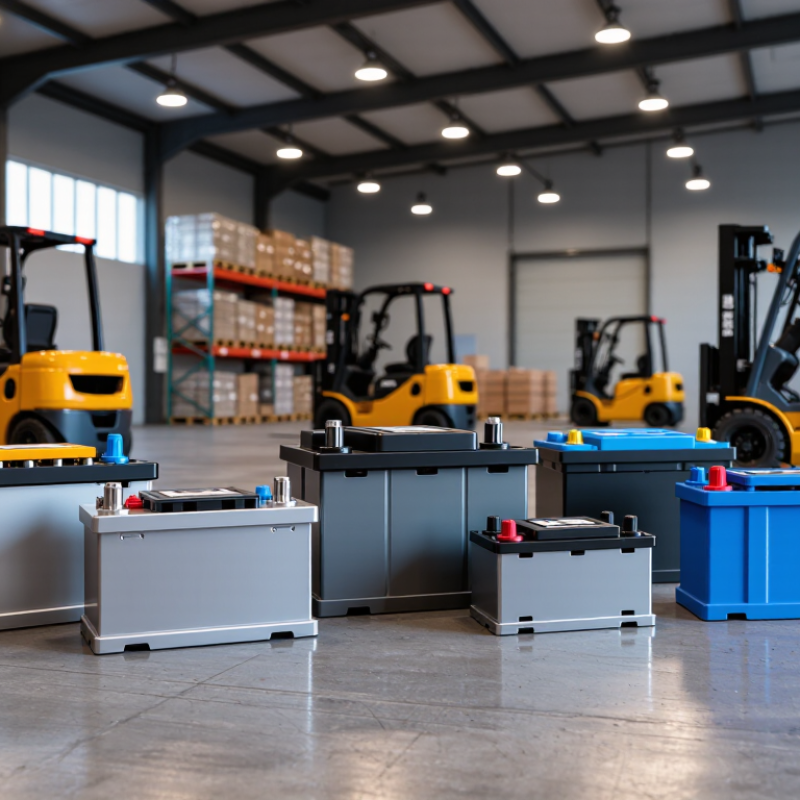
Top Forklift Battery Suppliers for Global Buyers?

Understanding Forklift Battery Types and Their Applications

Forklift batteries are not interchangeable power packs. Their chemistry affects charging routines, maintenance, operating time, and equipment requirements. Flooded lead-acid batteries remain common in single-shift warehouses, where staff can follow regular watering and charging procedures. They are heavy, which can help counterbalance some trucks, but they need suitable ventilation during charging. Missed maintenance can shorten service life. Small details matter.

Lithium-ion batteries can suit multi-shift operations that need brief charging breaks instead of long battery changes. Their battery management systems monitor conditions such as temperature and voltage, but the truck and charger must be compatible with the pack. Upfront cost, charging access, and local operating conditions all deserve careful review. Fit matters.

Absorbent glass mat batteries are sealed lead-acid units sometimes used where reduced routine watering is useful, though charging limits still apply. A cold distribution area, a dusty loading bay, and a busy indoor aisle create different demands. Compare duty cycles, shift length, available charging space, and service support before choosing. A neat specification sheet cannot capture every real-world constraint; even careful estimates may need revisiting after operators log actual energy use.

Forklift Battery Types and Typical Voltage by Application

These are representative system voltages, not fixed requirements: walkie pallet trucks commonly use 24 V systems, reach trucks often use 36–48 V, and counterbalance forklifts commonly use 48–80 V. Both lead-acid and lithium-ion batteries are available in voltage configurations suited to these applications; always confirm compatibility with the truck manufacturer.

How to Evaluate Forklift Battery Suppliers

How to Evaluate Forklift Battery Suppliers

Start with the truck’s actual duty cycle, not a supplier’s headline capacity. Ask for usable energy, cycle life at a stated depth of discharge, charging limits, operating-temperature range, and warranty exclusions. BloombergNEF’s 2023 Battery Price Survey reported an average lithium-ion pack price of $139 per kilowatt-hour, down 14% year over year. That is a market benchmark, not a forklift quote. Compare proposals only after checking whether they include chargers, installation, monitoring, and service. A cheap pack can become expensive when a cold warehouse cuts its usable runtime.

Check evidence, not polished slides. Request independent test results, serial-level traceability, spare-part availability, and written response times for service calls. The International Energy Agency’s Global EV Outlook 2024 reported that electric-vehicle battery demand reached about 750 gigawatt-hours in 2023, roughly 40% above 2022. That growth makes supply-chain questions worth asking, even though EV figures do not predict forklift availability directly. Ask where cells and replacement modules come from, and how lead times are handled. One awkward detail: suppliers may quote different cycle-test conditions, making their numbers look comparable when they are not. A short, monitored trial on your busiest shift can expose that gap.

Top Forklift Battery Suppliers for Global Buyers? - How to Evaluate Forklift Battery Suppliers

Evaluation Area What to Compare Evidence to Request Practical Buyer Check
Truck compatibility Battery voltage, compartment dimensions, connector, weight, and minimum/maximum truck battery weight. Common industrial truck system voltages include 24 V, 36 V, 48 V, 72 V, and 80 V, but compatibility is model-specific. Battery specification sheet, dimensional drawing, connector details, and truck-manufacturer compatibility requirements. Match the battery to the truck nameplate and compartment drawing; verify weight and center of gravity before ordering.
Capacity and duty-cycle fit Rated capacity in ampere-hours (Ah), test discharge rate, operating temperature, and the actual workload. Capacity ratings measured at different discharge rates are not directly interchangeable. Capacity test method, rated discharge rate, temperature conditions, and a load or duty-cycle recommendation. Compare quotations using the same voltage, Ah rating basis, and operating assumptions; size against shifts, travel distance, lift demand, and breaks.
Battery chemistry Lead-acid and lithium-ion systems have different charging, maintenance, weight, and operating requirements. Do not compare purchase price alone. Chemistry, cell configuration, maintenance instructions, charging limits, and any required truck or charger changes. Confirm the selected chemistry suits the site’s shift pattern, charging access, ventilation, maintenance capacity, and equipment requirements.
Cycle-life claims Compare cycle-life figures only when depth of discharge, temperature, charge method, and end-of-life capacity threshold are stated. These conditions materially affect results. Test report or written test protocol defining a cycle, test conditions, and the capacity-retention endpoint. Reject cycle-life figures with no test conditions; assess expected service life using the site’s actual charging and operating profile.
Charging system Charger voltage, current, charging profile, connector, and compatibility with the battery management system (BMS), where applicable. Charging time depends on the battery, charger, and operating conditions. Charger compatibility statement, charging profile, recommended charge limits, and installation requirements. Obtain written confirmation that the battery and charger are a matched system; verify available charging windows and site electrical capacity.
Safety and regulatory documentation Applicable safety, transport, and market-entry requirements depend on battery chemistry and destination country. Relevant standards may include IEC 60254 for lead-acid traction batteries and IEC 62619 for industrial lithium secondary cells and batteries. Current test reports and declarations applicable to the exact battery model and target market. For lithium batteries shipped by air, request applicable UN 38.3 test-summary documentation. Check document scope, model identifiers, issuing laboratory, validity, and destination-market requirements; do not rely on generic certificates.
BMS and monitoring For lithium systems, review cell monitoring, temperature protection, over-current protection, fault indication, communications, and data access. Features vary by design. BMS feature list, alarm and fault descriptions, communication protocol, and service access procedure. Confirm that the truck or fleet system can read required status information and that fault handling is documented for operators and technicians.
Build quality and traceability Check production controls, incoming-material checks, final testing, serial-number traceability, and quality-management processes. Quality-system certificate where applicable, sample inspection records, final test report, and a description of production traceability. Verify that certificates cover the relevant manufacturing site and that each delivered battery can be traced to production and test records.
Warranty and service Review warranty duration, capacity-retention terms, exclusions, claim procedure, response times, and responsibility for transport or labor. Terms differ by product and supplier. Full warranty text, service escalation process, technical support hours, and details of local repair or replacement arrangements. Ask for a written service plan for the delivery country and clarify how downtime, diagnosis, replacement, and freight costs are handled.
Delivery and export readiness Assess production lead time, packaging, shipping mode, customs documentation, dangerous-goods handling where applicable, and delivery terms. Written lead time, packing specification, shipping documents, applicable transport test documents, and a clearly stated Incoterms® rule and named place. Confirm who is responsible for export clearance, freight, insurance, import duties, and local delivery before comparing landed costs.
Total cost of ownership Consider purchase price, charger and installation costs, energy use, maintenance, replacement frequency, downtime, and end-of-life handling. Itemized quotation, operating assumptions, maintenance schedule, warranty coverage, and recycling or take-back options where available. Compare cost per operating hour or shift over the same evaluation period and workload rather than comparing battery price alone.
Supplier evaluation score Score each supplier consistently across compatibility, documented performance, compliance, warranty, service, delivery, and total cost. Use a common request-for-quotation checklist and retain supporting documents for each scored item. Apply a 1–5 score only after evidence review; mark missing or unverifiable claims as “Not demonstrated” rather than assuming equivalence.

Note: Technical ranges, test results, compliance requirements, and warranty terms are model- and market-specific. Verify all specifications against the exact battery, charger, truck, and destination-market requirements.

Leading Forklift Battery Suppliers Across Global Markets

Global buyers need forklift battery suppliers that can support different equipment, climates, and operating schedules. A capable supplier explains battery chemistry, capacity, charging needs, and expected service conditions in clear terms. Ask for technical documents and confirm that the proposed battery fits the forklift’s voltage, tray dimensions, and connector. Small mismatches can cause delays. Compare warranty coverage, replacement-part availability, and service response times across each supplier’s delivery regions. A low purchase price may not reflect the cost of downtime or maintenance.

Tips: Share your forklift model, daily operating hours, load patterns, and charging setup before requesting a quote. Ask how performance may change in cold storage or dusty warehouses. Check packaging, delivery estimates, and who handles technical support after arrival. Keep the answers in writing.

Supplier reach matters, but local support matters too. Confirm whether technicians or trained service partners can assist near your sites. Review references from buyers with similar fleet sizes and working conditions, while treating broad claims cautiously. No supplier is ideal for every operation; even a detailed comparison can miss an unexpected maintenance need. Revisit the choice after a trial period, using actual run time, charging records, and service requests to judge fit.

Comparing Supplier Products, Certifications, and Support

A forklift battery supplier should be judged by more than quoted capacity. Compare lead-acid and lithium options against the truck’s voltage, battery-compartment dimensions, shift length, and charging schedule. Ask for usable capacity, expected cycle life, charging limits, and operating-temperature ranges in writing. Details matter. A battery that fits on paper may still create handling problems if its weight or connector differs from the truck’s requirements.

Certifications deserve a closer look. Request current test reports and confirm which product model they cover; a certificate for one battery does not automatically apply to every configuration. Check that documentation addresses relevant safety and transport requirements for your destination. Ask for evidence. Supplier support is just as practical: clarify warranty exclusions, spare-part availability, troubleshooting hours, and response times across time zones. Can technicians review charger settings or diagnose a fault from operating data? That is not enough if help arrives only during the supplier’s local workday. Compare sample manuals and service commitments before ordering. Some buyers focus heavily on price, and that is understandable, but replacement delays can cost more than the initial saving. Even a detailed comparison has limits; confirm key specifications with the equipment manufacturer before committing.

Key Steps for Choosing a Supplier and Managing Procurement

Choose a forklift battery supplier by matching documented performance to your actual shift, not just comparing quoted prices. Record each truck’s voltage, daily operating hours, lift intensity, charging windows, and available charger space. Ask for usable capacity, cycle-life test conditions, temperature limits, battery-management features, and warranty coverage. A cycle-life figure without its test conditions is hard to compare. Request references from sites with similar fleets, then trial a battery on one representative truck before placing a large order.

Check supply continuity as carefully as technical fit. The International Energy Agency’s Global Critical Minerals Outlook 2024 reports that the three largest refining countries held an 86% share of refining for key energy minerals in 2023, up from 82% in 2020. This concentration can affect lead times and component availability; it does not predict a specific battery shortage. Still, it deserves attention. Ask suppliers about production locations, component traceability, forecast lead times, spare-part access, and how they report delays. Compare total cost per operating hour, including chargers, installation, maintenance, and downtime—not only the purchase price. I would also put delivery dates and capacity-retention terms in writing. Paperwork can miss the real strain of a peak shift, so review trial data with operators before approving the order.