
24 Hour ServiceChina’s glass machinery sector includes manufacturers of tempering, laminating, insulating-glass, cutting, and edging equipment. The names worth comparing are not defined by catalog size alone. Buyers should examine machine configuration, component quality, control systems, service access, and documented performance on glass similar to their own. A polished showroom demo helps. Production records matter more.
Glass scientist Dr. John Mauro is a credible voice on glass materials, but no verified statement from him about Chinese machine manufacturers is available here. To avoid misquotation, this guide uses an editorial principle rather than attributing invented words to him: “Judge a machine by repeatable results, not headline speed.” That distinction matters on a factory floor. A stable tempering line, for example, should deliver consistent sheets across planned thicknesses, not just an impressive sample.
This overview will compare leading Chinese suppliers through practical criteria: product range, technical support, customization, quality documentation, and export experience. It will also note where public information is limited. That part deserves scrutiny. A brochure rarely shows how quickly a technician can diagnose a fault, or whether spare parts arrive when a line stops. Any Glass Machine Manufacturer can promise performance; buyers should request evidence, references, and a clear acceptance-test plan before deciding.
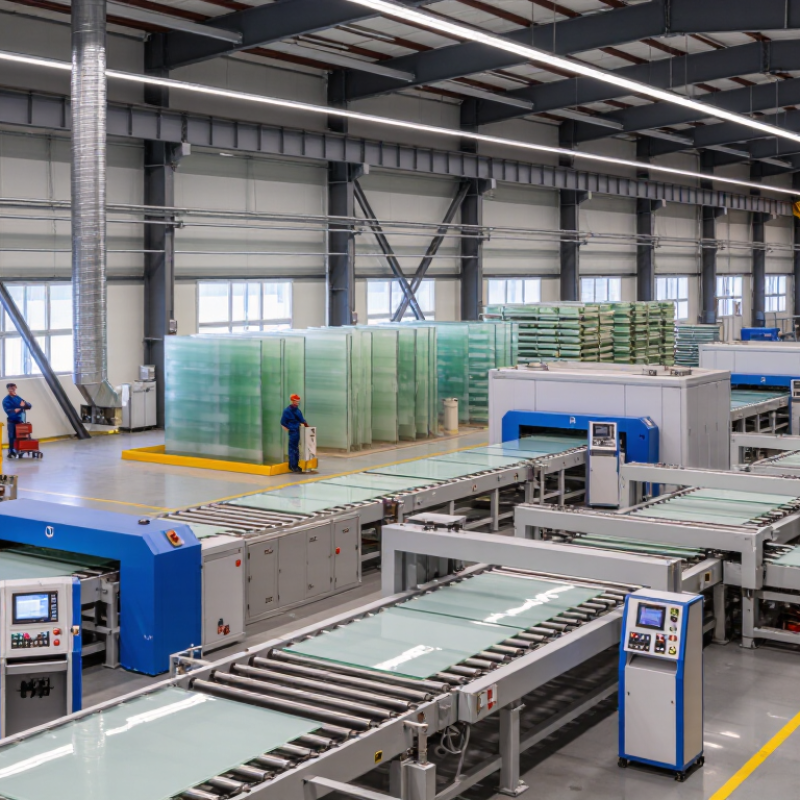
China’s glass machinery industry is shaped by a large, varied domestic glass market. The National Bureau of Statistics of China reported 969.01 million weight cases of flat glass production in 2023, up 3.9% year on year. That figure measures glass, not machinery, but it helps explain demand for cutting, edging, tempering, and insulating-glass equipment. The production scale is substantial. Yet factory needs differ widely.
A machinery line is more than its headline speed. Buyers assess glass thickness ranges, edge quality, heating uniformity, changeover time, and access to spare parts. For example, a tempering furnace may run steadily on standard panes but struggle with irregular sizes or frequent recipe changes. Small details matter. The International Energy Agency’s industrial-sector analysis highlights high-temperature heat as a key challenge for energy-intensive manufacturing, making furnace efficiency and heat recovery practical comparison points for glass processors.
China’s manufacturing base includes equipment for both basic processing and automated production lines. Evaluation should include a factory acceptance test using representative glass, not only a demonstration with ideal samples. Ask for measured cycle times, breakage rates, and energy use, then check how those figures were recorded. A polished specification sheet is useful, but it cannot reveal every operating problem. There is room for judgment here: a lower purchase price may matter less than dependable commissioning and maintenance support.
Identifying leading glass machine manufacturers takes more than comparing catalogue specifications. Look for evidence that their equipment works reliably with the glass types, thicknesses, and production speeds you actually need. A factory visit or live machine trial can reveal details a brochure misses: vibration during cutting, edge quality after grinding, and how easily operators reach service points. Small details count.
Technical documentation also deserves close attention. Clear drawings, installation requirements, maintenance schedules, and spare-parts lists suggest a disciplined engineering process. Ask how the manufacturer tests key functions and records results. A useful answer includes measurable checks, not only assurances. If possible, review sample output and discuss what happens when material dimensions vary. Real production is rarely perfect.
Support after delivery is another important measure. Confirm who provides commissioning, operator training, troubleshooting, and replacement parts, and ask for realistic response times. References from comparable factories can help, though one customer’s experience may not represent every installation. No checklist catches everything. I would also question my own assumptions: the most advanced machine is not automatically the best fit, especially when maintenance skills or floor space are limited. The strongest supplier is usually the one that explains both capabilities and constraints plainly.
Use this weighted framework to compare manufacturers. The weights are suggested evaluation criteria, not a published ranking or market-share data. Verify claims against current documents, machine specifications, and customer references.
| Evaluation Dimension | Weight | What to Verify | Useful Evidence |
|---|---|---|---|
| Product and process fit | 20% | Whether the manufacturer offers equipment suited to the buyer’s glass type, product dimensions, required processes, and production volume. | Machine specifications, process-flow proposal, sample-product trials, and a written scope of supply. |
| Engineering and customization capability | 15% | Ability to configure line layouts, handling systems, automation, and interfaces for the intended plant and operating requirements. | Technical drawings, interface lists, project references, and documented design-change procedures. |
| Quality management and traceability | 15% | Whether the supplier has documented quality controls for design, manufacturing, inspection, and corrective actions. ISO 9001 is a quality-management-system standard; certification should be checked for scope and validity. | Current certificate details where applicable, inspection records, component traceability, and quality-control procedures. |
| Safety and regulatory readiness | 12% | How machine hazards are assessed and how electrical, guarding, emergency-stop, and user-documentation requirements are addressed for the destination market. | Risk-assessment documentation, electrical drawings, safety-device lists, manuals, and market-specific conformity documents where applicable. |
| Performance validation | 10% | Whether output, product quality, and operating conditions are defined and tested against agreed acceptance criteria. | Factory-acceptance-test plan and results, agreed test samples, measurement methods, and written acceptance criteria. |
| Installation and commissioning support | 10% | Availability and scope of installation guidance, commissioning, operator training, and handover support. | Project schedule, service scope, training plan, commissioning checklist, and handover documentation. |
| Spare parts and after-sales service | 8% | Clarity of warranty terms, parts availability, service channels, and response arrangements for the buyer’s location. | Written warranty, recommended-spares list, service-contact details, and stated response and escalation procedures. |
| Delivery and project management | 5% | Whether manufacturing, inspection, packing, shipment, and site milestones are planned and tracked transparently. | Project timeline, milestone responsibilities, progress-reporting process, and packing or shipping requirements. |
| Commercial clarity and lifecycle cost | 5% | Transparency of the quotation, exclusions, payment milestones, operating requirements, and expected maintenance needs. | Itemized quotation, scope exclusions, utility requirements, maintenance schedule, and contractual terms. |
| Total suggested weighting | 100% | Compare suppliers using the same requirements and evidence checklist; confirm all critical specifications in the purchase contract. | |
China’s Glass Machinery Manufacturers cover several distinct equipment groups. Some build complete float-glass production lines, while others focus on tempering furnaces, laminating systems, or insulating-glass lines. Cutting tables, edging machines, and CNC drilling centers serve fabricators handling flat glass for buildings and interiors. These categories matter because a supplier skilled in furnace design may not offer the best solution for precise edge finishing.
Core equipment should be judged by its working details, not only its rated capacity. For a tempering furnace, ask about temperature control across the heating zone, loading patterns, and the glass thickness range. For an insulating-glass line, check spacer placement, sealant application, and how the system handles different unit sizes. Ask for reference installations and maintenance records. A polished brochure rarely shows downtime or operator training needs.
Tips: Request a live production demonstration using glass close to your own specifications. Inspect finished panels under angled light for roller marks, edge chips, or uneven seals. Confirm spare-part lead times and local service arrangements. No machine is perfect; even a strong proposal can leave practical questions unanswered.
Who Are the Top Glass Machine Manufacturers in China?
Glass processing technologies shape products used in buildings, vehicles, furniture, and appliances. In China, glass machine manufacturers supply equipment for cutting, edging, drilling, washing, tempering, and insulating-glass production. Each stage affects the next. A rough edge can cause problems during tempering, while dust left after washing may weaken a sealed unit. Operators therefore check dimensions, surface condition, and machine settings throughout production. Small details matter.
Tips: Match machine capacity to your actual glass sizes and daily output. Ask for sample processing and check edge quality, heating consistency, and service support. Test before scaling.
Industrial applications call for different priorities. Building-glass lines often need reliable tempering and laminated-glass handling, while furniture shops may value flexible cutting and precise edge polishing. Automotive production demands tight tolerances and repeatable results. Sensors, automated loading, and process controls can improve consistency, but they do not replace skilled inspection. In practice, a clean factory layout and trained operators matter as much as impressive specifications. It is easy to focus on speed; energy use, maintenance access, and spare-part availability deserve equal attention. Manufacturers should verify performance with their own glass types before committing to a production setup.
Typical temperature ranges for selected glass-processing equipment used in architectural, automotive, and decorative applications. Actual settings vary with glass composition, thickness, and production method.
These technologies support distinct production needs: autoclaves bond laminated glass, while high-temperature furnaces enable tempering, bending, and decorative frit firing.
Selecting a Chinese glass-machine manufacturer requires more than comparing quoted prices. Match the machine’s working size, glass thickness range, and daily output to your actual production needs. Ask for a live test using glass similar to yours, then inspect edge quality, breakage, and cycle time. Details matter.
Request an itemized quotation covering installation, operator training, shipping preparation, warranty terms, and commonly replaced parts. Ask who handles technical support and how quickly replacement components can be dispatched. Review electrical diagrams, safety documentation, and maintenance instructions before placing an order. A polished showroom can be reassuring, but it cannot prove consistent performance on a busy production line.
Check references from buyers with similar products and workloads. If possible, speak with an operator, not only a sales representative. Factory tests may use carefully prepared materials, so results might not match your daily conditions. A pilot run at your site can reveal issues that a demonstration misses. That takes time. It may still be worth it. Also confirm that manuals and remote support are available in a language your maintenance team can use. Even a thorough review leaves some uncertainty; production schedules, shipping, and communication can change.