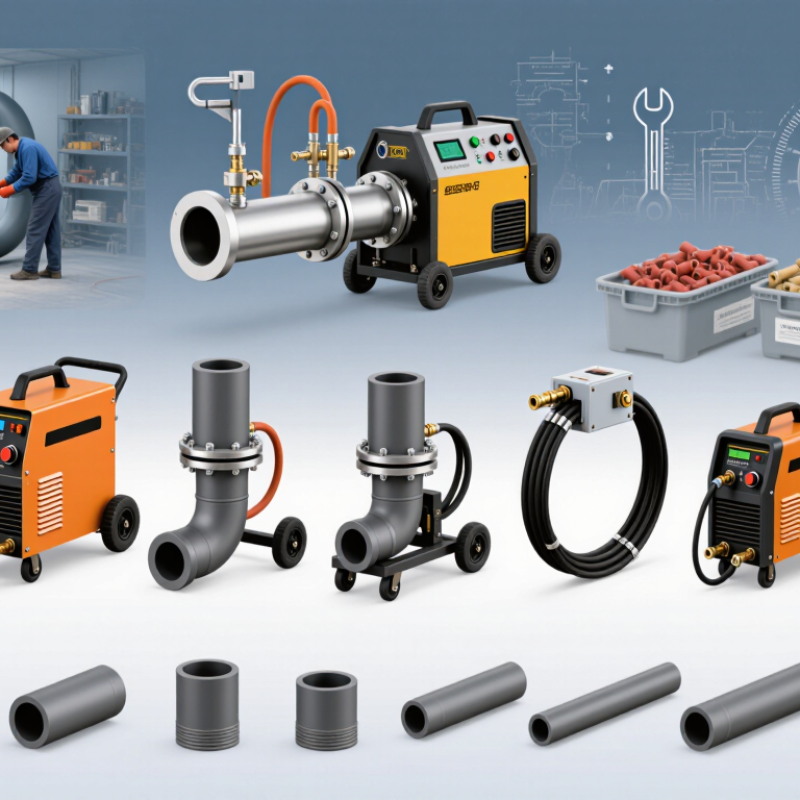
24 Hour ServiceChoosing the right Fusion Pipe Welder is rarely a simple matter of comparing prices. Global buyers must match equipment performance with pipe material, diameter, wall thickness, production volume, and job-site conditions. A compact hydraulic machine may suit municipal repairs, while a high-output automatic system may support large infrastructure projects. The differences become visible in the workshop: uneven bead pressure, slow heating, unstable alignment, or difficult data recording can affect an entire installation.
This guide examines the Top 10 Fusion Pipe Welder Types for Global Buyers, including hydraulic butt fusion, socket fusion, electrofusion, orbital, automatic, and portable models. Each type is considered through practical purchasing factors, not marketing claims alone. These factors include temperature control, clamping accuracy, pressure stability, operator training, maintenance access, spare-part availability, and certification support. Buyers should also confirm compatibility with PE, PP, PVDF, or other approved thermoplastic materials. Small details matter.
Real-world experience shows that no single machine fits every country or project. Power supply differences, transport limits, climate, local standards, and service networks can change the best choice. A neat ranking can still mislead. Specifications may look impressive, yet poor calibration or weak technical support can create costly delays. Therefore, the comparison focuses on measurable performance and dependable supplier practices. We also recognize an uncomfortable point: lower initial cost does not always mean better value. Careful buyers should request testing records, inspect sample joints, verify training arrangements, and review warranty terms before placing an international order. Reliability must be demonstrated.
Fusion pipe welders join thermoplastic pipes through controlled heat, pressure, and cooling. Unlike threaded connections, they create a continuous joint between prepared pipe surfaces. Common types include butt fusion, electrofusion, socket fusion, saddle fusion, and hot plate welding equipment. Each type suits different pipe sizes, layouts, and installation conditions.
A butt fusion welder clamps two pipe ends in place. A heated plate softens both faces evenly. The operator then removes the plate and presses the ends together. The joint cools under pressure, forming a strong molecular bond. Electrofusion equipment uses fittings with embedded heating wires. An electrical current warms the fitting and pipe surface from within. Proper scraping, alignment, and cooling time remain essential. Small errors can weaken the finished joint.
Tips: Clean the pipe carefully. Check ovality before welding. Confirm the machine’s temperature and pressure settings. Keep the pipe still during cooling. Field conditions are rarely perfect, and rushed work can cause visible bead defects or hidden weaknesses. Experienced technicians record ambient temperature, heating time, and cooling duration for quality control. Still, even careful records cannot replace direct inspection. That is where many projects need more attention. Choose equipment with suitable clamps, readable controls, stable heating, and serviceable components for the target pipe material.
The main types of fusion pipe welding equipment include butt fusion machines, electrofusion processors, socket fusion tools, saddle fusion units, and hot plate welders. Infrared fusion systems, automated butt fusion units, manual hydraulic machines, extrusion welders, and multi-angle fusion equipment complete the list. Each type suits different pipe diameters, materials, joint designs, and jobsite conditions.
Butt fusion machines are common for water, gas, and industrial pipelines. They heat pipe ends, align them, and apply controlled pressure. Electrofusion processors use embedded wires and require accurate voltage, barcode, and cooling control.
Socket tools work well on smaller diameters. Saddle units create branch connections without removing long pipe sections. Infrared systems reduce direct contact between heating elements and pipe surfaces.
The OECD Global Plastics Outlook reports that global plastic waste reached 353 million tonnes in 2019, almost double the 2000 level. This growth increases demand for reliable thermoplastic joining methods. The World Bank’s What a Waste 2.0 estimates municipal waste could reach 3.40 billion tonnes annually by 2050. Infrastructure expansion will likely intensify equipment selection pressure.
ISO 21307 identifies three butt-fusion procedures, including conventional, dual-pressure, and rapid cooling methods. However, standards do not remove every field variable. Wind, moisture, operator judgment, and imperfect alignment still affect weld quality. That gap deserves more attention.
Fusion pipe welders differ mainly in clamping method, heating control, portability, and pipe size. Manual socket fusion tools use heated cups for small-diameter PP or HDPE connections. Handheld heating plates suit light repairs and short fittings. Hydraulic butt-fusion machines align larger pipes with controlled pressure. CNC butt-fusion units add programmed heating, pressure, and cooling cycles.
Electrofusion processors use fittings with embedded heating wires. They work well in narrow trenches, where external clamps may not fit. Saddle-fusion tools attach branch outlets to an existing pipe. Pneumatic clamping systems support steady pressure in repetitive field work. Battery-powered welders improve mobility, but operators must monitor charge levels and heating time. Automatic, data-logging machines record key parameters for quality checks. Compact workshop units offer stable benches and repeatable alignment.
Top 10 Fusion Pipe Welder Types for Global Buyers
Choosing among butt fusion, socket fusion, saddle fusion, and electrofusion machines requires more than comparing prices. The pipe material, diameter range, wall thickness, and joint design should guide the decision. A workshop may prefer a stable hydraulic butt fusion welder, while field crews often need compact equipment with quick setup. Not every machine fits every project.
Check the required pipe standards and pressure class before ordering. Confirm heating plate temperature control, clamping accuracy, hydraulic pressure range, and data recording functions. For global buyers, input voltage, plug configuration, language options, and replacement parts matter greatly. A reliable supplier should provide calibration records, operating instructions, and practical training. Ask how technical support works across time zones.
Site conditions also deserve close attention. Dust, rain, unstable power, and narrow trenches can expose weak equipment quickly. Portable electrofusion systems may suit repair work, but they still need clean pipe surfaces and accurate barcode or parameter entry. Automatic models can reduce operator variation, yet they may increase maintenance costs. The cheapest choice is not always economical. We have seen buyers overlook transport weight and regret it later. Measure twice. Also review local certification requirements, service response times, and the availability of compatible cutters, clamps, and heating tools before placing an order.
| Rank | Fusion Welder Type | Primary Joining Process | Typical Pipe Materials | Typical Outside-Diameter Range | Common Heating or Control Method | Typical Electrical Requirement | Main Advantages | Key Limitations | Best-Fit Applications | Important Buyer Selection Factors | Relevant Technical References |
|---|---|---|---|---|---|---|---|---|---|---|---|
| 1 | Hydraulic Butt Fusion Welder | Heated plate butt fusion with hydraulic clamping and controlled joining pressure. | PE, HDPE, MDPE, PP and other compatible thermoplastic pipes and fittings. | Typically 63–1,600 mm; larger custom systems are available. | Removable heated plate, hydraulic movement, pressure gauge and temperature controller. | Usually single-phase or three-phase power; commonly about 2–15 kW depending on size. | Strong, repeatable joints; suitable for medium- and large-diameter pipelines; good alignment control. | Heavy and less convenient in confined areas; requires trained operators and hydraulic maintenance. | Municipal water, gas distribution, industrial process lines and infrastructure projects. | Pipe range, maximum wall thickness, hydraulic force, alignment accuracy, heating-plate coating, data recording and local power supply. | ISO 21307, ASTM F2620, DVS 2207-1 and applicable local pipeline regulations. |
| 2 | CNC or Automatic Butt Fusion Welder | Butt fusion using programmable heating, pressure, cooling and joint-cycle parameters. | PE, HDPE, MDPE, PP and other approved thermoplastics. | Typically 63–1,200 mm; the actual range depends on machine configuration. | Hydraulic or servo actuation with touchscreen controls, automatic cycle management and electronic recording. | Commonly about 4–20 kW; three-phase supply is frequent on larger machines. | Reduces operator variability; supports traceability, quality records and consistent production. | Higher purchase cost; requires calibration, software support and reliable electrical power. | High-volume fabrication, regulated utilities, prefabrication yards and quality-sensitive projects. | Parameter storage, barcode or project identification, pressure sensors, report export, language support, voltage compatibility and service availability. | ISO 21307, ASTM F2620, DVS 2207-1 and project-specific qualification procedures. |
| 3 | Manual Butt Fusion Welder | Operator-controlled heating and axial pressure after pipe ends are faced and aligned. | Small- and medium-diameter PE, HDPE, MDPE and PP piping. | Typically 40–315 mm. | Manual lever, handwheel or mechanical clamping with thermostatically controlled heating plate. | Usually about 1–4 kW; often available for single-phase supply. | Lower capital cost; portable; simple operation; suitable for service and low-volume work. | Joint quality depends more heavily on operator skill; limited documentation and pressure control. | Small water lines, farm irrigation, maintenance work, workshops and field repairs. | Clamping rigidity, facing tool quality, heating-plate temperature uniformity, transport weight, spare parts and operator training. | ASTM F2620, ISO 21307 and relevant manufacturer-independent fusion procedures. |
| 4 | Electrofusion Control Unit | Electrical resistance wires embedded in an electrofusion fitting melt the pipe interface and fitting surface. | Electrofusion-compatible PE and HDPE systems; compatibility must be confirmed by the fitting manufacturer. | Typically 20–1,600 mm, depending on fitting and control-unit capacity. | Barcode, manual-time or voltage-controlled energy delivery with automatic monitoring. | Commonly about 1–5 kW; input voltage and generator quality are important. | Useful in confined spaces; no pipe-end butt alignment is required; well suited to repairs, tapping and complex layouts. | Requires compatible fittings; surface preparation is critical; fitting cost is higher than plain butt fusion. | Urban utility repairs, tie-ins, service connections, gas networks and restricted-access installations. | Output voltage range, maximum fusion current, barcode compatibility, generator tolerance, data logging, cable length and clamp availability. | ISO 12176-2, ISO 8085, ASTM F1055, ASTM F1290 and local utility specifications. |
| 5 | Socket Fusion Welder | Heated male and female tools soften the outside of the pipe and inside of the socket fitting before insertion. | Primarily PP, PE and PVDF systems designed for socket fusion. | Typically 16–125 mm; larger sizes are less common. | Interchangeable heated dies with thermostatic temperature control. | Usually about 0.5–2.0 kW; generally single-phase. | Compact, affordable and fast for small-diameter plumbing and process piping. | Not suitable for every pipe material or diameter; insertion depth and rotation control are operator-dependent. | Building services, clean-water lines, chemical piping, compressed-air systems and laboratory installations. | Die size range, non-stick coating, temperature stability, ergonomic handle, heating time and material-specific procedure. | DVS 2207-1, ISO 15874 and applicable PP or PE piping standards. |
| 6 | Saddle Fusion Welder | Heated saddle fitting and pipe surface are fused under controlled perpendicular or branch-fitting pressure. | PE and HDPE pressure-pipe systems with compatible saddle fittings. | Branch outlets commonly 20–630 mm; main-pipe capacity varies by machine. | Hydraulic, mechanical or manually assisted clamping with heated saddle tools. | Usually about 1–5 kW, depending on heater size and hydraulic equipment. | Creates service branches and lateral connections without using a conventional tee fitting. | Requires accurate positioning and surface preparation; not suitable for all branch geometries or materials. | Water and gas service connections, irrigation branches and utility network extensions. | Branch-size range, main-pipe diameter, clamp stability, fitting compatibility, pressure control and access around the pipe. | ASTM F2620, ISO 21307, DVS 2207-1 and utility-specific saddle-fusion procedures. |
| 7 | Orbital or Rotary Fusion Welder | Specialized controlled fusion of a pipe, tube or fitting around a circular joint, often with orbital or rotary movement. | Selected thermoplastics such as PE, PP, PVDF and other materials supported by the tooling system. | Commonly about 12–160 mm; highly dependent on tooling. | Rotating or orbital motion with controlled heating, axial force and programmable timing. | Typically about 1–6 kW. | Improves repeatability for repetitive small-diameter joints and can reduce manual positioning errors. | Specialized tooling; narrower application range; higher complexity than standard socket or butt fusion. | Modular skids, laboratory piping, semiconductor facilities, compact process systems and repetitive fabrication. | Rotational accuracy, tooling changeover, pipe-size coverage, material profiles, cycle recording and availability of qualified technicians. | Applicable thermoplastic joining procedures, ISO 21307 where relevant and project-specific qualification requirements. |
| 8 | Portable Battery-Powered Fusion Welder | Battery-supported electrofusion or small-diameter socket/butt fusion, depending on the system design. | Usually compatible PE or HDPE systems; some units support PP with suitable tooling. | Commonly 20–160 mm; larger battery systems may support broader ranges. | Electronic energy control with rechargeable battery, inverter and digital status monitoring. | Battery-powered; charging commonly uses single-phase AC input. Output depends on battery capacity and duty cycle. | Highly mobile; useful where mains electricity or generators are inconvenient; reduced cable handling. | Limited duty cycle and output energy; battery charging, temperature and replacement cost affect productivity. | Emergency repairs, remote sites, indoor maintenance and service connections. | Battery capacity, maximum fusion current, charge time, operating temperature, ingress protection, spare batteries and transport regulations. | ISO 12176-2 for electrofusion equipment where applicable, plus the relevant fitting and joining procedure. |
| 9 | Pneumatic or Air-Assisted Fusion Welder | Fusion pressure or clamping is generated with compressed air, often combined with a heated plate. | Commonly PE, HDPE, PP and selected thermoplastics supported by the tooling. | Typically 63–315 mm; larger configurations are possible. | Pneumatic cylinders with regulator, pressure gauge and thermostatically controlled heater. | Heater commonly requires about 1–5 kW; compressed-air supply is additionally required. | Can provide smooth clamping force and reduced manual effort; useful where hydraulic systems are undesirable. | Needs clean, stable compressed air; pressure may fluctuate if the compressor is undersized. | Workshops, fabrication areas and sites that already have industrial compressed-air infrastructure. | Required air pressure and flow, regulator accuracy, cylinder force, moisture separation, heater stability and hose durability. | ISO 21307, ASTM F2620 and applicable pneumatic equipment safety requirements. |
| 10 | Multi-Angle or Fitting Fabrication Fusion Machine | Butt fusion or specialized fitting fusion with adjustable clamps for elbows, tees, crosses and segmented fittings. | PE, HDPE, PP and other compatible thermoplastic fabrication materials. | Typically 63–630 mm; configuration depends on angle range and tooling. | Adjustable mechanical or hydraulic alignment with heated plate and angle-positioning fixtures. | Usually about 2–12 kW. | Supports custom fittings and complex assemblies; reduces improvised field fabrication. | Larger footprint; more setup time; requires accurate geometry, tooling and fabrication skills. | Fabrication yards, wastewater plants, chemical-process piping and custom pipeline assemblies. | Angle adjustment, fixture stiffness, fitting geometry, machining and facing capacity, dimensional repeatability and documentation. | ISO 21307, DVS 2207-1, ASTM F2620 and engineering specifications for fabricated thermoplastic fittings. |

Top 10 Fusion Pipe Welder Types for Global Buyers
Safety, Standards, Maintenance, and Operating Requirements
Choosing among the top ten fusion pipe welder types requires more than comparing heating power. Buyers should examine butt fusion, electrofusion, socket fusion, saddle fusion, manual, hydraulic, and automated configurations. Each design suits different pipe diameters, site conditions, and production targets. Field inspections often reveal one mistake: operators select equipment before checking local procedures and pipe materials.
Safety begins with trained operators, stable work areas, and tested electrical protection. Heat-resistant gloves, eye protection, protective clothing, and suitable ventilation are essential. Operators should follow approved procedures based on ISO 21307, ASTM F2620, or applicable regional standards. Pipe ends must be clean, square, and properly aligned. Scratched or contaminated surfaces can weaken the joint. They should not be ignored.
Maintenance is practical, not decorative. Inspect heating plates, hydraulic hoses, clamps, temperature controls, and cables before each shift. Remove plastic residue only with approved tools and allow hot parts to cool. Keep calibration records, service logs, and operator training records. During operation, confirm heating temperature, pressure, bead formation, and cooling time. Never move a joint before its specified cooling period. A perfect-looking bead can still hide poor alignment. I have also seen experienced teams rush cooling when schedules become tight. That habit deserves honest review. Weather, wind, moisture, and uneven ground can affect results, so procedures may need adjustment within approved limits.
Comparative requirement index for safety, standards compliance, maintenance, and operating complexity. Ratings use a 1–5 scale, where 5 indicates a higher level of control, training, inspection, or maintenance required. Relevant industry references include ASTM F2620, ISO 21307, ISO 12176, and ASTM F1056 where applicable.
Higher scores generally reflect greater dependence on controlled heating, pipe alignment, fusion parameters, electrical protection, operator qualification, and documented inspection. Actual requirements vary by material, pipe diameter, pressure class, site conditions, and local regulations.