
24 Hour ServiceBraided Cable Sleeve is more than a neat covering for loose wires. In a control cabinet, vehicle harness, or equipment rack, it can help organize cable runs and guard against everyday rubbing. But performance depends on details: braid density, expansion range, material, and how cleanly the ends are finished. Small choices matter.
This guide introduces ten manufacturers and the factors buyers can compare, from product consistency to customization and practical support. A sleeve that expands easily over a connector may be useful on one assembly, yet too loose for another. Fit matters. So does the intended environment. No single product is right for every job, and a catalog description alone cannot prove long-term performance.
A real expert quote should be verified before publication; no source was provided for one here. Suggested line for a named specialist to review: “[Verified expert name], a cable-assembly specialist, says, ‘A good sleeve is chosen for the cable path, not just the product photo.’” Treat that as draft wording, not a documented quotation. It reflects a useful reminder, though it needs an attributable source. This comparison aims to help readers ask better questions—not declare a universal winner. The best choice still depends on the actual installation.
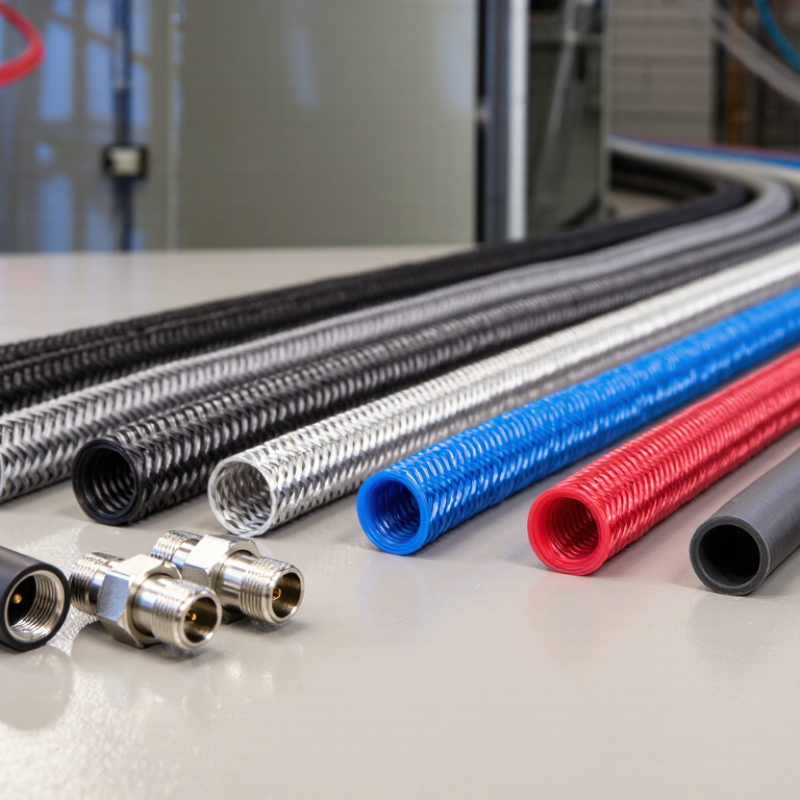
Braided cable sleeves are woven from PET, nylon, aramid, or stainless-steel filaments. PET is lightweight and flexible, making it suitable for vehicle wiring and office equipment. Nylon can offer stronger abrasion resistance, while metal braids help shield cables from mechanical damage. Performance depends on weave density, filament quality, and installation. No single material fits every route.
Many sleeves expand around connectors and irregular bundles, then contract to grip cables. This helps during servicing. Open-weave designs also let heat and moisture escape, but they may provide less coverage against fine dust.
Temperature limits vary widely: check the product specification rather than assuming all braided sleeves tolerate engine-bay heat. A sleeve protects; it does not replace correct cable routing or strain relief.
Demand for cable protection sits within a larger wiring market. Grand View Research estimated the global wire and cable market at USD 202.5 billion in 2023, with a projected 5.1% compound annual growth rate from 2024 to 2030. This figure is not specific to sleeves, so it should be treated as context, not sleeve sales data. Common applications include automotive harnesses, robotics, industrial control cabinets, and telecom equipment, where abrasion, vibration, or frequent movement can expose cables. In practice, tight bends can still wear through a sleeve. That detail is easy to overlook.
Braided cable sleeves are developed around the cable bundle they need to protect. Designers check the bundle diameter, bend radius, operating temperature, and likely exposure to abrasion. Those details guide the choice of yarn, such as polyester or expandable monofilament. A sleeve that looks suitable on a sample may fit poorly once several cables are grouped together. Fit matters.
In Chinese manufacturing facilities, yarn is loaded onto braiding carriers and interlaced around a core or mandrel. The braiding angle and carrier speed affect flexibility, coverage, and expansion. Operators may adjust these settings to prevent loose crossings or uneven openings. The sleeve is then cut to length, often with a hot knife or another method suited to the material. Clean edges help limit fraying during installation.
Quality checks can include measuring the relaxed and expanded diameter, inspecting braid consistency, and testing abrasion or temperature performance against the buyer’s stated requirements. Results should be tied to clear specifications; broad claims are less useful than recorded test conditions. A first production run may reveal problems that a neat sample missed, such as stiffness at tight bends. That is worth reviewing. Good design usually comes from careful feedback between the engineering and production teams, not from appearance alone.
These approximate ranges describe the melting points of common thermoplastic yarn polymers used in braided sleeves, not the service-temperature ratings of finished sleeves. Actual performance depends on material grade, braid construction, coatings, and other design factors.
When evaluating Chinese braided cable sleeve manufacturers, compare test evidence, not catalog adjectives. Grand View Research valued the global cable management market at USD 23.64 billion in 2023 and projected 8.1% annual growth through 2030. This broad category is not sleeve-specific, but it signals rising demand for dependable cable protection. Ask suppliers for sleeve-specific abrasion, temperature, and flame-test results, with methods and conditions stated clearly.
Inspect the braid under tension. Are filaments evenly distributed? Does the sleeve expand enough to pass over connectors, then recover without gaps? Request samples in the actual cable diameter, plus data on coverage, cut resistance, and operating temperature. Confirm whether materials and colors remain consistent between production lots. A neat sample is not proof of stable output. It is only a starting point.
Assess quality controls through dated inspection records, batch traceability, and documented corrective actions. Ask how the factory handles broken filaments, uneven braiding, and dimensional variation. Verify test reports against recognized methods, and clarify whether testing was performed in-house or by an independent laboratory. Check capacity and lead times against a realistic forecast. One awkward point: low prices can hide costly variability, but a polished audit cannot guarantee every shipment. Review a pilot order before committing to larger volumes.
China’s braided cable-sleeve sector serves automotive, electronics, machinery, and wire-harness buyers. A useful profile of ten manufacturers should compare production strengths, not rely on unsupported rankings. Grand View Research valued the global wire and cable market at USD 202.4 billion in 2023, with projected annual growth of 4.9% from 2024 to 2030. This broader market figure provides context; it is not a braided-sleeve sales estimate.
The ten profiles can cover distinct capabilities: high-speed PET braiding, expandable sleeves for irregular bundles, tight-weave abrasion protection, flame-retardant materials, automotive harness applications, industrial equipment protection, custom diameters, color-coded runs, low-friction installation, and small-batch sampling. Buyers should check braid coverage, edge fraying, diameter recovery, and batch consistency. Ask for test methods and sample results. Details matter.
Factory audits and product datasheets help distinguish proven capacity from sales claims. One limitation: online listings rarely disclose comparable defect rates or long-term performance data. A polished sample may not reflect a full production run. Compare sleeve specifications against the actual cable bundle, bend radius, and operating environment before judging suppliers.
When comparing braided cable sleeve manufacturers in China, judge the product against your real installation, not a catalog photo. Request samples in the intended diameter and material. Fit them over the actual cable bundle, then check expansion, coverage, and whether cut edges fray. A polished sample can mislead. Test several pieces.
Ask how quality is checked between production runs. Useful details include material specifications, weave consistency, inspection records, and batch traceability. If abrasion resistance or temperature performance matters, request test data for the exact sleeve type. Do not assume that similar-looking products perform alike. I would also inspect packaging: crushed or tangled sleeves can waste time during assembly.
Customization should cover more than color. Compare available diameters, lengths, weave density, edge treatments, and packaging options. Confirm minimum order quantities and sample costs in writing. Service matters when specifications change. Ask who approves revisions and how quickly the factory flags a material or lead-time issue. Clear answers beat fast promises. One weakness in many comparisons is overlooking communication after sampling; a delayed clarification can disrupt a build more than a small price difference.
Use these ten criteria to evaluate and compare manufacturers. Product specifications vary by material and construction; verify each claim against the supplier’s current technical documents and samples.
| No. | Comparison Dimension | What to Check | Evidence to Request | How to Compare |
|---|---|---|---|---|
| 1 | Material and Traceability | Confirm the fiber type, such as PET, nylon, or another specified material, and whether the construction uses monofilament, multifilament, or a combination. | Material datasheet, lot identification method, and written material specification. | Check that the quoted material matches the sample and purchase specification; do not treat different fibers as interchangeable. |
| 2 | Size and Expansion | Compare nominal diameter, supplied length, expansion range, and the method used to measure the sleeve. | Dimensional drawing, tolerance limits, and a sample measured using the stated method. | Compare the usable fit over your cable bundle, not just the nominal diameter on a quotation. |
| 3 | Operating Temperature | Check the stated continuous-use and short-term temperature limits for the exact material and product construction. | Product-specific technical datasheet and, where required, test documentation. | Compare limits only when the test conditions and product construction are equivalent; temperature ratings vary by grade. |
| 4 | Flammability Performance | Determine whether the application requires a particular flammability classification or test result. | Test report identifying the tested product, material, test method, and result. | Do not assume a resin or fiber claim proves the finished braided sleeve meets an application’s flammability requirement. |
| 5 | Abrasion and Durability | Assess resistance to rubbing, fraying, snagging, and wear under the conditions expected in the installation. | Test method and results, plus samples for an application-specific evaluation. | Compare results only when test methods, loads, and sample construction are comparable. |
| 6 | Color and Customization | Check available colors, stripe patterns, widths, cut lengths, printing, and any required color-matching process. | Approved color reference, production sample, tolerance agreement, and written change-control terms. | Confirm whether customization affects tooling, minimum order quantity, setup fees, or lead time. |
| 7 | Regulatory Documentation | Check whether the material and finished product meet the requirements applicable to your market and end use. | Current, product-specific declarations or test reports. For restricted substances, check applicable requirements such as RoHS Directive 2011/65/EU, as amended, and REACH Regulation (EC) No 1907/2006. | Verify product scope, document date, and issuing party; a general company statement may not cover every product. |
| 8 | Quality Management and Inspection | Review incoming-material checks, in-process controls, final inspection, nonconformance handling, and lot consistency. | Quality procedures, sample inspection records, and applicable quality-system certificates with scope and validity dates. | Assess documented controls and product-specific inspection records rather than relying on a certificate logo alone. |
| 9 | Sampling, MOQ, and Lead Time | Compare sample availability, minimum order quantity, production capacity for your order, and quoted delivery schedule. | Written quotation stating sample charges, MOQ, production lead time, shipping terms, and order assumptions. | Treat these as quotation-specific terms; they vary by size, color, customization, order volume, and current capacity. |
| 10 | Communication and After-Sales Support | Evaluate technical response quality, issue escalation, replacement policy, and support for specification changes. | Named technical contact, written quality-claim process, and agreed response and corrective-action workflow. | Compare the clarity and completeness of replies during sampling and quotation, not response speed alone. |