24 Hour ServiceGlobal buyers are paying closer attention to air compressor parts as equipment ages, energy costs rise, and production downtime becomes harder to absorb. The U.S. Department of Energy reports that compressed air can represent 10% to 15% of industrial electricity use. In poorly managed facilities, losses may become much higher. A leaking hose, worn separator, or contaminated filter can quietly increase operating costs.
This makes supplier selection a technical decision, not merely a price comparison. The Compressed Air Challenge and CAGI recommend checking system efficiency, maintenance practices, component compatibility, and lifecycle costs. Ron Marshall, a recognized compressed-air systems specialist, has often stated, “Compressed air is one of the most expensive forms of energy in a plant.” His warning remains practical. A low-cost replacement may fit today, yet create pressure loss tomorrow.
Reliable suppliers usually provide traceable specifications, material details, dimensional drawings, and support for installation. They should also explain whether parts meet the original equipment manufacturer’s requirements. Independent research from MarketsandMarkets and Grand View Research shows continuing expansion in the global compressor market, driven by manufacturing, food processing, healthcare, and energy applications. That growth increases demand for dependable air compressor parts.
Still, supplier data is not always comparable. Some reports combine compressors, accessories, and replacement components. Buyers should review the methodology carefully. Our guide examines leading suppliers through product range, quality controls, delivery capability, technical service, and after-sales reliability. The best choice is rarely the cheapest quotation. It is the supplier that helps keep pressure stable, maintenance predictable, and production moving.
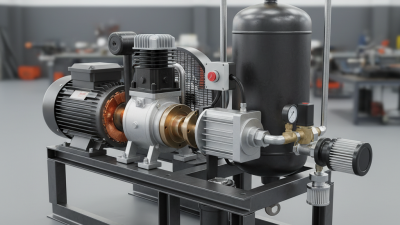
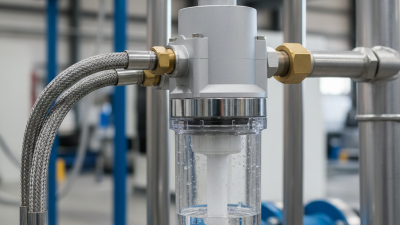
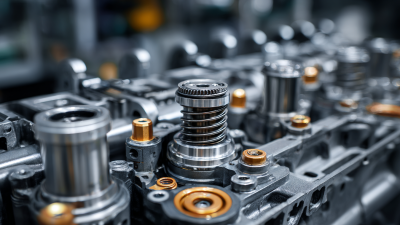
Air compressor parts suppliers do more than ship filters, valves, and seals. Reliable suppliers help buyers match each part to pressure, temperature, oil compatibility, and duty cycle. Common offerings include air filters, oil separators, intake valves, minimum-pressure valves, belts, couplings, drain valves, sensors, and service kits. These details matter because one incorrect seal can cause overheating, pressure loss, or repeated shutdowns.
The U.S. Department of Energy reports that compressed air can represent about 10% of manufacturing electricity use. Its guidance also notes that leaks may waste 20–30% of compressor output. This makes genuine replacement quality and correct sizing financially important. Suppliers should provide material specifications, dimensional drawings, testing records, and traceable batch information. ISO 8573-1 also helps buyers define air purity requirements for particles, water, and oil. Still, a perfect parts list is a myth. Site conditions change, and catalog data can miss real dust, humidity, or vibration.
Tips: Ask for operating-temperature limits and seal materials before ordering. Compare the part number, dimensions, and connection type. Keep one tested spare kit onsite. Photograph the old component before removal. A low price may hide shorter service life, but expensive parts are not automatically better. Evaluate evidence, not promises.
Top Air Compressor Parts Suppliers for Global Buyers
Key Factors for Comparing Suppliers in the Global Market
Global buyers should compare air compressor parts suppliers beyond catalog size. In my sourcing experience, a reliable supplier answers technical questions with drawings, material grades, and fitment data. Ask for compatibility with your compressor model, pressure range, temperature limits, and lubricant conditions. A supplier who only sends a price sheet creates avoidable risk. Request sample seals, valves, or filter elements before placing a production order. Check dimensions with calipers, not assumptions. Small errors can stop a line.
Quality evidence matters more than polished websites. Review inspection reports, batch traceability, and documented quality procedures. Ask how suppliers test leakage, hardness, corrosion resistance, and machining accuracy. Independent certificates can help, but verify their scope and date. I have seen impressive paperwork fail to explain actual sampling rates. That gap deserves attention. Compare warranty terms, replacement handling, and technical response times. A clear process for defective parts protects maintenance budgets and production schedules.
Global logistics require practical comparisons. Evaluate packaging, export documents, lead times, minimum order quantities, and spare-part availability. Confirm whether the supplier can maintain consistent materials and dimensions across repeat orders. Currency, duties, and freight can change the real purchase cost. Calculate landed cost per usable part, not invoice price alone. Communication also reveals capability. Do they confirm measurements in writing? Do they flag uncertain specifications? Honest hesitation is often safer than confident guessing. Keep written approval records for every critical component.
Global buyers should verify air compressor parts beyond price and delivery speed. The U.S. Department of Energy’s Improving Compressed Air System Performance sourcebook reports that leaks can waste 20–30% of compressor output. Poor seals, incorrect valves, and weak hoses can create similar losses. Ask suppliers for batch traceability, material certificates, dimensional inspection records, and pressure-test results. A certificate alone is not proof. Request evidence linked to the exact part number and production batch.
Compatibility needs practical checking. Compare bore size, thread type, shaft dimensions, pressure rating, temperature range, and lubricant requirements. Review the compressor’s service history, not only its catalogue. ISO 1217 supports performance testing for displacement compressors, while ISO 8573-1 defines compressed-air purity classes for contamination control. A filter element may fit physically but still deliver the wrong purity class. That mistake can damage instruments or contaminate production air. I have found that visual similarity often misleads purchasing teams. It looks obvious. It is not.
Tips: Ask for a sample inspection before bulk ordering. Use calibrated tools to check seals, clearances, and connection dimensions. Confirm conformity documents, warranty terms, and replacement availability in your region. Check whether the supplier follows a documented quality system, such as ISO 9001, but do not treat certification as a substitute for testing. Record every approval decision. Small details matter. Because specifications can be incomplete, ask the supplier to identify assumptions in writing. That simple step exposes compatibility risks before installation.
Price deserves more than a low number on a quotation. Compare identical specifications, materials, tolerances, and included seals. A cheaper valve may exclude testing or protective packaging. Ask for a line-by-line quote. It exposes hidden costs. Check minimum order quantities, tooling charges, payment terms, and currency risks. I also request recent inspection records and sample measurements before approving a large order. This step feels slow, but one incorrect dimension can delay an entire maintenance schedule.
Shipping needs practical verification. Ask how the supplier protects machined parts against moisture, vibration, and impact. A wooden crate, desiccant bags, and clear part labels can prevent expensive confusion. Compare delivery times using the same shipping terms and destination. Confirm whether the quote includes export packing, freight, insurance, and customs documentation. Request carton dimensions and gross weight early. Freight estimates often change after packing. That detail is easy to overlook.
After-sales support reveals operational maturity. Look for written warranty periods, response targets, replacement procedures, and technical contacts who understand compressor assemblies. Ask whether they can provide installation drawings, torque guidance, maintenance instructions, and traceability records. A dependable supplier should investigate failures instead of immediately blaming installation. Test communication before purchasing: send a detailed question and measure the answer’s clarity. Some responses sound professional but remain vague. I have learned that fast replies are not enough; useful replies include evidence, limits, and a workable next step. Keep every promise in writing.
Top Air Compressor Parts Suppliers for Global Buyers
Selecting the right supplier starts with your compressor’s actual working conditions. Check the model, part number, pressure range, temperature, and operating hours. A part may look identical but use a different seal or tolerance. That small difference can cause leakage, vibration, or early failure. Ask suppliers for drawings, material details, inspection records, and compatibility confirmation. Experienced suppliers should explain technical limits clearly, not simply promise a quick shipment.
Reliability also depends on traceability and communication. Confirm production capacity, stock levels, lead times, packaging methods, and replacement policies. Request a sample when the part affects safety or continuous operation. Review test reports carefully. Generic certificates are not enough. I once treated a short lead time as proof of readiness. It was not. The supplier later changed the delivery date, and our maintenance schedule suffered. That experience changed how I compare offers.
Tips: Keep a record of dimensions, old-part photos, and failure symptoms. Compare total cost, not unit price alone. Ask who checks the parts before dispatch. Confirm how urgent problems are handled across time zones. If answers remain vague, pause the order. A supplier should welcome technical questions. Trust needs evidence.
| Evaluation Dimension | What to Check | Recommended Benchmark | Why It Matters | Buyer Action |
|---|---|---|---|---|
| Part Compatibility | Compressor model, part number, dimensions, connection type, pressure rating and material | Written compatibility confirmation and dimensional drawing before purchase | Prevents incorrect installation, leakage and avoidable downtime | Send the nameplate, existing part number and technical drawing to the supplier |
| Product Range | Availability of filters, separators, valves, belts, couplings, seals, sensors and service kits | A documented catalog with clear part numbers and replacement intervals | A broader range can simplify purchasing and standardize maintenance | Compare the supplier catalog with the plant’s preventive-maintenance list |
| Quality Management | Quality-control procedures, inspection records, traceability and corrective-action process | ISO 9001-certified quality system or equivalent documented controls | Improves consistency across repeat orders and reduces rejected parts | Request the certificate scope, validity and sample inspection report |
| Performance Documentation | Flow, pressure, temperature, filtration efficiency, power requirements and operating limits | Technical datasheets based on applicable standards, including ISO 1217 or ISO 8573-1 where relevant | Allows engineering teams to verify performance rather than relying on price alone | Make datasheets and test requirements part of the purchase specification |
| Material and Construction | Elastomer type, metal grade, corrosion resistance, surface finish and sealing design | Materials identified by specification and suitable for the air, oil, temperature and humidity conditions | Correct materials extend service life and prevent premature failure | Confirm compatibility with lubricated or oil-free compressor systems |
| Lead Time | Stock status, production schedule, order cut-off time and estimated dispatch date | Stocked standard parts: commonly 3–10 business days; made-to-order parts require a confirmed schedule | Reliable delivery supports planned maintenance and reduces production interruptions | Obtain a written lead-time commitment and escalation contact |
| Minimum Order Quantity | Minimum order requirements for standard, customized and private-label parts | Flexible quantities for maintenance parts; clearly stated minimums for customized production | Prevents excess inventory and improves total procurement cost | Compare unit price, MOQ, storage cost and expected annual consumption together |
| Warranty and Returns | Warranty period, exclusions, evidence requirements and replacement procedure | Clear written warranty terms, commonly 6–12 months for replacement parts, subject to supplier conditions | Defines financial responsibility when a part fails prematurely | Clarify whether labor, freight and consequential damage are excluded |
| International Shipping | Export packaging, shipping documents, customs support, insurance and delivery terms | Quotation aligned with Incoterms® 2020 and packaging suitable for long-distance transport | Reduces customs delays, freight disputes and transit damage | Compare EXW, FCA, FOB, CIF or DAP offers on the same landed-cost basis |
| Technical Support | Installation guidance, troubleshooting, maintenance instructions and response time | Named technical contact with documented response and replacement-part support | Technical assistance can shorten diagnosis and restart time | Test support quality with a pre-sales compatibility question |
| Total Cost of Ownership | Purchase price, freight, energy impact, replacement frequency, labor and downtime risk | Select the lowest verified lifecycle cost, not automatically the lowest unit price | A cheaper component may cost more if it causes frequent replacement or pressure loss | Use a three-year cost comparison for critical compressor parts |
| Supplier Verification | Business registration, factory or warehouse capability, references, audit access and payment security | Verified legal entity, consistent documentation and traceable sales history | Reduces counterparty, quality and payment risks in global transactions | Begin with samples or a small trial order before approving large-volume purchasing |