
Blog

China Top 10 Wood Drying Equipment Manufacturers?

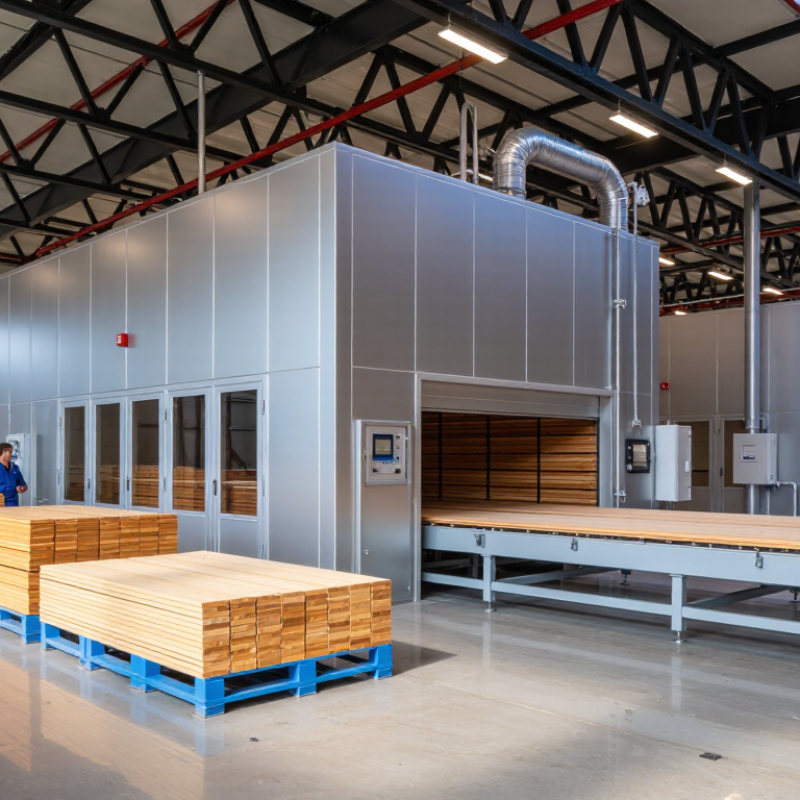
Choosing a wood drying system can shape product quality, energy use, and production schedules. This guide introduces ten manufacturers serving China’s wood-processing market. It focuses on Wood Drying Equipment, including conventional kilns, heat-pump dryers, and systems designed for specific timber volumes. The right choice depends on more than a machine’s advertised capacity.

A useful comparison looks at practical details: chamber size, temperature control, airflow, moisture monitoring, insulation, and available after-sales support. These features affect how evenly boards dry and how much rework a facility may face. Ask manufacturers for technical specifications, installation requirements, and references from comparable operations. A kiln that suits a small furniture workshop may not fit a large sawmill. Simple, but important.

Manufacturer information can change, and product claims are not always easy to compare. This overview should be treated as a starting point, not a ranking based on independent factory audits. Buyers should verify current models, certifications, service coverage, and performance data directly with each supplier. Even a detailed brochure leaves questions. Site conditions, timber species, board thickness, and local energy costs can alter results. The following profiles aim to clarify what each company offers and what readers may want to check before making a shortlist.
China Top 10 Wood Drying Equipment Manufacturers?

Wood Drying Basics: From the 30% Fiber Saturation Point to 8–12% Moisture

Wood drying changes character near the fiber saturation point. The USDA Forest Products Laboratory’s Wood Handbook (FPL-GTR-282, 2021) places this point near 30% moisture content for many species, though actual values vary. Above it, free water leaves cell cavities with relatively little shrinkage. Below it, bound water leaves the cell walls, and shrinkage becomes more significant. That is where checks and distortion can appear. Small details matter.

For many indoor applications, 8–12% moisture content is a practical target, not a universal rule. The Wood Handbook explains that equilibrium moisture content depends on surrounding temperature and relative humidity, so a board suitable for one room may move in another. Drying operators should track both kiln conditions and representative board moisture, then verify readings with a calibrated meter. A single surface reading can mislead. Thick stock may retain a wetter core even when its face feels dry. Allowing time for equalization helps reduce that gap, but it cannot erase every drying stress. The awkward truth: a neat target number does not guarantee stable lumber. Species, thickness, airflow, and the wood’s eventual indoor environment still matter.

Four Kiln Technologies: Conventional, Dehumidification, Vacuum, and RF

Conventional kilns use heated air and controlled ventilation to remove moisture. Operators adjust temperature, humidity, and airflow as boards dry. A stack with uneven sticker spacing can still develop wet pockets. Dehumidification kilns condense water from circulating air and reuse much of its heat, making them useful for smaller batches and moderate temperatures. The USDA Forest Products Laboratory’s Wood Handbook (2021) reports equilibrium moisture content near 12% at 30°C and 65% relative humidity. That figure helps explain why final moisture targets should reflect the building’s expected indoor conditions, not just the kiln schedule.

Vacuum kilns lower pressure, allowing moisture to evaporate at lower temperatures. They can shorten drying for thick stock, but loading and monitoring matter. Radio-frequency systems heat wood volumetrically, which can improve temperature uniformity in thick sections; however, equipment cost and careful process control can limit their fit. No single method suits every species, thickness, and production scale. Measure moisture in several boards, including pieces from the center of the stack. Small details matter. The handbook is a sound technical reference, but real schedules still need adjustment for local lumber and equipment. It is easy to trust a displayed average too much.

China Wood-Drying Equipment: Four Kiln Technologies

This chart compares defining operating principles, not manufacturers or market rankings. A value of 1 indicates that the principle is characteristic of the technology; 0 indicates it is not a defining principle.

Top 10 Chinese Manufacturers: Compare Products, Capacity, and Certifications

Comparing China’s top ten wood-Drying Equipment manufacturers works best when product type and operating needs are clear. Options may include conventional kilns, heat-pump dryers, and vacuum systems. Each suits different timber, batch sizes, and drying schedules. Check chamber dimensions, loading method, heating source, and control accuracy. A stated capacity means little without its measurement basis. Ask whether it refers to solid wood volume, a specific species, or a particular moisture range. Details matter.

Look for practical evidence, not brochure claims. Request a sample drying schedule, temperature-uniformity data, and references from comparable installations. A polished brochure can still leave gaps. Compare energy use per batch, fan capacity, insulation thickness, and available after-sales support. Then review certifications carefully: confirm the certificate covers the exact equipment model and relevant scope. An ISO management certificate alone does not establish drying performance. Export requirements can vary by destination, so verify applicable documentation with the supplier and an independent testing body. Capacity figures may look impressive; real operating conditions can change them. Ask for a written test plan.

China Top 10 Wood Drying Equipment Manufacturers? - Top 10 Chinese Manufacturers: Compare Products, Capacity, and Certifications

This comparison covers ten common wood-drying equipment configurations, not a verified ranking of manufacturers. Capacity figures are indicative planning ranges, not specifications attributed to any particular supplier.

No. Equipment Configuration Typical Applications Indicative Capacity Heat Source / Drying Method Key Selection Considerations Documentation to Request
1 Conventional batch kiln Sawn timber, furniture stock, and general-purpose lumber drying Approximately 20–200 m³ per charge Steam coils or hot-water coils with forced-air circulation Airflow uniformity, kiln insulation, species-specific schedules, and moisture-content control Capacity drawings, control-system details, operating manual, and applicable conformity documents
2 Small batch kiln Small sawmills, woodworking shops, and specialty lumber batches Approximately 2–20 m³ per charge Electric, hot-water, or compact boiler heating with forced-air circulation Available installation space, power supply, batch flexibility, and ease of loading Electrical diagrams, rated power, installation requirements, and safety documentation
3 Dehumidification kiln Small to medium lumber batches where heat recovery and moderate-temperature drying are priorities Approximately 5–50 m³ per charge Heat-pump dehumidification with controlled air circulation Ambient operating limits, drying time, heat-pump service access, and condensate management Performance data at stated conditions, refrigerant details, electrical ratings, and maintenance instructions
4 Vacuum drying system Thick, valuable, or difficult-to-dry timber requiring shorter drying cycles Approximately 1–30 m³ per charge Vacuum-assisted drying, commonly using heated platens or circulating heat-transfer media Maximum timber dimensions, loading method, vacuum level, and cycle-specific energy use Vessel design information, pressure/vacuum safety documents, cycle data, and service requirements
5 Solar-assisted kiln Seasonal or lower-throughput operations with suitable solar conditions Approximately 5–50 m³ per charge Solar heat, often supplemented by an auxiliary heater and fans Local climate, seasonal throughput, backup heating, and moisture-control consistency Collector area, expected operating conditions, ventilation design, and auxiliary-heater specifications
6 High-temperature kiln Selected industrial processes for species and products suited to elevated-temperature schedules Approximately 10–100 m³ per charge High-temperature hot water, thermal oil, or other engineered heating systems Species suitability, product-quality requirements, temperature uniformity, and equipment safety design Maximum design temperature, thermal-system drawings, safety interlocks, and validated process data
7 Continuous tunnel dryer High-throughput production lines processing timber in a steady sequence Rated by throughput; commonly specified in m³ or tonnes per day Continuous forced-air drying with staged temperature and humidity zones Feedstock consistency, line speed, residence time, material handling, and production-line integration Guaranteed throughput conditions, layout drawings, control interfaces, and commissioning criteria
8 Radio-frequency or dielectric dryer Specialized applications requiring volumetric heating or treatment of selected wood products Typically specified by product dimensions and throughput, rather than a standard batch volume Radio-frequency or microwave energy, with process-specific controls Energy uniformity, product geometry, electromagnetic safety, and suitability for the intended species Electrical and electromagnetic safety documentation, operating limits, and application-specific test results
9 Mobile or containerized kiln Remote sites, temporary operations, or facilities needing relocatable drying capacity Approximately 5–40 m³ per charge Packaged heating and forced-air systems; heat source varies by configuration Transport dimensions, site utilities, weather protection, loading access, and relocation requirements Transport dimensions, lifting points, utility requirements, installation instructions, and safety documents
10 Hybrid kiln with heat recovery Industrial operations seeking to combine drying control with recovery of usable process heat Approximately 20–200 m³ per charge Conventional kiln heating combined with heat exchangers or other heat-recovery equipment Measured energy performance, operating conditions, maintenance needs, and compatibility with the heat source Energy-performance test conditions, heat-recovery diagrams, control specifications, and maintenance schedule

Certification note: ISO 9001 is a quality-management-system standard, not a guarantee of dryer performance. CE marking concerns conformity with applicable EU requirements and is not a universal product-quality certification. Confirm the exact product, applicable regulations, certificate or declaration scope, and issuing body directly with each supplier; certification requirements depend on the equipment and destination market.

Key Equipment Metrics: Batch Volume (m³), Temperature Range (°C), and Controls

When comparing China’s top 10 wood drying equipment manufacturers, start with the figures that shape daily production. Batch volume, operating temperature, and control capability matter more than a large headline capacity. A chamber rated for 50 m³ may not hold that much usable lumber once airflow gaps and stacking clearances are considered. Ask whether the stated volume means chamber space or actual wood load. Small distinction. Big effect.

The temperature range should suit the wood species, board thickness, and target moisture content—not simply look impressive. Check minimum and maximum setpoints, sensor placement, and temperature uniformity across the load. A displayed setpoint does not prove every corner reaches it. Request data from a representative batch, including temperature and moisture readings. Real records help.

Controls determine whether operators can repeat a drying schedule or must constantly intervene. Look for programmable steps, alarms, data logging, and separate readings for dry-bulb and wet-bulb conditions. Confirm how the system responds to power loss or a failed sensor. Ask for a demonstration using your board dimensions, not just an empty chamber. Automation can reduce routine adjustments, but it cannot fix poor stacking or inconsistent lumber. I would compare calibration support and service response alongside capacity; impressive specifications can still disappoint.

How to Evaluate Kilns: Moisture Uniformity, Energy Use, Safety, and Service

When comparing wood-drying equipment manufacturers in China, ask how they verify moisture uniformity—not just how quickly a kiln completes a cycle. Request a sample drying report for the wood species and board thickness you actually use. It should show moisture readings from several positions, including near the door and at the centre of the load. Small differences matter. A few test boards with handheld meter readings can reveal uneven drying that an average conceals. Ask how the supplier accounts for sensor calibration and changes in stacking or airflow.

Energy use deserves a measured comparison. Check whether quoted consumption is based on a defined load, starting moisture content, and cycle time; otherwise, figures may not be comparable. Ask to see meter records from a representative run. That is not enough. Also inspect insulation, fan controls, and heat recovery options, then consider how local operating conditions affect performance. Safety details should include temperature limits, emergency stops, electrical protection, and clear operating instructions. Ask who provides installation guidance, spare parts, and troubleshooting after commissioning. Get response times in writing. Service can sound excellent in a sales call, yet practical support depends on staff, parts availability, and distance. One awkward question is worth asking: what happens when a sensor fails mid-cycle? A careful answer may expose gaps in an otherwise polished proposal.