China Top 10 Colored Glass Sheet Suppliers?
China has become a major source of architectural, decorative, and furniture glass. This guide introduces ten notable suppliers of Colored Glass Sheet for projects requiring controlled light, vivid surfaces, and consistent dimensions. The selection considers manufacturing experience, product range, quality systems, export capability, and customer support.
A reliable supplier should offer clear specifications for thickness, color, transparency, surface finish, and edge processing. Samples matter. A blue sheet can appear different under showroom lighting, daylight, and warm interior lamps. Buyers should also review tempering options, cutting tolerances, protective film, packaging strength, and minimum order quantities. These details often affect installation more than the color itself.
The listed companies may serve different needs. Some focus on large architectural panels, while others handle smaller decorative orders or customized patterns. Factory visits, video inspections, and independent sample testing can provide useful evidence before a purchase. Certificates and inspection records should be checked carefully, not simply accepted at face value.
No ranking is permanent. Supplier performance may change with equipment, staff, materials, or project volume. This article is therefore a practical starting point, not a final verdict. A few details may remain unclear until direct communication begins. Request recent product photos, technical data, lead times, and written quotations. Confirm everything. Careful comparison helps reduce color variation, transit damage, delayed delivery, and costly rework.
What Are Colored Glass Sheets and Where Are They Used?
Colored glass sheets are flat panels made by adding mineral pigments or metallic oxides during manufacturing. The color becomes part of the glass, rather than a surface coating. This supports stable appearance, easier cleaning, and better resistance to ordinary indoor wear.
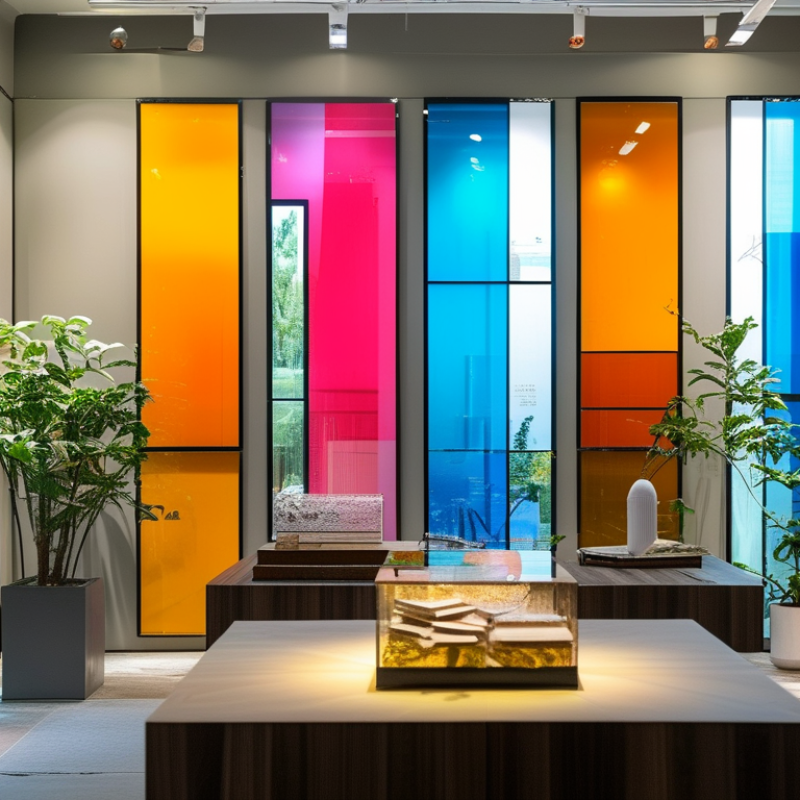
They are used in kitchen splashbacks, shower screens, doors, partitions, furniture panels, and decorative walls. In sunlight, amber glass can cast a warm tone across a room. Blue and green sheets often create a cooler visual effect. Translucent panels divide offices while preserving borrowed light. Opaque sheets provide stronger privacy for bathrooms and reception areas.
Chinese suppliers commonly offer float, tempered, laminated, and patterned colored glass. Each type solves a different problem. Tempered glass improves impact safety, while laminated construction helps hold fragments together after breakage.
However, color may appear different under daylight, LEDs, and warm interior lamps. Samples should be checked in the actual space. Small details matter. Thickness, edge finishing, hole placement, and glass tolerance can affect installation.
A common mistake is approving production from a screen image alone. Ask for technical data, safety documentation, and a physical color sample. The darkest sheet is not always the best choice. Lighting, maintenance, and long-term performance deserve equal attention.
What Products and Customization Options Do They Offer?
China’s top ten colored glass sheet suppliers generally serve architecture, interiors, furniture, and retail projects. Their product ranges often include tinted float glass, low-iron glass, back-painted glass, textured sheets, and laminated colored glass. Some also provide tempered and heat-strengthened options for demanding installations.
Common thicknesses range from 3 to 19 millimeters. Standard sheet sizes may be available, while larger projects usually require made-to-order dimensions. Buyers can request custom colors using RAL, Pantone, or physical samples. However, color matching is not always perfect. Lighting, glass thickness, and viewing angles can change the final appearance.
Customization may include polished, beveled, or flat edges. Suppliers can also arrange drilling, CNC cutting, rounded corners, grooves, and shaped openings. Screen printing, ceramic patterns, gradients, and translucent finishes add visual detail. Laminated versions can combine colored glass with clear or decorative interlayers.
Reliable suppliers usually provide small samples, technical drawings, production schedules, and inspection records. They should explain tempering limits before accepting complex designs. This matters because drilled or deeply processed glass may require special sequencing. Packaging is another practical concern. Export crates should separate sheets with protective materials and allow moisture control.
From project experience, sample approval should cover color, surface quality, thickness, and edge treatment. A sample can look excellent, yet a large batch may show slight shade variation. That risk deserves written control requirements. Check dimensions after production, not only during ordering. Some customization details are easy to request but costly to correct later.
China Top 10 Colored Glass Sheet Suppliers: Products and Customization Options
This chart summarizes commonly advertised capabilities across ten Chinese colored-glass sheet suppliers. The values represent the number of suppliers offering each product type or customization option, based on supplier product listings. Cut-to-size processing, custom colors, thickness selection, and laminated glass are among the most frequently available options.
How to Compare Quality, Pricing, and Export Services
When evaluating China’s top ten colored glass sheet suppliers, ranking alone is not enough. A practical comparison starts with the glass itself. Ask for samples cut from current production, not only polished showroom pieces. Check color consistency under daylight, edge quality, thickness tolerance, and visible bubbles. For architectural use, request test data for light transmission, thermal performance, and safety treatment. I have found that a small sample often reveals more than a sales presentation. It can also expose uneven coating or slight shade changes.
Pricing needs a clear worksheet. Compare the same thickness, dimensions, finish, packing method, and minimum order quantity. A low quotation may exclude crates, inspection, inland transport, or export documents. Request a detailed pro forma invoice and confirm whether prices use FOB, CIF, or another agreed term. Ask how breakage claims are handled. The cheapest offer is not always economical. Sometimes it becomes expensive after rework and replacement.
Export service deserves equal attention. Reliable suppliers should provide production photos, packing records, loading details, and realistic lead times. Check communication during a trial order, especially when drawings change. Confirm container loading plans and moisture protection for long sea routes. Independent inspection can improve confidence, although it adds cost. I once underestimated that cost. That was a useful lesson. Keep approved samples, inspection criteria, and written tolerances in one file. This makes comparisons fairer and reduces avoidable disputes.

 24 Hour Service