
Blog

Top 10 Auto Labeling Machine Manufacturers Worldwide

An Auto Labeling Machine is no longer just a device that applies a label. It can help manufacturers maintain line speed, improve placement consistency, and track production across changing product runs. Buyers still face practical trade-offs: container shape, label material, changeover time, and available floor space all affect performance. Small details matter.

The market context is substantial, but broad figures need careful interpretation. Fortune Business Insights estimated the global packaging machinery market at approximately USD 45.4 billion in 2023 and projected continued growth through 2032. That figure covers many machine types, not labeling equipment alone. PMMI’s 2024 State of the Industry report also highlights automation and operational flexibility as important packaging-sector priorities. These reports offer useful context, but they do not rank individual labeler manufacturers.

This “Top 10 Auto Labeling Machine Manufacturers Worldwide” overview therefore focuses on capabilities buyers can assess: application range, line integration, speed options, changeover design, and service support. A fast machine may look impressive in a brochure. It still needs to handle the actual bottle, carton, or pouch reliably. Vendor claims should be checked against product trials, technical documentation, and references from comparable production lines. Rankings are never the whole story. Needs differ by industry and plant, and even a strong supplier may not fit every operation.
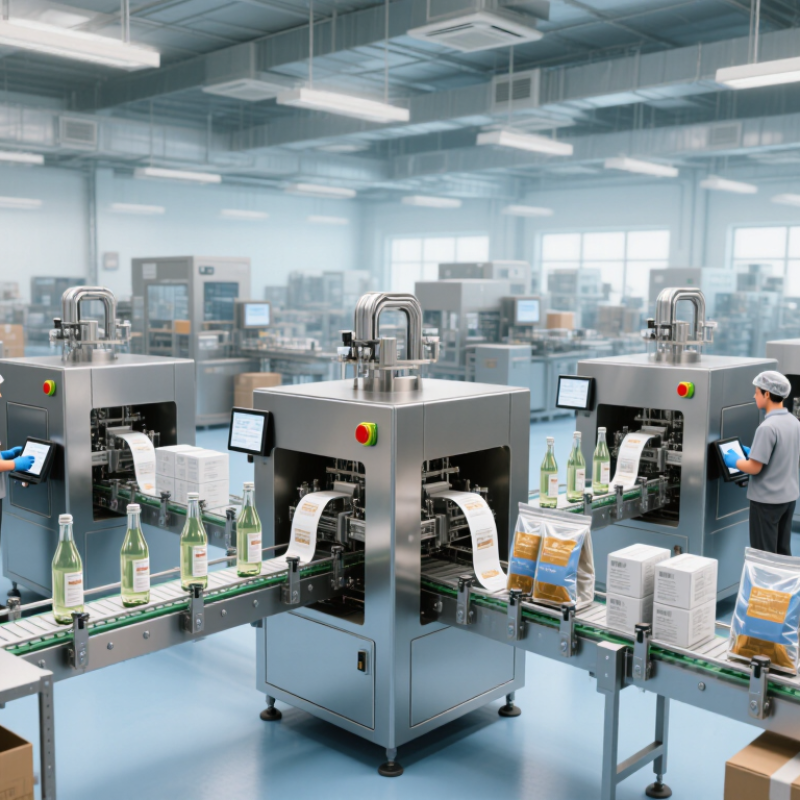
Top 10 Auto Labeling Machine Manufacturers Worldwide

Understanding Automatic Labeling Machines and Their Applications

Automatic labeling machines apply pressure-sensitive labels to containers, cartons, and other packages with controlled placement. Common systems include wrap-around, front-and-back, and top-surface applicators. The right format depends on the package shape, label material, and production pace. A round bottle may need a wrap station, while a flat carton can pass beneath a top-label applicator. Small details matter. Sensors detect each item, and adjustable guides help keep it steady as the label is applied. On a busy line, even a slight shift can create crooked labels or missed applications.

These machines serve food, personal-care, household-product, and other packaging operations. Selection should account for container dimensions, changeover frequency, cleaning needs, and operator access, not just advertised speed. Ask how the system handles gaps between products and whether settings can be saved for repeat runs. Test it with actual containers and labels before making a decision. A neat specification sheet can still mislead; real packages may wobble, collect dust, or arrive slightly out of alignment. That is worth admitting. Buyers comparing manufacturers should also check service availability, spare-parts support, and training, since dependable daily operation matters more than an impressive demonstration.

Criteria for Selecting Leading Manufacturers Worldwide

A credible evaluation begins with the product, container, and production environment, not a brochure’s headline speed. Ask manufacturers to demonstrate label placement on your own containers, including curved surfaces and damp or dusty conditions. Measure placement accuracy, reject rates, and how quickly operators can reload rolls. Small details matter.

Check whether the machine handles expected label sizes, materials, and line speeds without constant adjustment. Review changeover steps, safety guarding, cleaning access, and the availability of spare parts and trained service technicians in your region. Request clear documentation for calibration, maintenance intervals, and software updates. A polished demo is not enough. Ask for references from customers with similar products and production volumes.

Compare performance using a consistent test, ideally with your labels and containers. Record throughput, downtime, and placement variation rather than relying on a single successful run. Confirm that the machine can integrate with existing conveyors and inspection equipment. Then compare total ownership costs, including installation, training, consumables, and service. No scorecard removes judgment; sometimes a simpler machine is easier to maintain, though it may offer fewer adjustments. That trade-off deserves a careful look.

Top 10 Auto Labeling Machine Manufacturers Worldwide - Criteria for Selecting Leading Manufacturers Worldwide

This table provides a practical, brand-neutral framework for comparing manufacturers. It does not claim to rank or identify specific companies; verify each supplier’s capabilities and documentation directly.

Selection Criterion Why It Matters Evidence to Request How to Evaluate
1. Application and label compatibility Labeling machines are designed for different containers, label formats, and application positions. Technical specifications covering pressure-sensitive labels, container shapes, label dimensions, and application methods such as wraparound, front-and-back, or top-and-bottom labeling. Confirm that the proposed configuration matches the actual container, label material, adhesive, and placement requirements.
2. Verified production speed Rated speed alone may not reflect performance with a specific product, label, or production setup. A factory acceptance test or product trial using representative containers and labels, with the test conditions and results documented. Compare demonstrated output under equivalent conditions, including container spacing, changeovers, and any required inspection steps.
3. Application accuracy and consistency Positioning consistency affects product appearance, downstream packaging, and label readability. Written tolerance or acceptance criteria and measured trial results for label position, skew, wrinkles, and adhesion. Agree on measurable acceptance limits before ordering and verify them during a representative production run.
4. Changeover and adjustability Frequent product or label changes can add production time if adjustment is complicated. Changeover instructions, adjustment ranges, tooling requirements, and a demonstration using the intended product formats. Assess the time, tools, and operator steps needed to switch between the formats used at the facility.
5. Line integration A labeler must coordinate with upstream and downstream equipment to operate as part of a production line. Interface details for conveyors, sensors, line controls, guarding, and applicable communication protocols. Review the line layout and confirm electrical, mechanical, control, and product-transfer requirements with the integrator.
6. Inspection and rejection options Inspection can help identify missing, misplaced, or unreadable labels before products leave the line. Details of available sensors or vision systems, inspection functions, reject mechanisms, and reject confirmation options. Define which defects must be detected and test those cases with sample products during acceptance testing.
7. Safety and regulatory documentation Equipment must meet the applicable safety and regulatory requirements for its installation location. Risk assessment, safety-device documentation, electrical documentation, and conformity documentation applicable to the destination market. Have qualified personnel review the documents against local requirements, the facility’s safety standards, and the complete production line.
8. Materials and cleanability Construction and access requirements vary with the production environment and cleaning procedures. Materials specifications, enclosure and ingress-protection details where applicable, and cleaning or maintenance instructions. Check compatibility with the facility’s environment, cleaning agents, washdown needs, and hygiene procedures.
9. Service, spare parts, and training Service access and parts availability influence maintenance planning and recovery from equipment faults. Service coverage details, spare-parts recommendations, maintenance schedules, training scope, and support response terms. Confirm who provides local support, which parts are stocked, and what assistance is included after commissioning.
10. Total cost and acceptance terms The purchase price is only one part of the cost of installing and operating a machine. A quotation listing machine configuration, tooling, installation, training, warranty terms, options, and acceptance-test conditions. Compare equivalent scopes and evaluate lifecycle costs, exclusions, delivery requirements, and agreed performance criteria.

Profiles of 10 Major Auto Labeling Machine Manufacturers

Worldwide auto-labeling machine manufacturers differ in scale, engineering focus, and the production lines they serve. One specializes in compact tabletop units for short runs. Another builds high-speed systems for beverage and household-product lines. A third focuses on front-and-back labeling, helping operators apply two labels in one pass. A fourth designs wraparound applicators for cylindrical containers. A fifth offers modular equipment that can be adjusted as packaging formats change. Small details matter.

Another manufacturer concentrates on pressure-sensitive labels and quick roll changes. One is known for integration with conveyors, printers, and inspection cameras. A further supplier develops systems for irregular containers, where placement accuracy can be harder to maintain. One focuses on regional service and operator training, while another emphasizes custom-built lines for complex production layouts. Their strengths are not interchangeable. Buyers should compare label tolerance, changeover time, line speed, and access to spare parts. A fast machine may still cause delays if setup is difficult. Specifications also deserve a careful second look; published speeds do not always reflect real production conditions. Ask for a demonstration using your container and label stock. That reveals more.

Comparing Labeling Technologies and Industry Specialties

Automatic labeling machines are best compared by application, not headline speed. Pressure-sensitive systems suit frequent product changes and curved containers; operators can switch label rolls without heating an adhesive bath. Glue-applied machines often fit high-volume glass or rigid containers, where stable container spacing matters. Shrink-sleeve equipment handles full-body graphics and unusual shapes, but adds heat-tunnel and film-control requirements. Print-and-apply systems are useful for variable information on cartons and cases.

Small details matter. A wet bottle, dusty carton, or tapered jar can expose weaknesses that a factory demonstration misses.

Industry specialties shape machine design. Beverage lines prioritize throughput and accurate placement on fast-moving containers. Food plants may value washdown access and quick changeovers. Pharmaceutical operations often require controlled print quality and inspection records.

MarketsandMarkets estimated the global labeling equipment market at $5.5 billion in 2023, projecting $7.2 billion by 2028, a 5.6% compound annual growth rate. That growth reflects varied needs, not one universal machine.

When evaluating manufacturers, compare application range, changeover time, label waste, inspection options, and support for the actual container. Real lines are messier. Published speed figures can be useful, but they rarely capture jams, operator adjustments, or difficult label materials. A sensible comparison tests representative products under real production conditions.

Factors to Consider When Choosing a Manufacturer

Choosing an auto labeling machine manufacturer starts with the package, not the brochure. Compare the machine’s rated speed with your real production rate, including pauses for replenishment and changeovers. Check whether it handles your containers, label materials, and placement tolerances. A clear test using your own bottles or cartons can reveal wrinkles, skew, and missed labels before installation.

Automation is expanding across factories: the International Federation of Robotics reported 4,281,585 industrial robots in operation worldwide in 2023, a 10% increase from 2022, in its World Robotics 2024 report. That broader trend makes integration worth checking. Ask how the labeling system communicates with upstream and downstream equipment, and what support is available for setup, spare parts, and troubleshooting. A polished specification sheet is useful, but it cannot show every awkward adjustment on a fast-moving line.

Tips: Send sample containers and labels for a production-speed trial. Request changeover times, accuracy results, and maintenance intervals in writing. Check service coverage near your plant. Fit matters. And do not ignore the operator’s view; a difficult-to-adjust guide can slow a line every day.