Blog

What Is a Nylon Ring Nut and How Does It Work?

A Nylon Ring Nut is a fastening component designed to resist loosening under vibration, movement, and repeated loading. In many industrial catalogs, this term describes a metal nut combined with a nylon locking ring. The ring creates controlled friction around the mating thread. That friction helps the nut stay engaged after tightening. It is not the same as a plain hex nut.

The terminology is not perfectly consistent. Some suppliers use “ring nut” for a nut with a visible circular insert, while others mean a specialized threaded ring. That detail matters. Engineers should confirm the drawing, thread standard, material grade, and temperature range before selection. ASME B18.16.6 provides requirements for prevailing-torque locknuts, while DIN 982 and DIN 985 are commonly referenced for nylon-insert locknut designs. These standards help buyers compare dimensions, performance, and testing expectations.

Market evidence also supports careful selection. The Freedonia Group’s World Fastener report identifies automotive, machinery, construction, and electrical equipment as major fastener-consuming sectors. Mordor Intelligence’s Nylon Market report for 2024–2029 highlights continued nylon demand in transportation and industrial applications, where light weight and chemical resistance remain valuable. However, a market trend does not prove suitability for every assembly. Nylon can soften under sustained heat, and the locking effect may decline after repeated reuse. Small details matter. Picture a nut securing a vibrating motor bracket: the metal threads carry the load, while the nylon ring adds resistance against rotation. It sounds simple, but installation torque, thread condition, moisture, and temperature can change the result. This guide explains what a Nylon Ring Nut is, how it works, and where its practical limits deserve closer attention.

What Is a Nylon Ring Nut and How Does It Work?

Definition and Basic Structure of a Nylon Ring Nut

What Is a Nylon Ring Nut and How Does It Work?

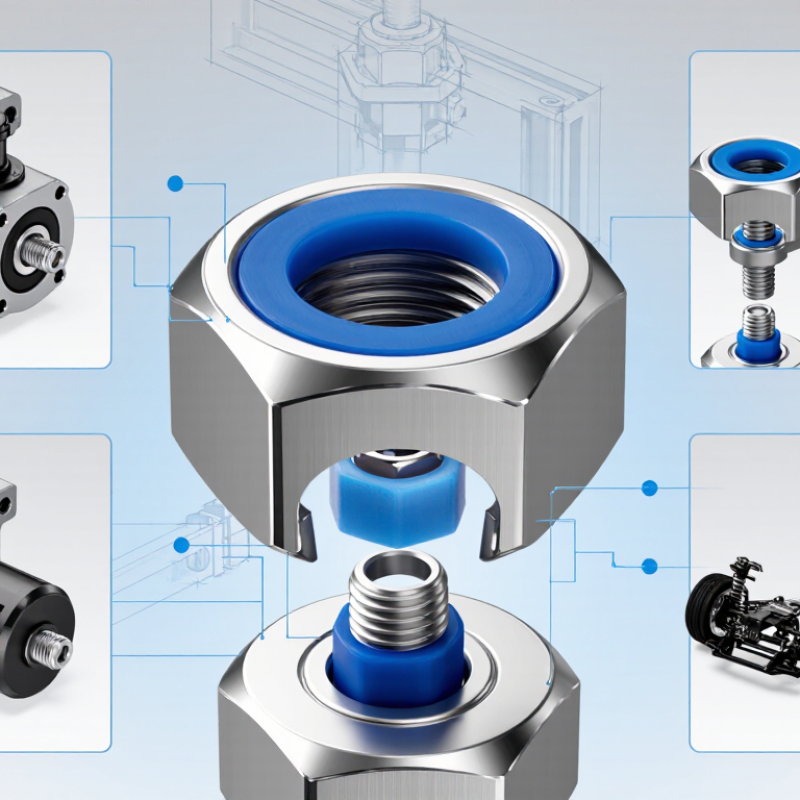
A nylon ring nut is a threaded metal fastener with a nylon ring fitted inside one end. This ring is usually called a nylon insert or collar. The metal body carries the load, while the nylon section creates resistance against unwanted loosening.

Its basic structure has three working parts: internal threads, external gripping flats, and the nylon ring. Internal threads match the bolt or stud. External flats allow a wrench to apply tightening torque. The nylon ring sits slightly inside the thread path. When the bolt enters, its threads press into the softer nylon and form a tight interference fit.

That friction helps the nut stay in position during vibration. It does not lock through adhesive, and it does not replace correct tightening torque. A clean bolt, suitable thread engagement, and even contact remain important. Small details matter here.

The nylon ring can also protect the threads from minor movement and moisture entry, although it is not a waterproof seal. Heat may soften or damage the insert, so temperature limits must be checked before installation. Strong solvents can create another problem. Repeated reuse may reduce its locking effect because the nylon gradually loses its original shape.

The name can be misleading. Not every ring-shaped nylon nut has the same design or performance. Always inspect the insert, thread size, and installation condition rather than relying only on appearance.

Materials and Key Features of Nylon Ring Nuts

A nylon ring nut is usually a metal nut with a nylon insert or ring. The ring deforms around the bolt thread and creates prevailing torque. This friction helps resist loosening from vibration. Common materials include polyamide 6 (PA6) and polyamide 66 (PA66). ISO 1874-1 classifies these engineering plastics by polymer type and performance characteristics.

Material choice changes the nut’s behavior. Engineering material databases and ASTM D570 test data commonly report moisture absorption near 2–3% under moderate conditioning. Saturated nylon can absorb roughly 8–10% water by weight. That matters. A damp nylon ring may expand, soften slightly, and lose dimensional stability. Typical unfilled PA6 and PA66 grades also show tensile strengths around 60–85 MPa, according to published ASTM D638 data ranges. These figures are useful references, not guarantees.

The nylon ring provides low weight, electrical insulation, and quiet thread engagement. It also limits installation reuse. ISO 2320 testing treats prevailing torque as a measurable performance feature, rather than an assumption. In practical assembly, temperature is often underestimated. Continuous heat above the material’s service range can reduce locking performance, while cold conditions may make the ring less flexible. Glass-filled nylon can improve stiffness, but it may increase thread wear and reduce impact tolerance. I have found torque charts helpful, yet incomplete. Actual results depend on bolt finish, thread cleanliness, moisture, and installation speed.

Nylon Ring Nuts: Common Metric Thread Sizes and Coarse Pitches

Nylon ring nuts are lightweight, electrically insulating fasteners that provide corrosion resistance and reduced surface damage compared with metal nuts. The chart shows nominal thread diameter and ISO coarse pitch values commonly used for metric threaded components.

Larger thread sizes provide greater nominal diameter and use a progressively larger coarse pitch. Actual nylon ring nut dimensions, load capacity, temperature resistance, and tightening torque depend on the specific design and nylon grade.

How a Nylon Ring Nut Creates a Secure Fastener

What Is a Nylon Ring Nut and How Does It Work?

A nylon ring nut, commonly called a nylon insert locknut, secures a threaded joint through controlled friction. Its top section contains a nylon ring with a slightly smaller internal diameter than the bolt thread. As the bolt enters, the threads deform the insert and create resistance. That resistance helps prevent rotation caused by vibration, repeated movement, or minor shock loads.

The locking effect begins after full thread engagement. A technician should tighten the nut with a calibrated torque wrench, not rely on feel alone. ASTM F606/F606M provides recognized methods for measuring fastener strength and performance, while ISO 2320 establishes prevailing-torque requirements for locknuts. These standards show why torque matters. Too little torque can leave the joint loose. Too much can damage the nylon or stretch the bolt.

Nylon inserts are practical, but they are not universal. Elevated temperatures, solvents, moisture, and repeated removal can reduce their holding ability. Many engineering references limit nylon use near continuous temperatures of 120°C, depending on the nylon grade and application. The exact limit must come from the material specification. Reusing the same nut may also reduce prevailing torque, even when the threads look normal. That assumption is easy to miss. Test data should guide the decision, especially on vibrating equipment, where a plain nut may slowly turn loose.

Installation Steps and Proper Tightening Methods

A nylon ring nut is a metal nut with a nylon insert inside its upper threads. The insert grips the bolt and helps resist loosening from vibration. It is not a replacement for correct assembly. The joint still needs clean threads, proper alignment, and suitable tightening.

Before installation, inspect the bolt and nut for damaged threads. Remove oil, dirt, and loose debris unless lubrication is required by the equipment instructions. Place the nut by hand and turn it several rotations. It should move smoothly. If it binds immediately, stop and check the alignment. Forcing it can damage both parts. The nylon ring should create resistance near the final threads.

Use a wrench or socket to tighten the nut, then apply a torque wrench when a specified value is available. Tighten gradually while keeping the connected parts aligned. Do not rely on the nylon insert alone to judge tightness. Excessive force may crush the joint, strip threads, or damage the insert. Without a torque specification, a general torque chart can provide guidance, but size, thread material, and lubrication change the result. That shortcut is imperfect. For critical assemblies, confirm the required value with qualified technical documentation. Replace the nut if the insert is cracked, loose, or no longer provides noticeable resistance. A nylon ring nut may look usable after removal, yet its locking performance can be reduced.

What Is a Nylon Ring Nut and How Does It Work? - Installation Steps and Proper Tightening Methods

Data Category Item or Stage Technical Description Recommended Practice
Basic Definition Nylon Ring Nut A hexagonal nut with an integrated nylon insert or nylon ring. The insert grips the bolt thread and creates resistance against loosening caused by vibration. Use it for general vibration resistance in clean, moderate-temperature applications.
How It Works Nylon Thread Engagement When the nut is threaded onto a bolt, the bolt threads deform the nylon insert slightly. The resulting friction supplements the clamping force created by tightening. The nylon section should engage the bolt threads fully rather than remain only at the nut entrance.
Material Limit Temperature Sensitivity Standard nylon inserts can soften or lose performance at elevated temperatures. Continuous-use limits depend on the nylon grade and the application environment. Confirm the nut specification before using it near heat sources, hot machinery, engines, or high-temperature fluids.
Compatibility Bolt and Thread Match The nut must have the same nominal diameter, thread pitch, and thread system as the bolt, such as M8 × 1.25 or 1/4-20 UNC. Never force a mismatched nut onto a bolt. Start the nut by hand to prevent cross-threading.
Installation Step 1 Inspect Components Check the bolt, nut, washers, and mating surfaces for damaged threads, burrs, corrosion, contamination, or deformation. Replace damaged components and clean the threads with a suitable lint-free cloth or approved cleaner.
Installation Step 2 Align the Joint Align the holes and place the bolt through the joint. Use a flat washer when needed to distribute load or protect a softer surface. Avoid using the nut to pull misaligned parts together because this can overload the fastener.
Installation Step 3 Hand-Start the Nut Thread the nut onto the bolt by hand until the nylon insert begins to engage the bolt threads. If the nut will not turn smoothly by hand, remove it and check thread compatibility and alignment.
Installation Step 4 Initial Tightening Use a wrench or socket to bring the joint together without applying excessive force or impact-tool torque. Keep the bolt head or opposite nut restrained to prevent unwanted rotation of the joint.
Installation Step 5 Final Tightening Apply the specified tightening torque with a calibrated torque wrench. The target torque depends on bolt grade, size, lubrication, joint design, and nut material. Follow the fastener or equipment specification whenever one is available.
Tightening Method Dry Thread Condition Dry, clean threads generally produce more friction than lubricated threads. The same torque therefore creates a different clamp load under different surface conditions. Do not apply lubricant unless the assembly specification permits it, and do not use dry torque values for lubricated threads.
Tightening Method Torque Wrench Method A torque wrench controls the rotational input used to tighten the nut, but it does not directly measure the resulting clamp load. Use a recently calibrated wrench and pull smoothly until the indicated torque is reached.
Reference Data Illustrative Dry Torque Range For common metric steel fasteners with coarse threads, approximate reference values are: M4: 1.5–2.0 N·m; M5: 2.5–3.5 N·m; M6: 5–7 N·m; M8: 12–18 N·m; M10: 25–35 N·m; M12: 45–60 N·m. Use these only as general reference values. The allowable torque may be lower for a nylon nut or a low-strength bolt.
Inspection Thread Protrusion After tightening, the bolt should extend through the nylon insert sufficiently to provide full thread engagement while avoiding excessive protrusion. Verify that the insert is engaged and that no joint gap remains.
Inspection Final Joint Check Inspect the joint for visible gaps, tilted washers, damaged nylon, stripped threads, or movement after tightening. Retighten only according to the specified procedure; do not compensate for a damaged component by adding excessive torque.
Reuse Guidance Repeated Removal The nylon insert can lose prevailing torque after repeated installation and removal, especially when exposed to heat, chemicals, or damaged threads. Replace the nut when the insert is worn, cracked, contaminated, or no longer provides noticeable resistance.
Application Limits When to Choose Another Locking Method High-temperature service, severe vibration, frequent disassembly, chemical exposure, or critical safety joints may require a different locking design. Select the locking method according to the equipment specification and the actual operating environment.

Important: Tightening torque is not universal. Always prioritize the fastener, equipment, or engineering specification. Torque values change with bolt grade, thread size, surface finish, lubrication, washer use, joint stiffness, and the strength and temperature rating of the nylon ring nut.

Common Applications, Benefits, and Limitations

A nylon ring nut usually contains a nylon insert inside its threaded section. When tightened onto a bolt, the insert grips the bolt threads and creates resistance against loosening. This resistance helps maintain clamping force during moderate vibration. The metal body carries the load, while the nylon ring provides the locking action. It is not a permanent adhesive.

Common applications include vehicle trim, appliance panels, electrical cabinets, furniture hardware, and light machinery. Technicians often choose these nuts where corrosion resistance, low weight, and reduced scratching matter.

Nylon also operates more quietly than some all-metal locking designs. However, its performance depends on correct torque, clean threads, and suitable temperature conditions. Reusing the nut may reduce its locking ability. That detail is often overlooked.

Tips: Check the working temperature before installation. Excessive heat can soften the nylon insert and weaken thread resistance. Avoid using these nuts for joints exposed to severe heat, strong chemicals, or critical dynamic loads unless engineering data supports them. Match the nut with the correct bolt grade and diameter. Do not force a damaged insert onto the threads. In field work, a torque check is useful because hand-tightening can create uneven results. Nylon ring nuts are convenient, but convenience should not replace joint verification.