
 24 Hour Service
- 800.825.3222
- Now Hiring
- Request A Quote
How to Find the Best Tunnel Kiln Supplier in China?
Choosing the right Tunnel Kiln supplier in China starts with the production line you actually need. A kiln for bricks, ceramics, or advanced materials may require different firing curves, loading systems, and atmosphere controls. A polished brochure cannot answer every process question. Ask for drawings, operating data, and references from plants making comparable products.
Quality expert W. Edwards Deming is widely associated with the reminder, “Quality is everyone’s responsibility.” That idea matters when assessing a supplier: reliable results depend on design, fabrication, commissioning, and after-sales support. Ask how the supplier measures temperature uniformity, fuel consumption, and product consistency. Request clear explanations of burner layout, refractory choices, control systems, and expected maintenance. Look closely at the details.
If possible, speak with an existing customer and learn what happened after installation—not only during the sales visit. Ask about commissioning delays, spare-part availability, and response times when the kiln stops. Get performance commitments and their measurement methods in writing. Compare total operating needs, not just the initial quotation. A lower price may conceal practical trade-offs.
There is no perfect supplier, and reference data may not match your plant exactly. That uncertainty deserves attention. This guide outlines a careful way to compare Chinese Tunnel Kiln manufacturers, check their technical capability, and identify questions worth asking before you commit. Ask for evidence. Then verify it.
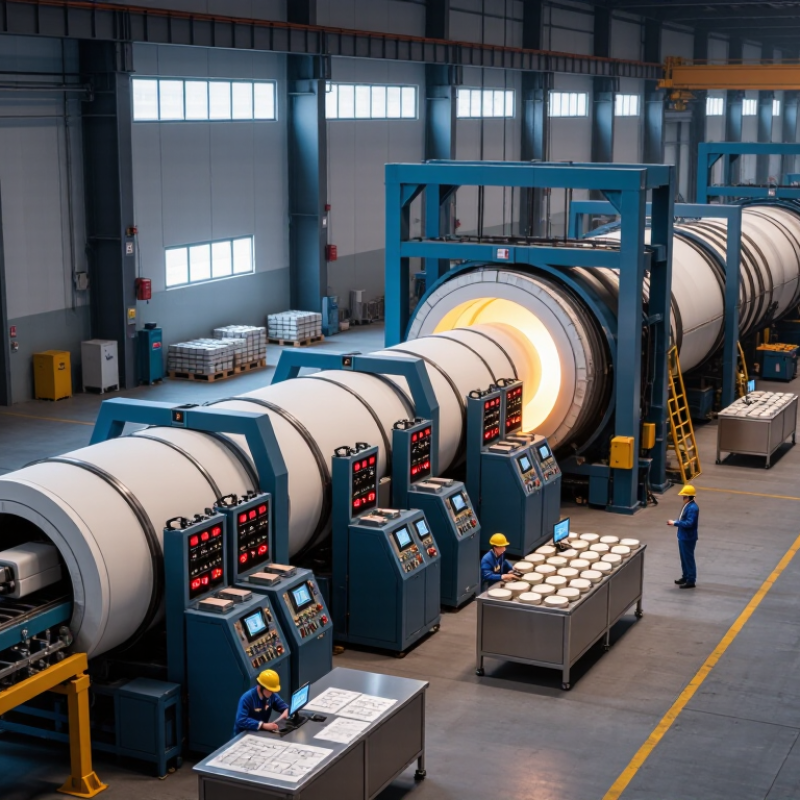
Define Your Tunnel Kiln Requirements and Production Goals
Before comparing tunnel kiln suppliers in China, define what the kiln must produce. Record the material, product dimensions, target firing temperature, and required daily output. Include the largest and smallest items, not just the average. A small change in product thickness can alter heat penetration and cycle time.
Describe the full production target. Estimate loading patterns, kiln-car spacing, operating hours, and acceptable reject rates. Note whether products need a controlled atmosphere, gradual cooling, or a specific temperature uniformity. Be precise. “High capacity” means little without a number. Also list available floor space, fuel or power supply, exhaust needs, and operator skill levels. These details help a supplier assess whether a proposed kiln fits your plant, rather than merely matching a brochure specification.
Ask potential suppliers to explain their assumptions behind throughput, energy use, and firing schedules. Request sample calculations and clarify which figures are estimates. If possible, provide representative products or test pieces for trials. A sales estimate is not production evidence. It is easy to overlook maintenance access or seasonal changes in raw material moisture; those factors can affect stable operation. Keep some flexibility in the brief, but mark essential limits clearly. That distinction makes technical discussions more useful and exposes gaps before equipment design begins.
| Requirement | Planning Target or Example | Unit or Basis | What to Confirm with the Supplier |
|---|---|---|---|
| Product and material | Specify the product type, body composition, dimensions, and intended use before selecting the kiln. | Product specification | Ask whether the proposed kiln design and firing curve suit the actual body, glaze, and product geometry. |
| Required output | Example planning goal: 30 tonnes of saleable product per operating day. | Tonnes/day | Clarify whether quoted capacity means loaded output, fired output, or saleable output after rejects. |
| Operating schedule | Example: continuous operation with planned annual maintenance and cleaning shutdowns. | Operating hours/day; days/year | Confirm the capacity calculation includes realistic loading, unloading, maintenance, and changeover time. |
| Firing temperature | Set the peak temperature from the product’s validated firing curve; many ceramic applications fall roughly within 950–1,300°C. | °C | Request the temperature profile, control accuracy, measurement locations, and suitable thermocouple specification. |
| Firing cycle | Define the required time from kiln entry to exit, including heating, soaking, and cooling; the cycle depends on the product and kiln design. | Hours | Ask for a proposed time-temperature curve and evidence that the target cycle can meet product quality requirements. |
| Product loading and kiln cars | Determine the net product mass per kiln car and the planned spacing and loading pattern. | kg/car; car spacing in m | Check the loading layout, kiln-car dimensions, setting furniture, and allowable load against product size and weight. |
| Kiln dimensions | Size the usable width, height, and heated length to the product envelope, loading pattern, and required throughput. | m | Confirm usable internal dimensions, temperature-zone arrangement, insulation thickness, and access for maintenance. |
| Fuel and utilities | State the available fuel and site utilities, such as natural gas, electricity, compressed air, and water. | Fuel type; pressure; flow; kW | Request utility consumption estimates at the specified production rate and confirm local fuel quality and supply conditions. |
| Energy performance | Set an energy-use target only after defining product, output, fuel, and operating conditions. | kWh/tonne or fuel units/tonne | Require the calculation basis, included equipment, measurement method, and operating assumptions for any energy guarantee. |
| Temperature uniformity | Define the acceptable variation across the usable kiln cross-section at critical firing zones. | °C variation | Agree on measurement positions, test conditions, instrumentation, and acceptance criteria before commissioning. |
| Product quality and rejects | Set measurable acceptance criteria for dimensions, appearance, strength, warpage, and other product-specific defects. | Inspection standard; reject rate | Define sampling and inspection methods and distinguish kiln-related defects from upstream forming or drying defects. |
| Emissions and compliance | Identify applicable local limits for dust, combustion gases, and other regulated emissions. | Applicable standards; mg/Nm³ where relevant | Confirm required monitoring, burner controls, exhaust treatment, and documentation for the installation location. |
| Controls and automation | Specify the required level of automatic temperature, pressure, and conveyor control, plus data logging. | Control functions; data points | Request a control-system description, alarm list, operating records, and backup or recovery procedures. |
| Installation and acceptance | Agree on site responsibilities, commissioning steps, training, and performance tests before ordering. | Project schedule; acceptance protocol | Set documented acceptance tests for output, product quality, energy use, and temperature performance under agreed conditions. |
| Planning note | Example figures are starting points for a project brief, not universal kiln specifications. Final values should be established through product trials, process engineering, and site-specific utility and compliance checks. | — | Provide the same product, capacity, utility, and acceptance data to each supplier so proposals can be compared on a consistent basis. |