
Blog

What Are the Different Types of Milk Cups?

Choosing a Milk Cup is not just a question of color or cute animal prints. For infants and toddlers, cup design affects grip, flow, cleaning, and how children practise drinking. Common options include handled trainer cups, soft-spout cups, straw cups, open cups, and weighted-straw designs. Each works differently at the kitchen table: a wide open rim invites sipping, while a valve may reduce spills but require extra cleaning.

Development matters more than a rigid product schedule. The U.S. Centers for Disease Control and Prevention lists drinking from an open cup, with occasional spills, as a milestone by age two. The American Academy of Pediatrics’ HealthyChildren guidance also recommends moving from bottles toward cups during toddlerhood. These are useful reference points, not promises that every child will follow the same timeline. Small spills are part of practice.

Material and construction deserve equal attention. Parents often compare stainless steel, food-grade silicone, and plastic for weight, durability, and ease of washing. Check the manufacturer’s age guidance, inspect spouts and straws for trapped residue, and consider whether replacement parts are available. No single cup is perfect. A leak-resistant lid can help on a walk, yet a simpler open cup may support supervised skill-building at home. The right choice depends on the child, the setting, and the caregiver’s willingness to clean it. This guide compares the main types, their practical advantages, and the trade-offs worth noticing before buying.
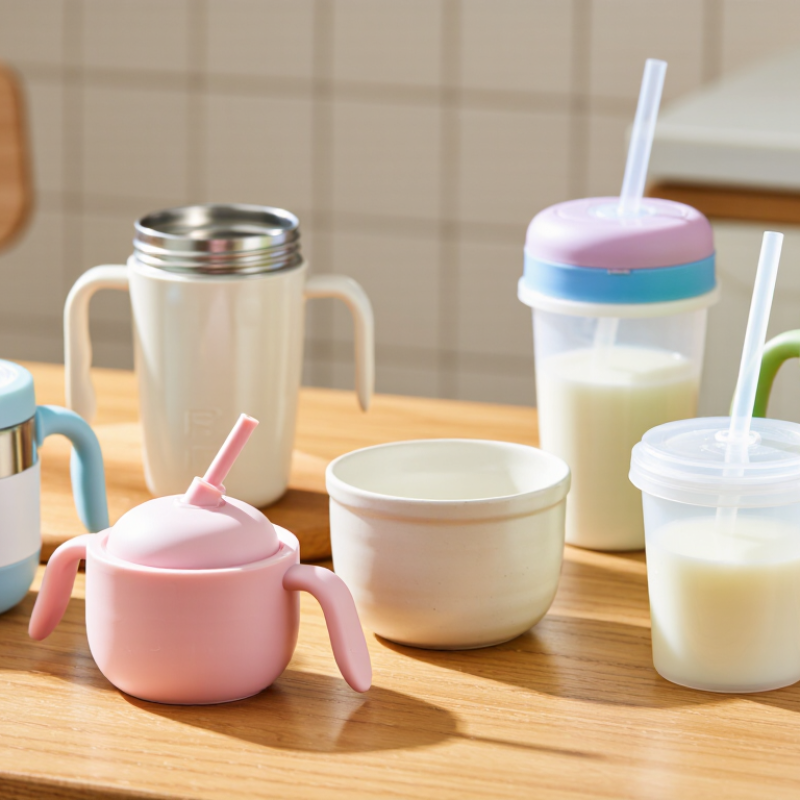
What Are the Different Types of Milk Cups?

How Milk Cups Are Classified by Purpose and Design

What Are the Different Types of Milk Cups?
How Milk Cups Are Classified by Purpose and Design

Milk cups differ in what they need to do. A wide, sturdy mug suits hot milk or a milky coffee, while a small glass makes cold milk easy to portion and serve. Cafés often use stainless-steel pitchers with narrow spouts for steaming and controlled pouring. For young children, handled cups or soft-spout training cups can be easier to grip, though the right choice depends on the child and the setting.

Design affects more than appearance. A curved rim can help guide a pour; a broad base may feel steadier on a table. Shape changes the pour. The National Coffee Association’s 2024 National Coffee Data Trends report found that 67% of U.S. adults had coffee the previous day, making milk-friendly serving ware a practical consideration for many cafés. Still, a cup that works well behind a counter may feel awkward at home. No single design suits every hand or drink.

Tips: Match capacity to the serving size, and check that handles stay comfortable when cups are full. For hot drinks, choose heat-resistant materials and avoid filling to the rim. Small details matter.

Types of Milk Cups: Typical Capacity by Purpose and Design

Representative capacities in milliliters (mL)

Capacities are illustrative examples, not fixed standards; sizes vary by product. Feeding bottles are designed for infants, while open and spouted cups support drinking practice. Straw cups offer a spill-resistant design, and insulated travel cups are made to help keep drinks at temperature.

Common Materials Used to Make Milk Cups

Milk cups are commonly made from ceramic, glass, stainless steel, plastic, or coated paper. Ceramic feels solid in the hand and holds warmth well, but it can chip if dropped on a hard kitchen floor. Glass lets you see how much milk remains and is easy to inspect for residue. It is heavier and breakable, though. Stainless steel is sturdy and light; its opaque walls make the remaining milk harder to judge. Plastic cups are lightweight and practical for small hands, but heat tolerance and scratch resistance vary by material. Check the maker’s care instructions rather than assuming every cup is microwave-safe.

Material choice also affects waste. The OECD’s 2022 Global Plastics Outlook estimates that 353 million tonnes of plastic waste were generated worldwide in 2019, and only 9% was ultimately recycled. That figure covers plastic waste generally, not milk cups specifically. Still, it is a useful reminder: a reusable cup helps most when it is actually reused. A durable cup that gets washed daily may suit home better than a disposable paper cup with a lining that complicates recycling.

Tip: For toddlers, compare cup weight, grip, and rim shape with the child’s hands. Inspect plastic for deep scratches and ceramic for chips. Small details matter. I would not choose by material alone; the easiest cup to clean is often the one used most reliably.

Milk Cups for Infants and Early Drinkers

For infants and early drinkers, a milk cup should make practice easier, not replace breast milk or infant formula. The CDC advises offering a cup from around six months, when babies begin complementary foods. A small, open cup lets a caregiver control each sip; a straw cup can reduce spills when little hands start helping. Some families also use spouted training cups. Keep practice brief, with the child seated upright and closely supervised. It can be messy. The American Academy of Pediatrics recommends completing the bottle-to-cup transition by 12 to 18 months. Readiness varies, so a rigid schedule may not suit every child.

WHO and UNICEF’s 2023 Global Breastfeeding Scorecard estimated that 48% of infants under six months worldwide were exclusively breastfed. That figure describes feeding patterns, not cup performance, but it is a useful reminder: a cup is a learning tool, not a reason to rush milk-feeding changes. Offer small amounts and watch for steady, comfortable swallowing. A child who coughs repeatedly, struggles to drink, or seems distressed may need a pause and advice from a pediatric clinician. The transition is rarely neat; even a well-chosen cup cannot prevent every spill.

What Are the Different Types of Milk Cups? - Milk Cups for Infants and Early Drinkers

Cup Type Typical Stage Design and How It Works Potential Benefits Things to Consider Cleaning Notes
Infant feeding bottle From birth, when bottle-feeding is used A bottle with a teat or nipple that releases milk as the baby sucks. Designed for feeding young infants; familiar to babies who take expressed breast milk or infant formula by bottle. Use a teat flow suited to the baby and follow safe milk-preparation and feeding guidance. Avoid propping the bottle or leaving it with a baby unattended. Take apart and wash the bottle, teat, ring, and cap after use. Follow local guidance on sterilizing feeding equipment.
Small open cup Often introduced when complementary foods begin, around 6 months, as the baby is ready A small cup with no lid or valve; an adult usually helps the baby sip from the rim. Offers practice drinking from a rim and does not require sucking through a teat or valve. Spills are common at first. Use small sips and supervise closely; do not let a baby walk or play with a cup in the mouth. Usually simple to wash because it has few parts. Clean promptly after milk feeds.
Straw cup For babies and toddlers who are ready to learn to drink through a straw; timing varies A cup with a straw, sometimes with a lid or spill-control valve. Can allow drinking without tipping the cup and can be useful for children who find rim drinking difficult. Straw skills vary. Check that the child can use it comfortably, and supervise while drinking. Valves may make sucking harder for some children. Wash the straw and any valve thoroughly; use a straw brush if needed and let all parts dry fully.
Soft-spout trainer cup For a child moving on from a bottle, depending on readiness and family preference A lidded cup with a soft, projecting spout; some models use a valve to reduce spills. A familiar transition shape for some children and often easier to carry than an open cup. It still involves sucking, and spill-control valves can require effort. It need not be a required step between bottle and open cup. Check the spout, lid, and valve for trapped milk; disassemble and clean according to the cup instructions.
Hard-spout sippy cup For some toddlers who are ready for a lidded cup A rigid spout extends from a lid; many designs include a valve to limit leaks. Portable and may reduce spills when used upright. Not necessary for learning to drink. Avoid prolonged sipping throughout the day; offer drinks while the child is seated and supervised. Remove and clean the lid and valve carefully, since milk residue can collect in small parts.
Rim-valve or 360-style cup For toddlers who can hold and tip a cup with supervision A lid allows drinking around the rim; a seal or valve opens when the child presses the rim to the mouth. Allows drinking from different points around the edge and can help limit spills when the cup is upright. The valve may take practice and can make drinking less like using a plain open cup. Check the child's comfort and drinking effort. Disassemble the sealing components and clean them thoroughly; follow the maker's care instructions.
Small handled cup For early drinkers who are practicing independent holding A small open cup with one or two handles to help a child grip it. Can support practice with holding and tipping a cup while an adult remains nearby. Handles do not prevent spills. Choose a size the child can manage and supervise every drink. Usually easy to clean; inspect handles and seams for milk residue.

Age and milk note: Readiness varies from child to child, so use these stages as general guidance rather than fixed age rules. Breast milk or infant formula remains the main drink during the first year. Cow's milk should not be used as a main drink before 12 months; ask a healthcare professional about individual feeding needs.

Everyday Milk Cups for Children and Adults

Everyday milk cups should suit the person using them, not just look good on a shelf. For toddlers, a small, lightweight cup with two handles can make practice easier. The CDC says children can begin learning to drink from a cup around 6 months, with bottle weaning generally completed between 12 and 18 months. An open cup builds sipping skills, while a straw cup may be easier on busy outings. Spills happen. That is part of learning.

For older children, choose a sturdy cup with a broad base and an easy-to-grip rim. Adults may prefer ceramic at home, or stainless steel for commuting. Capacity matters, too: the NIH Office of Dietary Supplements lists about 276 milligrams of calcium in one cup of milk. That makes an ordinary cup a useful portion guide, though individual needs vary. A cup that feels comfortable is more likely to be used every day.

Tips: Check that handles fit small hands, and wash lids and straws thoroughly. Avoid assuming a leak-resistant lid is easy to clean. For young children, supervise drinking and choose a durable cup that will not shatter if dropped.

Specialized Milk Cups for Storage and Serving

Milk cups for storage and serving solve different problems. A storage cup should have a tight-fitting lid, a stable base, and a smooth interior that is easy to clean. Glass lets you see the milk level, while food-grade stainless steel blocks light and resists breakage less well than some plastics. Check that any plastic is intended for food contact and follow its care instructions. Small details matter.

For refrigerated milk, use a clean, covered container and mark it with the date. Keep it chilled, and avoid repeatedly pouring unused milk back into the original container. A cup with measurement marks can help when portioning milk for recipes, but the markings may wear over time. Check them now and then. Storage cups are not automatically suitable for heating; follow the manufacturer’s guidance before warming milk in one.

Serving cups prioritize comfortable handling and controlled pouring. A small spout can help reduce drips, while a handle makes a warm cup easier to hold. Insulated cups can keep milk cool at the table, though their lids and narrow openings may take more effort to wash. A cup that looks convenient can be awkward in daily use. Inspect seams and seals, and choose a shape you can clean thoroughly.

Article Source: