
24 Hour ServiceBuying a Diesel Self Priming Sewage Pump is not simply a matter of choosing the largest engine. The right decision begins with the site, the wastewater, and the operating routine. A rural drainage project may need a compact trailer unit, while a municipal emergency station may require continuous, high-volume performance. Sludge, rags, stones, and changing water levels can quickly expose weak equipment.
Pump-industry educator Larry Bachus has often emphasized, “A pump is only as reliable as the system around it.” That observation matters here. Buyers should examine suction lift, discharge distance, solids-handling capacity, fuel consumption, priming speed, and access for cleaning. A pump that looks powerful on paper may struggle when its suction hose is too narrow or poorly sealed. Small details matter.
This guide presents seven practical tips for evaluating a Diesel Self Priming Sewage Pump. It considers pump materials, engine quality, automatic priming, safety features, maintenance access, supplier support, and total ownership cost. Look closely at the impeller, wear plate, check valve, and inspection cover. These parts face harsh conditions. Ask for verified performance data, not vague promises. Request a factory test report when possible. A polished brochure is not proof.
There is also room for honest doubt. Flow estimates may be wrong. Wastewater conditions may change. Even experienced buyers can overlook seasonal demand or fuel storage problems. Careful selection means checking assumptions before signing an order. It means matching equipment to real conditions, not ideal ones.
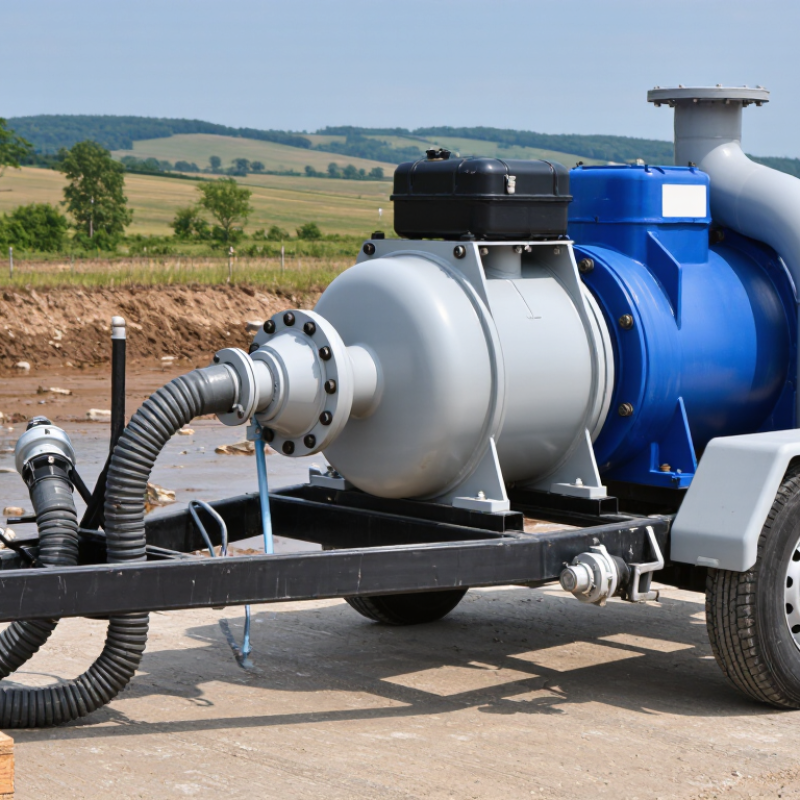
A diesel self-priming sewage pump combines a diesel engine, centrifugal impeller, suction chamber, and automatic air-removal system. It can start without manual priming after the casing is filled correctly. This matters on construction sites, flood zones, farms, and remote wastewater facilities. The UN World Water Development Report 2017 estimated that over 80% of global wastewater was discharged without treatment. Reliable temporary pumping remains important.
Before buying, check seven details. Confirm flow rate and total head from real site measurements. Verify the maximum solids-passage diameter. Inspect the suction lift, hose length, and coupling size. Choose an engine with enough reserve power, not only the advertised peak output. Ask about priming speed and dry-running protection. Check fuel-tank capacity for overnight operation. Finally, confirm parts availability and service training. Small oversights become expensive failures.
Field technicians often examine the impeller after pumping rags, grit, or stones. Abrasive solids can reduce efficiency quickly. A 2023 U.S. EPA wastewater energy overview notes that treatment facilities may consume 30–40% of municipal energy use, although conditions vary widely. Diesel pumps can provide useful independence during outages, but fuel consumption and exhaust control need careful planning. I would not trust a catalog flow figure alone. Test the pump against actual hose friction, elevation, and sewage temperature before purchase.
This chart presents representative engineering benchmarks commonly considered when selecting a diesel self-priming sewage pump. Actual performance depends on the pump design, impeller, pipework, wastewater characteristics, and operating conditions.
For a reliable purchase, compare the required flow rate and total head first, then verify practical suction lift, solids-passage capability, fuel autonomy, automatic priming performance, and access for maintenance. Always confirm the final duty point against the manufacturer’s performance curve.
7 Tips for Buying a Diesel Self Priming Sewage Pump
1. Measure actual sewage flow during peak hours, not only the daily average. The U.S. EPA’s 2022 Clean Watersheds Needs Survey estimated $630.1 billion in wastewater infrastructure needs over 20 years. That scale shows why capacity assumptions matter. 2. Calculate total dynamic head, including elevation, pipe friction, valves, and discharge pressure. 3. Check the suction lift carefully. A pump may self-prime, but long suction lines, air leaks, or a clogged foot valve can delay priming. Test the route on site.
4. Match the pump to the solids. Record rag size, grit, sludge concentration, and occasional debris. UNEP’s 2023 wastewater report notes that roughly 80% of global wastewater is discharged without adequate treatment. Poorly managed solids remain a practical problem. A wide passage helps. It does not solve everything. 5. Inspect the site conditions. Mud, flooding, limited ventilation, low temperatures, and unstable ground can affect installation and engine reliability. Leave room for cleaning and lifting equipment.
6. Compare diesel fuel use, runtime, noise, exhaust routing, and maintenance access. A lower purchase price can become expensive beside a remote wet well. 7. Require verified performance curves and a field commissioning test. Do not trust brochure figures alone. I would record flow, discharge pressure, priming time, and fuel consumption under real conditions. That record may reveal an awkward mistake before an emergency occurs. Beware of selecting a pump only by pipe diameter; that shortcut often overlooks lift and solids.
Tip 1: Match engine power to the real pumping load, not only the advertised flow rate. Measure total head, discharge distance, pipe friction, and elevation changes. A diesel engine with insufficient power may overheat or stall. Excessive power can waste fuel and stress the pump. In field inspections, operators often underestimate dirty pipework. That mistake matters.
Tip 2: Confirm the pump capacity with actual sewage conditions. Check required flow, solids size, suction lift, and operating hours. A high-capacity pump is not always the best choice. It may cycle too quickly or create unnecessary fuel consumption. Choose a model that handles the expected solids without frequent blockage. Leave some capacity margin, but do not oversize blindly.
Tip 3: Examine construction materials before comparing prices. Cast iron suits many general sewage duties and offers useful strength. Stainless steel can perform better in corrosive or chemically aggressive environments. The impeller, casing, shaft, and seals must work together. One weak component can shorten service life. Inspect coating quality and access points for cleaning. This is often overlooked.
Reliable selection also requires practical testing. Ask for performance curves, material details, and maintenance guidance. Verify that the quoted flow remains realistic at your working head. Site conditions may differ from laboratory figures. A careful review now can prevent costly downtime later.
Check priming performance under realistic conditions, not only in a clean showroom test. Inspect the suction hose, foot valve, seals, and air leaks before judging the pump. Measure how long it takes to lift wastewater from the planned depth. A reliable system should recover quickly after stopping. Watch for unstable flow, excessive vibration, or repeated loss of prime. These signs may indicate poor hose sizing or worn internal parts.
Fuel use deserves a practical test. Record diesel consumption during light, normal, and heavy pumping loads. A large engine may offer strong capacity, but it can waste fuel when operated far below its efficient range. Check tank capacity against expected working hours, access for refueling, and visible fuel-level markings. Small details matter. I have seen operators trust catalog figures, then find actual use higher because the pump handled thicker solids.
Controls should be simple enough for a tired operator at night. Look for clear start, stop, and emergency-stop functions, plus low-oil, high-temperature, and overload alarms. Automatic level control can reduce unnecessary running, but confirm that manual override remains available. Safety guards should cover moving parts and hot exhaust surfaces. Check grounding, spill containment, and safe access around the control panel. A checklist is useful, yet it is never perfect; test every alarm before purchase, because silence is not proof of safety.
Tip 1: Compare suppliers by technical evidence, not polished photographs. Ask for flow curves, fuel consumption data, noise levels, and pump test records. A supplier should explain performance at your actual lift and pipe length.
Tip 2: Check spare-parts availability before purchasing. A low purchase price means little if seals, impellers, or filters take weeks to arrive. Tip 3: Evaluate service response. Ask who answers emergency calls, where technicians are located, and whether support includes site visits. In field work, unclear support creates expensive delays.
Tip 4: Study the maintenance schedule carefully. Confirm oil-change intervals, priming-system inspections, cleaning procedures, and access to service points. Open the engine cover during inspection. Can one technician reach the filter without removing half the assembly? Tip 5: Request training materials and maintenance records. I have found that simple checklists prevent repeated mistakes, although operators sometimes skip them during busy shifts.
Tip 6: Read the warranty exclusions line by line. Check coverage for the engine, pump body, electrical controls, and wear parts. Confirm required documentation and response times. A long warranty may still be weak if labor, transport, or misuse clauses are unclear. Tip 7: Calculate total ownership cost over five years. Include fuel, routine service, replacement parts, downtime, transport, and resale value. A cheaper unit can consume more fuel every operating hour. I once underestimated idle fuel use; the purchase decision looked sensible, but the monthly cost proved otherwise.
Practical comparison framework for evaluating diesel-powered self-priming sewage pumps without relying on brand-specific claims
| Tip | Evaluation Area | What to Compare | Practical Benchmark or Requirement | Why It Matters | Suggested Weight |
|---|---|---|---|---|---|
| 1 | Hydraulic suitability | Compare rated flow, total dynamic head, suction lift, solids-handling capability, discharge size, and duty cycle. | Select a pump whose certified performance curve meets the required duty point. Allow a reasonable operating margin, but avoid excessive oversizing. | A pump that cannot meet the duty point may cause flooding, while an oversized pump can increase fuel use, wear, and purchase cost. | 25% |
| 2 | Supplier technical capability | Review engineering drawings, performance curves, material specifications, factory testing, documentation, and commissioning assistance. | Require a written quotation stating flow, head, engine rating, fuel tank capacity, maximum solids size, priming method, and operating limits. | Clear technical documentation reduces the risk of receiving equipment that is difficult to install or unsuitable for actual sewage conditions. | 15% |
| 3 | Maintenance support | Compare preventive-maintenance schedules, service procedures, troubleshooting guides, training, field support, and spare-parts availability. | Confirm access to routine service parts such as oil filters, fuel filters, air filters, belts, mechanical seals, gaskets, and impeller components. | Regular engine and pump maintenance helps control downtime and protects performance in abrasive or debris-heavy sewage applications. | 15% |
| 4 | Warranty clarity | Check warranty duration, covered components, exclusions, claim process, labor coverage, transport responsibility, and operating-condition requirements. | Obtain warranty terms in writing. Confirm whether the diesel engine, pump end, controls, battery, and fuel system have separate coverage conditions. | A longer warranty is not automatically better if exclusions are broad or the claim process is unclear. | 10% |
| 5 | Fuel and operating efficiency | Compare fuel consumption at the actual duty point, engine loading, tank capacity, noise, exhaust requirements, and expected annual operating hours. | Use supplier test data or engine fuel curves at the intended load; do not compare fuel figures measured at different flow and head conditions. | For frequently operated pumps, fuel can become one of the largest ownership costs and may exceed the initial price difference. | 15% |
| 6 | Total ownership cost | Include purchase price, freight, installation, fuel, lubricants, routine service, spare parts, labor, repairs, disposal, and expected downtime. | Use a multi-year estimate: TCO = purchase and installation + fuel + maintenance + repairs + downtime-related costs − residual value. | The lowest quotation may not be the lowest-cost option if it consumes more fuel or requires longer service interruptions. | 15% |
| 7 | Reliability and safety | Assess automatic priming, dry-run protection, low-oil shutdown, high-temperature protection, emergency stop, guarding, lifting points, and enclosure quality. | Request documented protection features and verify that the package complies with applicable local electrical, emissions, lifting, noise, and workplace-safety requirements. | Protective systems reduce avoidable damage and improve operator safety, especially at unattended or remote sewage stations. | 5% |