
Blog

How to Choose Welded Metal Suppliers in 2026?

Choosing Welded Metal suppliers in 2026 requires more than comparing prices and catalog photographs. Your decision can affect structural strength, production speed, maintenance costs, and customer trust. A reliable supplier should demonstrate practical welding experience, consistent quality systems, and clear communication from quotation to delivery.

Look closely at the supplier’s welding capabilities. Ask which materials, thicknesses, joint designs, and production volumes they handle regularly. Request sample inspection reports, weld procedure records, material certificates, and traceability details. A professional supplier should explain how operators control heat input, distortion, surface defects, and dimensional accuracy. Their workshop should also show suitable equipment, organized storage, and realistic quality checkpoints.

Do not ignore small details.

A factory may promise tight tolerances, yet its inspection tools might be poorly maintained. Another supplier may offer an attractive quote but provide vague answers about rework, packaging, or delivery risks. During evaluation, speak with technical staff, not only sales representatives. Independent audits, customer references, and recognized quality certifications can strengthen your assessment, but they should not replace direct verification.

Our experience suggests that the best supplier is not always the largest or cheapest. Some smaller manufacturers provide stronger technical support and faster problem-solving. Still, this assumption needs testing. Review their capacity during peak periods, subcontracting practices, response time, and corrective-action records. A transparent supplier will discuss limitations openly. That honesty is valuable. By comparing evidence instead of promises, buyers can select a Welded Metal partner with dependable performance for changing 2026 production demands.
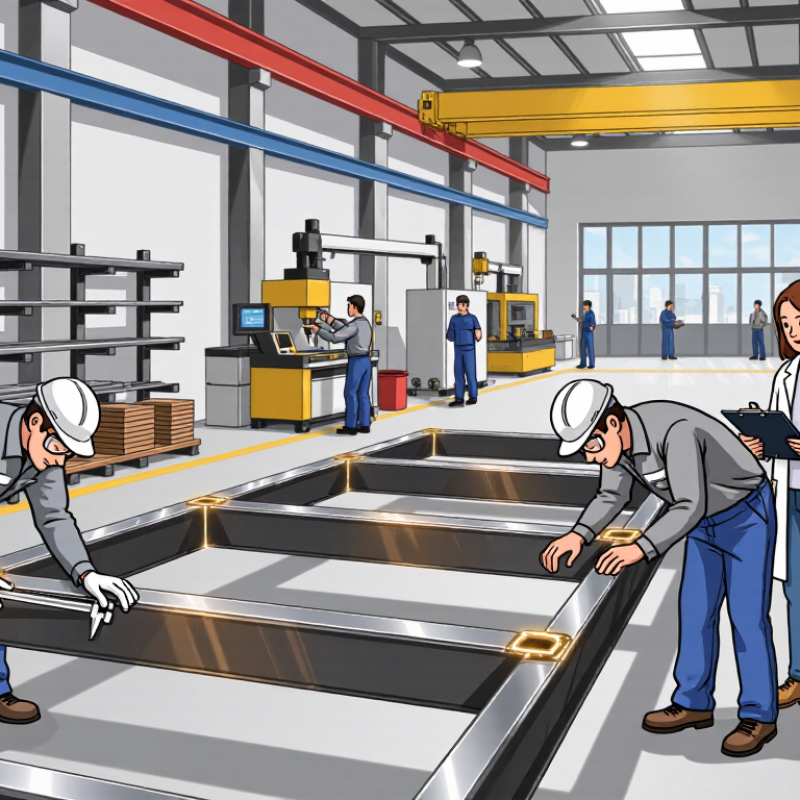
How to Choose Welded Metal Suppliers in 2026?

Define Welded-Metal Requirements Using ISO 3834 Quality Levels 2–4

How to Choose Welded Metal Suppliers in 2026?

Define your welded-metal requirements before comparing suppliers. ISO 3834 helps classify welding quality needs into three levels.

Level 2 sets comprehensive requirements for complex, safety-sensitive fabrications.

Level 3 suits standard production with controlled procedures.

Level 4 covers elementary work with simpler controls.

The correct level depends on load, failure consequences, material, joint design, and inspection needs. Do not choose Level 2 automatically. It may create unnecessary cost and paperwork.

Ask suppliers to show welding procedure specifications, welder qualifications, material certificates, inspection records, and corrective-action reports.

For Level 2 work, review traceability, non-destructive testing, subcontractor control, and welding coordination. For Level 3, confirm repeatable procedures and documented inspection. Level 4 still requires clear responsibilities and competent operators.

ISO 3834 supports quality management, but it does not replace project standards, drawings, or statutory requirements. A certificate alone is weak evidence.

Tips:

Match the quality level to real risk. Visit the workshop if possible. Watch how materials are identified beside active welds. Check whether heat numbers remain visible after cutting.

Ask how defects are recorded and repaired. Request recent examples with similar thicknesses and joint types. Also, question your own specification. It may demand more than the structure needs.

That mistake is common. A practical supplier review should balance technical evidence, communication, capacity, and honest limitations. Reliable suppliers explain what they cannot control. That honesty matters.

Screen Suppliers by AWS D1.1, ASME Section IX, and EN 1090 EXC1–EXC4

How to Choose Welded Metal Suppliers in 2026?

Screen suppliers against the governing standard, not a generic quality certificate. AWS D1.1/D1.1M controls structural steel welding requirements, including procedures, welder qualifications, inspection, and acceptance criteria. ASME Section IX qualifies welding procedures and personnel, but it does not define every fabrication or service requirement. Confirm that the supplier understands this difference.

For European structural work, EN 1090 assigns execution classes from EXC1 to EXC4. The class should match the design risk, loading, material, and project specifications. Request the manufacturer’s factory production control certificate, welding coordination records, WPS and PQR files, welder continuity logs, material heat certificates, and NDT reports. Ask for traceability from each plate to the finished weld. Paperwork is not enough.

The ISO Survey of Certifications 2022 recorded more than 1.2 million ISO 9001 certificates worldwide. That figure shows quality systems are widespread, but it does not prove welding competence. Check whether audits examine weld maps, joint preparation, preheating, interpass temperature, and repair rates. A supplier may pass an office audit yet struggle with distortion on a thick flange. Look inside the process.

Request a sample inspection and a controlled test weld. Review calibration labels on welding machines and temperature crayons. The uncomfortable question is whether the supplier can repeat quality under schedule pressure. I would also challenge unclear subcontracting arrangements. Incomplete records are not always failure, but they demand investigation before approval.

Audit Welding Capacity: WPS/PQR Control, Welder Qualification, and NDT Coverage

How to Choose Welded Metal Suppliers in 2026?

Audit Welding Capacity: WPS/PQR Control, Welder Qualification, and NDT Coverage

A capable supplier should show more than attractive samples. Ask for current WPS documents, supporting PQR records, and revision histories. The WPS should match the actual material, thickness, joint design, process, and welding position. PQR evidence should demonstrate that the procedure was tested under controlled conditions. Check whether essential variables are clearly identified and managed.

Review welder qualifications against the work scope. ISO 9606 records, or equivalent requirements, should cover the process, material group, position, and thickness range. Confirm continuity records, not only initial certificates. A qualified welder may lose validity when required continuity is not maintained. Small gaps matter.

NDT coverage reveals how seriously a supplier controls hidden defects. Examine the inspection plan, technician qualifications, equipment calibration, and acceptance criteria. Visual testing alone may not suit critical joints. Ultrasonic, radiographic, magnetic particle, or penetrant testing should match the material and risk. Request sample reports with weld numbers, locations, indications, and disposition.

During a site audit, compare documents with the workshop floor. Trace one weld from drawing to consumable issue, production record, inspection report, and release note. A tidy folder can still hide weak production habits. I have seen records that looked complete but lacked clear traceability. That weakness deserves discussion, not automatic rejection. Also check how the supplier handles failed tests, repairs, and procedure changes. Their response often matters more than a perfect first sample.

How to Choose Welded Metal Suppliers in 2026? - Audit Welding Capacity: WPS/PQR Control, Welder Qualification, and NDT Coverage

An anonymized supplier-audit comparison focused on welding procedure control, personnel qualification, inspection capability, traceability, and corrective-action readiness. Assessment criteria are aligned with commonly used requirements from ISO 15614-1, ISO 9606-1, ISO 3834, ISO 9712, ISO 17635, and ISO 5817.

Supplier Code Audit Scope WPS/PQR Control Welder Qualification NDT Coverage Material & Weld Traceability Quality Findings Corrective-Action Closure Audit Score Decision
Supplier 01 Carbon-steel frames and pressure-free structural assemblies 96% of sampled welds linked to an approved WPS.
PQR records include essential variables, test results, and revision history.
100% of sampled welders held current process-specific qualification records.
Continuity logs reviewed for the previous six months.
VT: 100% of production welds.
MT: 25% sample on specified joints.
UT: available through qualified external personnel.
Heat numbers recorded on material certificates and transferred to job travelers.
Weld maps available for critical assemblies.
2 minor findings; no major nonconformity.
Main issue: incomplete consumable batch sign-off.
92% closed within 30 days 91 / 100 Ready
Supplier 02 Stainless-steel enclosures and hygienic-finish assemblies 100% WPS availability for sampled GTAW and GMAW processes.
PQRs include corrosion-sensitive material groups and documented post-weld requirements.
94% of sampled qualification records were current.
One welder required updated continuity evidence before production release.
VT: 100%.
PT: 50% of specified surface-critical welds.
RT: available for contractually defined weld categories.
Material identification maintained through cutting, forming, welding, and final inspection.
Filler-metal lot traceability available.
3 minor findings; no major nonconformity.
Main issue: delayed closure of one welder-continuity record.
88% closed within 30 days 88 / 100 Ready
Supplier 03 Low-alloy steel brackets and machined welded components 89% of sampled welds linked to an approved WPS.
Two PQR files lacked clear identification of the supporting material group.
91% of sampled welders had current qualification evidence.
Continuity records were maintained manually with some missing entries.
VT: 100%.
MT: performed for selected repairs and critical joints.
UT: coverage depends on an external service provider.
Heat-number transfer was effective on 87% of sampled travelers.
Repair weld traceability was inconsistent.
5 minor findings and 1 major finding.
Main issue: incomplete linkage between repair records and final inspection.
74% closed within 30 days 76 / 100 Conditional
Supplier 04 Aluminum frames and thin-wall fabricated assemblies 82% of sampled welds had a directly applicable WPS.
Several parameter sheets were used without documented PQR support.
86% of sampled welders had current qualification records.
Two records did not clearly identify the applicable welding process range.
VT: 100%.
PT: available for selected joints.
No documented in-house UT capability for the audited product range.
Material certificates were available, but lot transfer to subassemblies was incomplete in 3 of 15 samples. 7 minor findings and 2 major findings.
Main issue: insufficient procedure qualification evidence for aluminum thickness ranges.
61% closed within 30 days 68 / 100 On Hold
Supplier 05 Heavy welded bases and large carbon-steel fabrications 98% of sampled welds linked to controlled WPS revisions.
PQR files included mechanical test reports and clear acceptance criteria.
100% of sampled welders qualified for assigned processes and positions.
Continuity tracking was electronic and immediately retrievable.
VT: 100%.
MT: 30% sample.
UT: 20% sample for specified full-penetration welds.
RT: subcontracted when required.
Heat, weld, operator, repair, and inspection identifiers were linked through a controlled traveler system. 1 minor finding; no major nonconformity.
Main issue: one overdue calibration label replacement.
100% closed within 30 days 95 / 100 Ready
Recommended approval logic: Select suppliers with current, process-specific welder qualifications; controlled WPS/PQR records; traceable materials and weld repairs; and NDT methods matched to joint design, material, and acceptance requirements.
Audit interpretation: “Ready” indicates that the sampled controls were generally effective. “Conditional” requires a documented corrective-action plan before critical production. “On Hold” indicates that procedure qualification, personnel qualification, or inspection coverage requires verification before release.

Compare Quotes by Defect Rates, Lead Times, Traceability, and Total Cost

Choosing a welded metal supplier in 2026 requires more than comparing the lowest quotation. In practical sourcing, I inspect sample welds, edge finishing, and packaging before reviewing price. A clean surface can hide weak penetration. Ask for recent defect rates, not broad quality claims. Request figures from comparable materials, thicknesses, and production volumes.

Lead time should include fabrication, inspection, rework, and shipping. A supplier promising ten days may quietly exclude testing. Compare the full schedule in writing. Ask how delays are reported and whether capacity changes during peak periods. A two-day buffer may prevent costly line stoppages. Still, forecasts are imperfect. Even experienced teams underestimate rework after a design change.

Traceability Traceability protects purchasing decisions. Each batch should connect to material certificates, welding records, inspection results, and operator qualifications. Check whether heat numbers remain visible after cutting and assembly. A simple lot code on every crate can save hours during an investigation. Digital records help, but only when entries are accurate and recoverable.

Calculate total cost, not quoted unit price. Include tooling, inspection, freight, packaging, corrective work, and rejected parts. A low quote with a 4% defect rate may cost more than a higher quote with stable 0.5% losses. Ask suppliers to price a small pilot batch before a long contract. I would also challenge my own assumptions: the cheapest measurable defect rate may ignore unreported failures. Speak with production staff, not only sales contacts, and compare evidence from recent orders.

Run a Sample Order and Verify Quality Records Before Long-Term Sourcing

How to Choose Welded Metal Suppliers in 2026?

A sample order reveals more than a polished sales presentation. Request a small batch using your intended material, weld type, thickness, and finishing requirements. Inspect the parts when they arrive. Check bead consistency, undercut, distortion, surface preparation, dimensions, and packaging damage. A practical trial also shows communication speed and how carefully the supplier follows drawings.

Ask for quality records linked to the sample, not generic files. These may include material certificates, welding procedure documents, welder qualification records, inspection reports, and non-destructive testing results where appropriate. Confirm heat numbers, lot numbers, inspection dates, and approval signatures. The records should match the delivered parts. If they do not, pause the evaluation. Ask how deviations were handled and whether corrective actions were verified. Some suppliers keep excellent documents but miss small dimensional issues. That gap matters.

Tips: Photograph key surfaces before and after inspection. Measure several parts, not just one. Record weld locations and acceptance criteria. Ask for a sample inspection report before production begins. Keep a simple comparison sheet for every supplier. Do not rely on certificates alone. During one trial, I once focused heavily on weld appearance and overlooked inconsistent hole positions. That mistake changed my inspection checklist. A supplier’s response to a fair complaint can reveal more than a perfect first batch.

How to Choose Welded Metal Suppliers in 2026?

Run a sample order and verify quality records before long-term sourcing. Use the following quality-gate thresholds to compare supplier documentation and sample-order results.

Recommended sample-order verification thresholds: complete traceability, documented material certification, dimensional conformity, weld inspection, non-destructive testing where specified, and timely corrective action.