How to Choose the Right Insulin Syringe for Your Needs?
Choosing an Insulin Syringe can feel like a small task, but the details matter. The right choice depends on your prescribed insulin dose, the insulin concentration, and the syringe’s capacity and markings. A barrel that is too large may make a small dose harder to measure clearly. Tiny lines can be difficult to read, especially in dim light or with unsteady hands. Simple details matter.
Check the syringe packaging and confirm that its concentration matches your insulin, such as U-100. Never assume two syringes are interchangeable because they look alike. If the label, dose markings, or insulin concentration is unclear, pause and ask a pharmacist or healthcare professional to verify them. A quick check can prevent a serious dosing mistake.
Needle length and gauge may also affect comfort and ease of use, but personal needs vary. Your clinician can help you consider these features alongside your injection technique, vision, and dexterity. Some people focus only on needle size; that may not be the most important factor for everyone. It is worth reconsidering. This guide will explain the key features to compare, what to check on the label, and when to seek professional guidance. It cannot replace individualized medical advice, but it can help you ask clearer questions and choose with greater confidence.
Understanding Insulin Syringe Types and Measurements
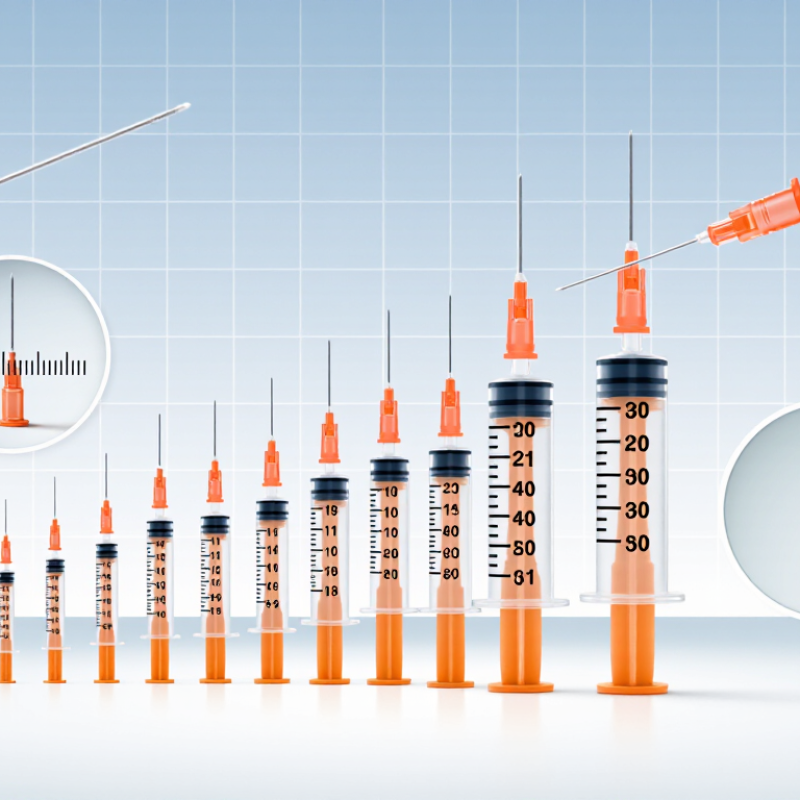
Insulin syringes differ in capacity, needle size, and unit markings. Common U-100 syringe capacities are 0.3 mL, 0.5 mL, and 1 mL, holding up to 30, 50, and 100 units respectively. Smaller syringes can make small doses easier to measure, while larger ones hold more. Check the scale carefully. The spacing between lines varies by syringe, so a marking on one model may not match another. Small details matter.
The syringe must match the insulin concentration shown on its label. A U-100 syringe is calibrated for insulin containing 100 units per milliliter; never assume another concentration uses the same scale. If the insulin or syringe is unfamiliar, ask a pharmacist or healthcare professional to confirm the correct device and how to read its markings. This is not a place for guesswork. Needle length and thickness also vary, and the best option depends on personal needs and clinical guidance. It is easy to focus on the needle and overlook the barrel markings; I would double-check both before use. Follow the instructions provided for your prescribed insulin.
How to Choose the Right Insulin Syringe for Your Needs?
Understanding Insulin Syringe Types and Measurements
For U-100 insulin, 1 mL contains 100 units. The capacities shown are equivalent to 30, 50, and 100 units, respectively. Choose a syringe whose capacity and measurement markings suit the prescribed dose, and confirm the correct syringe type with a healthcare professional.
Matching Syringe Capacity to Your Insulin Dose
How to Choose the Right Insulin Syringe for Your Needs?
Matching Syringe Capacity to Your Insulin Dose
Choose a syringe whose capacity fits your prescribed dose, leaving the markings easy to see. For U-100 insulin, common capacities are 0.3 mL (30 units), 0.5 mL (50 units), and 1 mL (100 units), as reflected in standard device specifications and ISO 8537. A smaller barrel can make low-dose markings easier to read. Tiny lines matter. But syringe markings must match the insulin concentration: the FDA warns that using the wrong syringe with concentrated insulin can cause serious dosing errors. Confirm both with a pharmacist or diabetes care professional.
Tips: If your usual dose is 18 units, a 30-unit syringe may offer clearer spacing than a 100-unit syringe. Check the smallest graduation on the barrel, not just its maximum capacity. Readability varies between products, and tired eyes can miss a line.
Before switching sizes, compare the syringe markings with your prescription and current insulin label. Never estimate between marks or assume all insulin is U-100. If your dose changes, or the label shows another concentration, ask your care team which syringe is appropriate. It may feel like a small equipment choice; it deserves a careful check.
How to Choose the Right Insulin Syringe for Your Needs? - Matching Syringe Capacity to Your Insulin Dose
| Syringe capacity | Maximum volume on a U-100 syringe | Typical dose range it can hold | Markings to check | General selection note |
| 0.3 mL | 30 units | Up to 30 units | Marking intervals vary; some models have half-unit markings. | Often easier to read for smaller doses, provided the prescribed dose fits within its capacity. |
| 0.5 mL | 50 units | Up to 50 units | Marking intervals vary by syringe; check the scale on the package and barrel. | Can suit doses above 30 units when a 1 mL syringe is not needed. |
| 1 mL | 100 units | Up to 100 units | Marking intervals vary; larger-capacity syringes may have wider spacing between unit marks. | Provides the greatest capacity of these common sizes; check that the scale is easy to read for the prescribed dose. |
Important: These capacities refer to U-100 insulin, for which 1 mL contains 100 units. Use a syringe that matches the insulin concentration, and confirm the syringe’s capacity and graduation marks before use. Follow the prescribed dose and ask a pharmacist or healthcare professional if you are unsure which syringe is appropriate.
Choosing a Needle Length and Gauge
Needle length affects how reliably insulin reaches the fatty tissue beneath the skin. For many adults, a 6 mm syringe needle is a practical option, but body composition, injection site, and technique matter. Longer needles may require a skinfold or a different angle, so ask a diabetes clinician to demonstrate your technique. One detail is easy to miss: evidence for pen needles does not automatically apply to every syringe. The FITTER expert recommendations favor short needles for insulin injections, while advising individualized technique (Frid et al., Mayo Clinic Proceedings, 2016).
Gauge describes needle thickness. A higher gauge number means a thinner needle; thinner needles may feel gentler, though insulin can take longer to draw up or inject. In a randomized crossover study, adults using 4 mm pen needles had glycemic control comparable to those using longer needles (Hirsch et al., Current Medical Research and Opinion, 2010). That is useful context, not a direct syringe comparison. Check the syringe’s stated length and gauge, and have a clinician confirm the fit for your injection routine. I still double-check. Don’t choose by the smallest number alone.
Checking Compatibility With Insulin Concentration
Insulin concentration describes how much insulin is contained in a given volume. The syringe must match the concentration shown on the insulin label. A U-100 syringe is designed for U-100 insulin; its numbered scale measures units for that concentration. Check both the vial and syringe before drawing a dose. Labels matter. Similar-looking packaging can make a quick check feel unnecessary, but concentration differences can change the amount delivered.
Some insulin products use concentrations other than U-100, and they may require a specific delivery device. Do not assume a U-100 syringe is suitable, or try to calculate a conversion from memory. Never draw insulin from a pen into a syringe unless a qualified clinician has specifically instructed you; the device and concentration may not be intended for that use. If the label is unclear, pause and ask a pharmacist or prescriber to confirm the correct syringe. Even careful people can overlook a small “U” marking under poor lighting. I would not rely on memory here. Keep the insulin label and syringe package together while checking, and confirm the prescribed dose using the syringe’s marked scale.
Confirming Your Choice With a Healthcare Professional
Before buying an insulin syringe, ask your healthcare professional to confirm that it matches your prescribed insulin and dose. Insulin products can have different concentrations, and syringe markings must correspond to the one prescribed. Never assume that two syringes are interchangeable. Small details matter.
Bring your insulin container and the syringe you are considering to an appointment or pharmacy consultation. Your clinician or pharmacist can check the markings, capacity, needle length, and whether the scale is easy for you to read. They can also show you how to draw up the prescribed dose and use the syringe safely. Ask them to watch you demonstrate the steps; it can reveal a confusing marking or a grip that feels awkward. Bring it along.
Mention any changes in eyesight, hand strength, or injection sites, since these may affect what is practical for you. I might overlook a small label when comparing products, so I would ask again rather than guess. If your insulin, dose, or syringe changes, confirm compatibility before using it. If anything remains unclear, contact your care team before the next injection.

 24 Hour Service