
24 Hour ServiceChoosing the best Greenhouse Flower Cart begins with more than comparing prices or polished product photos. A cart may look strong online, yet struggle on wet concrete, narrow aisles, or uneven thresholds. Dr. Roberto Lopez, a respected greenhouse horticulture specialist at Michigan State University, offers a practical principle: “Equipment should serve the crop and the worker.” That idea should guide every decision.
Start with the daily workflow. Measure aisle width, bench height, door openings, and turning space before reviewing models. A cart carrying potted flowers should roll smoothly without damaging stems or scraping greenhouse benches. Large, non-marking wheels can improve movement across damp floors. Locking casters add control during loading. A raised edge may prevent pots from sliding when the cart stops suddenly.
Capacity matters, but maximum capacity can be misleading. A heavily loaded cart may become difficult to steer, especially during long shifts. Consider the average load, not only the advertised limit. Frame material also deserves attention. Powder-coated steel may provide strength, while aluminum can reduce lifting effort and resist corrosion. Check weld quality, wheel replacement options, and cleaning access.
Think about workers, too. Handle height, pushing force, and posture affect productivity and fatigue. Small details matter. Sometimes, the cheapest cart creates the highest long-term cost. Still, no single design fits every greenhouse. A careful choice may require trial use, staff feedback, and a little honest reconsideration. The best Greenhouse Flower Cart is the one that fits your space, crop, people, and real working conditions.
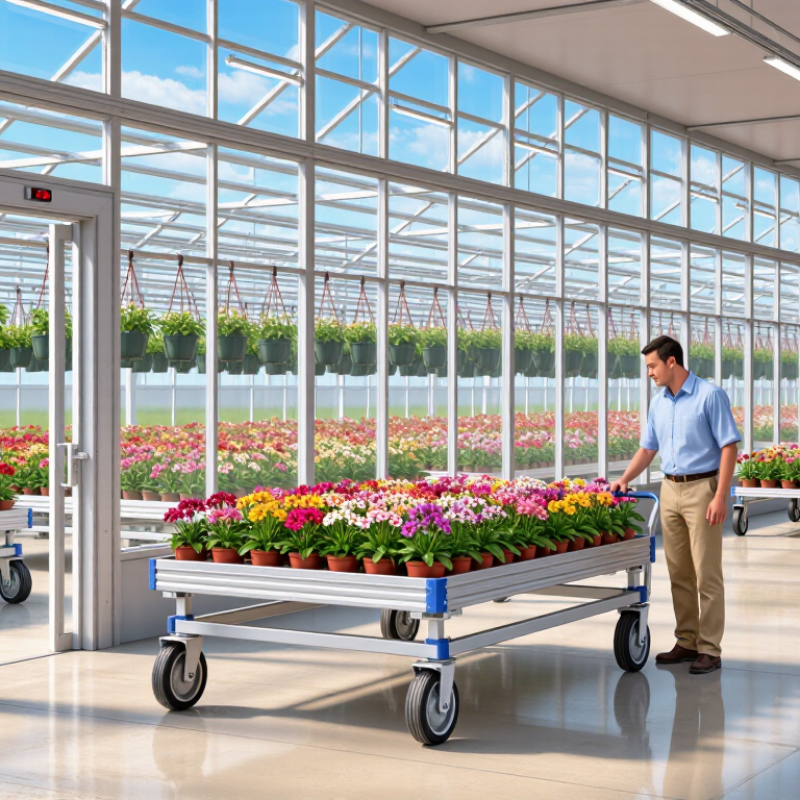
A greenhouse flower cart is a wheeled platform or rack designed to move potted flowers, seedling trays, or cut stems inside a greenhouse. It reduces repeated carrying between benches, irrigation areas, and packing stations. Some carts have adjustable shelves, locking casters, and removable side rails. Others are simple flat platforms. The right design depends on crop height, aisle width, floor condition, and daily load.
The scale of this equipment matters. The USDA’s 2023 Floriculture Crops Summary reported more than six billion dollars in U.S. grower sales. At that level, small handling delays can become expensive. A suitable cart should match the real workflow, not only its advertised capacity. Check its rated load, wheel diameter, turning radius, and braking performance. Small wheels may struggle on wet concrete. Poor balance can damage stems.
Measure twice.
Wageningen University research on greenhouse logistics repeatedly connects labor efficiency with better internal transport planning. That does not mean the largest cart is best. A narrow cart may improve aisle movement but carry fewer trays. A wider model may save trips and create congestion. This is where selection becomes imperfect. Growers should test one loaded cart during watering, harvesting, and cleaning. Observe vibration, worker posture, and wheel resistance. A practical trial often reveals problems that a specification sheet hides.
A greenhouse flower cart is a wheeled platform used to move potted plants, trays, and flowers efficiently between growing areas, workstations, and shipping zones. Load capacity is one of the first specifications to compare.
Light-duty carts are suitable for seedlings and small pots, general-duty carts support routine nursery handling, and heavy-duty carts are better for dense plant loads or large containers. Always confirm the rated capacity, wheel suitability, aisle width, corrosion resistance, and platform dimensions before purchasing.
A flower cart must match your greenhouse conditions, not just your display style. Moisture, soil, fertilizer, and daily movement can quickly expose weak materials. Galvanized steel offers strong load support for heavy pots and trays. It may still develop rust where the coating is scratched. Aluminum is lighter and easier to push between narrow benches. However, it can bend under concentrated loads. Stainless steel resists corrosion well, but its higher cost may not suit every growing operation.
Design affects safety as much as material. Choose wide, lockable casters for wet floors and uneven paths. A low center of gravity reduces tipping when the top shelf is full. Slatted shelves allow excess water to drain after irrigation. Smooth, rounded edges protect leaves, sleeves, and hands. Measure your narrowest aisle before ordering. A cart that fits the greenhouse entrance may fail near the propagation tables.
I prefer carts with replaceable wheels and accessible bolts. Repairs become simpler during busy planting weeks. Test one loaded cart before purchasing several. Push it over a damp floor and turn it beside a bench. I once selected a lightweight frame that seemed practical, but its shelves flexed under mature plants. That mistake changed my criteria. Weight capacity should be verified, not guessed. Consider airflow, cleaning time, and storage space too. The best design may look less attractive, but it should remain stable after repeated use.
Cart size should match your aisles, benches, doorways, and turning points. Measure twice. A cart that fits the aisle may still fail at the corner. Leave at least 10–15 centimeters of clearance on each side when plants are fully loaded. This space helps protect stems, trays, and workers’ hands. The USDA NASS Floriculture Crops 2023 Summary valued U.S. floriculture sales at approximately $6.7 billion, showing how small handling delays can affect a high-value operation.
Capacity needs more than a maximum-load label. Calculate the combined weight of pots, wet growing media, trays, and the cart itself. Wet media is easy to underestimate. Choose shelves with a working load above your normal batch weight, not just the advertised limit. Keeping loads near 70–80% of rated capacity is a cautious field practice. It reduces frame stress and improves steering. My first estimate is often too optimistic.
Mobility depends on wheel diameter, flooring, gradients, and load balance. Larger wheels cross cracks and hose lines more smoothly. Swivel casters improve turning, but they may wander on uneven floors. ISO 11228-2 provides a recognized framework for assessing pushing and pulling tasks, including force and workplace conditions. Test the cart with a realistic load before purchasing several units. Push it through a wet aisle. Check stopping distance. A lightweight cart can still become difficult when the top shelf is overloaded.
Choosing the best greenhouse flower cart starts with plant protection. A strong frame should resist moisture, fertilizer residue, and frequent washing. Powder-coated steel or treated aluminum usually performs well in humid spaces. Check every weld carefully. Rough edges can damage leaves, gloves, or pots. Shelves with drainage openings prevent standing water and improve airflow around containers. A raised edge keeps plants secure during movement. Locking casters also reduce accidental rolling. For sensitive plants, choose a UV-resistant cover with vents and easy access. However, covers can trap excessive heat. A small thermometer remains useful.
Daily use depends on practical design. Select a cart that fits through greenhouse doors and between growing benches. Adjustable shelves help separate tall flowers from low seedlings. Confirm the total load rating before stacking wet soil or ceramic pots. A padded handle reduces hand strain during repeated trips. Smooth, washable surfaces also limit algae and soil buildup. In practical greenhouse work, small details matter. A beautiful cart may still waste time if its wheels jam on wet floors. Test it fully loaded before purchase.
Tips: Measure doorways, aisle widths, and turning space first. Choose larger wheels for uneven surfaces. Inspect caster locks regularly. Keep heavy pots on lower shelves. Recheck stability after adding a cover, because wind and heat can change daily conditions.
Choosing a greenhouse flower cart starts with its total cost, not its displayed price.
The USDA Floriculture Crops 2023 Summary reported $6.7 billion in U.S. floriculture sales. That scale makes handling efficiency financially important. Compare the cart, shelves, wheels, brakes, delivery, installation, and replacement parts together. A cheaper cart can become expensive when rust appears around wet wheel housings. Check load capacity with saturated soil, not empty trays. It is a small detail.
Maintenance should be measured in labor minutes. Record how long workers spend cleaning rails, tightening fasteners, and moving each cart between benches. The European Committee for Standardization’s greenhouse standard, EN 13031-1, emphasizes structural safety and service conditions, which supports checking stability under real greenhouse loads. Ask for corrosion resistance, wheel availability, and written care intervals. I once compared only purchase prices, and that was a weak decision. Long-term value also depends on floor protection, turning radius, and whether one person can move the cart safely. The USDA report reflects crop sales, not equipment performance, so buyers should avoid treating market growth as proof of any cart’s quality. A simple three-year worksheet helps: purchase cost, maintenance hours, parts, downtime, and expected service life. Leave room for uncertainty. Greenhouse humidity, water quality, and uneven floors can change the calculation.