How to Choose the Best Electric Water Heater for Your Home?
Choosing the best Electric Water Heater for your home can seem daunting. With various options available, it’s important to make an informed decision. An electric water heater is essential for daily activities like showering and washing dishes. Picking the right one not only increases comfort but also impacts energy bills.
Consider the size of your household. A larger family may require a higher capacity unit. Evaluate your hot water usage patterns too. Some need continuous hot water, while others can manage with storage units. Reliability is key; reputable brands often provide better warranties. Customer reviews can guide you toward trusted products.
Do not overlook energy efficiency ratings. A more efficient electric water heater saves money over time. However, these units may come with a higher upfront cost. Assess your budget versus long-term savings. Trust your instincts. Sometimes, the best choice is not the one that looks appealing but the one that serves your needs.
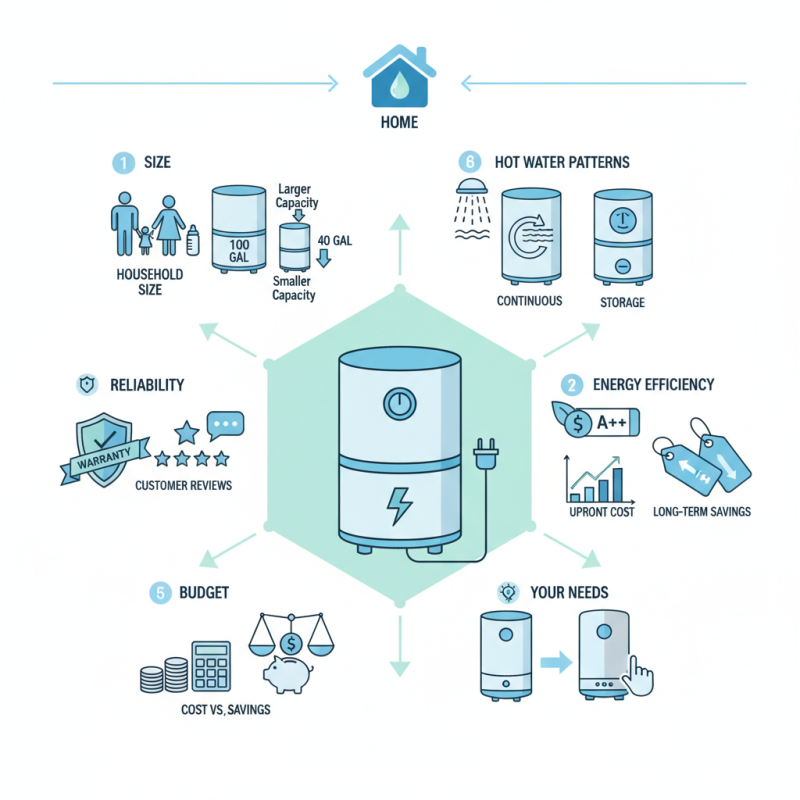
Factors to Consider When Choosing an Electric Water Heater
Choosing the right electric water heater for your home involves several important factors. Energy efficiency is a primary consideration. According to the U.S. Department of Energy, water heating can account for up to 18% of a home's energy consumption. An Energy Star-rated model can be 10-50% more efficient than standard models, saving homeowners significantly on utility bills.
Another key factor is the capacity needed for your household. The average family requires a water heater with a capacity of 40-50 gallons. If you frequently run multiple hot water appliances simultaneously, you might want to invest in a larger unit. Moreover, the recovery rate, or how quickly a heater can warm water, varies widely. For instance, some models can heat up to 20 gallons per hour, while others may take much longer.
Installation location also plays a crucial role. If you have limited space, a compact model may suit your home better. However, it is essential to consider venting and accessibility for maintenance. Some homeowners overlook the importance of plumbing compatibility, which can lead to unexpected costs. Overall, thorough research and professional advice can guide you to make a more informed decision that aligns with your needs.
Understanding Different Types of Electric Water Heaters Available
When choosing an electric water heater, understanding the types available is essential. There are mainly two categories: tank and tankless systems. Tank heaters store a fixed amount of water, providing a constant supply. This type can be less efficient in terms of energy since the water is heated even when not in use. Investigate the size carefully. If your family uses a lot of hot water, a larger tank might be necessary.
Tankless heaters, on the other hand, heat water on demand. They are often more energy-efficient. However, some homes may require multiple units to keep up with demand. This can be a drawback for larger families. Consider your usage patterns. If you only need hot water for showers or kitchen use, a tankless unit could be a good fit.
Moreover, there are hybrid models that combine features from both systems. These can be a compromise, but they might end up being more complex and sometimes less reliable. Assess your energy source and space constraints as well. Each option comes with pros and cons, so prioritize what matters most to you.
How to Choose the Best Electric Water Heater for Your Home?
| Type of Electric Water Heater | Capacity (Gallons) | Efficiency Rating (EF) | Installation Type | Average Cost ($) |
| Tank Electric Water Heater | 30, 40, 50, 80 | 0.9 - 0.95 | Indoor | 300 - 1,000 |
| Point-of-Use Electric Heater | 2.5 - 10 | 0.9 - 0.95 | Indoor/Outdoor | 100 - 500 |
| Electric Tankless Water Heater | N/A | 0.9 - 0.99 | Indoor/Outdoor | 500 - 1,500 |
| Heat Pump Water Heater | 40 - 80 | 2.0 - 3.0 | Indoor | 1,000 - 3,000 |
Evaluating Capacity and Recovery Rate for Household Needs
When choosing an electric water heater, evaluating the capacity and recovery rate is crucial. Capacity refers to how much hot water the unit can store. This is usually measured in gallons. For a typical family of four, a 40 to 50-gallon tank is often recommended. It may seem adequate, but you should consider peak usage. Remember, a busy morning with multiple showers can quickly deplete hot water.
Recovery rate is how fast the heater can replenish hot water. This is measured in gallons per hour. A high recovery rate means less waiting time during peak hours. If your family frequently demands hot water, this becomes essential. Some families might overlook this, leading to frustrations. You don’t want to be left waiting for hot water while your family needs it.
Detailing your household’s hot water demands helps in this evaluation. Take time to observe your habits. Are there specific times when everyone showers? Do you run the dishwasher while doing laundry? These patterns impact your needs. Reflecting on this can lead to a more informed choice. It’s not just about numbers; it’s about your daily life. Aim for a balance between sufficient capacity and an optimal recovery rate for your family.
Energy Efficiency Ratings: Why They Matter in Water Heaters
When evaluating electric water heaters, energy efficiency ratings are crucial. These ratings indicate how much energy a unit consumes compared to its output. The U.S. Department of Energy reports that energy-efficient models can save households anywhere from $200 to $600 annually. Choosing a heater with a higher efficiency rating not only reduces your bills but also lessens environmental impact.
Understanding energy factors (EF) is essential. An EF rating indicates the heater’s efficiency in converting energy to hot water. For instance, a water heater with an EF of 0.95 uses 5% more energy than necessary. While models with lower ratings may have a lower initial cost, they often require more electricity over their lifespan. Over time, these costs can add up significantly, making the more expensive, efficient model the better long-term investment.
Moreover, consider the heater's recovery rate. This rate shows how quickly a unit can heat water. Models with higher efficiency may have improved recovery rates. However, these features can come at a premium. Always weigh upfront costs against potential energy savings. It’s important to reflect on your specific needs and usage patterns. Doing so can lead to more informed decisions regarding your water heating solutions.
Energy Efficiency Ratings of Electric Water Heaters
Installation and Maintenance Considerations for Electric Water Heaters
When considering electric water heaters, installation is a pivotal factor. Proper installation ensures efficiency and safety. Many homeowners might underestimate the importance of correct placement. The heater should be installed in a space that promotes optimal air circulation. It’s essential to follow local codes and regulations. Hiring a qualified electrician can greatly reduce mistakes. Incorrect installation may lead to higher energy bills.
Maintenance also plays a crucial role in the heater's lifespan. Regularly checking the anode rod can prevent corrosion. Flushing the tank at least once a year will reduce sediment buildup. Some homeowners forget this step. Neglecting maintenance can lead to unexpected breakdowns. Monitoring the water temperature is equally important. Setting it too high can be dangerous but too low may cause bacteria growth. Ultimately, being proactive will enhance the performance of your electric water heater.

 24 Hour Service