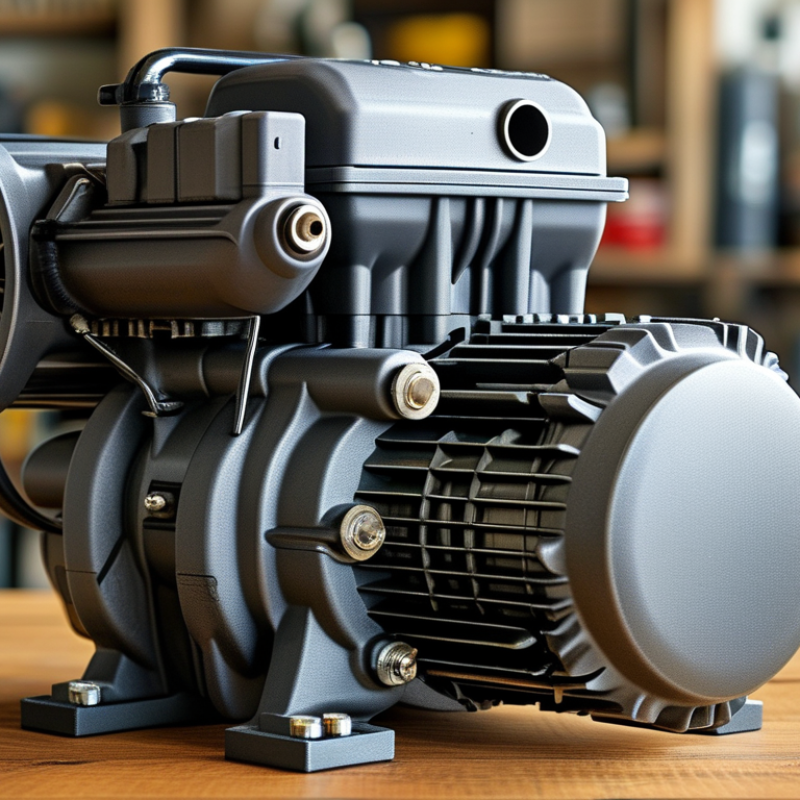
How to Choose the Right Single-Stage Compressor for Your Needs?
Choosing the right Single-Stage Compressor can significantly impact your projects. With so many options available, it's easy to feel overwhelmed. A clear understanding of your needs is vital. You should consider factors such as size, power, and intended use.
Single-Stage Compressors are ideal for many tasks, from home workshops to professional settings. They are simpler and often more affordable than multi-stage models. However, not all compressors are created equal; their specifications can vary greatly. Each project may demand different capabilities, leading to potential mismatches.
Many people choose a compressor hastily, sometimes overlooking critical features. This often results in ineffective performance. Knowing what to prioritize will help you avoid purchasing an unsuitable model. Ultimately, careful evaluation will ensure you select a Single-Stage Compressor that meets your specific requirements.
Understanding the Basics of Single-Stage Compressors and Their Applications
Single-stage compressors are vital tools in various applications, ranging from home workshops to industrial settings. They are designed to compress air in one step, making them efficient for tasks requiring moderate pressure. Understanding their fundamentals is crucial for making an informed choice.
These compressors come in different sizes and power ratings, often defined by their maximum psi output. For light-duty tasks, models with lower psi should suffice. However, for applications like spray painting or air-powered tools, a higher psi is necessary. It's essential to consider the specific air requirements of your tools. If the compressor cannot consistently meet those needs, performance will suffer.
While selecting the right compressor, also think about portability. Some models are heavy and fixed, while others are lightweight and portable. Reflect on where you will use the compressor most frequently. If it’s in various locations, mobility becomes a priority. Additionally, pay attention to noise levels, especially if you'll use it indoors. A quieter model could save you discomfort. Balancing these aspects can help you find a compressor that meets both your needs and work environment.
Key Factors in Assessing Compressor Capacity and Performance
When selecting a single-stage compressor, understanding its capacity and performance is crucial. Compression ratio plays a key role. A ratio of 4:1 is common for many applications. However, exceeding this can reduce efficiency. According to a recent industry report, compressor efficiency is optimally maintained at this range, providing reliable performance without strain.
Another aspect to consider is air delivery rate. Cubic feet per minute (CFM) is a standard measure. Most applications require between 2 to 10 CFM. Performance drops significantly if inadequate CFM is provided. Users often underestimate how their needs can shift, impacting overall performance. It's essential to evaluate these factors under real working conditions, not just theoretical settings.
Energy consumption is vital for longevity and cost-efficiency. Compressors can account for 20% of an operation's energy use. Therefore, selecting a model that balances power and consumption is wise. Regular maintenance can also enhance performance. Neglected units may seem efficient but often lead to higher costs in the long run. Evaluating all these factors ensures you make an informed choice tailored to your specific needs.
Evaluating Different Types of Single-Stage Compressors: Pros and Cons
When choosing a single-stage compressor, it’s essential to evaluate various types for their strengths and weaknesses. Single-stage compressors are popular for their simplicity and efficiency. They typically compress air to a specific pressure in one stroke, making them ideal for lower pressure applications. According to industry reports, they are often favored for tasks such as tire inflation and powering pneumatic tools.
However, one must weigh the pros and cons. On the positive side, single-stage compressors are usually lighter and more affordable than multi-stage options. Their maintenance can be simpler, attracting those who prefer user-friendly equipment. However, they generally have a lower pressure output. This limitation can restrict their use in heavy-duty applications, where higher pressure is necessary. A study by the Pneumatics Institute highlights that over 40% of users have reported needing to upgrade due to inadequate pressure.
**Tip:** Consider your air demand carefully. A smaller compressor may suffice for basic tasks, but high-demand environments need more powerful units.
Understanding the specific applications can lead to better decisions. Single-stage compressors often struggle under continuous, heavy use. For professionals in construction or manufacturing, this could lead to frequent downtimes. A survey showed that 30% of compressor users faced operational interruptions due to equipment limitations.
**Tip:** Analyze your workload patterns. An occasional task may not justify a more robust model, while frequent high output may require investing in a heavy-duty compressor.
Evaluating Different Types of Single-Stage Compressors: Pros and Cons
Noise Levels and Energy Efficiency Ratings in Compressor Selection
When selecting a single-stage compressor, noise levels and energy efficiency ratings are crucial. Compressors produce varying sound levels during operation. Some are designed to be quieter, while others can be quite loud. If noise is a concern, look for decibel ratings. A compressor with lower decibels will be more suitable for residential areas or indoor use.
Energy efficiency is another key factor. Compressors with higher efficiency ratings consume less electricity. This not only saves money on energy bills but also reduces environmental impact. Research indicates that over time, an energy-efficient compressor pays for itself. However, many consumers overlook this aspect. They might prioritize upfront costs over long-term savings.
Check the compressor's specifications carefully. Some models may offer great performance but lack efficiency. This can lead to frustration and higher costs in the long run. Assess your actual needs versus what a model offers. Gaining insights from user reviews can help too. Remember that choosing the right compressor goes beyond just specs; it involves balancing performance, noise, and energy efficiency.
How to Choose the Right Single-Stage Compressor for Your Needs? - Noise Levels and Energy Efficiency Ratings in Compressor Selection
| Model | Noise Level (dB) | Energy Efficiency Rating | Max Pressure (psi) | Air Flow Rate (CFM) |
| Model A | 60 | A+ | 125 | 6.5 |
| Model B | 70 | B | 150 | 7.0 |
| Model C | 65 | A | 130 | 6.0 |
| Model D | 75 | C | 140 | 5.5 |
| Model E | 68 | A++ | 120 | 6.8 |
Maintenance Considerations for Long-Term Performance and Reliability
When selecting a single-stage compressor, maintenance is key for ensuring long-term performance and reliability. Regular checks can prevent unexpected breakdowns. Start with oil levels. Low oil can lead to serious damage. Make it a habit to change the oil as recommended. The right oil will keep components lubricated and functioning smoothly.
Check air filters frequently. Clogged filters can lead to reduced efficiency. Clean or replace them as needed. Dust and debris can significantly impact performance. Listening for unusual noises is important too. If you hear something out of the ordinary, investigate immediately. Ignoring it could result in costly repairs.
Inspect belts for wear and tear. A worn belt can slip or break, causing downtime. Regular inspections can save you time and money. Keep an eye on pressure gauges. Abnormal readings often indicate underlying issues. Prompt attention can extend the lifespan of your compressor. Remember, a proactive approach is essential for reliability.

 24 Hour Service