
Blog

China Top 10 Integrated Solar LED Street Light Manufacturers

Choosing a reliable Integrated Solar Led Street Light manufacturer involves more than comparing prices or advertised wattage. Buyers must examine battery capacity, panel efficiency, LED output, controller settings, and the quality of the housing. These details affect how a fixture performs through cloudy days and long winter nights. Small differences matter.

This guide introduces ten manufacturers serving China’s solar street-light market. It offers a starting point, not a universal ranking. Company capabilities, product ranges, and export experience can change, so buyers should verify current specifications directly. Ask for datasheets, warranty terms, test records, and clear information about battery chemistry and replacement options. Check whether stated operating hours reflect local sunlight conditions or ideal test settings.

Real sites add complications. A wide road needs different light distribution from a narrow residential lane. Dust, heat, heavy rain, and nearby trees can also affect performance. A supplier’s project examples may help, but ask for comparable installations and measurable results. Look closely at pole height, spacing, and illumination targets. Then compare the proposed configuration with local conditions. Not every low-cost system is a poor choice, and not every premium quote guarantees better service. That is worth questioning.

The profiles ahead are intended to help procurement teams, contractors, and distributors build a practical shortlist. Use them to frame better questions before requesting samples or quotations. The best fit depends on the project, maintenance plan, and available technical support—not just a polished brochure.
China Top 10 Integrated Solar LED Street Light Manufacturers

Integrated Solar LED Street Lights: Components, Operation, and System Types

Integrated Solar LED Street Lights: Components, Operation, and System Types

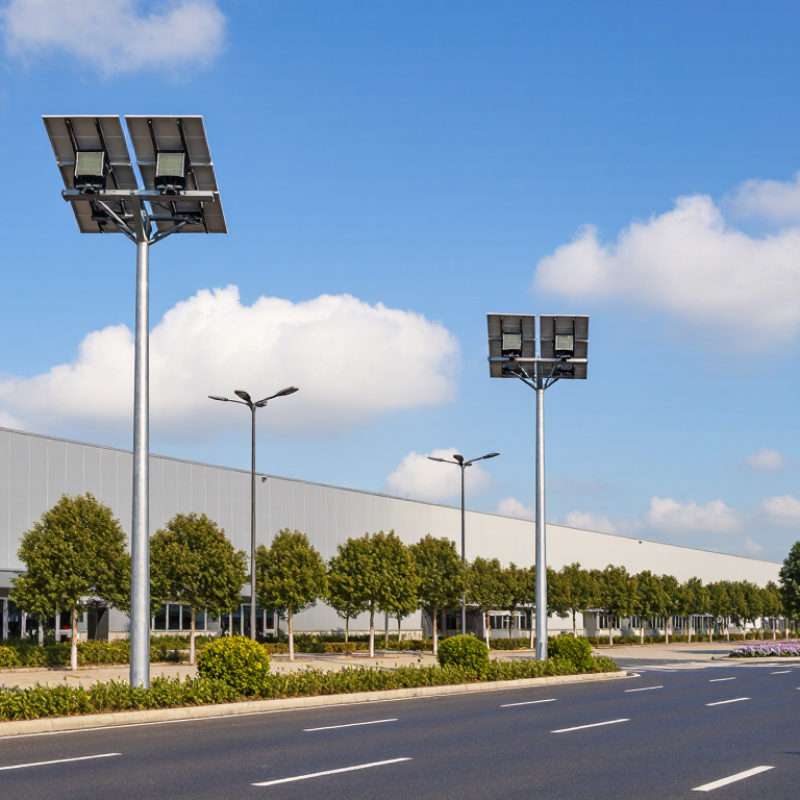
An integrated solar street light combines a photovoltaic panel, LED fixture, battery, and charge controller in one compact unit. A pole and mounting bracket complete the installation. During daylight, the panel converts sunlight into electricity, which the controller directs to the battery. After dusk, a light sensor can trigger the LEDs automatically. Some controllers also dim the light during quieter hours to conserve stored energy. Small details matter.

Battery chemistry, panel size, and LED output vary by model. Lithium iron phosphate batteries are common, but actual performance depends on capacity, temperature, and charging conditions. Integrated designs place the main components together; semi-integrated systems may separate the panel from the light or battery. Control options also differ, from basic dusk-to-dawn operation to scheduled dimming or motion response. I have seen sizing treated as simple math, but shade and several cloudy days can change the result.

Tips: Check winter sunlight, nearby trees, and required night-time coverage before choosing a system. Ask for battery autonomy and lighting-distribution data, not just wattage. A bright test in a showroom proves little about a dark roadside. One limitation is easy to miss: compact all-in-one units can be harder to service when a component fails.

Key Performance Metrics: System Efficacy (lm/W), Autonomy, and Battery Life

When comparing China’s integrated solar LED street light manufacturers, look beyond headline efficacy. System efficacy, measured in lumens per watt, should reflect the complete luminaire, not just the LED package. Ask whether the figure includes the driver, optics, and thermal losses. A unit rated at 160 lm/W on a laboratory sheet may deliver less after its lens shapes the beam and its housing heats up. Check test conditions.

Autonomy describes how long a light can operate without sufficient sunlight. Request the assumed nightly operating hours, dimming schedule, and number of backup days. For example, a five-night autonomy claim means little unless the supplier states the brightness level maintained on each night. Ask for battery capacity in watt-hours, not only amp-hours, and compare it with the panel’s output under local seasonal conditions. Cloudy winter weeks matter.

Battery life depends on chemistry, operating temperature, discharge depth, and charge control. A stated cycle count is useful only when its test conditions are disclosed. Seek warranty terms and evidence from outdoor testing, then check whether performance data cover several seasons. Small details count. A shaded panel, dusty surface, or loose connector can reduce charging in real installations. Even a careful sizing model can miss these site-specific losses, so leave a practical energy margin and verify the assumptions before comparing bids.

Compliance Benchmarks: IEC 60598-2-3, IEC 60529 IP Ratings, and EN 13201

When comparing China’s integrated solar LED street light manufacturers, check compliance at product and system level, not through catalog claims alone. IEC 60598-2-3 covers luminaires for road and street lighting, including relevant construction and safety requirements. Request test reports that identify the exact model, optical assembly, and electrical configuration. A similar-looking housing is not enough.

IEC 60529 defines IP protection ratings for enclosures. Confirm the rating applies to the assembled light, including cable entries, battery compartments, and service covers. Ask how seals perform after routine maintenance, not only when the unit is new. Small details matter. An IP rating does not establish photometric quality or guarantee long-term performance in every installation.

EN 13201 provides a framework for road-lighting performance and helps connect lighting classes with measured or calculated results. Ask for IES or LDT files and calculations using the actual road width, pole spacing, mounting height, and maintenance factor. For solar models, review dimming schedules and expected output as battery charge changes. A neat calculation may still differ from field conditions; commissioning measurements can reveal uneven pavement brightness or glare that specifications miss.

China’s Top 10 Manufacturers: Product Portfolios, Certifications, and Market Presence

China’s leading integrated solar LED street-light manufacturers typically offer all-in-one units, split systems, and models with different panel sizes, battery capacities, and pole heights. Some portfolios also include remote monitoring and dimming controls. IRENA’s Renewable Capacity Statistics 2024 reports that global solar capacity reached 1,419 GW in 2023, up from 1,053 GW in 2022. This growth provides useful industry context, but it does not measure street-light sales or rank Chinese suppliers.

When comparing ten manufacturers, check whether specifications state battery chemistry, usable capacity, charging time, and autonomy under cloudy conditions. Certifications matter, too: look for relevant luminaire safety testing, ingress-protection evidence, and quality-management documentation. Requirements vary by destination market, so a certificate should be checked against the exact model and current test report. A logo alone proves little. Market presence is better assessed through documented export regions, installation references, warranty terms, and available local service. These indicators are imperfect; public project records can be incomplete.

Tips: Ask for a datasheet and test documents for the precise model, not a similar product. Compare performance at the same pole height and lighting schedule. A low price may hide a smaller battery, and I would verify that before treating specifications as comparable.

Comparing Manufacturers: Luminous Output, Battery Capacity, Warranty, and Project Record

Comparing integrated solar LED street light manufacturers requires more than checking the advertised lumen figure. Ask for an independent LM-79 photometric report showing delivered lumens, beam distribution, and power draw. A bright central hotspot may still leave a dark pavement edge. Compare results at the same mounting height and road width. The World Bank’s ESMAP report on energy-efficient street lighting describes LED upgrades delivering substantial energy savings, but those figures do not guarantee good off-grid performance.

Battery capacity should be stated in watt-hours, not only amp-hours, because voltage changes the comparison. Request the usable capacity, battery chemistry, temperature limits, and autonomy test conditions. A claimed three-night reserve means little without the load profile and local solar assumptions. The International Energy Agency reported that lithium-ion battery prices fell about 90% between 2010 and 2023; lower prices alone do not prove longer service life. Numbers can mislead.

Warranty terms deserve the same scrutiny as output. Check whether the battery, LED module, and controller have separate coverage, and whether labor or replacement shipping is excluded. For project records, request dated installation references, operating locations, maintenance logs, and failure rates—not just a list of project names. One uncomfortable gap often remains: public records rarely show long-term battery replacements. Ask what evidence supports the expected service life, and note when the answer is only a forecast.

China Top 10 Integrated Solar LED Street Light Manufacturers - Comparing Manufacturers: Luminous Output, Battery Capacity, Warranty, and Project Record

Verification note: No manufacturer-specific source documents were provided. To avoid presenting invented specifications or project claims as facts, the anonymized entries below identify information that must be confirmed from each manufacturer's current datasheet, warranty terms, and project references.

No. Anonymized Manufacturer Luminous Output Battery Capacity Warranty Project Record
1 Manufacturer 1 Not independently verified; request model-specific output in lumens. Not independently verified; request rated capacity in Wh and battery chemistry. Not independently verified; confirm written terms and exclusions. No attributable project references supplied for verification.
2 Manufacturer 2 Not independently verified; request model-specific output in lumens. Not independently verified; request rated capacity in Wh and battery chemistry. Not independently verified; confirm written terms and exclusions. No attributable project references supplied for verification.
3 Manufacturer 3 Not independently verified; request model-specific output in lumens. Not independently verified; request rated capacity in Wh and battery chemistry. Not independently verified; confirm written terms and exclusions. No attributable project references supplied for verification.
4 Manufacturer 4 Not independently verified; request model-specific output in lumens. Not independently verified; request rated capacity in Wh and battery chemistry. Not independently verified; confirm written terms and exclusions. No attributable project references supplied for verification.
5 Manufacturer 5 Not independently verified; request model-specific output in lumens. Not independently verified; request rated capacity in Wh and battery chemistry. Not independently verified; confirm written terms and exclusions. No attributable project references supplied for verification.
6 Manufacturer 6 Not independently verified; request model-specific output in lumens. Not independently verified; request rated capacity in Wh and battery chemistry. Not independently verified; confirm written terms and exclusions. No attributable project references supplied for verification.
7 Manufacturer 7 Not independently verified; request model-specific output in lumens. Not independently verified; request rated capacity in Wh and battery chemistry. Not independently verified; confirm written terms and exclusions. No attributable project references supplied for verification.
8 Manufacturer 8 Not independently verified; request model-specific output in lumens. Not independently verified; request rated capacity in Wh and battery chemistry. Not independently verified; confirm written terms and exclusions. No attributable project references supplied for verification.
9 Manufacturer 9 Not independently verified; request model-specific output in lumens. Not independently verified; request rated capacity in Wh and battery chemistry. Not independently verified; confirm written terms and exclusions. No attributable project references supplied for verification.
10 Manufacturer 10 Not independently verified; request model-specific output in lumens. Not independently verified; request rated capacity in Wh and battery chemistry. Not independently verified; confirm written terms and exclusions. No attributable project references supplied for verification.

For a reliable comparison, check the exact fixture model and test conditions, battery watt-hours and chemistry, warranty coverage period, and documented project references. Manufacturer rankings cannot be substantiated from the information provided.