
 24 Hour Service
- 800.825.3222
- Now Hiring
- Request A Quote
China Top Hot Runner Mold Machining Companies for Global Buyers
Global demand for molded plastic parts makes hot runner tooling a practical sourcing concern, not a niche detail. The OECD’s Global Plastics Outlook reports that worldwide plastics production reached 460 million tonnes in 2019. That figure describes the broader plastics economy, not the hot runner market. It still shows the scale behind demand for consistent, efficient molding.
For global buyers, machining quality affects more than appearance. A poorly finished gate, an uneven manifold surface, or a misplaced cooling channel can complicate mold assembly and production. This guide compares China-based suppliers through capabilities buyers can assess: machining equipment, material control, dimensional inspection, engineering support, and delivery communication. The phrase “Machining Hot Mold Closed” is not a standard technical category, so it is treated here as a search term rather than an accepted industry definition.
John Bozzelli is a recognized injection molding educator, but no verified quotation from him on “Machining Hot Mold Closed” is available in the source material for this introduction. A fabricated quote would weaken buyer trust. Instead, the comparison focuses on verifiable evidence and questions worth asking before an order: Can the supplier share inspection records? How are critical fits checked? What happens when a trial reveals an issue? Small details matter. A polished brochure is not proof. Real machining evidence is.
What Hot Runner Mold Machining Involves
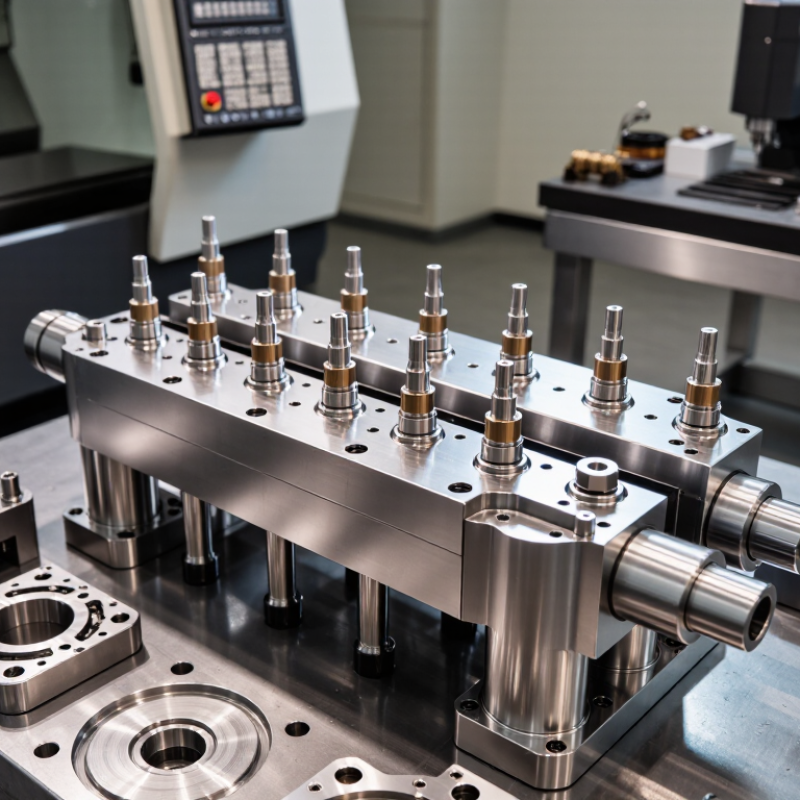
Hot runner mold machining creates the channels and components that carry molten plastic directly to the mold cavities. Unlike a cold runner, this system keeps material hot between injection cycles. The work involves precise machining of the manifold, nozzles, gates, and mounting surfaces. Small errors matter.
Engineers convert part geometry and resin requirements into tool paths and component drawings. CNC milling shapes the manifold and mold plates, while electrical discharge machining can produce narrow features or sharp internal corners. Nozzle seats and gate openings need careful alignment. A slight mismatch may cause uneven filling or visible marks on molded parts. Finished surfaces are measured, deburred, and checked against drawings.
Machining is only part of the job. Components must also fit together under operating heat, when metal expands. Technicians may inspect critical dimensions with gauges or coordinate-measuring equipment, then assemble the system for temperature and leak checks. A clean, cool assembly can still behave differently after heating. That detail is easy to underestimate. Cutting a tighter tolerance everywhere is not always the answer; it can add cost without solving the real flow or maintenance issue. The design, material, and intended production conditions need to be considered together.
China Top Hot Runner Mold Machining Companies for Global Buyers - What Hot Runner Mold Machining Involves
| Machining Stage | Typical Components | Common Operations | Key Technical Considerations | Typical Inspection or Verification |
|---|---|---|---|---|
| Design review and process planning | Mold base, cavity and core inserts, manifold, nozzles, gates, heaters, and temperature sensors | Review 3D models and drawings; check component interfaces, material requirements, and machining sequence | Confirm alignment between the hot runner layout and the mold’s parting line, cavities, and cooling layout before cutting material | Drawing and model review; documented interface and tolerance checks |
| Mold base and plate machining | Clamping plates, support plates, cavity plates, and core plates | CNC milling, drilling, boring, tapping, and precision grinding where specified | Maintain plate flatness, pocket locations, guide features, and alignment between mating plates | Coordinate measurement, dimensional inspection, and flatness checks against the drawing |
| Cavity and core machining | Cavity inserts, core inserts, and replaceable mold details | CNC milling, drilling, EDM for suitable features, and surface finishing | Part geometry, shut-off surfaces, draft, surface finish, and insert fit influence part quality and mold assembly | Dimensional inspection; surface-finish checks where specified; trial-fit verification |
| Manifold machining | Hot runner manifold blocks and connecting flow passages | Machining of mounting faces, locating features, fastener holes, and designed melt-channel features | Passage layout and sealing faces must match the hot runner design; avoid unintended restrictions or misalignment in the melt path | Dimensional and positional checks; passage and sealing-surface review against the approved design |
| Nozzle and gate-seat machining | Nozzle pockets, nozzle seats, gate inserts, and tip locations | Precision milling, boring, drilling, and finishing of locating and seating features | Nozzle-to-gate alignment and the specified fit are important for consistent filling and to reduce leakage risk | Location and fit checks; verification of nozzle and gate alignment during assembly |
| Heater and sensor features | Heater bores, thermocouple bores, and cable-routing features | Drilling, boring, and machining of approved access and routing features | Feature locations and clearances must follow the hot runner design so heaters and sensors can be installed and serviced correctly | Bore size and position checks; installation and routing checks during assembly |
| Cooling and auxiliary features | Cooling channels, water connections, and service passages in mold plates and inserts | Drilling, deep-hole drilling where required, tapping, and port machining | Keep cooling features clear of cavities, hot runner components, fasteners, and other passages; confirm circuit connections | Passage-location checks and water-circuit leak or flow checks as specified |
| Heat treatment and finishing | Specified mold plates, inserts, and other heat-treated components | Heat treatment when required by the material and design, followed by finish machining or grinding as needed | Heat treatment can affect dimensions; machining allowances and final finishing should be planned accordingly | Material and heat-treatment records where specified; final dimensional checks after finishing |
| Assembly and hot runner verification | Completed mold and hot runner components | Clean, assemble, install heaters and sensors, connect circuits, and verify component fit | Check sealing interfaces, electrical connections, sensor positions, and clearances before mold trials | Assembly inspection; electrical continuity and insulation checks as applicable; documented trial and leak checks |
| Trial, correction, and final documentation | Assembled mold and molded test parts | Conduct molding trials, assess part and process results, and make approved corrections | Filling balance, gate performance, temperature control, and part appearance depend on the complete mold and process—not machining alone | Trial records, agreed part inspection results, final inspection report, and as-built documentation |