
Blog

China Top 10 Transformer Winding Machine Manufacturers?

Choosing among China’s top transformer winding machine manufacturers requires more than comparing prices or catalog photographs. A winding machine may look impressive on a factory floor, yet the real test comes when it handles a specific conductor, coil geometry, and insulation system. Buyers should examine winding accuracy, tension control, automation options, service support, and the availability of application-specific engineering.

Transformer engineering author S. V. Kulkarni provides a useful technical lens. A paraphrase of the design principles in his work—not a verbatim quotation—is: “Reliable transformer performance begins with controlled winding geometry, sound insulation, and repeatable manufacturing.” Those principles matter on the shop floor. An operator watches wire tension, checks layer alignment, and listens for a change in motor tone. Small process variations can affect coil consistency. Details matter.

This guide compares ten Chinese manufacturers through practical questions: What types of machines do they build? Which transformer applications do they serve? Can they demonstrate repeatable results, provide commissioning support, and explain their quality controls? Public information can be incomplete, and a polished product page is not proof of performance. Treat any shortlist as a starting point, then request technical specifications, customer references, and a machine trial using representative materials. Speed is not everything. The right choice depends on the production line, the team’s skills, and the work the machine must perform every day.
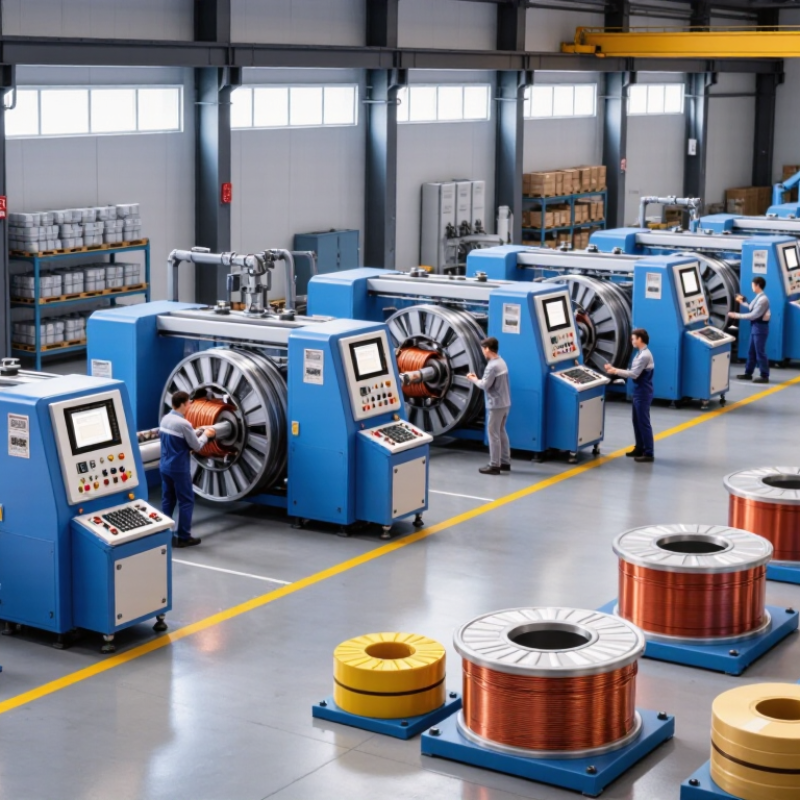
China Top 10 Transformer Winding Machine Manufacturers?

What Transformer Winding Machines Are and How They Work

A transformer winding machine forms insulated copper or aluminum conductors into coils for a transformer’s core. Depending on the design, it may wind wire, flat strip, or foil. The machine rotates a mandrel while guides place each turn in a controlled position. Even tension matters. Too little can leave loose layers; too much may stretch or damage the conductor.

The operator sets the required turns, winding speed, wire tension, and layer spacing. On automated equipment, programmed controls coordinate rotation and guide movement. Sensors may track turns or detect tension changes, but settings still need careful checking. A typical winding process builds one layer at a time, with insulation added where the design requires it. Finished coils are inspected for uneven edges, damaged insulation, and loose sections. In practice, small variations can occur, so the process is not entirely “set and forget.”

Tips: Check the conductor path before starting. Use a sample run to confirm tension and spacing, then inspect the first layers closely. Record adjustments; a brief note can prevent repeated mistakes.

How China’s Transformer Winding Machine Industry Is Organized

China’s transformer winding machine industry is better understood as a layered supply network than a simple top-ten list. At its center are machine builders designing horizontal or vertical winders for distribution and power transformers. Some offer standard platforms; others customize spindle layouts, traverse systems, wire guides, and tension control for specific coil dimensions. Around them are suppliers of motors, sensors, controllers, tooling, and electrical cabinets. Integrators connect these parts and adapt machines to factory workflows. Service teams may handle installation, commissioning, and operator training.

The structure is practical, but not perfectly tidy. A supplier may assemble a complete line while sourcing key components elsewhere. Regional manufacturing networks can shorten procurement and service cycles, yet capabilities vary between workshops. Buyers should confirm winding range, repeatability, changeover time, safety guarding, and commissioning support using sample coil drawings—not brochure figures alone. Ask for a live run or recorded test with comparable wire and dimensions. Small details matter. Even a capable machine may need adjustment when a factory’s production habits differ from the test setup.

Tips: Request a written acceptance test, spare-parts list, and service response commitment. Confirm who provides training.

How China’s Transformer Winding Machine Industry Is Organized

A product-family view of transformer winding equipment, organized by the coil form or conductor used.

Wire-winding, foil-winding, and toroidal-winding machines represent distinct equipment specializations. The chart marks each category’s inclusion in this product-family taxonomy; it does not show market share, manufacturer counts, or sales.

Criteria for Selecting Leading Chinese Manufacturers

China Top 10 Transformer Winding Machine Manufacturers?
Criteria for Selecting Leading Chinese Manufacturers

Choosing a transformer winding machine manufacturer takes more than comparing quoted prices. In practice, buyers should check winding accuracy, tension control, supported conductor sizes, and changeover time against their own production needs. The IEA’s Electricity Grids and Secure Energy Transitions (2023) says annual grid investment must rise from about USD 330 billion to more than USD 600 billion by 2030. This is not a machine-sales forecast, but it signals growing pressure on grid equipment supply and production capacity.

Ask for a witnessed trial using your actual wire, bobbin, and winding pattern. Measure coil dimensions, tension consistency, cycle time, and rework—not just the sample’s appearance. Small defects matter. Check whether quality records are traceable, operator training is documented, and critical spare parts are available locally or with clear delivery times. Factory acceptance testing should include agreed pass criteria and written results. A polished catalogue can still hide practical limits. I would also question claims of “zero defects”; real production has variation, and credible suppliers explain how they detect and reduce it. Compare service response, software support, safety features, and customization costs before ranking candidates.

China Top 10 Transformer Winding Machine Manufacturers? - Criteria for Selecting Leading Chinese Manufacturers

A manufacturer-neutral evaluation framework. Compare documented machine specifications and verified service capabilities; this table does not rank or identify individual companies.

No. Selection criterion Information to compare How to verify Why it matters
1 Application and machine type Supported winding processes, such as layer, foil, toroidal, or other application-specific winding; transformer types and workpiece dimensions supported by the proposed configuration. Request the machine configuration, operating range, and a sample winding demonstration using a representative workpiece. A machine suitable for one winding process or transformer design may not suit another.
2 Wire and conductor compatibility Supported conductor material and cross-section or diameter range, including whether the machine can handle the buyer’s wire, strip, or foil specifications. Check the technical datasheet and validate using the actual conductor and insulation materials intended for production. Conductor dimensions and material affect feeding, tension control, and winding quality.
3 Winding accuracy and repeatability Specified positioning or winding accuracy, layer alignment capability, turn-count control, and repeatability under stated test conditions. Ask for the measurement method, acceptance criteria, and repeat-run results on a comparable coil or transformer winding. Clear test conditions make accuracy claims more meaningful and comparable.
4 Tension and wire-handling control Available tension-control method, adjustable range where specified, wire-break detection, and compatibility with delicate or insulated conductors. Review the control-system description and observe wire feeding and winding with the intended conductor. Inadequate wire handling can damage insulation or lead to inconsistent winding.
5 Automation and changeover Programmable recipes, automatic or assisted functions, tooling-change requirements, and the steps needed to change between product specifications. Request a live recipe changeover demonstration and document which operations require manual intervention. Actual changeover needs help determine whether automation fits the production mix.
6 Controls and production data Control interface, recipe storage, alarm and fault information, data export options, and any interfaces required for the buyer’s production system. Confirm functions in the control-system documentation and test required data exchange during acceptance testing. Documented controls support repeatable operation and production traceability where required.
7 Safety and compliance documentation Machine guarding, emergency-stop provisions, electrical documentation, operating instructions, and conformity documentation applicable to the destination market. Review the actual machine and its documents against applicable local requirements; verify any conformity claims with the relevant records. Requirements depend on the machine configuration and the country where it will be installed and used.
8 Build quality and maintainability Machine layout, accessibility of service points, spare-parts identification, maintenance schedule, and availability of electrical and mechanical drawings. Inspect the machine, review maintenance documents, and confirm the parts-list format and replacement-part ordering process. Accessible service points and clear documentation can make routine maintenance easier.
9 Testing and acceptance support Factory acceptance test scope, sample-product requirements, installation and commissioning plan, training, and agreed performance acceptance criteria. Put test procedures, responsibilities, and measurable acceptance conditions in the quotation or purchase contract. A documented acceptance process helps both parties assess whether the delivered machine meets the agreed requirements.
10 Service, warranty, and total cost Warranty terms, response and escalation process, remote-support arrangements, spare-parts lead times, training costs, and installation or shipping charges. Request written service terms and a complete quotation that separates machine price, options, delivery, commissioning, and ongoing support. The purchase price alone does not show the full cost or support arrangements over the machine’s service life.

Comparison note: Machine ranges, accuracy figures, cycle times, and service commitments should be checked against the specific model, tooling, materials, and test conditions quoted for the application.

Profiles of Ten Chinese Transformer Winding Machine Manufacturers

China’s transformer-winding machine suppliers serve different production needs. These ten profiles describe common capability types, not a verified ranking of named companies. Profile one focuses on compact coil winders for repair shops, where floor space matters. Profile two targets distribution-transformer lines and emphasizes repeatable wire tension. Profile three builds CNC-controlled machines for varied coil sizes. Ask how quickly operators can change settings.

Profile four specializes in foil winding, with attention to edge alignment and insulation handling. Profile five serves larger power-transformer coils and may offer reinforced frames. Profile six focuses on automatic wire feeding and programmable turns. Profile seven supplies semi-automatic equipment for factories balancing cost and flexibility. Profile eight develops machines for multi-strand conductors. Check its stated tension range against your actual wire samples. Small details matter.

Profile nine combines winding equipment with tooling or line-integration support. Profile ten offers customized designs for unusual coil dimensions. A polished brochure is not proof of performance. Request a live trial using your material, and inspect finished coils for looseness, uneven layers, and insulation damage. Compare service response times, spare-part availability, operator training, and written acceptance criteria. Some specifications may remain unclear until a real production test. Ask for measurable results, not broad promises.

How to Compare Manufacturers, Products, and Services

When comparing transformer winding machine manufacturers, look beyond catalog speed and headline price. The International Energy Agency’s 2023 report, Electricity Grids and Secure Energy Transitions, says annual grid investment needs to exceed $600 billion by 2030, nearly double current levels. That outlook makes dependable production capacity important, but it does not prove that any one machine suits your factory. Compare wire-diameter ranges, winding tension control, spindle accuracy, and changeover time against your actual coil designs. Small details matter.

Ask for a witnessed test using your own wire and winding specification. Check finished-coil dimensions, layer consistency, and repeatability across several runs—not just one demonstration. Request cycle-time data under realistic operating conditions. A fast machine may still create costly stops if operators struggle to adjust recipes or load bobbins. Ask for proof.

Tips: Get written details on installation, operator training, spare-part availability, and service response times. Ask how quickly a technician can support your site, and whether common wear parts are stocked locally. Compare warranty coverage line by line. A low quote can omit useful support; a detailed quote can still leave gaps. I would verify each promise in the contract, because supplier claims are not always easy to measure after delivery.

Article Source: