
Blog

China Top 10 Petroleum Coke Composition FAQs?

China’s petroleum coke market serves aluminum, steel, cement, and energy industries. Its material quality depends on crude oil origin, refinery configuration, and delayed-coking conditions. Therefore, Petroleum Coke Composition is never a single fixed formula.

The U.S. Energy Information Administration’s Petroleum Supply Annual tracks refinery coke production and petroleum-processing trends. The International Energy Agency’s Oil 2024 report also highlights continuing refinery changes and regional demand shifts. These sources help explain why Chinese Petroleum Coke Specifications can differ between provinces, suppliers, and shipment periods. Numbers vary. Sampling matters.

Typical analysis covers fixed carbon, volatile matter, sulfur, ash, moisture, and trace metals. Nickel and vanadium deserve close attention. They can influence combustion behavior, anode quality, and equipment fouling. A dark, dry granule may look uniform, yet laboratory results can reveal significant internal variation. ASTM and ISO-based methods improve comparability, while certified laboratories strengthen purchasing decisions.

This FAQ guide examines ten practical questions about China’s petroleum coke composition. It connects supplier specifications with testing practice, industrial use, and quality-control risks. Readers will find why green coke differs from calcined coke, how sulfur levels affect applications, and why moisture should not be overlooked. Some published market summaries use broad averages. That is useful, but incomplete. Actual performance still depends on representative sampling, verified test reports, and consistent batch records.
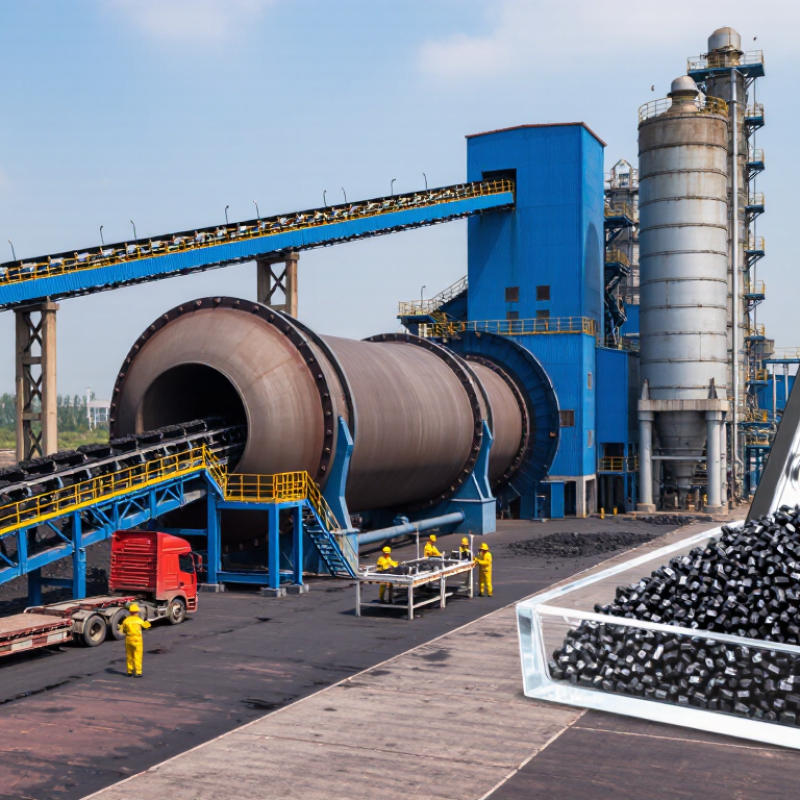
China Top 10 Petroleum Coke Composition FAQs?

What Is Petroleum Coke? Typical Fixed Carbon Ranges from 80% to 95%

China Top 10 Petroleum Coke Composition FAQs?

What is petroleum coke? It is a carbon-rich solid produced during crude-oil refining. Green petroleum coke usually contains 80% to 95% fixed carbon, depending on feedstock and processing conditions. Calcined grades can exceed 98% fixed carbon after volatile materials are removed. These figures are typical ranges, not universal guarantees.

A common composition includes 3% to 15% volatile matter, 0.2% to 8% ash, and varying sulfur content. Sulfur may range from below 1% to above 6%, especially when refinery feedstocks differ. The U.S. Geological Survey’s Mineral Commodity Summaries describes petroleum coke as a major carbon material used in industrial processes. ASTM laboratory methods, including proximate analysis procedures, help measure moisture, volatile matter, ash, and fixed carbon consistently.

Fixed carbon is often calculated by difference, not measured as pure elemental carbon. That shortcut is useful, but imperfect. A sample with 90% fixed carbon may still perform differently because of sulfur, metals, moisture, and particle size. The International Energy Agency has reported continuing attention to refinery coke and its emissions profile, particularly where high-sulfur material is combusted. Buyers should request a recent certificate of analysis, test method, and sampling date. Numbers without testing details can mislead. Even “95% carbon” needs context.

How Do Sulfur Levels Define Chinese Petcoke Grades: Below 3% or Above 6%?

Sulfur is the quickest way to separate Chinese petroleum coke grades. In common trade practice, coke below 3% sulfur is considered low-sulfur material. Coke above 6% is usually classified as high-sulfur coke. The 3–6% range is often treated as medium sulfur, although contracts may define it differently.

This difference matters at the unloading yard. A low-sulfur cargo usually produces fewer sulfur-related process concerns during anode or industrial use. High-sulfur coke may require tighter combustion control and stronger desulfurization measures. The U.S. Energy Information Administration links petroleum coke quality with crude selection and refinery configuration. Its refinery yield data show coke commonly representing about 4–8% of refinery output, while sulfur levels vary widely between crude slates. China’s customs statistics also show sustained petroleum coke import activity, making sulfur certificates commercially important.

A laboratory certificate should report total sulfur, moisture, ash, volatile matter, and metals. Do not judge quality from sulfur alone. Nickel and vanadium can influence anode performance and furnace behavior. The International Aluminium Institute has repeatedly highlighted impurity control as a key factor in carbon anode quality. Testing should use recognized methods, such as ASTM sulfur analysis procedures, with sampling performed before blending.

The boundary is useful, but not perfect. A “below 3%” result can still hide high vanadium or unstable moisture. One test is not enough. Contract terms, sampling location, and test timing deserve equal attention.

China Top 10 Petroleum Coke Composition FAQs: How Do Sulfur Levels Define Chinese Petcoke Grades—Below 3% or Above 6%?
Scope: The figures below are representative technical ranges used for petroleum coke screening and procurement discussions in China. Actual specifications vary by refinery, crude feedstock, delayed-coking process, shipment condition, and laboratory method. Sulfur is a major classification factor, but it does not define grade by itself.
No. Frequently Asked Question Key Composition or Quality Dimension Representative Data or Technical Answer Practical Interpretation for Chinese Petcoke Grading and Use
1 What sulfur level is generally considered low-sulfur petroleum coke? Total sulfur, typically reported on an as-received or dry basis. Below 3% sulfur is commonly used as a commercial screening boundary for low-to-medium sulfur material. Material below approximately 1% is often described as low-sulfur or extra-low-sulfur in trade discussions. Below 3% usually provides greater flexibility for fuel, anode, and industrial applications, but buyers should confirm the contractual basis and the applicable emissions requirements.
2 Does sulfur above 6% automatically mean that the coke is unusable? High sulfur and combustion or calcination conditions. Above 6% sulfur is generally treated as high-sulfur petroleum coke. It is not automatically unusable, but sulfur dioxide control, blending, or a suitable end use may be required. High-sulfur coke is more restricted where sulfur emissions are tightly controlled. Its acceptability depends on the furnace, desulfurization system, product specification, and local environmental rules.
3 Is the 3% to 6% range a separate petroleum coke grade? Commercial sulfur bands rather than a single universal standard. Yes, many buyers treat approximately 3%–6% sulfur as a medium- to high-sulfur range. However, Chinese market labels and purchasing specifications are not completely uniform. The sulfur band should be stated together with ash, volatile matter, metals, moisture, and size. A sulfur number alone is insufficient to establish a legally recognized grade.
4 What is the normal fixed-carbon content of green petroleum coke? Fixed carbon and volatile matter. Green petroleum coke commonly contains about 80%–95% fixed carbon by mass, depending on the crude source and coking severity. Volatile matter is often approximately 8%–15%. Higher fixed carbon generally improves the potential fuel value and carbon yield. Volatile matter affects ignition, handling, calcination behavior, and storage requirements.
5 How much ash is normally present in petroleum coke? Inorganic mineral residue after combustion. Typical green petroleum coke ash is approximately 0.1%–2.5%, although outliers can occur because of crude feedstock, catalysts, contamination, or handling. Lower ash is preferred for carbon anodes and many metallurgical applications because ash reduces effective carbon content and may introduce unwanted oxides or trace elements.
6 How does moisture affect the quoted composition? Total moisture and reporting basis. As-received moisture is often around 3%–15%, but it can be higher after rain, washing, or outdoor storage. Dry-basis values remove the effect of water and are not directly interchangeable with as-received values. Moisture changes delivered weight, heating value, conveying behavior, and measured concentration. Every purchase specification should identify whether sulfur and other values are as-received, air-dried, or dry basis.
7 Which metals are most important in Chinese petroleum coke specifications? Vanadium, nickel, iron, calcium, and sodium. Vanadium and nickel can range from tens to several thousand parts per million, depending on crude origin. Iron, calcium, and sodium are also monitored because they can affect ash, corrosion, catalysts, and anode performance. High vanadium and nickel may be acceptable in some fuel applications but can be unfavorable for anode-grade or specialty carbon uses. Metal limits must be agreed separately from sulfur limits.
8 What is the difference between green and calcined petroleum coke? Thermal treatment, carbon purity, and volatile matter. Green coke is the product directly obtained from delayed coking. Calcined petroleum coke is heated, commonly around 1,200–1,350 °C, to remove most volatile matter; calcined material often contains more than 98% fixed carbon, subject to ash and specification. Calcination improves electrical conductivity, dimensional stability, and carbon purity. It does not automatically remove sulfur; much of the sulfur remains unless the process and feedstock promote measurable sulfur loss.
9 Does sulfur level alone determine anode-grade petroleum coke? Anode suitability and combined quality parameters. No. Anode-grade assessment also considers sulfur, vanadium, nickel, iron, calcium, sodium, ash, real density, porosity, volatile matter, thermal stability, and calcined properties. A coke below 3% sulfur may still fail anode requirements if metals, ash, density, or structural properties are unsuitable. Conversely, some higher-sulfur material may be technically usable in a controlled blend, subject to the buyer's limits.
10 Which laboratory tests should be requested before buying Chinese petcoke? Certificate of analysis and test-method consistency. At minimum, request total sulfur, ash, volatile matter, fixed carbon by difference, moisture, vanadium, nickel, iron, calorific value for fuel use, particle-size distribution, and bulk density. Use recognized ASTM, ISO, or equivalent Chinese methods and retain representative samples. Comparisons are meaningful only when the same test method, reporting basis, sampling procedure, and size fraction are used. A shipment should be accepted against the agreed specification, not only against a broad sulfur label.
Important grading note: “Below 3%” and “above 6%” are practical commercial reference points, not universal definitions applicable to every Chinese supplier, refinery, or end-use sector. Final classification should be based on the complete certificate of analysis, the product’s reporting basis, the intended application, and current environmental requirements.

Which Trace Metals Matter? Vanadium and Nickel May Exceed 100 ppm

China Top 10 Petroleum Coke Composition FAQs?

Vanadium and nickel deserve close attention in petroleum coke testing. Technical surveys report vanadium levels near 50–500 ppm, while nickel may range from 20–300 ppm. Some samples exceed 100 ppm for both metals. These values are not universal limits. They reflect crude-oil origin, refinery processing, and sampling quality. The U.S. EPA’s AP-42 emissions guidance identifies metal content as an important factor during petroleum coke combustion. Higher concentrations can increase ash deposits, fouling, and particulate-metal emissions.

Vanadium can form corrosive compounds on hot boiler surfaces. Nickel may remain concentrated in ash after combustion. A dry, dusty sample can also produce misleading results. ASTM D5708 provides an ICP-based method for measuring nickel and vanadium in heavy petroleum materials. However, petroleum coke requires careful preparation because uneven particles can distort laboratory results. One test is rarely enough. I would review duplicate samples from the top, middle, and bottom of each storage pile. That extra step costs time, but it may prevent an expensive operating mistake.

Tips: Request results in ppm on a clearly stated basis, preferably dry basis. Check the detection limit, moisture value, and laboratory method. Compare vanadium and nickel with ash, sulfur, and calorific value. The International Maritime Organization’s fuel-quality work also shows why sulfur and metal data must be reviewed together. Numbers can look acceptable, yet combustion behavior may still be poor.

How Do Ash, Moisture, and Volatile Matter Affect Petcoke Quality?

China Top 10 Petroleum Coke Composition FAQs

Petroleum coke quality depends heavily on ash, moisture, and volatile matter. Ash is the mineral residue left after combustion. High ash reduces fixed carbon and can increase abrasion in mills, calciners, and conveyors. It may also affect anode performance when the coke is used in aluminum production. A grey, dusty sample can be a warning, but appearance alone proves little.

Moisture changes the commercial value of each shipment. Surface water may come from rain, washing, or uncovered storage. It lowers the usable heating value and increases transport costs. In winter, wet coke can freeze into hard blocks. Even experienced buyers get this wrong. Testing should report moisture on an as-received basis, while comparing results on a dry basis.

Volatile matter shows how much combustible material is released during controlled heating. High volatile matter can support ignition, but it may create unstable combustion and affect calcination control. Very low values can suggest extensive thermal treatment, though this depends on the testing method and coke type. Sampling matters most. One handful is not enough. A representative composite sample should be tested under recognized ASTM or ISO procedures. Results should include ash, total moisture, volatile matter, sulfur, and fixed carbon. I would not trust a certificate without checking its basis, sampling date, and laboratory method. Composition targets also vary by furnace design, fuel system, and end use. That detail is easy to overlook.

How Is Petcoke Composition Tested Using ASTM Sulfur and Ash Methods?

Petroleum coke composition depends on its source, refining conditions, and storage history. A reliable test begins with a representative sample. Collect increments from different locations, then combine and reduce them carefully. Crushing can create dust segregation. That detail matters.

Sulfur is commonly measured by ASTM D4294 using energy-dispersive X-ray fluorescence. The prepared sample is pressed or placed in a suitable sample cup, then exposed to X-rays. The instrument estimates sulfur from the emitted spectrum. Some laboratories use high-temperature combustion methods, such as ASTM D1552, for confirmation. Results should include the reporting basis, such as as-received or dry basis. Moisture can change the apparent sulfur percentage. It is easy to overlook.

Ash is often tested with ASTM D4422 for petroleum coke. A weighed portion is heated in a controlled furnace until combustible material is removed. The remaining mineral residue is weighed and reported as ash. Clean crucibles, stable furnace temperature, and complete cooling in a desiccator improve repeatability. If the residue looks unusually high, contamination or poor sample mixing deserves investigation.

Tips: Record sample mass, preparation steps, instrument calibration, and test atmosphere. Run duplicates when results affect purchasing or furnace operation. A small disagreement between methods is not automatically an error. It may reveal matrix effects, uneven particles, or an unsuitable reporting basis. Review the raw data before accepting a single final number.

China Top 10 Petroleum Coke Composition FAQs: How Is Petcoke Composition Tested Using ASTM Sulfur and Ash Methods?

The chart shows commonly reported composition ranges for green petroleum coke. Values are indicative industry ranges rather than a specification for any single shipment. Fixed carbon, volatile matter, and ash are normally reported on a dry basis, while moisture is commonly reported on an as-received basis. Sulfur is included within the carbonaceous material and is shown as a separate quality parameter.

Top 10 Petroleum Coke Composition FAQs

  1. What is petroleum coke mainly made of?
    Petroleum coke mainly consists of carbon, with smaller amounts of volatile matter, sulfur, ash, moisture, and trace metals.
  2. What is the typical fixed-carbon content?
    Green petroleum coke commonly contains approximately 85–92 wt% fixed carbon on a dry basis, depending on the refinery process and feedstock.
  3. What is petroleum coke volatile matter?
    Volatile matter is the portion released when the sample is heated under controlled conditions. Typical values are approximately 8–14 wt% on a dry basis.
  4. How is sulfur in petcoke tested?
    Total sulfur can be measured by ASTM D4294 using energy-dispersive X-ray fluorescence or by ASTM D4239 using a high-temperature tube-furnace method.
  5. Which ASTM method is commonly used for ash?
    ASTM D3174 is commonly used to determine ash from petroleum coke by controlled heating in air until the inorganic residue remains.
  6. What does ash represent?
    Ash is the non-combustible inorganic residue remaining after the carbonaceous portion of the sample has been burned. Typical petroleum coke ash is approximately 0.2–2.0 wt%.
  7. Why is sample preparation important?
    Petroleum coke must be representative, properly dried when required, crushed, and thoroughly mixed because particle-size segregation and moisture variation can affect results.
  8. What is the difference between dry-basis and as-received results?
    Dry-basis results exclude moisture, while as-received results reflect the material in its delivered condition. The reporting basis must always accompany the test value.
  9. How is fixed carbon determined?
    Fixed carbon is commonly calculated by difference after measuring moisture, volatile matter, and ash rather than by a separate direct measurement.
  10. Why do sulfur and ash values vary between petroleum coke sources?
    Variation is mainly related to crude-oil sulfur, refinery feedstock, delayed-coking conditions, operating severity, and the inorganic minerals entering the coker.