
Blog

China Best Rapid EV Charger Manufacturers for Global Buyers

Choosing a Rapid Ev Charger manufacturer in China requires more than comparing charging speed and factory prices. Global buyers need dependable engineering, transparent documentation, and proven field performance. A charger rated at 240 kW may look impressive on paper, yet unstable software or poor thermal control can reduce its real output. That difference matters at a busy highway station, where every minute affects driver confidence and operator revenue.

James Court, chief executive of the Electric Vehicle Association England, has said, “Drivers need confidence that charging will be easy, reliable, and available.” His point reflects the buyer’s real challenge. A strong manufacturer should provide load testing records, protection details, warranty terms, and responsive after-sales support. It should also understand regional requirements, including connector standards, grid conditions, payment systems, cybersecurity, and language localization. Certifications such as CE, UKCA, or UL can support credibility, but certification alone cannot prove long-term reliability.

The best Chinese suppliers combine power electronics expertise with practical deployment experience. Look for evidence from public charging networks, fleet projects, climate testing, and service records. Ask how quickly replacement parts arrive. Ask who handles remote diagnostics at night. These details reveal more than polished brochures.

No supplier is perfect. Some manufacturers still overstate charging performance or provide unclear efficiency data. Buyers should verify every important claim independently. This guide examines leading China-based manufacturers through product capability, manufacturing strength, compliance, customization, and global support. The goal is not to promote the loudest brand. It is to identify partners that can deliver safe, maintainable, and genuinely useful Rapid Ev Charger systems.
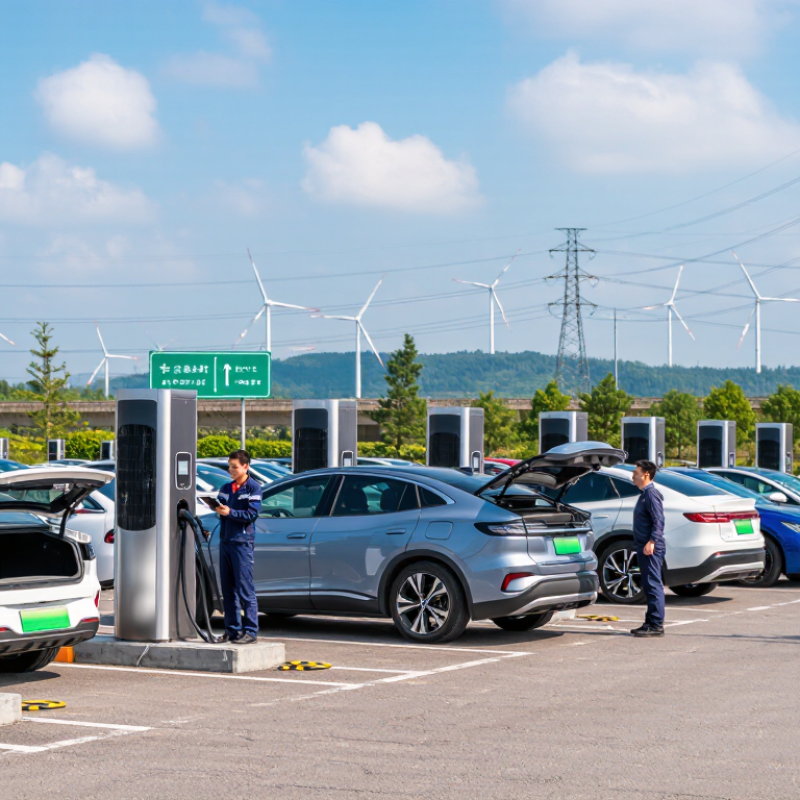
China Best Rapid EV Charger Manufacturers for Global Buyers

What Defines a Leading Rapid EV Charger Manufacturer in China

A leading rapid EV charger manufacturer in China is defined by verified engineering, not production volume alone. It should show test records for power modules, insulation, surge protection, and thermal performance. High-power charging creates heat quickly. Stable cooling matters during repeated summer sessions. Experienced suppliers explain derating behavior instead of hiding it. They also adapt connectors, grid requirements, and communication protocols for each market. Certification must match the destination country and the actual charger configuration. That is essential.

Global buyers should inspect manufacturing discipline. Ask about incoming component checks, end-of-line testing, traceability, and software update controls. A reliable factory can provide sample data, installation guidance, training, and responsive fault analysis. Remote diagnostics can reduce downtime, but only when cybersecurity is treated seriously. Warranty terms should state response times, spare-part availability, and coverage for charging cables and cooling systems. Site references help, though they should be independently verified. No factory gets every detail right. Honest discussion of limits is often more credible than perfect claims.

Tips: Request a pilot batch before a large order. Test charging under different temperatures and grid conditions. Check connector wear after repeated use. Confirm local service partners and language support. Review certificates with an accredited body. Keep a written record of acceptance tests.

Key Technologies Used in China’s Rapid EV Charging Systems

China’s rapid EV charging systems rely on high-power DC architecture, often supporting 400-volt and 800-volt vehicle platforms. Modular power cabinets divide the load across several charging outlets. This improves service continuity when one module requires maintenance. Silicon carbide power devices can reduce switching losses and cabinet size. Field testing still matters, because efficiency changes under heat, dust, and unstable grid conditions.

Liquid-cooled charging cables help manage high current without becoming too heavy for daily use. Thermal sensors monitor cable temperature, connector contacts, and internal power components. Insulation monitoring and residual-current protection add important safety layers. Battery communication also controls voltage, current, and charging limits through the vehicle’s management system. Small details matter. A poorly fitted connector can create heat, noise, and slower charging.

Dynamic load balancing adjusts output when several vehicles charge together. Cloud platforms can record fault codes, energy use, and maintenance intervals. Open communication protocols may simplify integration with fleet software and local payment systems, but compatibility should never be assumed. Global buyers need to verify connector standards, grid frequency, cybersecurity controls, and regional certification before ordering. Heat remains stubborn. Liquid cooling improves performance, yet filters, pumps, and seals require regular inspection. Some systems advertise impressive peak power, while real output falls during low-voltage conditions or crowded charging periods. Independent testing under local conditions is therefore more reliable than a brochure figure.

China Best Rapid EV Charger Manufacturers for Global Buyers

Key Technologies Used in China’s Rapid EV Charging Systems

The chart compares representative non-brand DC fast-charging power classes used for engineering evaluation. The estimated charging time is calculated for a 60 kWh battery charged from 20% to 80%, assuming 100% energy-transfer efficiency. Real charging sessions normally take longer because of power limits, battery temperature, state-of-charge tapering, and vehicle-side constraints. Higher-power systems commonly require 800 V architecture, advanced liquid cooling, and high-current DC charging interfaces.

Top Chinese Rapid EV Charger Manufacturers for Global Buyers

Top Chinese Rapid EV Charger Manufacturers for Global Buyers

Chinese rapid EV charger manufacturers serve commercial fleets, highway stations, and urban parking sites worldwide. Experienced buyers should examine output stability, cooling design, connector durability, and software compatibility. A factory audit can reveal more than a sales presentation. Check production records, inspection procedures, and load-testing equipment. Ask for test reports from independent laboratories where possible. Local grid conditions also matter, especially voltage variation and harsh weather.

Tips: Request a complete sample test. Measure charging speed, temperature, noise, and communication stability. Review warranty terms carefully. A low purchase price may bring higher service costs later.

Reliable manufacturers should provide clear technical documents, installation guidance, spare-parts planning, and responsive after-sales support. Confirm whether the charger supports required communication protocols and regional safety requirements. Do not rely only on rated power. Real performance may fall during peak heat or heavy use. No supplier is perfect. Even a strong prototype can hide maintenance problems after months of operation. Buyers should therefore compare factory capacity, quality controls, software updates, and service response times. Small details matter, such as cable flexibility at minus-zero temperatures or screen visibility under direct sunlight. A careful evaluation protects investment and supports safer, more dependable charging networks.

How to Compare Chinese EV Charger Suppliers and Product Ranges

Choosing China’s best rapid EV charger manufacturer requires more than comparing quoted prices. A serious buyer should examine charging power, connector options, cooling design, and software compatibility. Check whether the supplier offers 60 kW, 120 kW, or higher-output systems. Ask for efficiency data at different loads. A charger that performs well in a showroom may behave differently beside a busy highway.

Request technical documents before discussing volume orders. These should include test reports, ingress protection ratings, electrical safety evidence, warranty terms, and installation requirements. Confirm which international standards apply in your target market. Also review the supplier’s production controls, spare-parts policy, and response time for remote faults. Clear serial-number tracking matters during maintenance.

Product range deserves equal attention. Some manufacturers offer compact wall units, commercial DC chargers, dual-gun models, and battery-supported systems. A broad catalog is useful, but it can hide weak engineering depth. Compare internal components, operating temperature ranges, screen visibility, payment functions, and load-management features. Ask for a sample unit or a monitored pilot installation. Small details matter.

Do not trust polished brochures alone. A missing wiring diagram or vague warranty clause can create expensive delays. I would also question unusually low prices, even when the specifications look attractive. Supplier comparison is never perfectly neat. Real sites have dust, voltage fluctuations, limited grid capacity, and impatient drivers. The strongest partner explains these risks clearly and supports the product after shipment.

China Best Rapid EV Charger Manufacturers for Global Buyers - How to Compare Chinese EV Charger Suppliers and Product Ranges

Comparison Dimension AC Wall-Mounted Charger AC Floor-Mounted Charger DC Compact Fast Charger DC High-Power Charger Depot or Fleet Charger Buyer Verification Point
Typical output power 3.7–22 kW AC 7–22 kW AC per outlet 20–60 kW DC 60–180 kW DC 120–480 kW DC, often with power sharing Confirm continuous rated power, not only peak power.
Primary application Homes, apartments, workplaces, hotels Commercial parking areas and public destinations Retail sites, service areas, small public charging locations Highway sites, fuel stations and urban fast-charging hubs Buses, delivery vans, logistics fleets and shared vehicle depots Match the charger profile to vehicle dwell time and site traffic.
Common AC input Single-phase 220–240 V; three-phase versions also available Single-phase 220–240 V or three-phase 380–415 V Three-phase 380–415 V is common Three-phase 380–415 V is common Three-phase 380–415 V; higher-capacity sites may require dedicated transformers Verify local grid voltage, frequency, phase balance and utility capacity.
Output voltage range Typically follows the vehicle’s onboard AC charger, commonly up to 230/400 V AC Typically follows the vehicle’s onboard AC charger, commonly up to 230/400 V AC Commonly approximately 200–750 V DC Commonly approximately 200–1,000 V DC Often configured for approximately 200–1,000 V DC, depending on the power module Check compatibility with the minimum and maximum battery voltage of target vehicles.
Charging interface IEC 62196 Type 2 or regional equivalent IEC 62196 Type 2 or regional equivalent CCS2, CCS1, GB/T DC or another market-specific connector CCS2, CCS1, GB/T DC or another market-specific connector Single or dual DC connectors, subject to local vehicle compatibility Specify connector standard, cable length, locking method and liquid-cooled cable requirements.
Charging control protocol IEC 61851; networked models may support OCPP IEC 61851; networked models may support OCPP IEC 61851; OCPP commonly available for networked operation IEC 61851; OCPP commonly available for networked operation OCPP, load management and fleet-management integration are commonly requested Confirm the exact OCPP version, backend compatibility and remote firmware process.
Ingress protection target IP54–IP65, depending on installation environment IP54–IP65 IP54–IP55 is common; higher ratings may be configurable IP54 or higher is common for outdoor cabinets IP54 or higher, with separate protection for power cabinets where applicable Request an IP test report for the complete enclosure, not only individual components.
Operating temperature Commonly −20°C to +50°C Commonly −20°C to +50°C Commonly −20°C to +50°C; derating may occur at high temperature Commonly −20°C to +50°C; thermal derating should be specified Commonly −20°C to +50°C; cooling design is important for continuous fleet use Ask for the derating curve and minimum storage temperature separately.
Efficiency indicator AC charging losses depend mainly on the vehicle’s onboard charger AC charging losses depend mainly on the vehicle’s onboard charger Power-conversion efficiency commonly specified at approximately 94–96% Power-conversion efficiency commonly specified at approximately 95–97% System efficiency depends on modules, cooling, distribution and power-sharing mode Compare efficiency at 25%, 50%, 75% and 100% load.
Safety functions Overcurrent, overvoltage, residual-current and over-temperature protection Overcurrent, overvoltage, residual-current and over-temperature protection Input surge, short-circuit, insulation, leakage-current and emergency-stop protection Input surge, short-circuit, insulation, leakage-current, emergency-stop and thermal protection Additional isolation monitoring, emergency-stop circuits and cabinet-level protection may be required Review the complete protection list against the destination country’s regulations.
Metering and payment options Basic energy display, RFID or app control on connected models RFID, mobile application, QR payment or backend billing options MID-compliant meter, RFID, QR payment and remote billing options may be available Certified meter, card payment terminal and cloud billing integration may be available Sub-metering, fleet identification and tariff-based billing are commonly required Confirm measurement accuracy, legal metrology approval and payment compliance.
Installation requirements Wall strength, dedicated circuit, protective device and earthing Concrete foundation, cable routing, protective device and earthing Three-phase supply, foundation or pad, ventilation and vehicle-access clearance High-capacity grid connection, foundation, thermal clearance and service access Site power study, load management, civil works, cable protection and fleet circulation planning Request drawings showing dimensions, cable entry, foundation bolts and maintenance clearance.
Relevant compliance areas IEC 61851, IEC 62196 and applicable electrical safety requirements IEC 61851, IEC 62196 and applicable EMC and safety requirements IEC 61851, connector standards, EMC, low-voltage and market-access requirements IEC 61851, EMC, electrical safety, connector and destination-market certification requirements Applicable charging, grid-connection, metering, EMC, cybersecurity and construction requirements Certification must cover the exact model, connector, power rating and destination market.
Best comparison criteria for suppliers Compare the complete technical datasheet, test reports, sample performance, firmware support, spare-parts policy, warranty terms, installation documents, communication compatibility, customization capability and after-sales response process. Do not compare price alone; compare total cost of ownership and verified performance.

Note: The specifications shown are common configurable ranges in the Chinese EV charging equipment market. Actual values vary by model and destination market; buyers should verify the final datasheet, certification documents, test reports and grid requirements before purchase.

Global Certifications, Export Support, and After-Sales Service Factors

Selecting a rapid EV charger manufacturer in China requires more than checking power ratings and delivery prices. Global buyers should verify market-specific certifications, such as CE for Europe or UL-related requirements for North America. IEC 61851 and IEC 62196 compliance can support safer system integration, but they do not replace local approval. Ask for current certificates, test reports, and the exact model numbers covered.

Export support should be practical. Experienced manufacturers provide wiring diagrams, multilingual manuals, packing lists, certificates of origin, and customs documentation. They should also confirm connector standards, grid compatibility, and site conditions before production. A 120 kW charger may require different protection equipment from a 60 kW unit. Small details matter. Poor translation can delay installation.

After-sales service often separates reliable suppliers from temporary sellers. Look for remote fault diagnosis, firmware guidance, replacement-part availability, and clear warranty terms. Response times should be written into the contract, not left to friendly promises. Ask how technicians handle overheating alarms, payment failures, or communication loss. A local service partner is useful, but its training must be verified. No export process is perfect. Delays, voltage differences, and unclear responsibility can still occur. Buyers should test one sample charger, review service records, and keep a realistic spare-parts plan.