
 24 Hour Service
- 800.825.3222
- Now Hiring
- Request A Quote
China Best Color TFT LCD Screen Supplier?
Finding the China Best Color TFT LCD Screen Supplier requires more than comparing prices or browsing polished product pages. A dependable supplier should demonstrate practical manufacturing experience, stable quality control, and clear technical communication. The right Color Tft Lcd Screen must match your application, enclosure, brightness needs, interface, and expected service life.
Real evaluation often begins with a sample. Check the display under direct sunlight, low indoor lighting, and different viewing angles. Inspect color consistency, touch response, connector quality, and frame dimensions. Ask for detailed datasheets, inspection records, production capacity, and sample testing procedures. A serious manufacturer should explain driver IC selection, backlight performance, operating temperature, and customization limits without hiding difficult details.
No supplier is perfect. That matters. A factory may offer excellent optical performance but slower customization. Another may provide fast delivery while having limited engineering support. Buyers should compare evidence instead of trusting broad claims about being the “best.” Factory audits, video inspections, independent testing, and documented corrective actions can improve confidence. Clear communication also reveals experience: reliable teams discuss tolerances, packaging risks, warranty terms, and replacement procedures before problems occur. This guide examines how to identify a capable Chinese supplier through product quality, engineering support, certification practices, production reliability, and long-term cooperation. The goal is not to promote one factory blindly. It is to help buyers make a careful decision based on measurable performance and realistic project requirements.
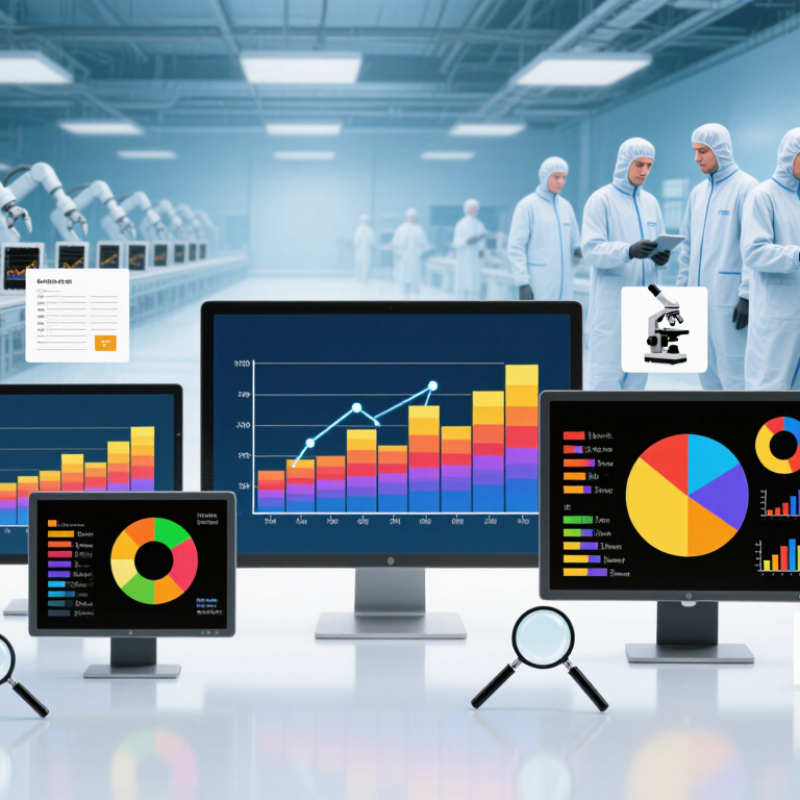
What Is a Color TFT LCD Screen?
A color TFT LCD screen is a flat-panel display that uses thin-film transistors to control individual pixels. Each pixel contains red, green, and blue subpixels. Their brightness combines to create detailed colors and images. The liquid crystal layer does not produce light itself. A backlight, usually placed behind the panel, makes the image visible.
In practical display integration, I check resolution, brightness, viewing angle, response time, and operating temperature. These specifications affect performance in instruments, vehicles, medical equipment, and industrial controls. A screen with high resolution may still feel unsuitable if its backlight is weak. Outdoor use needs stronger brightness and careful glare control. Touch functionality is separate from the LCD panel, although both parts are often assembled together.
Small details matter. Very much. Cable placement can limit installation space. The interface must match the controller, or the screen may remain blank. I have also seen color expectations fail because different viewing angles changed the perceived image. No panel is perfect. Engineers should test samples under real lighting, vibration, and temperature conditions before selecting a supplier. A reliable supplier should provide clear specifications, consistent samples, inspection records, and responsive technical support. Specification sheets help, but hands-on testing reveals problems they sometimes miss.
| Data Dimension | Typical Value or Range | What It Means | Application Considerations |
|---|---|---|---|
| Display Definition | Active-matrix liquid-crystal display using thin-film transistors | Each pixel is controlled by one or more thin-film transistors, allowing accurate image control and fast addressing. | Suitable for instruments, control panels, industrial equipment, medical devices, and consumer electronics. |
| Color Formation | Red, green, and blue subpixels with a color filter | Different brightness levels from the three subpixels combine to produce full-color images. | Color performance depends on the panel structure, backlight, calibration, and viewing conditions. |
| Common Screen Sizes | 2.4 to 15.6 inches for embedded equipment; larger sizes are also available | Screen size is measured diagonally from one corner to the opposite corner. | Choose the size according to enclosure dimensions, viewing distance, and available installation space. |
| Common Resolutions | 320 × 240, 480 × 272, 800 × 480, 1024 × 600, 1280 × 800, and 1920 × 1080 pixels | Resolution indicates the number of addressable pixels across and down the display. | Higher resolution improves detail but may require greater processing capability and memory bandwidth. |
| Aspect Ratios | 4:3, 5:3, 15:9, 16:9, and 16:10 | The aspect ratio compares the width of the active display area with its height. | The ratio should match the graphical interface and the mechanical design of the product. |
| Panel Technologies | TN, IPS, VA, and related liquid-crystal structures | Panel structure affects viewing angle, contrast, response time, color consistency, and cost. | IPS is commonly selected for wide viewing angles; TN may offer fast response and economical designs. |
| Viewing Angle | Approximately 45° to 178° per direction, depending on panel technology | Viewing angle describes how far the observer can move from the normal viewing direction before image quality changes noticeably. | Wide-angle panels are preferable for public displays, vehicle interfaces, and equipment viewed from different positions. |
| Backlight Type | White LED backlight | LEDs provide illumination through the liquid-crystal panel because the LCD itself does not emit light. | LED backlights are thin, energy-efficient, and available in different brightness levels. |
| Typical Brightness | 250 to 500 cd/m² for indoor products; 800 cd/m² or more for high-brightness designs | Brightness is measured in candelas per square metre and indicates the amount of light produced by the display. | Outdoor or sunlight-readable products may require higher brightness, optical bonding, and anti-glare treatment. |
| Contrast Ratio | Approximately 300:1 to 1500:1, depending on panel type and measurement method | Contrast ratio compares the luminance of the brightest white to the darkest black displayed by the panel. | Higher contrast generally improves image separation, especially in dark scenes. |
| Color Depth | 16-bit, 18-bit, or 24-bit interface and display processing | Higher color depth allows more distinct color levels and smoother gradients. | A 24-bit RGB system can represent up to approximately 16.7 million color combinations. |
| Response Time | Approximately 5 to 30 ms, depending on panel design and measurement conditions | Response time is the time required for a pixel to change between specified brightness levels. | Shorter response times help reduce motion blur in video, animation, and fast-moving interfaces. |
| Refresh Rate | Typically 60 Hz; higher rates are available for selected applications | Refresh rate indicates how many times per second the image is updated. | Higher refresh rates can improve motion smoothness but may increase power and system requirements. |
| Interface Options | RGB, LVDS, MIPI DSI, eDP, SPI, and parallel interfaces | The interface transfers image data between the host processor and the display module. | Interface selection depends on bandwidth, cable length, pin count, electromagnetic compatibility, and system architecture. |
| Touchscreen Options | Resistive, projected capacitive, or no touchscreen | A touch layer allows the user to interact directly with graphical controls. | Projected capacitive touch is common for multi-touch interfaces, while resistive touch can work with gloves and styluses. |
| Operating Temperature | Common commercial range: 0°C to 50°C; industrial ranges may extend to approximately −20°C to 70°C | The operating-temperature range defines the conditions under which the display is designed to function. | Always verify the specified range for the complete module, including the backlight, touch panel, and controller. |
| Storage Temperature | Often approximately −20°C to 70°C; exact limits vary by module | Storage temperature defines the permitted non-operating environment for transport and warehousing. | Extreme temperature changes can cause condensation, so packaging and acclimatization procedures may be required. |
| Power Consumption | Approximately 0.5 to 8 W for many small and medium modules | Power use is affected by screen size, brightness, backlight current, interface electronics, and touch functions. | Low-power designs should include brightness control and suitable power-management circuitry. |
| Mechanical Structure | Open-frame, framed, or complete display module | The structure determines how the screen is mounted and protected inside the final product. | Confirm active area, outline dimensions, mounting holes, connector position, and module thickness before production. |
| Optical Treatments | Anti-glare, anti-reflection, optical bonding, and polarizer options | Optical treatments improve readability, reduce reflections, or strengthen the assembly. | Optical bonding can reduce air-gap reflections and improve outdoor visibility, but it may increase cost and repair complexity. |
| Supplier Evaluation Factors | Specification control, sample consistency, quality inspection, customization capability, and technical support | A suitable supplier should be able to provide stable specifications, documented testing, and reliable communication. | Evaluate samples, production capacity, quality records, lead time, warranty terms, and long-term component availability. |