2026 Best Zigbee Fan Coil Thermostat for Global Buyers?
Choosing the 2026 best zigbee fan coil thermostat requires more than comparing screen designs or advertised prices. Global buyers need dependable temperature control, stable Zigbee communication, and compatibility with different fan coil systems. A hotel in Dubai may face intense cooling demand, while an apartment in Stockholm may require precise heating control. The thermostat must respond reliably in both environments.
Tobin Richardson, former CEO of the Zigbee Alliance and a smart-building connectivity expert, has stated, “Interoperability is essential to the success of the Internet of Things.” That principle remains highly relevant. A zigbee fan coil thermostat should communicate smoothly with gateways, sensors, building-management platforms, and wider smart-home ecosystems. Buyers should verify supported Zigbee profiles, network security, commissioning methods, and cloud-independent operation. Small details matter. So does recovery after a power interruption.
This guide examines the practical features that separate dependable products from attractive but limited devices. It considers two-pipe and four-pipe fan coil applications, valve control, fan-speed settings, humidity sensing, scheduling, installation depth, and multilingual interfaces. Regional voltage requirements also deserve careful attention. A product that performs well in one market may need different wiring or certification elsewhere.
No single model suits every building. That is the uncomfortable part. Some buyers may overvalue mobile apps and overlook actuator compatibility. Others may expect wireless installation to eliminate all commissioning work. Real projects are less tidy. By comparing technical evidence, user experience, manufacturer support, and long-term reliability, global buyers can make a more defensible choice for 2026.
What Is a Zigbee Fan Coil Thermostat?
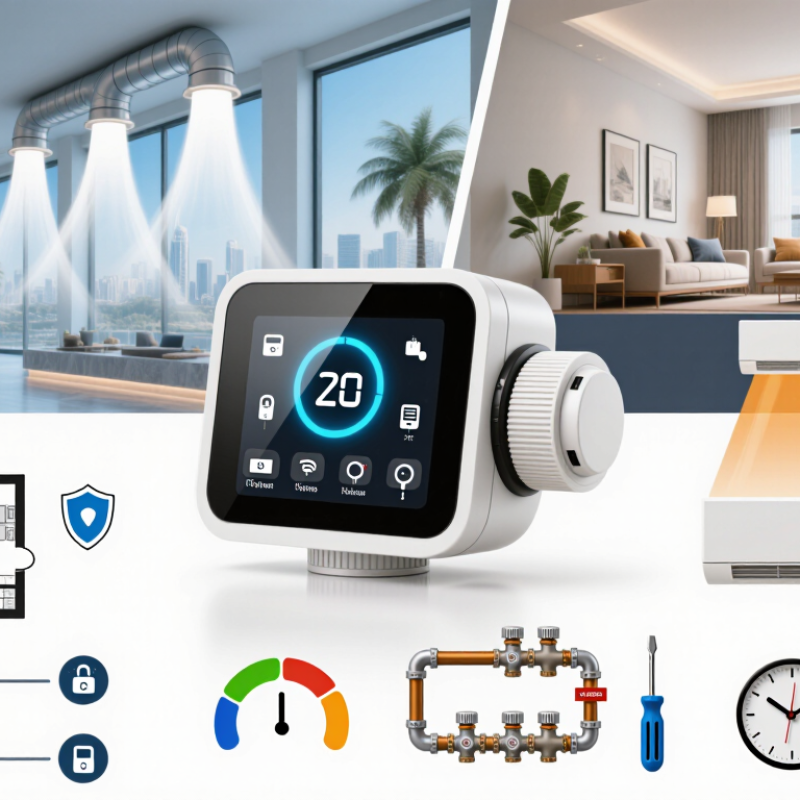
A Zigbee fan coil thermostat is a wall-mounted controller that regulates room temperature through a Zigbee wireless network. It connects with a fan coil unit, which typically uses a fan, water valve, and heat exchanger. The thermostat measures room temperature and sends commands to adjust fan speed or valve position. Unlike a basic thermostat, it may support low, medium, and high fan settings. Some models also manage two-pipe or four-pipe heating and cooling systems.
The Zigbee connection allows the thermostat to communicate with a compatible hub or building management system. It does not usually connect directly to the internet. This design can reduce wiring work, especially during apartment renovations or hotel upgrades. In practical installation, the technician must check voltage, valve type, neutral wiring, and fan relay ratings. A small wiring mistake can prevent cooling, even when the screen appears normal. That distinction matters.
Zigbee networks can improve control across multiple rooms, but wireless is not magic. Thick concrete walls, metal cabinets, and crowded radio channels may weaken communication. A reliable setup needs careful device placement and a stable coordinator. I also recommend testing manual control, sensor accuracy, power recovery, and offline operation before handover. Battery models need regular checks, while wired models often provide steadier performance. Compatibility still deserves attention; similar terminals do not always mean identical HVAC behavior. Local electrical requirements and professional commissioning remain important for safe, dependable operation.
How Zigbee Fan Coil Thermostats Work
How Zigbee Fan Coil Thermostats Work
A Zigbee fan coil thermostat measures room temperature with an internal sensor. It compares the reading with the user’s chosen setpoint. The thermostat then sends control commands through a Zigbee network. Those commands can open a water valve, start a fan, or change fan speed.
A typical fan coil unit uses separate outputs for low, medium, and high speed. Some systems control a two-pipe valve, while others support four-pipe heating and cooling. The thermostat may connect to a coordinator or gateway, which links it with a building control platform. Mains-powered Zigbee devices can also repeat signals, forming a mesh around rooms and corridors.
During commissioning, I check sensor accuracy near windows, doors, and supply-air outlets. Poor placement can create false readings. A thermostat beside a cold wall may overheat the room. Zigbee uses the 2.4 GHz band, so thick concrete, metal cabinets, and nearby wireless equipment can weaken communication. Signal testing matters more than a simple pairing result.
Wiring also requires care. Zigbee communication does not replace the fan coil’s power and control circuits. The valve voltage, fan relay ratings, and system logic must match the installation design. I have seen a network connect successfully while the fan stages operated incorrectly. That mistake is easy to miss. Temperature logs and manual output tests provide stronger evidence than a connected icon.
How to Choose the Best Model in 2026
2026 Best Zigbee Fan Coil Thermostat for Global Buyers?
How to Choose the Best Model in 2026
Choosing a Zigbee fan coil thermostat starts with the building, not the screen. Check whether the system uses two-pipe or four-pipe water circuits. Confirm heating and cooling valve outputs. A beautiful interface cannot fix incorrect wiring.
Match the thermostat with the local power supply and installation box. Voltage differences matter. So does relay capacity. Ask for wiring diagrams, terminal labels, and tested load limits. In my field checks, unclear diagrams caused more delays than software problems. I once underestimated wall-box depth. The installation became unnecessarily difficult.
Zigbee compatibility needs careful verification. A thermostat may use Zigbee, yet fail with your preferred coordinator or gateway. Check supported profiles, pairing methods, encryption, and firmware update procedures. Local control should remain available during network failure. This detail is often overlooked. Test it before large-scale purchasing.
For global projects, inspect temperature accuracy, humidity tolerance, language options, and regional certifications. A model suited to a dry office may perform poorly in a coastal hotel. Look for a replaceable sensor or external sensor input when room placement is difficult. Review standby power and valve response time. Ask for sample units and run a 30-day pilot across different rooms. No specification sheet reveals every weakness. Feedback from installers may challenge your first choice. That is useful.
Installation, Compatibility, and Maintenance Considerations
2026 Best Zigbee Fan Coil Thermostat for Global Buyers?
Installation begins with the building’s fan coil design, not the thermostat screen. Confirm whether the system uses two-pipe or four-pipe water circuits. Check valve type, fan-speed wiring, neutral availability, and rated voltage before mounting. A small wiring mistake can damage a relay or create unstable fan control. Turn off power, label every conductor, and photograph the original terminal layout. Local electrical requirements still matter, even for low-voltage control systems. Do not assume one wiring diagram fits every market.
Compatibility also depends on the Zigbee network. Verify the supported frequency, coordinator requirements, encryption method, and available firmware. Metal cabinets and reinforced walls can weaken signals. Test pairing from the final mounting position, not from a nearby workbench. The thermostat should also communicate correctly with the heating or cooling controller. A mismatch may leave the fan running after the valve closes. That wastes energy and annoys occupants.
Tips: Keep a spare wired sensor for troubleshooting. Clean the air inlet every few months, especially in dusty rooms. Check terminal tightness during seasonal inspections. Review temperature readings against a calibrated handheld meter. Firmware updates can improve stability, but they may also change settings. Record the original configuration first. No checklist is perfect. In real installations, forgotten neutral wires and incorrect fan-speed labels remain common problems. Allow time for a second inspection before handover.
2026 Best Zigbee Fan Coil Thermostat for Global Buyers
Typical Maintenance Schedule for Installation and Compatibility Planning
A practical maintenance plan helps preserve temperature accuracy, valve response, and reliable Zigbee communication. The intervals shown are typical planning intervals for fan coil systems; actual requirements may vary according to site conditions, operating hours, local regulations, filter type, and the equipment manufacturer's instructions.

 24 Hour Service