What Is the Best Thermal Bond Non Woven for 2026?
Choosing the best thermal bond non woven for 2026 requires more than comparing fabric prices. Manufacturers must examine fiber selection, bonding strength, softness, air permeability, thickness, and production consistency. These factors influence how the material performs in hygiene products, filtration layers, furniture padding, medical packaging, and automotive interiors. A low-cost roll may look attractive, yet uneven bonding can create weak edges, dusty surfaces, or unwanted shrinkage during converting.
This guide evaluates Thermal Bond Non Woven through practical performance, not marketing language. It considers polyester, polypropylene, viscose, and blended fibers under realistic manufacturing conditions. Roll weight, web uniformity, thermal stability, and recovery after compression deserve close attention. Small differences become visible on the production line. A poorly controlled temperature can flatten loft or produce brittle bonding points. That matters.
Reliable selection also depends on supplier experience and documented quality control. Buyers should request technical data sheets, batch records, sample rolls, and application-specific testing. Important checks include tensile strength, thickness tolerance, moisture behavior, and resistance to repeated handling. Independent laboratory results are useful, but they should support, not replace, hands-on trials. We must admit that no single material is best for every application. Even a strong recommendation may change when equipment, climate, or end-use requirements change. That uncertainty is worth discussing honestly. For 2026, the strongest choice will balance performance, process efficiency, sustainability goals, and dependable supply rather than chasing one impressive specification.
Definition and Core Structure of Thermal Bond Nonwoven Fabric
What Is the Best Thermal Bond Non Woven for 2026?
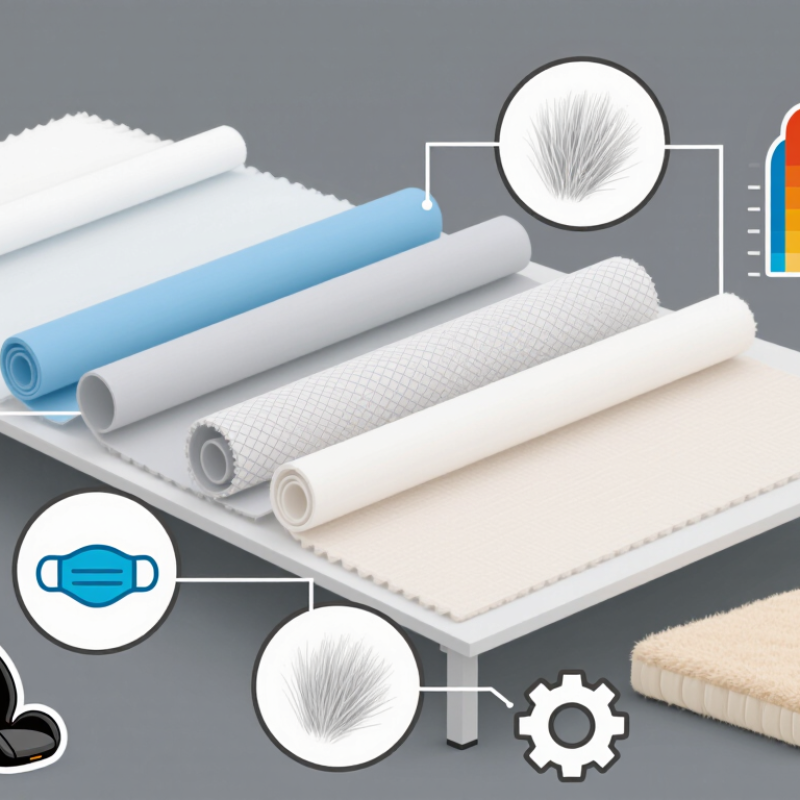
Thermal bond nonwoven fabric is a web of fibers joined by heat, pressure, or heated air. No traditional weaving or knitting is required. The core structure usually contains thermoplastic fibers, such as polypropylene, polyester, or low-melt bicomponent fibers. During bonding, the outer sheath softens and locks neighboring fibers together. The internal fiber network remains porous.
That structure controls softness, strength, thickness, and air permeability. Point-bonded sheets often show small, repeated bonding marks. Through-air bonded webs usually feel bulkier and softer. Basis weight, fiber diameter, bonding temperature, and cooling speed all influence performance. Small process changes matter.
According to INDA’s U.S. Nonwovens Industry Outlook 2024–2027, nonwoven demand remains strongly connected to hygiene, filtration, medical, and construction applications. Smithers’ nonwovens market analysis also identifies thermal bonding as an important route for lightweight, engineered materials. EDANA technical publications emphasize measurable factors, including tensile strength, elongation, air permeability, and absorbency. These reports support a practical point:
“best” depends on the end use, not only the fabric name.
A higher basis weight may improve durability, but it can reduce softness and increase material use. A softer web may tear more easily. The definition is useful, yet not perfectly universal. Some suppliers describe layered or partially bonded webs differently. Therefore, buyers should inspect cross-sections, bond patterns, test conditions, and production samples before choosing a 2026 specification. A datasheet alone can miss the real hand feel.
Key Materials and Manufacturing Steps in Thermal Bond Nonwoven Production
What Is the Best Thermal Bond Non Woven for 2026?
Material selection controls thermal bond nonwoven performance. Polypropylene offers low density, moisture resistance, and economical production. Polyester provides higher heat stability and better dimensional retention. Bicomponent fibers add a low-melting sheath around a stronger core. This structure enables bonding without fully melting the web. According to Grand View Research, the global nonwoven fabric market reached approximately US$53.5 billion in 2023. That scale increases pressure for lighter, stronger, and more resource-efficient materials.
Production begins with fiber opening, blending, and precise dosing. Operators then card the fibers into a uniform web. Cross-lapping can improve widthwise strength. Thermal bonding follows through heated calender rolls or circulating hot air. Calender bonding creates clear patterns and controlled thickness. Through-air bonding usually produces a softer, bulkier structure. Temperature, pressure, line speed, and residence time must remain balanced. Excess heat can crush loft. Insufficient heat can cause weak bonding.
Smithers’ nonwovens market outlook identifies hygiene, filtration, and medical applications as important growth areas through 2028. These sectors demand stable pore structure and reliable tensile performance. In practice, recycled polyester can reduce virgin material use, but contamination may affect bonding consistency. This point deserves more testing. The “best” material is therefore application-specific, not simply the strongest option. Pilot trials should measure softness, tear strength, thickness recovery, and thermal shrinkage before full-scale production.
How to Compare Thermal Bond Nonwovens for Different Applications
What Is the Best Thermal Bond Non Woven for 2026?
How to Compare Thermal Bond Nonwovens for Different Applications
The best thermal bond nonwoven depends on its working environment, not only its price or weight. Compare basis weight, thickness, fiber type, bonding pattern, strength, softness, and air permeability. A lightweight sheet may suit filtration, while a denser structure may perform better in cushioning or protective packaging. Measure consistently. Small testing errors can change the result.
For hygiene products, assess softness, liquid handling, lint control, and skin-contact safety. For automotive interiors, focus on dimensional stability, abrasion resistance, noise reduction, and temperature exposure. Industrial insulation needs controlled thickness, thermal resistance, and low shrinkage. Check both machine-direction and cross-direction strength. These values often differ more than expected.
Ask for production samples, not only laboratory data. Inspect the surface under normal light, then test it after bending, compression, and repeated handling. A material that looks uniform may weaken near the edges. Moisture can also alter softness and bonding performance. I have found that application testing often reveals problems hidden by standard specifications. There is no universal winner. The practical choice balances performance, processing speed, waste, and service life. Consider retesting when equipment, humidity, or fiber composition changes.
Performance Criteria for Selecting the Best Thermal Bond Nonwoven in 2026
Choosing the best thermal bond nonwoven in 2026 requires measured performance, not attractive samples. Grand View Research estimates the global nonwoven fabrics market reached approximately USD 53.7 billion in 2023, with a projected 7.0% CAGR through 2030. That expansion increases material choices and quality risks.
Start with basis weight, thickness, tensile strength, and elongation. Test these properties after heat, humidity, and compression exposure. ISO 9073 methods support consistent testing for mass, thickness, tensile behavior, and liquid absorption. Air permeability also matters. ASTM D737 testing can reveal whether a filter layer breathes evenly or develops weak zones. A soft sheet may feel excellent. It may still tear during converting.
Thermal bonding quality depends on fiber selection and bonding temperature. Bicomponent fibers can improve cohesion while preserving loft, but excessive heat can reduce softness and airflow. For filtration or hygiene applications, examine pore structure, pressure drop, lint release, and fluid handling. Smithers’ “The Future of Nonwovens to 2028” highlights filtration, healthcare, and hygiene as important growth areas, making stable performance increasingly valuable. Production teams should also track energy use and scrap rates per square meter. The cheapest roll is not always the lowest-cost option. I would avoid choosing from one laboratory result. Real production often exposes edge curl, uneven bonding, or poor recovery. That inconvenient step deserves attention.

 24 Hour Service