
 24 Hour Service
- 800.825.3222
- Now Hiring
- Request A Quote
10 Best Metal Stamping Companies for Global Buyers
Metal Stamping supports products used in vehicles, appliances, electronics, and industrial equipment. For global buyers, choosing a supplier involves more than comparing unit prices. Tooling design, press capacity, material range, and production consistency can all shape a project’s cost and timeline. A well-made part may still fall short if its dimensions, finish, or delivery schedule do not match the buyer’s needs.
This guide presents 10 Metal Stamping companies for buyers assessing international sourcing options. It considers practical factors such as engineering support, prototype capabilities, progressive-die production, quality processes, facility locations, and communication. These details matter. A supplier suited to high-volume steel brackets may not be the right choice for a small run of precision electrical contacts. Buyers should confirm current capabilities directly, review relevant quality documentation, and ask how each company handles tooling ownership, sample approval, and production changes. Fit comes first. Company profiles can help narrow a search, but they cannot replace a technical review or a clear quotation. Even a promising shortlist has limits: capacity, lead times, and pricing may change with material availability and project specifications. Use this comparison as a starting point, then test each candidate against your drawings, volumes, and delivery requirements.
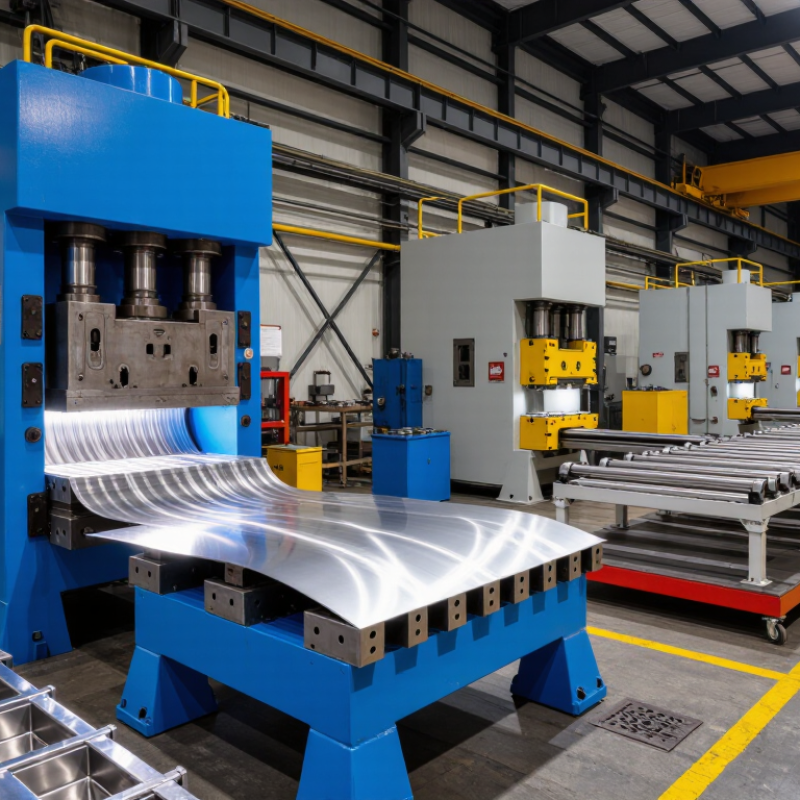
Define Metal Stamping: Progressive, Transfer, and Deep-Draw Processes
Metal stamping shapes sheet metal through controlled die pressure, but the process name alone does not reveal part quality. Progressive stamping moves a metal strip through connected stations, with each press stroke adding a feature. A pilot pin aligns the strip; small feed errors can shift holes across a long run. Transfer stamping moves separate blanks between stations, making it useful for larger or more complex parts. Deep drawing pulls a blank into a die cavity to form cups, housings, or shells. Material thickness, draw depth, and corner radii all affect cracking and thinning. Small details matter.
Process choice also depends on volume, geometry, and material use. Progressive dies can support high output, while transfer systems allow parts to move independently between operations. Deep drawing needs careful control of blank holding and lubrication. World Steel Association’s World Steel in Figures 2025 reports 1,882.6 million tonnes of global crude steel production in 2024. That figure describes the scale of steel supply, not stamping output, but it helps explain why material yield and repeatable forming matter to global buyers. Ask suppliers how they verify dimensions, monitor die wear, and inspect first-off parts. A polished sample is not enough. Real production varies. A specification can still leave room for interpretation.
10 Best Metal Stamping Companies for Global Buyers - Define Metal Stamping: Progressive, Transfer, and Deep-Draw Processes
| Area to Evaluate | What It Means | Typical Fit | What Buyers Should Verify |
|---|---|---|---|
| Progressive die stamping | A coil-fed strip advances through a sequence of stations; each station performs an operation, and the finished part is separated at a later station. | Repeat production of relatively small or connected strip-fed parts with multiple features. | Die design capability, strip layout, feed control, and inspection of critical features. |
| Transfer die stamping | A blank or partly formed workpiece is moved between stations by a transfer system, allowing each station to work on an individual part. | Parts that need more room or movement between operations, including some larger or deeper formed components. | Part handling method, station sequence, forming feasibility, and production-line setup. |
| Deep-draw stamping | A sheet-metal blank is drawn into a die cavity by a punch to create a cup-like or hollow shape; the process may use multiple draws. | Hollow parts such as cans, housings, shells, and drawn enclosures, subject to material and geometry limits. | Material formability, draw sequence, blank-holder approach, and controls for thinning or wrinkling. |
| Blanking and piercing | Shearing operations cut a part outline or create holes and openings in sheet metal. | Flat blanks and parts requiring holes or cutouts before or during forming. | Cut-edge requirements, burr direction, tool clearance, and dimensional inspection method. |
| Bending and forming | The sheet is plastically deformed into angles, flanges, channels, or other shapes without relying only on cutting. | Brackets, clips, panels, and components with formed features. | Bend radii, springback compensation, material direction, and part-to-part consistency. |
| Material capability | The supplier’s ability to process specified sheet or coil materials and thicknesses using suitable tooling and equipment. | Projects with defined mechanical, corrosion-resistance, weight, or surface requirements. | Approved material grades, thickness range, traceability, and material certification requirements. |
| Tooling design and maintenance | Tooling determines how stamping operations are performed; maintenance helps keep tools functional and parts consistent. | Custom parts where die design, tool life, and ongoing production support matter. | Tool ownership terms, design approvals, maintenance responsibility, and spare-tool arrangements. |
| Quality control and measurement | Inspection checks whether parts meet agreed drawings, specifications, and acceptance criteria. | All production parts, especially those with close tolerances or critical fit and function. | Inspection plans, measurement equipment, control records, and the process for handling nonconforming parts. |
| Secondary operations | Additional steps may include deburring, cleaning, coating, heat treatment, or assembly, depending on the part specification. | Parts that need finishing or further processing beyond the stamping operation. | Which operations are performed in-house or externally, applicable specifications, and final-part inspection scope. |
| Export and logistics readiness | Packaging and shipping arrangements protect parts and support delivery to the buyer’s destination. | Cross-border sourcing and programs with defined delivery, packaging, or documentation requirements. | Packaging specifications, shipping responsibilities, export documents, and the agreed delivery terms. |