
24 Hour ServiceChoosing the best Industrial Vacuum Cleaner in 2026 starts with the work it must do, not a headline specification. In a busy workshop, the right machine should collect the dust, chips, or liquid the task produces without slowing the crew. A production floor may need a larger collection capacity, durable components, and steady performance across long shifts. Fine powders call for careful attention to filtration, while wet pickup requires a machine designed for that use. Dust matters. So do hose reach, filter access, noise, and the time needed to empty the tank. Small details become daily costs.
No single model fits every facility. That answer is less satisfying, but more honest. This guide explains how to compare industrial vacuums by application, airflow, filtration, capacity, power source, and maintenance needs. It also considers practical questions: Can operators move the unit between workstations? Are replacement filters easy to obtain? Does the purchase price reflect the expected service life and operating costs? Specifications help, but they do not tell the whole story. A vacuum that looks impressive on paper may prove awkward beside a crowded machine or on a long shift. The guide will help readers weigh those trade-offs, identify features worth checking, and match a model to real working conditions. Where performance depends on the material, setup, or maintenance, that uncertainty deserves a clear note rather than a confident guess.
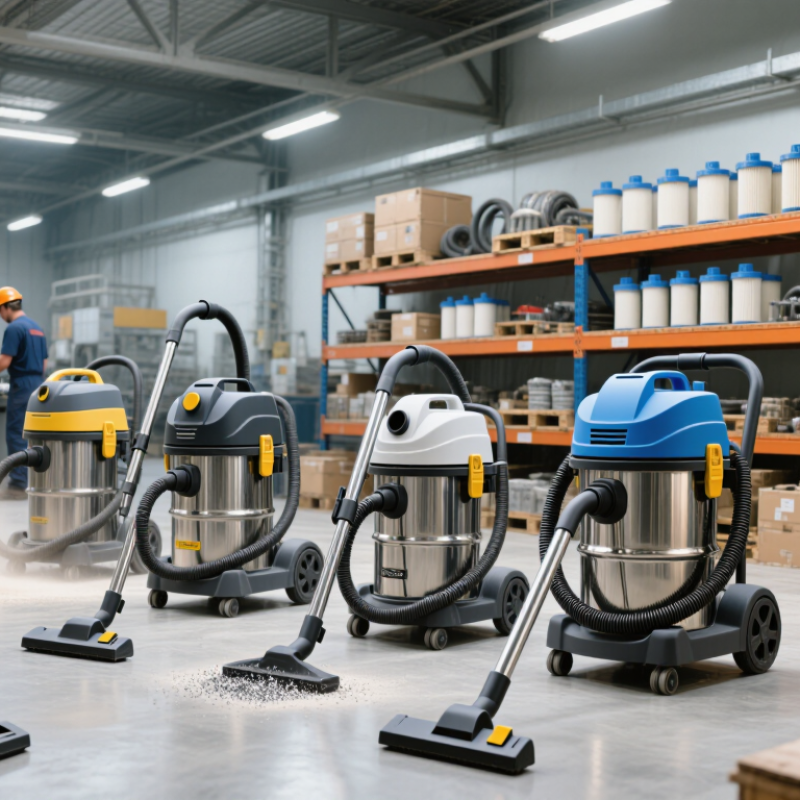
An industrial vacuum cleaner is defined by the work it can handle safely and repeatedly, not just by a powerful motor. Look at airflow, sealed filtration, tank capacity, duty cycle, and compatibility with the material being collected. Fine dust, wet debris, and hot production waste create different demands. The IEC 60335-2-69 standard classifies certain dust-control vacuum equipment as L, M, or H, helping buyers match filtration controls to workplace risks.
Filtration is measurable. NIOSH guidance describes HEPA filters as capturing at least 99.97% of particles measuring 0.3 micrometers. For respirable crystalline silica, OSHA sets an eight-hour permissible exposure limit of 50 micrograms per cubic meter. These figures do not make every HEPA-equipped vacuum suitable for every task; leaks, poor filter maintenance, and incorrect disposal can undermine performance. A machine may look robust. The details matter more.
The best industrial vacuum cleaner depends on what enters the hose, how long the machine runs, and where dust is collected. A compact dry unit suits intermittent cleanup around workbenches. A continuous-duty machine needs cooling and filtration designed for long shifts. Wet pickup calls for a compatible tank, float shutoff, and materials that tolerate the liquid. Duty changes everything.
Filtration class matters when fine dust is present. IEC 60335-2-69 classifies vacuum cleaners for dust control: L permits up to 1% penetration, M up to 0.1%, and H up to 0.005% under the standard’s test conditions. These ratings are not interchangeable with a simple “HEPA” label. OSHA’s respirable crystalline silica guidance estimates that more than two million U.S. construction workers are exposed to silica dust, underscoring why matching filtration to the hazard matters. For a real selection, check the dust assessment and the manufacturer’s tested classification.
Design affects performance at the point of use. A wide inlet can clear chips quickly, while a narrower hose may reach beneath machines but clog more readily. Filter area, automatic cleaning, sealed collection, and airflow under load deserve attention alongside motor power. That sounds simple. It isn’t. Buying by wattage alone feels objective, but it overlooks how filters load during a shift. The useful question is whether suction stays adequate with the actual material, hose length, and work cycle.
Which Performance Factors Matter Most in 2026?
A useful industrial vacuum must match the material, shift length, and cleanup method. Airflow affects how quickly it collects debris; static lift matters when pulling heavy material through long hoses. Compare both under realistic conditions, not just headline ratings. A narrow nozzle may clear a machine seam well but slow down floor cleaning. For fine silica dust, OSHA sets a permissible exposure limit of 50 micrograms per cubic meter as an eight-hour time-weighted average. That figure comes from its respirable crystalline silica standard. A vacuum’s rating alone cannot confirm safe exposure levels. Numbers need context.
Filtration is another key measure. The U.S. EPA’s 2018 Guide to Air Cleaners in the Home describes HEPA filtration as capturing at least 99.97% of 0.3-micrometer particles. Treat that as a filter benchmark, not proof that an entire vacuum system performs equally well; seals and filter loading matter. Watch the filter. Check replacement cost, cleaning access, and whether suction drops as the bin fills. Noise and heat affect operators over long shifts, while hose length and wheel design shape daily handling. Ask for performance data with the intended hose and filter installed. A small trial on the actual debris can reveal awkward handling that a specification sheet misses.
What Is the Best Industrial Vacuum Cleaner in 2026?
How to Match a Vacuum Cleaner to the Work Environment
The best industrial vacuum cleaner depends on the material, floor plan, and length of each work shift. Start by identifying what needs collecting. Fine powder, wood shavings, metal fragments, and liquid spills place different demands on a machine. A filter suited to coarse debris may clog quickly with fine dust. Check the filtration specification and collection capacity against the actual task, not just the machine’s advertised power. Dust tells a story.
Next, look at the work area. A crowded assembly line may need a compact unit with a narrow hose and easy steering. In a large workshop, a longer hose or larger container can reduce interruptions. For continuous shifts, consider motor duty rating, filter-cleaning access, and how quickly staff can empty the bin. Noise matters too, especially near workstations where people communicate. A useful test is simple: move the vacuum through the real route, around benches and over floor joints. Small obstacles expose awkward designs. It is tempting to choose the strongest model, but suction alone does not make a good fit. I would still leave room for trial and error; real floors are rarely as tidy as a product sheet.
| Work Environment | Typical Material to Collect | Best-Fit Vacuum Type | Filtration and Safety Considerations | Useful Capacity and Features | Why This Match Works |
|---|---|---|---|---|---|
| General manufacturing and assembly | Packaging debris, metal chips, dust, and routine production residue | Industrial dry vacuum with a robust motor, durable hose, and serviceable filter | Select filtration for the dust’s particle size and hazard level. For regulated dust, follow the applicable dust-class and workplace requirements. | A 30–80 L container is a practical starting range for many work areas; choose a larger hopper for high-volume collection. | Balances everyday cleanup needs with durable construction and less frequent emptying than a small portable unit. |
| Fine-dust-producing work For example, sanding or machining non-hazardous materials | Fine powder and airborne dust that can quickly load ordinary filters | Fine-dust vacuum with effective filter cleaning, such as a manual or automatic filter-cleaning system | Use a sealed system and filtration appropriate to the material. A HEPA filter may be appropriate where the risk assessment or process requires it; HEPA performance should be verified against the relevant test standard. | A 30–60 L container often suits localized cleanup. Check filter area, filter-cleaning method, and replacement-filter availability. | Filter cleaning helps maintain airflow as dust accumulates, while appropriate filtration reduces dust escaping back into the workspace. |
| Concrete, masonry, or other hazardous mineral dust | Silica-containing dust and other hazardous fine mineral dust | Dust-control vacuum selected for the specific hazard and the tool or process being used | Use the dust class and filtration required by local regulations and the task risk assessment. Dust-class requirements vary by jurisdiction and application. | Match container size to the work duration and debris volume; prioritize sealed connections, suitable filter cleaning, and safe dust disposal. | Correctly matched extraction can help reduce exposure at the source. A vacuum alone does not replace required ventilation, work practices, or protective equipment. |
| Metalworking and machine shops | Metal chips, swarf, grinding dust, and dry process debris | Heavy-duty industrial vacuum configured for the material and collection method | Confirm compatibility with hot particles, sharp swarf, and the specific metal dust. Combustible metal dust requires purpose-designed equipment and a documented safety assessment. | Choose a robust container or chip separator for bulky swarf; use a suitably sized hose and fittings that resist abrasion. | Durable components and a suitable collection arrangement cope better with abrasive debris than a general-purpose lightweight vacuum. |
| Wet cleanup and liquid spills | Water, non-flammable process liquid, or wet sludge, where equipment is rated for the liquid | Wet-and-dry industrial vacuum designed for liquid recovery | Follow the equipment’s liquid-collection instructions. Do not vacuum flammable liquids or chemically incompatible substances unless the unit is specifically designed and approved for that use. | Consider a liquid shutoff, drain hose or pump-out option, corrosion-resistant tank, and a capacity suited to the spill volume. | Liquid-rated components and a suitable emptying method make recovery and cleanup more practical than using a dry-only vacuum. |
| Combustible-dust areas | Potentially combustible dusts, including some powders from food, plastics, wood, or metals | Vacuum specifically certified or approved for the identified combustible-dust hazard and area classification | Ordinary industrial or shop vacuums are not automatically safe for combustible dust. Assess ignition risks, grounding and bonding needs, and applicable hazardous-area requirements with a qualified safety professional. | Specify the unit, accessories, and disposal method as a complete system for the site’s dust and operating conditions. | Combustible dust can create fire or explosion hazards; equipment must be selected for the actual material and classified area, not just suction performance. |
| Large production floors and central collection | Continuous or high-volume dust and debris from multiple workstations | Stationary industrial vacuum or engineered central vacuum system | Design filtration, ducting, and collection around the material and the number of simultaneous users. Hazardous dust may require specialized system design. | Size the system using required airflow, hose length, pressure losses, duty cycle, and expected waste volume—not tank size alone. | A properly engineered fixed system can serve multiple points and support continuous operations more effectively than moving a small vacuum between stations. |
Selection note: There is no single best industrial vacuum for every workplace. Confirm the material, dust hazard, required airflow, duty cycle, collection volume, filtration needs, and local safety rules before choosing a unit. Capacity ranges above are practical starting points, not performance standards or a substitute for manufacturer specifications.
The best industrial vacuum is the one suited to your dust, shifts, and work area—not simply the model with the highest airflow. Check airflow and static lift together: airflow moves debris, while lift helps maintain suction through long hoses and loaded filters. Then match the filtration class to the hazard. IEC 60335-2-69 defines dust classes for industrial and commercial vacuums, helping buyers compare equipment against the material being collected. Numbers matter. Also inspect filter-cleaning performance, bin capacity, noise, and how easily operators can service the unit. A clogged filter can quietly undermine an otherwise capable machine.
For respirable crystalline silica, NIOSH’s 2002 criteria document recommends limiting exposure to 50 micrograms per cubic meter as an eight-hour time-weighted average. Treat that as a practical benchmark when assessing source-capture needs, not proof that a vacuum alone controls exposure. Look for compatible tool connections, sealed collection, and clear test documentation. Ask suppliers how airflow is measured under real filter-loading conditions; a specification sheet may not tell the whole story. I would still test the unit on the actual material. That step is easy to overlook.
Tips: Record airflow at the tool, not just at the vacuum inlet. Test a representative hose length and check filter cleaning during a full shift. Compare service access, replacement-filter costs, and operator feedback before choosing. A little inconvenient, perhaps—but useful.