What Are the Best Hydronic Heat Transfer Plates in 2026?
Hydronic Heat Transfer Plates can make or break the performance of a radiant floor. They move heat from tubing into the floor, helping reduce cold stripes and uneven room temperatures. But a shiny surface alone proves little. Plate shape, metal thickness, tubing fit, installation quality, and floor construction all affect results.
John Siegenthaler, P.E., is a respected hydronic-heating educator and author. A practical principle reflected in his published design guidance is: “Good heat transfer depends on close, continuous contact.” This is a paraphrase, not a verbatim quotation. It captures why a snug plate-and-tube fit matters more than marketing claims.
This 2026 guide compares common plate styles, materials, and installation uses. It looks at extruded aluminum plates, stamped plates, and options designed for joist-bay systems. Expect practical details: how firmly tubing sits in its groove, how plates attach beneath subflooring, and where installation can leave gaps. Small details count. A plate that looks robust may still transfer heat poorly if it fits loosely or covers too little tubing. No single product wins every project. The right choice depends on the floor assembly, heat-loss needs, budget, and installer’s workmanship. We’ll weigh those trade-offs carefully, while noting where product claims need independent verification.
How Hydronic Heat Transfer Plates Work
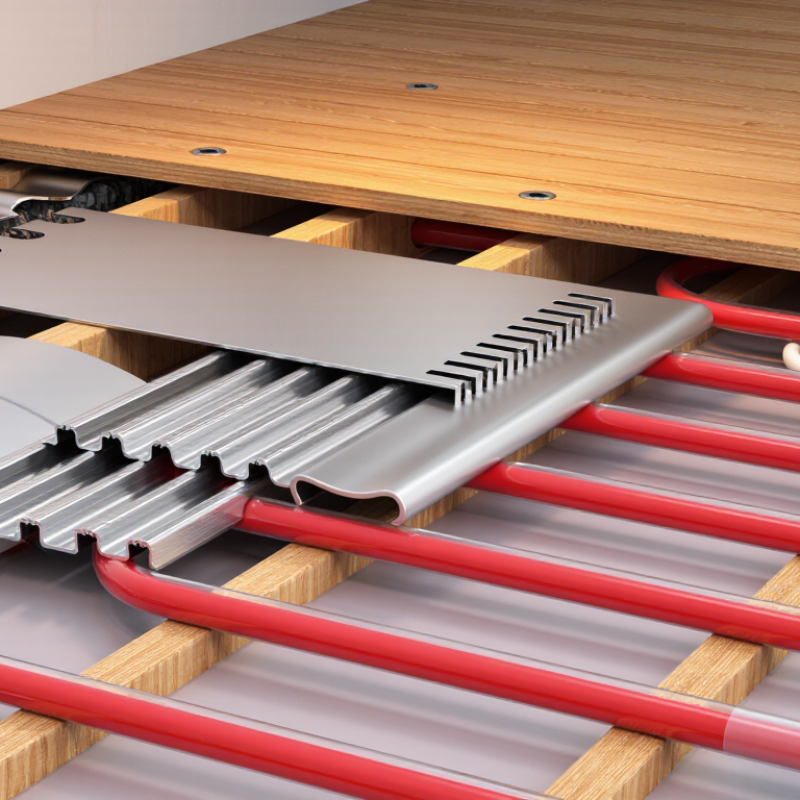
Hydronic heat transfer plates spread warmth from water-filled tubing into the floor structure. The tubing sits in a formed channel, often beneath the subfloor or between floor joists. As warm water moves through the pipe, heat passes into the plate, then across a wider area of wood. The floor surface warms more evenly than it would from a pipe touching a narrow strip alone. That gap matters.
Many plates are made from aluminum because it conducts heat readily and is relatively light. A snug fit around the tubing helps transfer heat; loose contact can leave uneven warm and cool patches. Plate shape, pipe spacing, water temperature, insulation, and floor materials all affect performance. Small details count. For example, a thick floor covering can slow heat reaching the room, even when the tubing is warm.
Plates do not create heat or guarantee a particular room temperature. They help move heat from the tubing toward the occupied space, while insulation below the system limits losses into the cavity. Installation quality matters, too: plates should be secured as specified, and tubing should sit properly in its channel. A common oversight is assuming every joist bay behaves alike. In real buildings, framing and floor layers vary, so system sizing should account for the actual assembly rather than relying on a generic rule.
Which Plate Designs and Materials Are Available?
Hydronic heat-transfer plates mainly come as stamped sheet channels or heavier extruded tracks. Stamped plates form a shallow groove around the tubing. They are light and easy to fit between joists. But thin metal may leave small air gaps when tubes or framing vary. That detail matters. Extruded tracks have a deeper, more rigid channel and can hold tubing more consistently. They also add weight and cost.
Material affects heat flow. The ASHRAE Handbook—Fundamentals (2021) gives approximate room-temperature conductivity values of 390 W/m·K for copper, 220 for aluminum, and 50 for carbon steel. Alloy and temper can shift these figures. Copper transfers heat quickly, but may exceed a project’s budget. Aluminum offers a practical balance of conductivity, weight, and formability. Steel is sturdy, though its lower conductivity may require more plate coverage or closer tube spacing. These are bulk-metal values, not finished-floor performance. Plate contact, fasteners, subfloor thickness, and flooring resistance also matter. A catalog number cannot settle every installation.
How to Compare Hydronic Heat Transfer Plates in 2026
When comparing hydronic heat transfer plates in 2026, look beyond price and advertised output. Check the plate’s material, thickness, channel shape, and compatibility with your tubing diameter. A close, even fit helps the plate contact the tube and spread heat across the floor. Fit matters.
Stamped plates are often lighter and easier to install, while heavier extruded plates may offer firmer tube contact and greater heat spreading. The trade-off depends on the assembly: subfloor material, insulation, tube spacing, and floor finish all affect performance. A thick plate cannot compensate for poor contact or heat escaping downward. Compare installation details, not just metal weight.
Before choosing, confirm that the plate suits the intended installation, including joist spacing and flooring limits. Look for clear dimensions, material specifications, and guidance on fastening; vague claims make products difficult to assess. If possible, compare samples with the same tubing and subfloor. Notice whether the tube snaps in securely and whether the plate sits flat. Real installations are rarely perfect, so leave room for small gaps and uneven framing when estimating results. A comparison based only on catalog numbers can miss those details.
Which Plate Types Suit Different Heating Systems?
Hydronic heat-transfer plates work best when their shape matches the floor assembly. For tubing between floor joists, wide aluminum plates with a formed channel hold the tube against the metal and spread heat across a larger area. They suit staple-up installations, especially when insulation below the floor limits downward heat loss. Thin stamped plates can be easier to handle and less costly, but loose contact may leave cooler stripes. Small gaps matter.
For tubing above a subfloor, grooved panels or plates designed for surface mounting can provide steadier contact and a flatter finish. They are useful in renovations where raising the floor is acceptable. Heavier extruded plates are rigid and transfer heat effectively, though they may be harder to fit around joists and obstacles. Copper conducts heat well, but cost and material compatibility deserve attention. The best choice is not always obvious; actual floor layers and tube spacing can change the result.
Tips: Check that the plate groove matches the tubing diameter. Press the tube fully into place, and insulate beneath joist-bay systems. Follow the heating designer’s guidance for water temperature and floor limits. One detail is easy to miss: a plate cannot compensate for poor insulation or uneven installation.
What Are the Best Hydronic Heat Transfer Plates in 2026?
Typical thermal conductivity ranges for common plate metals (W/m·K). Higher conductivity can help transfer heat, but system design, plate contact, tubing fit, and cost also matter.
System fit: Aluminum plates are commonly used in staple-up radiant floors for their combination of conductivity and low weight. Copper offers higher conductivity but is typically more costly. Steel has lower conductivity, so plate design and system requirements are especially important when selecting it. Values are typical approximate ranges and vary by alloy and temperature.
How to Size, Install, and Maintain Heat Transfer Plates
Sizing heat transfer plates starts with the room’s heat loss, not the plate count. Check the design load, floor covering, tubing diameter, and spacing against reliable output data for the floor assembly. A thick rug or dense tile changes heat delivery. Fit matters. Choose plates that match the tubing and provide close contact beneath the subfloor. Guessing from square footage alone can leave cold strips near exterior walls.
During installation, lay out tubing runs before fastening anything. Keep the tube seated in each channel, and follow the plate maker’s fastening guidance without crushing or puncturing the tubing. Use the specified spacing and leave room for bends at turns. Small gaps matter. After the circuit is connected, pressure-test it before covering the work. A slow leak is much harder to find after flooring goes down.
Maintenance is usually modest, but access may be limited once the floor is closed. Inspect visible manifolds and connections for moisture, corrosion, or pressure changes. Keep system water clean and remove trapped air when needed, following the boiler and system instructions. Recheck controls at the start of the heating season. Even a neat installation can underperform if the floor covering changes later; record the tubing layout and plate locations before they disappear.

 24 Hour Service