7 Best Double Glass Solar Panels for 2026
Double Glass Solar Panels are gaining attention as buyers look beyond headline wattage. The market is expanding quickly: IRENA’s Renewable Capacity Statistics 2025 reports that global solar capacity reached about 1,865 GW by the end of 2024. That scale brings more products, and more confusing claims. A panel’s glass layers can affect protection, weight, installation needs, and long-term performance. They do not guarantee higher energy yields on every roof.
This guide compares seven options for 2026 using manufacturer datasheets, published warranties, and practical buying criteria. We consider rated power, efficiency, dimensions, temperature behavior, and whether the product suits residential or commercial projects. IEA PVPS’s Trends in Photovoltaic Applications 2024 provides useful context on the industry’s rapid development, while NREL’s photovoltaic operations and maintenance guidance underscores why inspection and system design matter after installation. Small details count. Think of a heavy module being carried up a narrow roof ladder, or a warranty clause that excludes certain installation conditions. Those details can matter as much as a laboratory rating.
The shortlist is not a promise that one panel fits every site. Double-glass construction may be a poor match where added weight or mounting constraints are serious concerns. Product availability also varies by region, and datasheets can change. We may miss a local advantage. Use this comparison to narrow choices, then verify current specifications with the manufacturer and a qualified installer before purchasing.
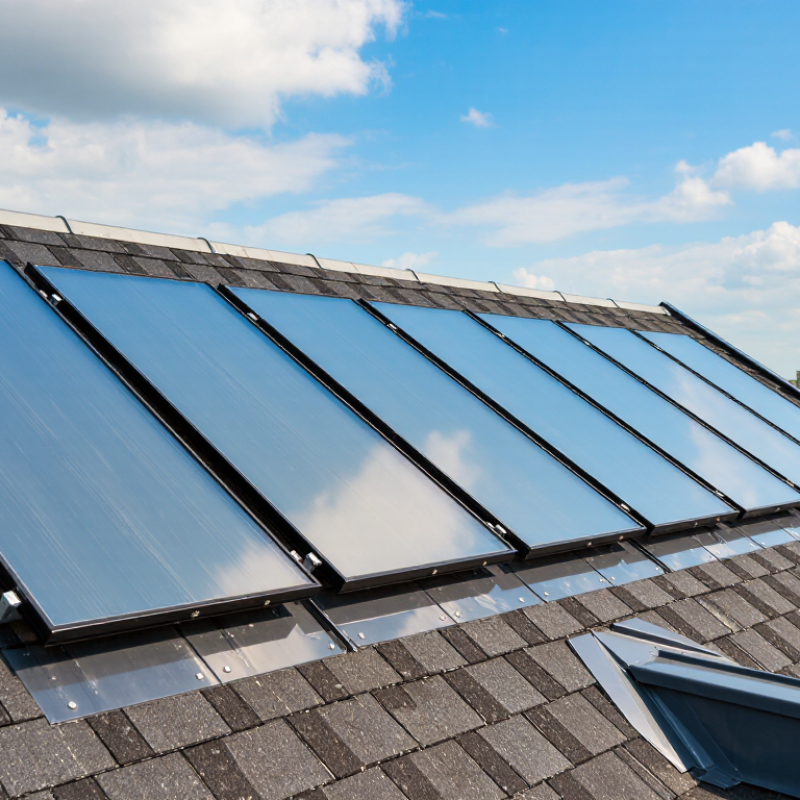
What Double-Glass Solar Panels Are and How They Work
A double-glass solar panel sandwiches its photovoltaic cells between a front glass sheet and a rear glass sheet. The layers are sealed around the cells, replacing the conventional polymer backsheet. Sunlight excites the cells, producing direct-current electricity; an inverter then converts it for household use. Two panes. One laminate. Some double-glass panels are bifacial, so they can also collect light reflected onto the rear side. The IEA PVPS Snapshot of Global PV Markets 2024 estimated 447 GW of new solar capacity was installed worldwide in 2023, bringing cumulative capacity above 1.6 TW. As deployment grows, module design matters—but that figure does not prove every glass-glass panel will perform better.
Glass can resist moisture and weathering, but it adds weight and does not guarantee a longer service life. Installation quality matters. So do the frame, seals, mounting system, and site conditions. For bifacial models, light-colored ground may send more light toward the rear surface; dark roofing can limit that benefit. The trade-off is easy to overlook: two glass layers may improve protection, yet handling and roof-loading requirements deserve careful review. It is not a durability guarantee.
Tips: Check the panel’s weight, warranty terms, and installation requirements before choosing a model. Ask how the rear surface will receive reflected light at your site. A small detail, but worth checking.
How to Evaluate Double-Glass Panels for 2026
When evaluating double-glass panels for 2026, compare construction, electrical performance, and installation requirements—not just advertised efficiency. Two glass layers can protect cells from moisture and environmental stress, but they may increase panel weight. Check the datasheet for dimensions, weight, temperature coefficient, and rated power. Looks matter less. Confirm that the mounting system supports the panel’s clamp zones and that the roof can handle the added load.
For bifacial models, estimate how much light can reach the rear surface. Bright ground, panel height, and row spacing affect the gain; a crowded rooftop may offer little benefit. Compare output assumptions with your actual site conditions. Review independent test results, degradation figures, and warranty terms, and check that certifications apply to the exact model being considered. A longer warranty is useful, but it cannot promise a specific energy yield. Ask an installer to assess shading at different times of day and to confirm compatibility with the inverter. Small details count. Double glass is not automatically the better choice: extra weight, installation constraints, and modest rear-side exposure can offset its advantages. When documentation leaves a question unanswered, treat that uncertainty as part of the comparison.
How to Evaluate Double-Glass Solar Panels in 2026
IEC 61215 qualification includes temperature and humidity stress tests. This chart shows the temperature points used in selected tests; it is a test-condition reference, not a prediction of service life or proof that one module design is superior.
Thermal cycling covers 200 cycles, humidity-freeze covers 10 cycles, and damp heat runs for 1,000 hours at 85°C and 85% relative humidity. When comparing double-glass panels, check the applicable certification and test reports alongside warranty terms and installation requirements.
Performance, Durability, and Installation Considerations
Double-glass solar panels place solar cells between two sheets of glass rather than pairing front glass with a polymer backsheet. This construction can improve resistance to moisture and some forms of environmental wear, but it does not guarantee higher energy production. On sunny roofs, output still depends on cell efficiency, temperature, orientation, and shading. Small details matter. A panel’s bifacial design may capture reflected light from below, but dark roofing can limit that benefit.
When comparing seven leading options, look beyond peak wattage. Check the temperature coefficient, product and performance warranties, and tested mechanical-load ratings. A slightly lower-rated panel may suit a hot roof better if it loses less output as temperatures rise. Yet specifications do not tell the whole story; local installation quality and real roof conditions matter. That is easy to overlook.
Installation needs careful planning because glass-glass modules are often heavier than comparable single-glass panels. Confirm the roof structure can carry the added load, and use mounting hardware approved for the panel’s dimensions and clamping zones. Leave space for airflow, keep nearby trees from casting regular shade, and ask a qualified installer to assess cable routing and roof penetrations. Handling also deserves attention: glass edges can chip during transport, even when the panel appears sturdy. The trade-off is not always obvious. A durable module is only a sound choice when its weight, layout, and installation cost fit the specific roof.
How to Choose a Panel for Your Home or Project
Choosing a double-glass panel starts with the site, not the product label. Check roof loading, mounting clearance, shade, and the surface below the panel. Bifacial cells can collect reflected light, but a dark roof or tight mounting gap may limit that benefit. On a ground-mounted project, pale gravel or concrete can reflect more light than dark soil. Measure the available area, too; a heavier panel may affect handling and installation plans. Small details matter.
Ask for the module’s power rating, dimensions, weight, temperature coefficient, warranty terms, and independent test data. Compare usable power per square metre, not wattage alone. NREL’s PVWatts calculator uses 0.5% annual degradation as a default assumption, not a guarantee for any particular module. A 2013 review by Jordan and Kurtz examined nearly 2,000 reported degradation rates and found a median near 0.5% per year. Real results vary with climate, installation, and maintenance. Don’t treat a general benchmark as a promise. For a home, have an installer confirm roof capacity and electrical compatibility; for a larger project, request site-specific yield estimates and mounting calculations. A rushed comparison can miss those costs.

 24 Hour Service