
24 Hour ServiceChoosing China’s best Lithium Ups Battery Backup suppliers requires more than comparing prices and catalog capacity. Buyers need evidence of engineering discipline, factory experience, and dependable after-sales support. A reliable supplier should explain cell chemistry, battery management systems, thermal protection, cycle life, and UPS compatibility in plain language. It should also provide test records, certifications, warranty terms, and clear delivery responsibilities.
Dr. M. Stanley Whittingham, a Nobel Prize-winning battery scientist, said, “The lithium-ion battery has revolutionized our lives.” His observation remains important for UPS buyers. Lithium technology can provide longer service life, faster recharge, and smaller footprints than traditional lead-acid systems. However, performance depends on design quality. Not every battery cabinet deserves the same confidence.
Look closely.
A serious supplier should demonstrate balancing accuracy, alarm functions, communication protocols, and protection against overcharge or excessive discharge. Ask for installation examples in data centers, medical facilities, factories, or telecommunications rooms. A warm cabinet, inconsistent voltage readings, or vague technical documents should not be ignored. They may reveal deeper weaknesses. Even experienced buyers can focus too heavily on purchase cost. That is a mistake worth reconsidering. Total ownership cost includes maintenance visits, replacement timing, downtime risk, and technician training. This guide examines leading Chinese suppliers through those practical details, while recognizing an uncomfortable truth: specifications alone cannot prove long-term reliability. Factory audits, sample testing, reference checks, and responsive communication still matter. Buyers should compare evidence, not promises.
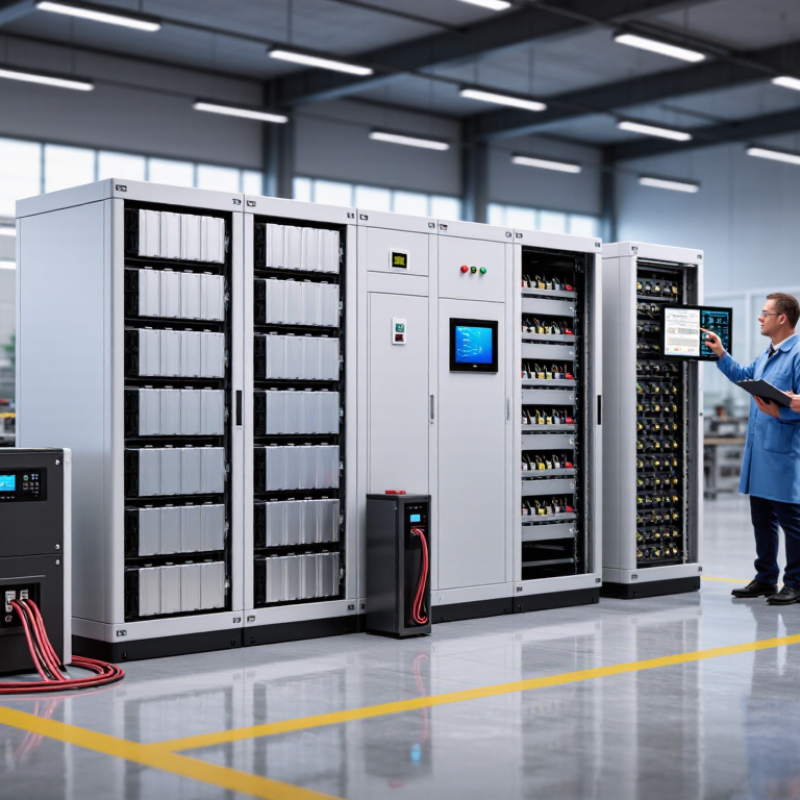
A lithium UPS battery backup system combines a UPS, lithium-ion battery modules, a battery management system, and monitoring software. It stores electrical energy during normal operation. When the grid fails, the inverter supplies stable power to servers, medical equipment, or industrial controls. The transfer happens within milliseconds, protecting sensitive loads from outages, voltage dips, and frequency changes.
Lithium batteries usually provide higher energy density and longer usable life than traditional lead-acid batteries. BloombergNEF reported an average lithium-ion battery pack price of 115 dollars per kilowatt-hour in 2024. This figure covers broader battery markets, not complete UPS installations. Buyers should avoid treating it as a direct system quotation. Real costs also include thermal control, fire protection, installation, and service support.
Buyers should avoid treating it as a direct system quotation. Real costs also include thermal control, fire protection, installation, and service support.
Practical evaluation starts with load measurements, not supplier promises. Record the actual kilowatt demand, expected runtime, ambient temperature, and future expansion. A 100-kilowatt load requiring 15 minutes needs different equipment from a 60-minute application. The Uptime Institute’s 2023 Global Data Center Survey found that many operators experienced outages within three years, with some events causing serious disruption. That finding reinforces the need for tested redundancy and clear maintenance procedures. A simple runtime estimate can be wrong. Battery aging, high temperatures, and poor charging settings reduce available capacity. Buyers should request test records, battery-cycle data, replacement plans, and independent safety certifications before comparing lithium UPS suppliers.
Chinese lithium UPS battery suppliers offer strong manufacturing depth, flexible engineering, and competitive purchasing options. Many factories produce cells, battery modules, BMS units, and cabinets within connected supply chains. This can shorten development time and simplify quality discussions. For buyers, customization is practical. Suppliers may adjust voltage, capacity, cabinet size, communication protocols, and connector layouts. A clear technical drawing still matters.
Reliable suppliers should provide test records, traceability details, and documented quality procedures. Ask for cycle-life data, thermal protection specifications, and sample performance under load. Independent audits can reveal details that brochures miss, such as cable labeling or warehouse conditions. Certifications should match your market and installation requirements. A low quotation is not always efficient. Hidden costs may appear through replacement parts, delayed support, or weak documentation. Chinese sourcing is powerful, but supplier selection requires patience and technical judgment. Some communication will be imperfect. That is normal, not an excuse.
Tips: Request a sample before signing a large order. Test it during simulated outages, not only in standby mode. Check battery temperature, recharge time, alarm signals, and BMS communication. Confirm warranty terms in writing. Keep one approved sample for future comparison. Ask who handles technical support after shipment. Factory photos help, but onsite or third-party verification is stronger. Times change. Specifications may change too.
China Best Lithium UPS Battery Backup Suppliers for Buyers?
Evaluating Chinese UPS battery manufacturers requires more than comparing price and rated capacity. Ask where the cells come from, how they are matched, and whether each pack receives a documented capacity test. A reliable supplier should provide traceability from cell batch to finished battery. Review BMS protections for overcharge, deep discharge, short circuit, and temperature faults. Request test evidence under defined load, temperature, and discharge conditions.
Factory experience matters. Inspect production areas, aging rooms, welding equipment, and quality records when possible. ISO 9001 can support process control, but it does not prove battery performance by itself. Check relevant safety and transport documentation, including applicable IEC testing and UN 38.3 records. The exact standards depend on chemistry, design, market, and shipping method. Do not accept vague certificates.
Communication is another practical test. Ask engineers to explain alarm logic, CAN or RS485 compatibility, parallel operation, and replacement procedures. Clear answers usually reveal technical depth. A sample should run through your actual UPS settings before bulk purchasing. Small details matter, such as connector polarity and cable length. They can delay installation.
A polished factory tour can still mislead. I would verify claims through independent testing when the project is critical. Warranty terms also need careful reading. Some suppliers advertise long cycle life under gentle conditions that do not match real UPS use. Poorly defined assumptions remain a common sourcing weakness.
China’s lithium UPS battery backup suppliers usually fall into four groups: battery manufacturers, OEM/ODM specialists, system integrators, and technical distributors. Battery manufacturers often provide stronger cell traceability, battery management systems, and production consistency. Their products may suit data centers, telecom rooms, and industrial facilities requiring stable discharge performance.
OEM/ODM suppliers offer flexible casing designs, communication protocols, and capacity adjustments. This helps buyers match batteries with existing UPS cabinets. System integrators add installation planning, monitoring software, and after-sales support. Their strength is practical coordination, especially for multi-rack projects. Technical distributors usually provide faster sampling, local inventory, and model comparisons, but their technical depth can vary. Ask for test reports, warranty conditions, safety certifications, and clear replacement procedures. Do not judge quality by price alone.
Tips: Request a sample battery before placing a large order. Check terminal design, connector quality, BMS alarms, and charging behavior. Ask how the supplier handles temperature protection and capacity testing. A strong specification can still hide weak communication during a fault. No supplier is perfect. I would also verify production records and confirm whether the stated cycle life reflects real operating conditions. This small detail often changes the purchase decision.
| Supplier Type | Typical Product Range | Common Battery Chemistry | Typical Voltage / Capacity | Key Product Strengths | Best-Fit Applications | Important Buyer Checks |
|---|---|---|---|---|---|---|
| UPS Battery Specialists | Replacement battery packs, rack modules, and UPS-compatible assemblies | Lithium iron phosphate (LiFePO4) | 12.8 V, 25.6 V, or 51.2 V; commonly 50 Ah–200 Ah per module | Designed around UPS operating profiles; compact footprint; integrated battery management system; communication options such as CAN or RS485 | Data rooms, network closets, security systems, and office UPS replacement projects | UPS compatibility, discharge current, communication protocol, installation dimensions, and warranty terms |
| Industrial Battery Manufacturers | High-capacity battery cabinets, outdoor enclosures, and modular energy-storage systems | LiFePO4; some projects use lithium nickel manganese cobalt oxide (NMC) | 48 V–1000 V DC; approximately 10 kWh–500 kWh per system | Scalable architecture; thermal monitoring; cabinet-level protection; support for parallel expansion and remote monitoring | Industrial UPS systems, telecommunications, manufacturing facilities, and critical infrastructure | Short-circuit protection, thermal management, enclosure rating, emergency shutdown, and integration with the UPS controller |
| OEM and Custom-Pack Suppliers | Custom battery packs, molded housings, wiring harnesses, and application-specific assemblies | LiFePO4 or NMC, selected according to size, power, and temperature requirements | Typically 12 V–96 V; capacity configured to the equipment load and required runtime | Flexible mechanical design; customized connectors; tailored BMS parameters; suitable for low- to medium-volume projects | Specialized UPS units, medical equipment, portable backup systems, and equipment with limited battery space | Prototype approval, cell consistency, BMS settings, sample testing, minimum order quantity, and change-control procedures |
| Telecommunication Backup Suppliers | 48 V telecom batteries, outdoor power cabinets, and DC backup modules | Primarily LiFePO4 | 48 V nominal; commonly 50 Ah–200 Ah per module | Good standby performance; remote status monitoring; modular installation; compatibility with common DC power architectures | Base stations, communication shelters, fiber networks, and distributed telecom cabinets | Low-temperature charging protection, outdoor operating range, surge protection, IP rating, and remote alarm functions |
| Energy-Storage System Integrators | Battery racks, power-conversion systems, monitoring platforms, and complete backup solutions | LiFePO4 is widely used for stationary storage | 48 V–1000 V DC; approximately 20 kWh–1 MWh or more, depending on system design | Complete system engineering; load analysis; energy-management integration; commissioning and after-sales support | Large data centers, factories, hospitals, commercial buildings, and microgrid backup systems | System efficiency, redundancy design, fire protection, grid requirements, maintenance plan, and project references |
| Export-Oriented Battery Assemblers | Standard rack batteries, wall-mounted units, small UPS modules, and private-label assemblies | LiFePO4; NMC may be offered for compact applications | 12.8 V–51.2 V; approximately 1 kWh–10 kWh per unit | Competitive pricing; standard product availability; export packaging; flexible labeling and documentation support | Residential backup, small businesses, retail equipment, and light commercial UPS systems | Production traceability, capacity test reports, transport documentation, spare-parts support, and local compliance requirements |
| High-Power Battery Solution Providers | High-rate battery modules, parallel battery banks, and short-duration UPS backup systems | LiFePO4; alternative lithium chemistries may be selected for specific power-density needs | 48 V–800 V DC; designed for high current and short backup durations | High discharge capability; fast recharge potential; reduced battery-room footprint; precise current and thermal controls | Data centers, semiconductor facilities, emergency systems, and high-power industrial UPS installations | Peak discharge rating, busbar and cable sizing, cooling design, fault coordination, and UPS transient-load performance |
Selecting a Chinese lithium UPS battery supplier requires more than comparing catalog prices. Buyers should verify manufacturing experience, engineering capacity, and export records. Request factory photos, production flow details, and recent quality reports. A reliable supplier should explain cell sourcing, battery management systems, thermal protection, and capacity testing clearly.
Ask for samples before placing a large order. Test backup time, charging behavior, temperature changes, and communication functions. For data centers, confirm compatibility with the existing UPS system. Check applicable safety documentation, including transport testing and recognized electrical certifications. Certification alone is not enough. The test scope must match the battery model being purchased.
A factory audit can reveal practical problems. Look at storage conditions, aging areas, fire controls, and final inspection records. Discuss warranty terms, replacement procedures, spare parts, and technical support before signing. Delivery capacity also matters during peak seasons. A low quotation may hide weaker cells or limited after-sales service. Buyers sometimes focus too heavily on price and regret ignoring response time. I would also request a written production schedule, though schedules can still change. Keep payment milestones linked to inspection results and approved samples.