
Blog

10 Best Belt Conveyor Roller Suppliers for Global Buyers

Choosing a belt conveyor roller supplier is not just a price comparison. Roller diameter, tube wall thickness, bearing type, and seal design all affect service life. A mismatch can cause belt tracking problems, excess noise, or repeated maintenance. Details matter.

For global buyers, the right supplier should understand the operating conditions behind the order. A dusty quarry, a food-processing line, and a parcel hub place different demands on rollers. Share belt speed, load, temperature, and working environment before requesting a quotation. Ask for dimensional drawings, material specifications, test records, and clear packaging details. These checks make supplier claims easier to assess.

This guide reviews 10 belt conveyor roller suppliers for buyers comparing product range, manufacturing capability, export support, and communication. The list is intended as a practical starting point, not a universal ranking. Availability, lead times, and after-sales support can vary by destination and project size. Confirm current specifications directly with each company, especially before ordering custom rollers or large batches. A polished catalogue is useful, but it cannot replace a sample inspection or a precise technical discussion. That can be easy to overlook. Supplier selection also involves trade-offs: a lower unit price may come with longer delivery or fewer customization options. Use the profiles to build a shortlist, then check which supplier fits your conveyor system and service expectations.
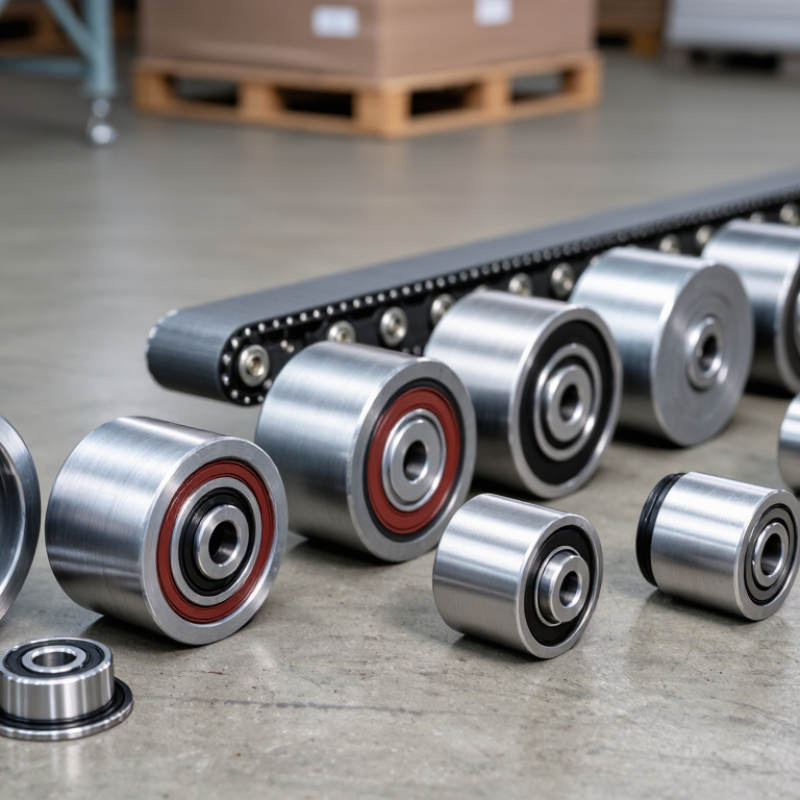
10 Best Belt Conveyor Roller Suppliers for Global Buyers

Understanding Belt Conveyor Rollers and Their Role in Material Handling

Belt conveyor rollers support the belt and guide it along the conveyor frame. They help carry materials while limiting sag between support points. A typical roller has a steel or polymer tube, a shaft, bearings, and seals. Under a loaded belt, these parts face repeated rotation, dust, vibration, and occasional impact. Small details matter. A rough bearing can increase rolling resistance, while a damaged seal may let dust or moisture enter.

Roller choice depends on load, belt speed, material, and operating conditions. For example, a dusty aggregate line may need effective bearing seals, while a wet process may call for corrosion-resistant components. Check tube diameter, shaft dimensions, bearing arrangement, and installation fit against the conveyor design. Misalignment can cause uneven belt tracking and faster wear. Keep an eye on noise, heat, and visible wobble during routine inspections. In practice, specifications are not always tidy; actual material flow and cleaning habits can differ from the design assumptions. That gap deserves attention. A suitable roller is not simply the strongest one, but one matched to the system and maintained at sensible intervals.

Key Criteria for Evaluating Roller Suppliers

Choosing a belt conveyor roller supplier starts with the duty, not the catalogue. Start with duty. Share belt speed, material, load per idler, ambient temperature, washdown exposure, and daily operating hours. Ask for documented roller diameter, wall thickness, shaft tolerance, bearing type, sealing design, and radial runout. These details help reveal whether a roller will turn freely or drag grit into its bearings. Small details matter. Request sample inspection records and load-test methods, then confirm batch records match the delivered shipment. CEMA’s Belt Conveyors for Bulk Materials offers useful design context, but supplier specifications must suit your conveyor geometry.

Compare evidence, not just price. The U.S. Department of Energy’s 2014 Improving Motor and Drive System Performance sourcebook reports that motor-driven systems use about 68% of U.S. manufacturing electricity. That figure is not roller-specific, but it shows why unnecessary rolling resistance deserves attention. Ask how suppliers measure rotational resistance, noise, runout, and service life. Request test conditions alongside results. Check spare-bearing availability, moisture-resistant packaging, delivery consistency, and response times for field failures. A polished datasheet can still hide gaps. Trial a small batch on your actual conveyor, then inspect temperature, tracking, and wear after several shifts. Short trials cannot prove full service life, so pair them with references from similar loads and operating environments.

Key Criteria for Evaluating Belt Conveyor Roller Suppliers

Suggested evaluation weighting for comparing suppliers. These are recommended planning weights, not results from a supplier survey.

Prioritize technical compliance and product quality, then assess delivery reliability, customization capability, and after-sales support. Adjust the weights to fit your project requirements.

Profiles of 10 Belt Conveyor Roller Suppliers for Global Buyers

The profiles below compare ten common belt conveyor roller supplier types for global buyers. A regional manufacturer may offer quick communication and short delivery routes. An export-focused factory often supports mixed quantities and prepares shipping documents. A large-volume producer may suit standard rollers ordered by the pallet. A custom engineering supplier can adapt shaft ends, seals, or roller dimensions. A heavy-duty specialist typically focuses on thicker shells and demanding loads.

A low-noise supplier may be suitable for facilities near work areas. A corrosion-resistant supplier may offer coated or stainless-steel options for damp conditions. A compact supplier can serve small conveyor builders needing flexible batches. A vertically integrated factory may control more production steps, but buyers should verify quality records. A distributor can provide local stock and simpler replacement orders, though its technical support may vary. These profiles are starting points, not verified endorsements.

Tips: Request a drawing, material specification, and sample before ordering. Check runout, bearing fit, and seal details. Ask for the actual lead time. Small details matter.

Comparing Supplier Capabilities, Products, and International Reach

A useful comparison of ten belt conveyor roller suppliers looks beyond catalog size. Buyers should check roller diameter, shell thickness, bearing options, sealing, and stated load limits. Ask for drawings and test records, not just a headline service-life claim. Small details matter. A roller that fits a frame but runs poorly under dust or moisture can increase maintenance work.

Product range reveals how well a supplier serves different operating conditions. Light-duty rollers may suit parcel lines, while mining and bulk-handling systems need robust shells, dependable seals, and consistent bearing alignment. World Steel Association’s World Steel in Figures 2024 reports 1,892.2 million tonnes of crude steel production in 2023. That scale underscores the importance of durable components in heavy industrial settings, though steel output alone cannot predict a buyer’s roller needs. Compare material specifications with the actual load, speed, and environment.

International reach is practical, not merely a map of export destinations. UNCTAD’s Review of Maritime Transport 2024 reports that seaborne trade grew 2.4% in 2023 and projected 2.7% growth for 2024. For buyers, regional stock, protective export packaging, clear shipping estimates, and accessible technical support can matter as much as price. Check whether suppliers provide traceable dimensions and replacement-part guidance. A polished brochure can still leave gaps; delivery promises and after-sales response deserve verification. One fair question remains: how quickly can a supplier resolve a fit issue across time zones?

10 Best Belt Conveyor Roller Suppliers for Global Buyers - Comparing Supplier Capabilities, Products, and International Reach

This company-neutral comparison describes common supplier capability profiles rather than naming or ranking specific businesses. Product dimensions and options are typical market offerings, not guaranteed specifications. Confirm current designs, standards, documentation, and export terms directly with each prospective supplier.

Supplier Profile Core Products Typical Product Range Capability Strengths International Reach to Assess Best Fit for Buyers
1. High-volume standard roller producer Carrying, return, and impact rollers Common tube diameters include approximately 50–159 mm; confirm face length, shaft ends, and bearing options. Repeat production, standard configurations, and volume pricing. Check export packaging, lead times, shipping terms, and spare-parts support in destination markets. Large orders using established conveyor designs.
2. Custom-engineered roller specialist Made-to-drawing rollers and idler assemblies Custom lengths, shaft ends, wall thicknesses, seals, and bearing arrangements, subject to engineering review. Drawing review, non-standard interfaces, and project-specific engineering. Request technical support hours, drawing control, and documentation availability across time zones. Retrofits, unusual conveyor layouts, and OEM projects.
3. Heavy-duty mining roller supplier Heavy-duty carrying, return, and impact rollers Options may include larger shafts, robust housings, and reinforced impact arrangements; confirm load and duty ratings for the application. Focus on abrasive materials, high loads, and demanding operating conditions. Assess remote-site delivery capability, replacement availability, and field-service arrangements. Mining, quarrying, and bulk-material handling projects.
4. Corrosion-resistant roller supplier Stainless-steel and corrosion-protected rollers Material and finish options vary; specify the environment, cleaning chemicals, and required corrosion resistance. Material selection for wet, washdown, or corrosive environments. Verify material certificates, finish details, and packaging that protects against transit corrosion. Food processing, chemical handling, coastal, and washdown areas.
5. Low-noise and energy-conscious roller supplier Precision rollers and low-resistance idler options Configurations depend on bearing, seal, tube, and operating-speed selections; request measured performance data. Emphasis on running resistance, noise control, and consistent assembly quality. Ask whether test reports and technical support are available for the buyer’s destination and application. Facilities prioritizing noise reduction or conveyor operating efficiency.
6. Food and hygiene-focused roller supplier Washdown-suitable rollers and conveyor components Material, sealing, and surface-finish options should be selected against the actual sanitation process. Design attention to cleanability, moisture exposure, and material traceability. Confirm applicable food-contact requirements, declarations, and destination-market compliance; suitability is application-specific. Food, beverage, and hygienic production environments.
7. Agriculture and outdoor-duty roller supplier Weather-resistant rollers for outdoor and seasonal service Configurations vary by material, sealing, and exposure; specify dust, rain, temperature, and storage conditions. Options for dust, moisture, and intermittent operating cycles. Check regional spare-parts access, seasonal production capacity, and shipping protection. Grain handling, agricultural processing, and outdoor conveyors.
8. Idler-frame and assembly supplier Rollers, brackets, troughing idlers, and return idlers Assembly geometry and trough angles depend on belt width and conveyor design; common trough angles include 20°, 35°, and 45°. Can supply matched assemblies rather than rollers alone. Verify dimensional compatibility, packing for assembled frames, and replacement-component availability. Buyers seeking coordinated idler assemblies and simplified procurement.
9. OEM and private-label production partner Rollers manufactured to buyer drawings or specifications Product range is defined by agreed drawings, tolerances, materials, and inspection requirements. Custom packaging, production planning, and buyer-specific quality procedures may be available. Review export documentation, intellectual-property controls, minimum order quantities, and delivery terms. Distributors and equipment makers building their own product lines.
10. Regional-stock and service-oriented supplier Standard replacement rollers and common idler components Usually focused on frequently used dimensions; confirm local stock and compatibility before ordering. Potentially shorter replenishment cycles and support with identification or replacement selection. Assess warehouse locations, delivery coverage, local-language support, and service response times. Maintenance teams that value availability and reduced downtime.

Buyer checks: Compare quotations using the same belt width, roller diameter and length, shaft dimensions, bearing and seal specification, duty conditions, inspection criteria, delivery terms, and required documentation. Standards or certifications should be verified for the specific product and destination market.

How to Select and Verify a Supplier for Your Project

A belt conveyor roller supplier should be evaluated against your operating conditions, not just a catalogue. Share belt width, roller diameter, shaft dimensions, load, speed, and daily running hours. Include dust, moisture, washdown, or temperature details. Small omissions can change bearing seals and roller life.

Ask for a dimensional drawing, material specifications, bearing details, and stated tolerances. Then compare these with your conveyor design. Request a sample where practical. Measure its diameter and shaft ends, and check rotation for roughness or unusual noise. A smooth hand test is useful, but it does not replace a loaded trial. Check how the supplier handles inspection records, packaging, lead times, and replacement parts.

Verify claims with recent customer references from similar industries. Ask what failed, not only what worked. Request test methods and clarify whether performance figures apply to your belt speed and load. Paperwork helps. It is not proof by itself. A factory visit or third-party inspection may be worthwhile for large orders, though it adds time and cost. I would also compare quoted service life with the actual maintenance history; that record is often incomplete, and assumptions should be stated.