
24 Hour ServiceChoosing the best Automation Computer supplier in China requires more than comparing prices or browsing attractive product pages. Industrial buyers need stable hardware, clear documentation, responsive support, and proven production capability. A computer may look powerful in a catalogue, yet fail when dust enters a cabinet or vibration reaches the storage drive.
Dick Morley, widely recognized as the father of the programmable logic controller, said, “The PLC is a computer designed to work in an industrial environment.” His words remain relevant today. An Automation Computer must survive heat, vibration, electrical noise, and continuous operation. It should also connect smoothly with PLCs, robots, sensors, cameras, and factory networks.
A reliable supplier should provide more than a standard box. Look for fanless designs, wide-temperature components, industrial-grade storage, multiple communication ports, and long-term product availability. Certifications matter, but they should support real quality evidence. Ask for burn-in test records, sample inspection results, warranty terms, and replacement procedures.
Factory visits can reveal useful details. Check cable organization, dust control, testing equipment, and the way workers handle finished units. Small details often expose larger habits.
No supplier wins every test. One may offer stronger customization, while another provides better global support. Some buyers may focus too heavily on low cost. That is a mistake I would reconsider after seeing a failed system stop a production line.
This guide compares China-based suppliers through practical, technical, and service-focused criteria. The goal is not to promote the loudest brand. It is to identify the Automation Computer partner that can perform reliably after installation, during expansion, and under pressure.
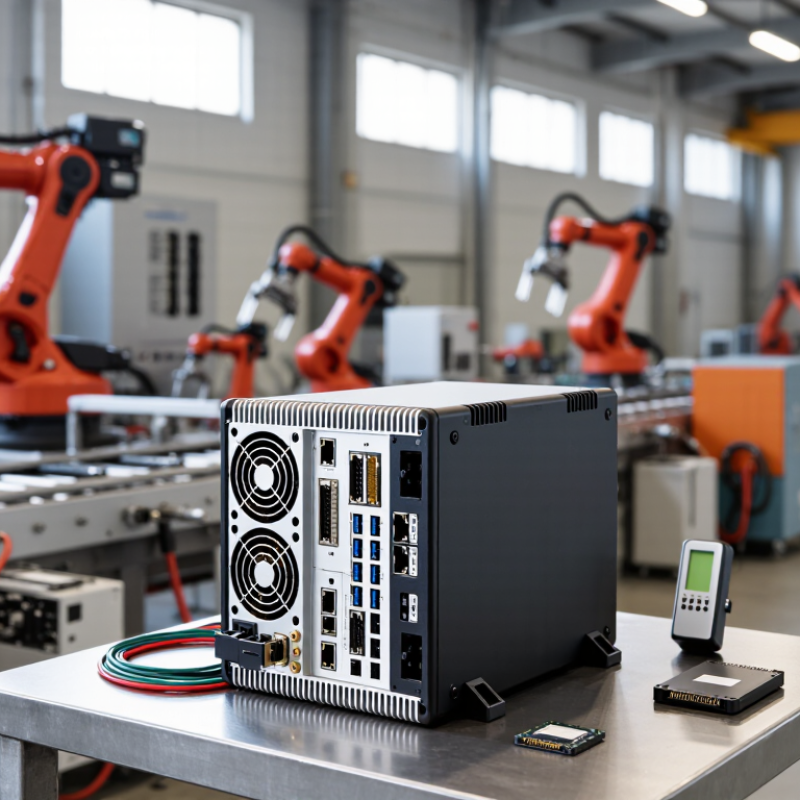
An automation computer supplier provides industrial computers for machines, production lines, and control systems. The role involves more than selling hardware. A capable supplier helps select processors, memory, storage, displays, and expansion ports for each working environment. These computers may operate beside vibrating motors, dusty conveyors, or hot control cabinets. Stable performance matters more than impressive specifications.
From practical system evaluations, I have found that application knowledge separates a supplier from a simple distributor. A reliable supplier should explain operating temperature, power input, mounting options, communication interfaces, and expected service life. It should also provide clear datasheets, inspection records, and firmware information. Trial testing is valuable. A computer that works on a clean office desk may fail near electrical noise or constant vibration. No supplier is perfect. Even careful teams sometimes underestimate future maintenance needs.
Tips: Ask for a sample unit before placing a large order. Test it with your actual software, cables, sensors, and network load. Check response times after extended operation. Request technical support procedures and replacement guidance in writing. Compare warranty terms carefully. A low purchase price can become expensive when downtime, custom changes, and delayed support are included. The best automation computer supplier in China should offer dependable engineering communication, honest limitations, and consistent quality control.
Chinese automation computer suppliers typically offer industrial PCs, embedded computers, panel PCs, fanless edge systems, and rugged operator terminals. These products serve different jobs. A fanless computer can sit inside a dusty control cabinet, while a panel PC gives operators a touchscreen beside a production line. Some suppliers also provide expansion cards, power supplies, mounting kits, and configuration support.
The choice reflects wider factory needs. The International Federation of Robotics reported 4,281,585 industrial robots operating worldwide in 2023, with 541,302 installed that year in its World Robotics 2024 report. More connected equipment increases demand for reliable local computing, though robot totals do not directly measure industrial computer sales. Edge systems can process sensor data near machines, reducing reliance on distant servers. Check processor options, operating temperature, ports, and long-term component availability before comparing prices. Details matter.
Not every catalog tells the whole story. A compact unit may look suitable, yet lack the serial ports or thermal margin a real installation needs. Ask for test conditions and interface drawings. Then verify them against the cabinet, display, and devices already in use. Small mismatches can delay deployment.
| Product Category | Typical Features and Configurations | Common Applications | What to Confirm with a Supplier |
|---|---|---|---|
| Industrial Panel PCs | Integrated display and computer; commonly available with touchscreens, fanless designs, and front-panel protection ratings such as IP65. | Machine control, operator interfaces, production lines, and equipment monitoring. | Screen size and brightness, touchscreen type, mounting method, operating temperature, and the exact protection rating. |
| Fanless Industrial Computers | Compact embedded computers designed to operate without a cooling fan; configurations may include multiple Ethernet, USB, serial, or display ports. | Factory automation, machine vision, edge computing, and control cabinets. | Processor and memory options, port count, power input, heat dissipation requirements, and supported operating systems. |
| Industrial Rackmount Computers | Rack-mounted systems, often in 19-inch formats, with expansion slots and configurable storage and I/O. | Control rooms, test systems, data acquisition, and centralized industrial computing. | Rack height, expansion-slot type, drive bays, power-supply configuration, and required certifications. |
| Embedded Box PCs | Small-form-factor computers for installation inside machines or enclosures; options may include DIN-rail or wall mounting. | Industrial gateways, process monitoring, kiosks, and distributed control applications. | Dimensions, mounting accessories, I/O availability, storage type, and environmental operating limits. |
| Industrial Motherboards and SBCs | Boards in industrial form factors, including Mini-ITX and other embedded formats, with processor, memory, and expansion options depending on the design. | Custom control equipment, embedded systems, and OEM machine designs. | Board revision, processor compatibility, lifecycle availability, BIOS support, and technical documentation. |
| Industrial Touch Monitors | Standalone displays with touch input; available in different screen sizes, resolutions, and panel-mount or VESA-mount configurations. | Operator stations, machine interfaces, and industrial kiosks. | Brightness, viewing angle, touch technology, interface connectors, enclosure rating, and mounting dimensions. |
| Industrial Data Acquisition Computers | Computer systems configurable with data-acquisition interfaces, serial ports, digital I/O, or expansion cards. | Measurement, equipment testing, process data collection, and monitoring systems. | Required signal types, channel count, isolation needs, sampling requirements, and compatibility with acquisition hardware. |
| Rugged Mobile Computers | Portable computing devices designed for field use; available configurations may include touch displays, wireless connectivity, and barcode-reading options. | Warehouse operations, field service, asset tracking, and logistics. | Drop and ingress-protection ratings, battery life, wireless bands, scanner requirements, and service support. |
| Industrial Edge Computers | Computers intended for local data processing, with options for multiple network interfaces, storage, and industrial communication connections. | Machine connectivity, local analytics, protocol conversion, and edge applications. | Supported communication protocols, security-update policy, remote-management features, and software compatibility. |
Product availability and specifications vary by supplier and configuration. Compare the exact model datasheet, certifications, warranty terms, customization scope, lead time, and after-sales support before purchasing.
A reliable automation computer supplier in China should offer more than a low quotation. The real test begins with technical understanding. Engineers should explain processor choices, industrial interfaces, storage protection, and operating temperature limits clearly. They should ask about your machine, factory conditions, and expected service life. Generic recommendations often create expensive problems later.
Look closer.
Reliable suppliers document their testing process. Ask for burn-in records, vibration checks, thermal testing, and inspection reports for each production batch. A serious supplier can also provide traceable component information and clear quality procedures. Certifications matter, but they do not replace practical evidence.
Request a sample unit before placing a large order. Test it.
Competitiveness includes stable lead times, sensible customization, and responsive support. A capable team should help with BIOS settings, image deployment, remote diagnosis, and replacement planning. Spare parts should be available without creating long production delays. Communication should remain precise when specifications change.
This is where many evaluations become too optimistic. A supplier may promise fast delivery, yet lack enough testing capacity during peak seasons. Ask how delays are handled, not only how they are prevented.
Compare total operating cost, including downtime, support, freight, and future upgrades. The cheapest computer may become the most expensive choice. Reliability grows from evidence, honest communication, and repeated performance in real industrial environments.
Comparing automation computer suppliers in China requires more than checking processor speed. The right evaluation starts with the production environment. Will the computer face dust, vibration, heat, or continuous operation? A factory floor needs stable thermal design, secure storage, and predictable maintenance. Small details matter, such as tool-free access and clearly labeled ports.
Market demand offers useful context. The International Federation of Robotics reported 541,302 industrial robots were installed worldwide in 2023. China represented about 51% of those installations, with 276,288 units. This scale suggests strong local experience in industrial computing. However, a large manufacturing base does not guarantee every supplier provides reliable engineering. That assumption deserves caution.
Compare suppliers through evidence. Request lifecycle statements, temperature test results, failure-rate records, and replacement timelines. Check whether the supplier supports common industrial protocols and real-time operating requirements. IDC’s Worldwide Edge Spending Guide describes edge computing as a fast-growing investment area, driven by local processing and reduced latency. Ask how the supplier handles firmware updates and cybersecurity over several years. This is often overlooked.
Cost comparisons should include downtime, not only the purchase price. A cheaper computer can become expensive after repeated failures or delayed repairs. Review sample units under actual workloads, then inspect performance after extended operation. Some suppliers communicate well before payment but respond slowly afterward. That experience can be decisive. No comparison is perfect, and test results may change across applications. Reliable decisions come from documented evidence, direct trials, and honest technical questions.
What Is the Best Automation Computer Supplier in China?
Selecting the best automation computer supplier starts with your application, not a catalog. Define processor load, operating temperature, mounting space, display needs, and communication interfaces. A factory controller near welding equipment needs different protection from a computer inside a clean packaging room.
Ask suppliers for real test evidence. Review temperature cycling, vibration testing, power fluctuation tolerance, and long-duration operation reports. Check whether the computer supports the protocols used by your PLCs, sensors, cameras, and industrial networks. Compatibility problems often appear during commissioning, when changes become expensive.
Look closely at engineering experience. Can the supplier customize I/O, BIOS settings, storage, or enclosure design? Request a sample unit and run your own workload for several weeks. Measure boot time, thermal behavior, connection stability, and maintenance access. It may reveal weaknesses that brochures hide.
Quality systems also matter. Confirm traceability for key components, documented inspection procedures, and clear warranty terms. Ask how firmware updates are controlled and how security vulnerabilities are handled. Reliable technical support should include response times, remote diagnosis, spare parts, and local service options.
Do not judge only by the lowest quotation. A cheaper computer may create downtime through limited support or short component availability. A perfect supplier rarely exists. Even experienced teams can overlook cable routing or future expansion. Record these risks openly, compare suppliers against the same requirements, and choose the one that proves performance consistently.
How to Select the Best Supplier for Your Application
This reference scorecard uses a 100% weighting model for comparing automation computer suppliers. Application fit and product reliability receive the highest priority, while integration capability, technical support, compliance, and total cost help complete the evaluation. Adjust the weighting according to your operating environment, deployment scale, and industry requirements.