
24 Hour ServiceFinding the best Air Centrifugal Blower in China takes more than comparing prices or polished product photos. China has manufacturers with different strengths, from compact units for workshop ventilation to large systems designed for continuous industrial use. The right supplier depends on airflow, pressure, operating hours, installation space, and the conditions at your site.
Start with manufacturers that publish clear specifications and can explain how their equipment is tested. Ask for performance curves, motor details, noise data, materials, and recommended maintenance intervals. Check whether the stated airflow and pressure match your actual operating point; a headline capacity alone can be misleading. Evidence matters. Request references for similar applications, sample inspection records, and a written warranty. If possible, arrange a video factory tour or an independent inspection before production or shipment. These steps do not guarantee a perfect purchase, but they make gaps easier to spot.
Compare service as carefully as hardware. Ask who handles commissioning, spare parts, and technical questions after delivery, and confirm response arrangements in writing. A lower quote may exclude accessories, packaging, or support. Read the scope closely. No checklist is flawless, and supplier claims still need verification. Even experienced buyers can overlook a detail, such as voltage compatibility or access for replacing a filter. A careful shortlist should balance verified performance, build quality, practical support, and total operating cost. This guide explores where to look in China and what to ask before choosing a supplier.
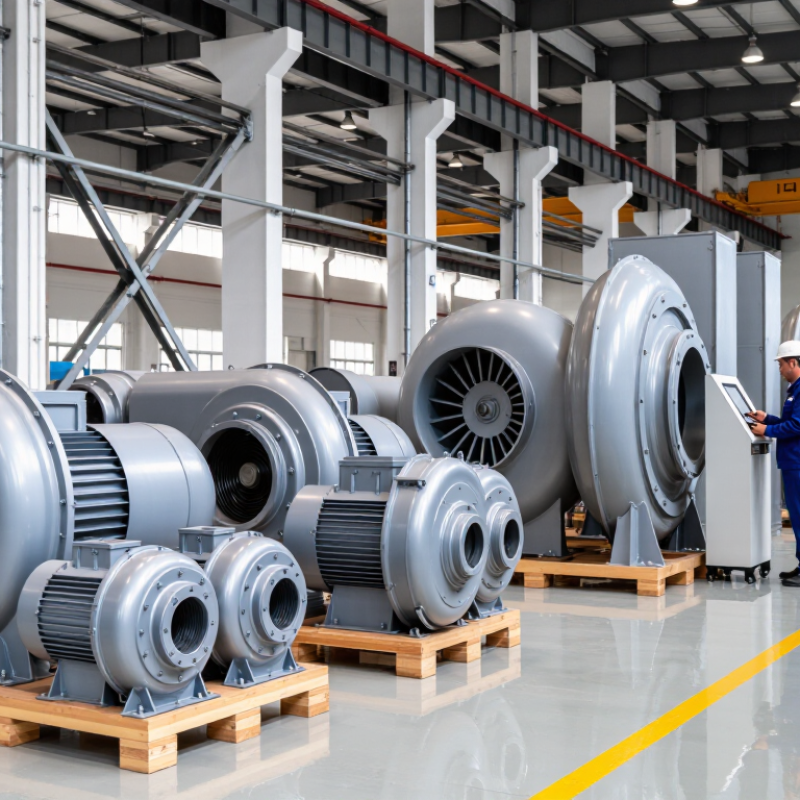
Understanding Air Centrifugal Blowers and Their Applications
An air centrifugal blower draws air into the center of a rotating impeller and pushes it outward through a housing. This motion helps create airflow against resistance from ducts, filters, or process equipment. Air moves fast. Unlike a simple fan, a centrifugal blower is often selected when a system needs steadier pressure as well as air volume.
Applications range from workshop ventilation to drying lines and equipment cooling. In a small production room, for example, a blower may move warm air through a narrow duct with several bends. Those bends add resistance. Check the required airflow and pressure together, rather than choosing by motor power alone. Also consider the air itself: temperature, moisture, and dust can affect material choices and maintenance needs. A unit designed for clean air may not suit a dusty process.
Installation details matter. A flexible connector can help limit vibration, while a poorly supported duct may rattle during operation. Listen for unusual noise and check connections after startup. I still find duct resistance easy to underestimate; even a clean filter adds some. Review the operating conditions, space, and service access before selecting a blower.
How temperature affects air density at constant atmospheric pressure
Warmer air is less dense at the same pressure. This matters when selecting and evaluating a centrifugal blower, because air density affects mass flow and fan performance. Values are ideal-gas estimates for dry air at 101.325 kPa, not blower performance ratings.
Choosing a Chinese air centrifugal blower manufacturer starts with evidence, not a polished catalogue. Request a performance curve showing flow, pressure, power, and efficiency at your operating point. The U.S. Department of Energy’s 2016 sourcebook reports that compressed-air systems consume about 10% of U.S. manufacturing electricity. That figure covers whole systems, not centrifugal blowers alone, but it shows why energy data deserves scrutiny.
Ask for test results with conditions stated, including inlet temperature, pressure, speed, and motor input. AMCA 210/ASHRAE 51 describes laboratory methods for measuring fan aerodynamic performance; ask whether the quoted curves follow this method. Do not confuse a standard reference with independent certification. Check sound and vibration at the specified duty point. Details matter.
During a factory review, inspect impeller balancing records, material certificates, coating specifications, and quality-control logs. Ask about spare-part availability, commissioning support, and service response times. Request references for installations with similar airflow and pressure requirements. One judgment call remains: a very low quote can be tempting, but examine its test scope, exclusions, and stated operating conditions closely.
Where to Find the Best Air Centrifugal Blower in China?
China’s main sourcing zones sit within broader industrial regions, not one single blower city. The Yangtze River Delta, especially Jiangsu and Zhejiang, offers dense networks of machinery workshops, motor suppliers, and component distributors. Nearby ports can also simplify export logistics. Guangdong’s Pearl River Delta is worth checking when electrical controls and system integration matter. Shandong and Henan have substantial industrial user bases, which can support suppliers familiar with demanding process applications.
These clusters benefit from a strong manufacturing base. The National Bureau of Statistics reported that China’s equipment manufacturing value added grew 6.8% in 2023, faster than overall industrial output, which rose 4.6%. This is useful context, not proof that every regional supplier makes high-quality centrifugal blowers. Ask for performance curves, material specifications, vibration readings, and test records for the exact model. Details matter.
A factory visit can reveal more than a polished catalogue. Look at impeller balancing, weld quality, and whether test instruments carry current calibration records. One limitation: supplier directories may list trading companies alongside manufacturers, and the difference is not always obvious. Verify the production address and request a live inspection before comparing quotations. A lower price can hide different test conditions.
| Industrial Region | Representative Cities | Relevant Industrial Strengths | Potential Blower Applications | What Buyers Should Check |
|---|---|---|---|---|
| Yangtze River Delta — Jiangsu | Suzhou, Wuxi, Changzhou, Nanjing | A broad manufacturing base with machinery, electrical equipment, metalworking, and industrial-component supply chains. | Factory ventilation, material handling, process-air systems, and equipment-integrated blower packages. | Confirm the supplier’s experience with the required airflow and pressure range, motor and control compatibility, test documentation, and export packaging. |
| Yangtze River Delta — Zhejiang | Hangzhou, Ningbo, Taizhou | Strong private-sector manufacturing and established production networks for machinery, pumps, motors, castings, and related components. | General industrial air supply, ventilation, dust-handling systems, and customized equipment projects. | Request performance curves, material specifications, operating limits, vibration information, and details of any included accessories. |
| Shandong Peninsula and Central Shandong | Qingdao, Weifang, Jinan | A substantial industrial and equipment-manufacturing base, alongside large process industries that use air-moving equipment. | Process-air duties, industrial ventilation, wastewater treatment aeration, and plant utility systems. | For continuous or demanding service, verify duty-point efficiency, corrosion protection, bearing and seal arrangements, and maintenance requirements. |
| Pearl River Delta — Guangdong | Guangzhou, Foshan, Dongguan, Shenzhen | Dense manufacturing and electronics supply chains, with access to a wide range of electrical, fabrication, and automation services. | Factory ventilation, production-line air systems, equipment integration, and compact or customized installations. | Check noise limits, footprint, control interfaces, local installation requirements, and whether the quoted configuration includes the motor and drive. |
| Shanghai and the Greater Yangtze River Delta | Shanghai and nearby cities in Jiangsu and Zhejiang | Strong engineering, logistics, port access, and a wide network of industrial service and component suppliers. | Projects requiring engineering coordination, imported components, export logistics, or integration with wider plant systems. | Clarify where the equipment is manufactured, who provides after-sales support, applicable standards, delivery terms, and spare-parts availability. |
| Central China — Henan | Zhengzhou, Luoyang | A significant industrial base that includes machinery, metalworking, and heavy-industry supply chains. | General industrial ventilation and process-air applications where regional manufacturing or project support is suitable. | Assess the supplier’s application references, quality-control procedures, balancing and testing records, and transport arrangements to the project site. |
Buyer note: These regions are practical sourcing areas, not a ranking of individual manufacturers. Compare suppliers using the same required airflow, pressure, gas conditions, operating schedule, efficiency target, and applicable compliance requirements.
When evaluating an air centrifugal blower supplier in China, look beyond polished product photos. Ask for a recent factory audit, production records, and inspection data for the exact model you plan to buy. A capable supplier should explain impeller balancing, casing weld checks, and motor testing in clear language. Details matter. Request a test report listing airflow, pressure, power, and vibration readings. Compare its test conditions with your operating requirements; figures without conditions can mislead.
Check each certificate’s issuing body, validity, and product or facility scope. Confirm that the certificate covers the actual manufacturing site, not just a trading office. Quality-management certification can indicate documented processes, but it does not prove that one blower meets your duty point. Ask for material specifications and traceability records for critical components. If an answer feels vague, request a sample document. It may take another email.
Service quality becomes visible after installation. Ask who handles commissioning questions, how quickly technical support replies, and whether spare parts are stocked locally or shipped from the factory. Get warranty terms, response times, and recommended maintenance intervals in writing. A video call with an engineer can clarify wiring, foundation, and duct connection details. Factory visits help, though they may show a carefully prepared day; keep that in mind.
The best air centrifugal blower supplier in China is the one that can match your actual duty point, not merely quote the highest airflow. Share required flow, static pressure, gas temperature, altitude, and daily operating hours. Include duct losses and filter resistance; missing either can lead to an undersized unit.
The U.S. Department of Energy’s Improving Fan System Performance sourcebook estimates that fan systems use about 7% of electricity consumed by U.S. manufacturing. This is a sector-wide figure, not a forecast for one plant. Still, it makes efficiency worth checking. Request performance curves showing airflow, pressure, power, and efficiency across your operating range. Ask how testing follows recognized methods, such as ISO 5801 or ANSI/AMCA 210. A curve at one convenient point is not enough.
For continuous service, compare motor efficiency, variable-speed control, bearing access, noise data, and spare-parts lead times. Ask the supplier to confirm performance at your site’s temperature and elevation, then review the test procedure and acceptance criteria before ordering. A spreadsheet can miss real duct conditions. I would treat any unverified operating assumption as provisional, even when the quoted specification looks precise.