
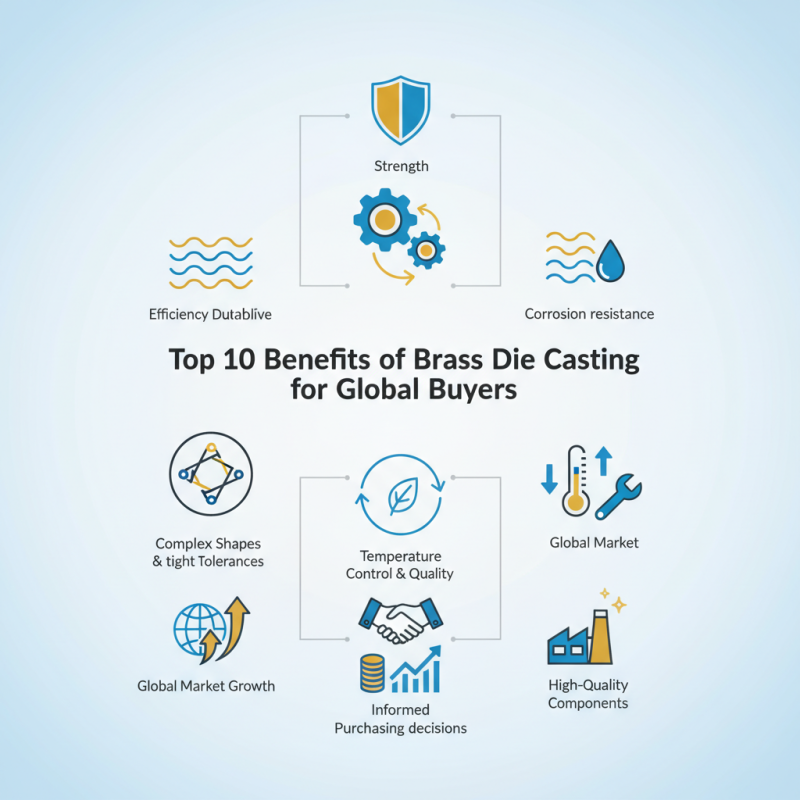
24 Hour ServiceBrass Die Casting has become increasingly popular in various industries around the world. According to a report by Grand View Research, the global die casting market is expected to reach $120 billion by 2027, with brass components leading the charge. This growth stems from brass's durability, strength, and resistance to corrosion.
In recent years, many manufacturers have turned to brass die casting for its cost-effectiveness and efficiency. The method allows for complex shapes with tight tolerances, which traditional forming techniques struggle to achieve. However, challenges remain, such as the need for careful temperature control during the casting process. Improper handling can lead to quality issues that may impact the final product.
Moreover, sustainability is a growing concern in production processes. While brass die casting offers efficient recycling opportunities, the industry must continually improve its environmental practices. Despite these challenges, the benefits of brass die casting are undeniable. As global buyers seek high-quality components, understanding these advantages can inform better purchasing decisions.
Brass die casting offers remarkable advantages in manufacturing efficiency, making it a preferred choice for various industries. This process allows for high-speed production of intricate designs. The final products exhibit excellent dimensional accuracy. Because brass is malleable, manufacturers can create complex shapes easily.
One key benefit is the reduced lead time. Due to automated processes, the turnaround from concept to finished product is quicker. This efficiency is especially beneficial for businesses needing rapid prototypes. Moreover, the durability of brass ensures that products withstand wear and tear over time, minimizing replacement costs.
Tips: Consider potential tooling costs upfront. They can significantly affect overall savings. Invest in quality molds for better durability in production runs. Always evaluate your specific needs and the brass alloy you plan to use. Different alloys offer unique properties, impacting the final product's performance.
Brass die casting offers remarkable benefits, particularly in durability and strength. Products made from brass die casting are known for their resilience. The inherent properties of brass provide excellent resistance to corrosion. This makes it suitable for a range of applications, including outdoor and marine environments. Users often note how well these products endure harsh conditions without degrading.
Moreover, the strength of brass die cast items plays a significant role in their performance. These products can withstand heavy loads and significant stress. Many industries appreciate this strength, as it enhances the reliability of components in machinery and tools. Yet, it is essential to recognize that not all brass die castings meet the same quality standards. Buyers should research the manufacturing processes to ensure exceptional quality.
Casting defects can sometimes occur, impacting the performance of the product. Regular inspections and quality checks are crucial. Discerning buyers often emphasize the importance of sourcing from reputable foundries focused on quality control. This attention to detail can significantly enhance the overall success of a project. Therefore, investing time in understanding these factors can lead to better purchasing decisions.
Brass die casting offers significant cost advantages for mass production, making it a preferred choice for many industries. According to a report by the International Die Casting Association, the cost savings associated with brass die casting can reach up to 30% compared to alternative methods. This cost-effectiveness derives from lower material wastage and reduced production time.
Precision and repeatability are critical in mass production environments. Brass die casting consistently produces high-quality parts. This method allows for intricate designs that meet tight tolerances. A study by the American Foundry Society states that components made from die casting often result in less need for post-processing, leading to further cost reductions.
However, the initial setup costs for brass die casting can be significant. Molds are expensive to create, which can deter new buyers. For large-scale production, these expenses are often justified by the long-term savings. It is essential for buyers to evaluate both the upfront investment and the volume of production needed to maximize the benefits. Balancing these factors is crucial for achieving cost efficiency in the long run.
Brass die casting offers remarkable design flexibility, making it a popular choice among manufacturers. The process allows for intricate and complex shapes that are difficult to achieve with other methods. Fine details can be incorporated easily, ensuring a higher level of precision. This adaptability caters to various industry needs, from automotive to electronics.
However, it’s important to recognize the challenges that accompany this flexibility. Complex designs may require more advanced tooling, leading to higher initial costs. Additional time might be needed for adjustments and fine-tuning. Finding the right balance between creativity and practical execution is essential. The learning curve can be steep, requiring skilled personnel to navigate these complexities effectively.
This method excels at producing high-quality components consistently. The surface finish is often superior, reducing the need for extensive additional processing. Buyers can expect durability and reliability from their products. However, buyers should remain aware of the trade-offs in design intricacy. The optimal design may not always be the easiest or the cheapest to produce. Emphasizing quality while managing costs demands a careful and informed approach.
Brass die casting offers significant environmental benefits, making it a preferred choice for many industries. One of the most crucial advantages is its recyclability. Brass can be melted and reshaped without degrading its quality. According to the U.S. Environmental Protection Agency, around 97% of brass components can be recycled, leading to substantial resource savings.
Another noteworthy point is the energy efficiency of brass die casting. Manufacturing processes that utilize this material generally consume less energy compared to others. A study by the International Bronze and Brass Association highlights that switching to brass can reduce energy consumption by up to 30%. This reduction is vital for industries looking to lower their carbon footprints.
Moreover, brass die casting can contribute to waste reduction. The precision in die casting minimizes scrap material. Reports indicate that accurate molds can lead to waste reduction figures of about 20%. While not perfect, this method showcases gradual improvements in sustainable practices. Each step counts in the journey toward a greener industry.
| Benefit | Description | Environmental Impact |
|---|---|---|
| Durability | Brass components are long-lasting and resistant to corrosion, reducing waste. | Less frequent replacements lead to decreased manufacturing waste. |
| Recyclability | Brass is 100% recyclable without losing quality, making it a sustainable choice. | Reduces the need for new raw materials. |
| Excellent Thermal Conductivity | Brass’s high thermal conductivity is beneficial for applications requiring efficient heat dissipation. | Improved energy efficiency in products. |
| Versatility | Brass can be easily molded into complex shapes, allowing for innovative designs. | Enables reduced material waste due to efficient design. |
| Low Melt Temperature | Requires less energy to melt compared to other metals, reducing carbon footprint. | Lower energy consumption means reduced greenhouse gas emissions. |
| Resistance to Bacterial Growth | Brass has natural antimicrobial properties, making it safer for health applications. | Promotes healthier environments in various settings. |
| Aesthetic Appeal | Brass has an attractive finish and color, ideal for decorative applications. | Encourages long-lasting use due to its visual appeal, minimizing waste. |
| Improved Safety Features | Brass doesn’t spark easily, which is critical for certain industrial applications. | Reducing hazards in environments requiring high safety standards. |
| Cost Efficiency | Brass die casting can be more cost-effective due to lower material wastage. | Economical processes lead to lower environmental impact. |
| Enhanced Mechanical Properties | Brass exhibits high strength and machinability, ideal for precision applications. | Long-lasting components reduce the need for replacements. |