
 24 Hour Service
- 800.825.3222
- Now Hiring
- Request A Quote
2026 Top Water Based Gel Coating Machine Types
In 2026, water-based gel coatings are gaining attention across packaging, textiles, medical materials, and decorative surfaces. Their lower solvent exposure supports cleaner production environments and more responsible process design. However, performance depends on much more than the coating formula. The selected Water-Based Gel Coating Machine must match viscosity, substrate texture, drying capacity, and production speed.
This guide examines practical machine types, including roll coating, knife coating, slot-die coating, spray coating, and curtain coating systems. Each design leaves a different surface signature. A slot-die head can create a controlled, even layer on flexible film. A knife coater may handle thicker gels more comfortably. Roll systems suit continuous production, while spray units can reach irregular shapes. Small details matter, such as nozzle alignment, pump pulsation, web tension, and cleaning access.
Real production is rarely perfect.
Experienced operators often adjust pressure, temperature, and line speed several times before stability improves. Laboratory results may not transfer directly to a factory floor. That gap deserves attention. This overview compares machine structures, coating accuracy, maintenance demands, energy use, and suitable applications. It also considers safety controls, operator training, material compatibility, and long-term reliability. Buyers should verify supplier specifications, test samples under production conditions, and request documented performance data. A machine that looks efficient on paper may struggle with foaming, gel separation, or uneven drying. Careful evaluation remains essential.
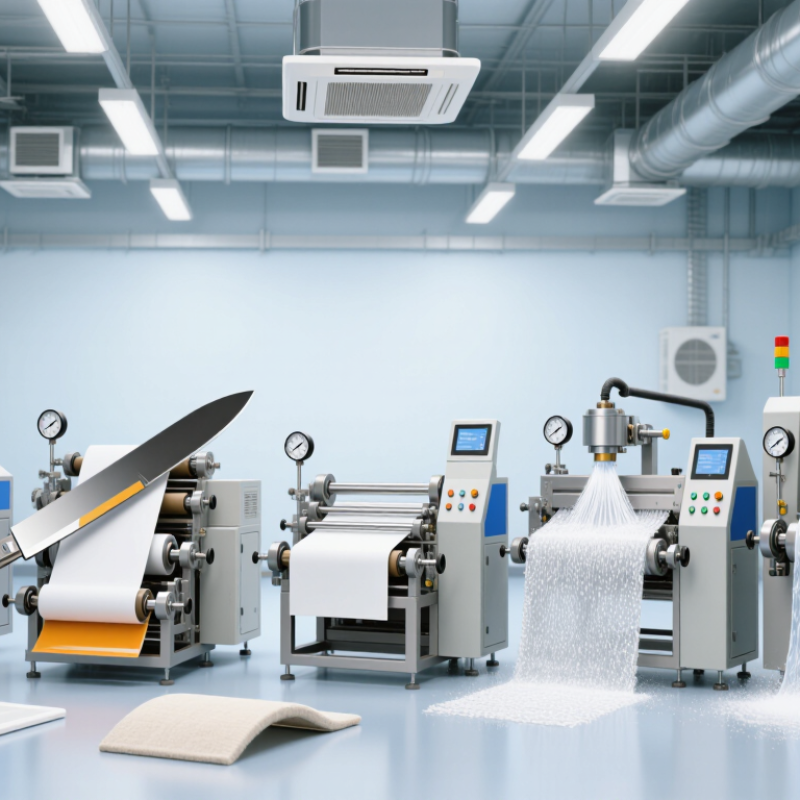
What Is a Water-Based Gel Coating Machine?
What Is a Water-Based Gel Coating Machine?
A water-based gel coating machine applies a thick, water-carried coating onto a controlled surface. It usually combines a mixing tank, metering pump, viscosity control, and coating head. The coating may be spread by a roller, slot die, curtain head, or precision spray system. Unlike solvent-based equipment, it is designed to manage water evaporation and slower drying behavior. The process needs careful control. Too much pressure can create streaks, bubbles, or uneven film thickness.
In production, operators monitor coating weight, temperature, pump speed, and drying airflow. A small change in viscosity can affect edge coverage within minutes. Equipment selection should match the material’s solids content and gel strength. A 2024 Grand View Research report valued the global water-based coatings market at approximately USD 79 billion in 2023, with continued growth expected through 2030. This wider trend supports investment in cleaner coating processes, but it does not guarantee every gel application will perform well. MarketsandMarkets also reported strong growth expectations for water-based coatings, driven by lower volatile organic compound emissions and regulatory pressure.
The machine still needs practical adjustment. A laboratory formula may behave differently on a fast production line. Operators should test drying temperature, substrate speed, and nozzle or roller settings before scaling output. Water-based does not mean maintenance-free. Residue can dry inside lines, and cleaning delays can become expensive.
| Machine Type | How It Applies the Water-Based Gel Coat | Best-Suited Applications | Main Advantages | Key Limitations | Important Operating Controls |
|---|---|---|---|---|---|
| Airless Spray Coating Machine | Uses a high-pressure pump and spray tip to atomize and distribute the coating without compressed air at the nozzle. | Large composite panels, molds, tanks, irregular surfaces, and medium-to-high production volumes. | High transfer efficiency, fast coverage, and good productivity on large surfaces. | Can produce uneven film thickness if pressure, tip size, or spray distance is poorly adjusted; overspray requires control. | Pump pressure, nozzle orifice, spray distance, fan pattern, coating temperature, and filtration. |
| HVLP Spray Coating Machine | Uses a high volume of air at relatively low pressure to atomize the water-based gel coat. | Small and medium parts, detailed molds, repair work, and applications requiring controlled spray deposition. | Good operator control, relatively low overspray, and suitable for finer surface finishing. | Usually slower than airless spraying and sensitive to coating viscosity and air-compressor capacity. | Fluid viscosity, air pressure, fluid-flow adjustment, nozzle size, humidity, and ventilation. |
| Roll Coating Machine | Metering and applicator rollers transfer a controlled layer of coating onto flat or gently curved substrates. | Flat panels, sheets, boards, flooring components, and continuous or batch production lines. | Low overspray, repeatable film application, and efficient use of coating material. | Not suitable for deep recesses, complex three-dimensional shapes, or highly textured surfaces. | Roller gap, line speed, roller hardness, coating viscosity, surface cleanliness, and wet-film thickness. |
| Curtain Coating Machine | Forms a continuous curtain of liquid coating that falls onto horizontally moving parts. | Flat, rigid components requiring high-speed, continuous, and uniform coating. | Very uniform coverage, high production speed, and limited mechanical contact with the substrate. | Requires consistent flow properties and is unsuitable for vertical, irregular, or highly contoured parts. | Curtain stability, pump flow rate, conveyor speed, coating temperature, edge control, and recirculation. |
| Slot-Die Coating Machine | A precision die deposits a measured coating bead or stripe directly onto a moving substrate. | Continuous flat substrates, narrow coating lanes, and processes requiring precise coating weight. | Accurate metering, low material waste, and good compatibility with automated production. | Higher equipment cost and greater sensitivity to particles, viscosity changes, and die alignment. | Die gap, pump stability, web or conveyor speed, coating temperature, filtration, and substrate flatness. |
| Dip or Flow Coating Machine | Parts are immersed in or flooded with the coating and then drained to form a continuous film. | Small three-dimensional parts, complex shapes, and components that can be suspended or conveyed through a tank. | Coats many surfaces in one operation and can reach areas that rollers cannot contact. | Drain marks, runs, pooling, and variable thickness may occur; drying space is often required. | Immersion or flow time, withdrawal speed, bath agitation, drainage position, filtration, and drying conditions. |
| Automated Robotic Spray System | A programmable robot controls spray-path movement, gun orientation, speed, and overlap across the part. | Repeated production of complex molds, automotive or marine composite parts, and applications requiring consistent quality. | Repeatable film thickness, reduced operator exposure, and consistent coverage on complex geometries. | Higher initial investment, programming requirements, and the need for coordinated safety systems. | Robot path, gun angle, overlap, atomizing pressure, part positioning, booth ventilation, and interlocks. |