2026 Best Electric Rickshaw for Global Buyers?
Choosing the 2026 best Electric Rickshaw requires more than comparing showroom prices. Global buyers need evidence from real roads, not attractive brochures. A vehicle that performs well in Delhi may struggle on Nairobi’s hills, Southeast Asia’s humidity, or Europe’s colder streets. Climate, road quality, passenger loads, and charging access can change the buying decision completely.
Naveen Munjal, Managing Director of Hero Electric, has said, “Electric mobility is not a choice, but the future.” His view reflects a wider industry shift, yet the future still demands careful evaluation. The strongest Electric Rickshaw should combine dependable battery performance, practical range, stable handling, and accessible after-sales support. Buyers should examine battery chemistry, charging time, motor efficiency, payload capacity, braking systems, and warranty coverage. Safety matters more than a polished dashboard.
Real-world details reveal the difference. Can the rickshaw complete a full working shift without an unexpected recharge? Does its suspension handle broken pavement while carrying several passengers? Can local technicians diagnose faults, and are replacement parts available nearby? These questions often matter more than peak speed.
There is no universal winner. That is uncomfortable, but true. Manufacturer range figures may reflect ideal conditions. Dealer promises can also sound stronger than service records. A careful buyer should request test-drive data, maintenance costs, certification documents, and battery warranty terms. This guide compares leading models through those practical measures. It also considers total ownership cost, operating reliability, comfort, and regional support. The final choice may not be the cheapest vehicle. It should be the one that keeps earning, charging, and serving passengers consistently.
What Is an Electric Rickshaw and How Does It Work?
2026 Best Electric Rickshaw for Global Buyers?
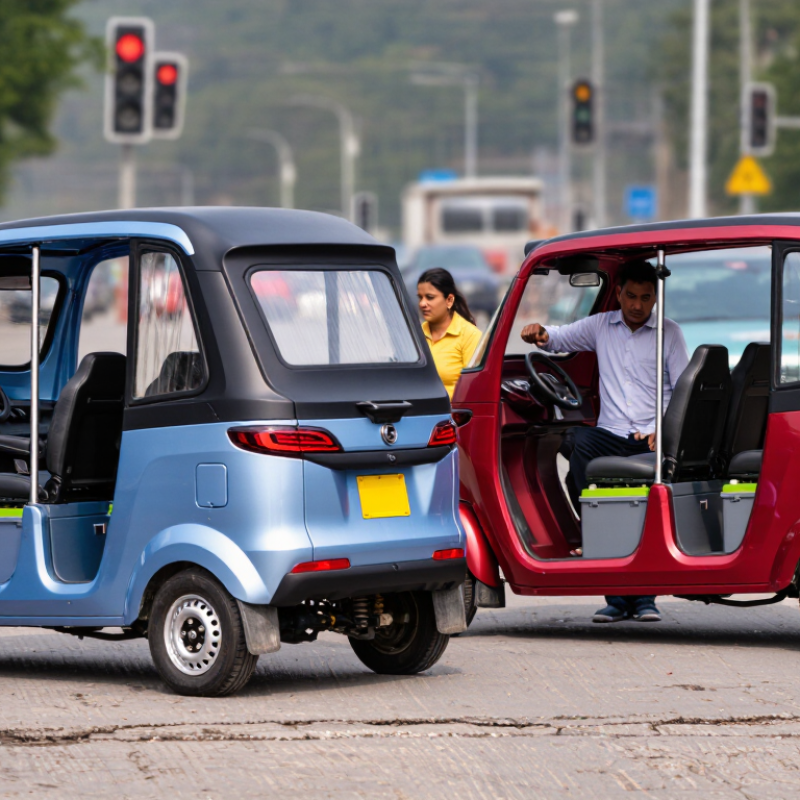
An electric rickshaw is a compact three-wheeled vehicle powered by a rechargeable battery and electric motor. It carries passengers or light cargo through busy streets, narrow lanes, and short urban routes. The battery sends direct current to a controller, which regulates power to the motor. When the driver presses the accelerator, the controller increases motor speed. Simple in principle.
Most models use lithium or lead-acid batteries, each offering different costs, weight, lifespan, and charging needs. A lithium pack usually reduces weight and supports more daily cycles, but it can raise the purchase price. Regenerative braking may return limited energy during deceleration. It does not replace regular charging. Buyers should check motor output, rated payload, climbing ability, ground clearance, and real-world range instead of trusting one impressive specification.
Charging normally takes several hours from a suitable electrical outlet. Battery temperature, passenger weight, road quality, and driving habits can reduce range noticeably. I have found that suspension comfort and brake response often matter more than a slightly larger battery. The overlooked detail is after-sales support: replacement parts, trained technicians, and battery testing can decide operating costs. No design is perfect. A buyer should also verify local registration, safety equipment, charging standards, and permitted vehicle dimensions before importing or operating one.
2026 Best Electric Rickshaw for Global Buyers?
An electric rickshaw is a three-wheeled vehicle powered by an electric motor and rechargeable battery. The chart below shows commonly published specification ranges for passenger and light-cargo electric rickshaws, helping buyers compare practical requirements before selecting a vehicle.
Typical market ranges: actual performance varies with battery chemistry, payload, road conditions, speed, temperature, and charging practices.
Regional Regulations, Charging, and Ownership Considerations
2026 Best Electric Rickshaw for Global Buyers?
Regional rules, charging access, and daily operating costs matter more than showroom specifications. The IEA’s Global EV Outlook 2024 reports that electric three-wheelers represented more than half of global three-wheeler sales in 2023. However, adoption differs sharply by market. Buyers must verify vehicle classification, type approval, speed limits, insurance, driver licensing, and passenger or cargo requirements. A model accepted as a low-speed vehicle in one country may need different certification elsewhere. Regulations change.
Charging can decide whether the vehicle earns money or loses working hours. The IEA recommends assessing local charging availability alongside electric-vehicle demand, not separately. Check voltage, connector compatibility, charging duration, and electricity tariffs. In dense cities, overnight depot charging may work well. Rural operators may need a larger energy buffer. Battery temperature also affects range, especially during hot afternoons or cold seasons. Claimed range is not real range. Payload, hills, traffic, and rain reduce it.
Tips: Request verified battery test records and warranty terms. Measure a normal route before choosing capacity. Compare energy cost, tire wear, service access, and replacement-battery pricing. The World Bank’s Electric Mobility literature stresses total-cost analysis, yet buyers often focus only on purchase price. That is a weak shortcut. Keep a small downtime allowance; even reliable vehicles eventually need repairs. Personally, I would inspect charging behavior for one full workday before committing.
A Practical Framework for Choosing the Best Model
2026 Best Electric Rickshaw for Global Buyers?
A Practical Framework for Choosing the Best Model
Choosing the best electric rickshaw starts with the route, not the brochure. A vehicle carrying passengers on uneven streets needs stronger suspension and ground clearance. For short urban trips, a compact body may reduce turning problems. Measure your narrowest gate and busiest loading point before comparing models.
Battery performance deserves careful testing. Ask for usable capacity, charging time, cycle data, and protection against heat or moisture. A claimed range may shrink with heavy loads, hills, cold weather, or frequent stops. Request a supervised test ride with realistic passengers and cargo. Record energy use over the same route. Small details matter.
Check the motor rating, braking response, lighting, mirrors, seat strength, and emergency controls. Confirm that the vehicle meets local road, electrical, and passenger-safety requirements. Documentation should include warranty terms, spare-part availability, service training, and battery disposal guidance. A low purchase price can become expensive when one controller takes weeks to replace.
Speak with operators who use similar roads. Their experience often reveals rattling panels, weak door latches, or difficult maintenance access. Still, one operator’s success is not universal. Climate, terrain, driving habits, and local repair skills change the result. I would also leave room for uncertainty; early specifications can look impressive before long-term field data appears. Test carefully. Record everything.

 24 Hour Service