
24 Hour ServiceFinding the right carbon steel pipe for sale in 2026 requires more than comparing online prices. Buyers must examine grade, wall thickness, diameter, surface condition, and documented test results. A pipe may look smooth in a warehouse photograph, yet contain dimensional problems that affect installation. Small details matter.
This guide draws on practical procurement considerations used by engineers, contractors, and industrial buyers. It explains where to buy carbon steel pipe, how to compare mills and distributors, and which questions to ask before placing an order. Reliable suppliers should provide material certificates, heat numbers, inspection records, and clear information about manufacturing standards. Confirm whether the pipe is seamless, welded, galvanized, or coated. Each option suits different operating conditions.
Price still matters, but the lowest quotation may not be the safest choice. Freight, cutting fees, storage conditions, and rejected materials can increase the final cost. Ask about stock age, packaging, delivery schedules, and return procedures. A dependable seller should answer these questions without vague promises.
No checklist is perfect. Site conditions can change the decision. For example, a pipe used for water service may need different protection from one installed in a high-temperature process line. Independent inspection can be worthwhile for critical projects. Before buying, compare at least three qualified suppliers and review their technical documents carefully. The best purchase combines verified quality, suitable specifications, dependable delivery, and support after the sale.
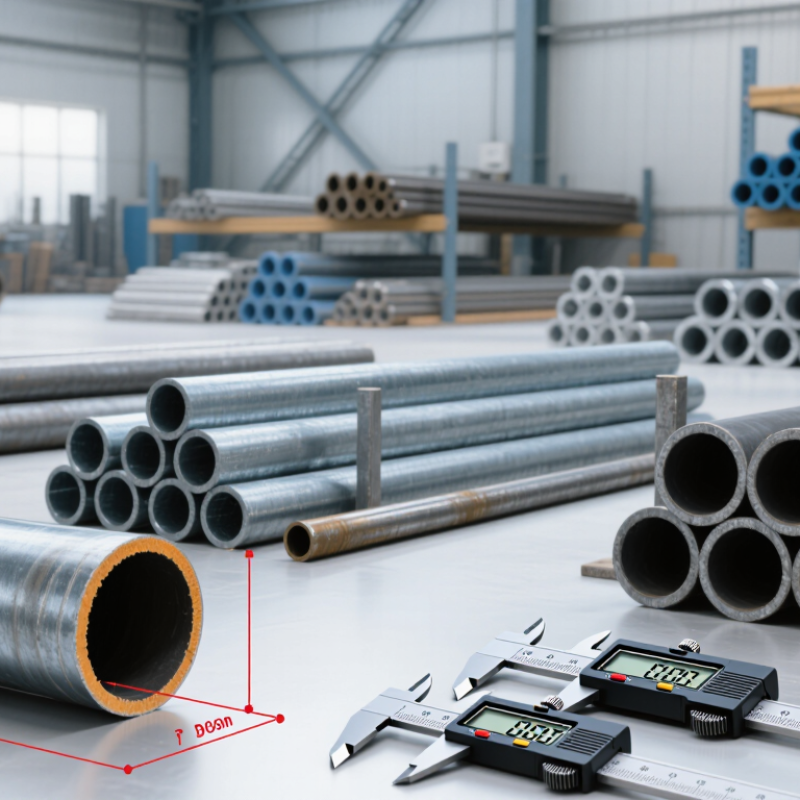
Carbon steel pipe is a strong, practical tube made mainly from iron and carbon. It carries water, gas, oil, steam, and structural loads. Its strength comes from a dense steel body and dependable weldability. Unlike plastic, it tolerates high temperatures and heavy pressure. That matters in demanding industrial systems.
In 2026, buyers should choose carbon steel pipe for its balance of strength, cost, and availability. Modern suppliers can provide heat numbers, mill test certificates, and dimensional records. These documents support traceability and professional quality control. However, durability is not automatic. Pipe grade, wall thickness, coating, and installation conditions all affect service life. A common purchasing mistake is focusing only on price. Cheap pipe may require earlier repairs or additional protection. Reliable sellers should explain standards, tolerances, delivery condition, and inspection options clearly. Real evidence matters.
Tips: Define the medium, pressure, temperature, and outside diameter before requesting prices. Match the grade to the application, not just the project budget. Check for rust, dents, uneven ends, and missing markings during delivery. Consider an external coating or internal lining in corrosive environments. I would also compare several quotations, because specifications are sometimes incomplete or misunderstood. Small details can become expensive problems.
2026 Best carbon steel pipe for sale: Where to Buy?
Carbon steel pipe selection starts with service conditions, not appearance. Common options include seamless, ERW, and spiral-welded pipe. Seamless pipe suits demanding pressure and temperature applications. ERW pipe often offers efficient production and consistent dimensions. Spiral-welded pipe can support large diameters and water infrastructure. Popular grades include ASTM A53 Grade B, ASTM A106 Grade B, and API 5L Grade B. Higher-strength line pipe may use X42, X52, or stronger grades. Always match the grade with pressure, temperature, fluid, and welding requirements.
Tips: Confirm outside diameter, wall thickness, length, and schedule before ordering. “6-inch pipe” does not always mean a six-inch outside diameter. Request mill test certificates, heat numbers, inspection records, and coating details. Check standards carefully, including ASTM, ASME, API, or EN requirements. The latest edition may change acceptance criteria. Local engineering rules still matter.
When comparing carbon steel pipe for sale, assess dimensional tolerances, surface condition, delivery capacity, and traceability. A low price can hide unsuitable material or incomplete documentation. I have learned that choosing by price alone is an expensive shortcut. However, even experienced buyers can overlook corrosion allowance or future expansion. Verify every critical detail with a qualified engineer and an established industrial supplier. Buy only after the pipe specification, inspection scope, and delivery terms are clearly recorded.
Buying carbon steel pipe in 2026 requires more than comparing the lowest quotation. The World Steel Association reported 1.892 billion tonnes of crude steel production in 2023. That huge output does not guarantee consistent pipe quality. I check the material grade, outside diameter, wall thickness, length, and permitted tolerances. The purchase specification should match the application, pressure, temperature, and joining method. A pipe can look smooth but still fail dimensional checks.
Price comparisons become meaningful only when every supplier quotes identical conditions. Ask for mill test certificates, heat numbers, chemical composition, tensile results, and hydrostatic or nondestructive testing records. EN 10204 type 3.1 documentation provides stronger traceability than a basic commercial certificate. The OECD Steel Outlook has also highlighted continuing global steel overcapacity, so unusually low offers deserve careful review. Freight, cutting, packing, inspection, duties, and delivery time can change the final cost sharply. I have seen a cheap quote become expensive after rework. That mistake is easy to repeat.
Tips: Request one itemized quote. Compare price per usable metre, not price per tonne alone. Confirm whether the quoted weight uses theoretical or actual values. Visit the supplier’s stockyard when possible, and check markings before loading. A reliable supplier should explain test limits clearly, not hide behind vague words like “premium quality.” Some assumptions may still be wrong, so keep a written inspection plan and allow a small budget for verification.
| Pipe Category | Common Standard | Typical Application | Manufacturing Method | Typical Size Range | Typical Wall Thickness | Typical Mechanical Requirement | Indicative 2026 Price Range* | Best Buying Channel | Quality Checks |
|---|---|---|---|---|---|---|---|---|---|
| Seamless Line Pipe | API 5L Grade B / ASTM A106 Grade B | Oil and gas transmission, high-temperature service, process piping | Hot-finished or cold-drawn seamless | NPS 1/2 to NPS 24 | Schedule 10 to Schedule XXS | Tensile strength typically 415 MPa minimum; yield strength typically 240 MPa minimum for Grade B | US$850–1,450/metric ton | Qualified pipe distributor or mill-authorized stockist | Material Test Certificate, heat number, hydrostatic test, dimensional inspection, ultrasonic or eddy-current testing where specified |
| Seamless Pressure Pipe | ASTM A106 Grade B | Steam, boiler, refinery, chemical and high-temperature piping | Seamless hot-finished or cold-drawn steel | NPS 1/8 to NPS 48 | Schedule 10 through Schedule XXS, subject to size limits | Yield strength typically 240 MPa minimum; tensile strength typically 415 MPa minimum | US$900–1,600/metric ton | Industrial piping distributor or approved project supplier | Heat analysis, tensile and bend tests, hydrostatic or approved nondestructive test, end squareness and wall-thickness checks |
| Electric-Resistance-Welded Pipe | ASTM A53 Grade B | Water, air, steam, low-pressure structural and general mechanical service | ERW, with welded longitudinal seam | NPS 1/8 to NPS 26 | Standard, Extra Strong and selected Schedule wall thicknesses | Yield strength typically 240 MPa minimum; tensile strength typically 415 MPa minimum | US$700–1,200/metric ton | Local steel service center or general pipe wholesaler | Grade marking, seam inspection, hydrostatic test, coating condition, outside diameter and wall-thickness tolerance |
| Large-Diameter Spiral-Welded Pipe | API 5L PSL 1 / ASTM A252 where applicable | Water transmission, piling, dredging, low-to-medium-pressure infrastructure | Helically submerged-arc welded or spiral welded | Approximately 16 to 120 inches outside diameter | Approximately 6 to 25 mm, depending on design | Requirements vary by grade, project design and applicable standard | US$650–1,150/metric ton | Project pipe fabricator or infrastructure-material supplier | Weld radiography or ultrasonic testing, hydrostatic testing, dimensional survey, coating inspection and pile-point inspection if applicable |
| Structural Hollow Section | ASTM A500 Grade B or Grade C | Building columns, trusses, frames, bridges and general fabrication | Cold-formed welded or seamless structural tubing | Round, square and rectangular sections; round sizes commonly up to 64 inches | Approximately 2.5 to 25 mm, depending on section and grade | Grade B: 315 MPa minimum yield; Grade C: 345 MPa minimum yield | US$750–1,300/metric ton | Structural steel service center or fabrication supplier | Section dimensions, corner radius, straightness, weld quality, yield and tensile test results, coating or primer condition |
| Galvanized Carbon Steel Pipe | ASTM A53 with hot-dip zinc coating | Water distribution, fire protection, outdoor utility and corrosion-exposed service | Usually ERW or seamless steel followed by hot-dip galvanizing | NPS 1/8 to NPS 26 | Standard and heavier schedules available | Base-pipe mechanical requirements plus specified zinc-coating compliance | US$950–1,650/metric ton | Plumbing, fire-protection or industrial pipe distributor | Zinc coating thickness and uniformity, adhesion, threaded-end condition, diameter, wall thickness and corrosion protection |
| Boiler and Heat-Exchanger Tube | ASTM A179 / ASTM A192, when specified by design | Heat exchangers, boilers and high-pressure thermal equipment | Seamless cold-drawn or cold-finished tube | Commonly 6 to 76 mm outside diameter | Commonly 1.0 to 6.0 mm | Requirements depend on the applicable tube specification and service pressure | US$1,100–2,000/metric ton | Specialty tube distributor or qualified heat-equipment supplier | Eddy-current or hydrostatic test, dimensional control, surface finish, chemical analysis and tensile or hardness testing |
| Comparison Factor | What to Compare | Why It Matters | Recommended Buying Evidence |
|---|---|---|---|
| Applicable Standard | ASTM, API, EN or project-specific specification | Defines chemical composition, dimensions, testing and acceptance criteria | Written compliance statement and traceable certificate |
| Grade and Strength | Yield strength, tensile strength, elongation and impact requirements | Confirms the pipe is suitable for design loads and operating conditions | Mill Test Certificate linked to heat and batch numbers |
| Dimensions | Outside diameter, wall thickness, length, ovality and straightness | Affects pressure rating, fit-up, weight and installation cost | Inspection report with measured dimensions and tolerances |
| Manufacturing Process | Seamless, ERW, longitudinal SAW or spiral welded | Influences pressure performance, availability, price and inspection requirements | Process description, weld procedure and inspection records |
| Testing and Traceability | Hydrostatic, ultrasonic, radiographic, eddy-current and mechanical tests | Reduces the risk of hidden defects and unverified material substitution | Heat marking, inspection plan, test reports and third-party inspection when required |
| Total Delivered Cost | Pipe price, testing, coating, packaging, freight, duties and taxes | The lowest ex-works price may not be the lowest delivered cost | Comparable quotation using the same quantity, specification and Incoterm |
| Supplier Capability | Production capacity, stock availability, quality system and export experience | Affects lead time, consistency, documentation and after-sales support | Auditable quality certifications, references and an approved-supplier assessment |
Where to Buy Carbon Steel Pipe for Different Project Needs
Carbon steel pipe selection should begin with the project environment, not the lowest quote. The World Steel Association reported global crude steel production of about 1.88 billion tonnes in 2024. This scale supports broad supply, but quality still varies between mills, stockists, and fabricators. For water lines, structural frames, and general service, welded pipe may offer practical pricing and flexible sizing. Seamless pipe is often preferred for demanding pressure or temperature conditions. Confirm the required grade, outside diameter, wall thickness, and length before requesting prices. A small mismatch can create costly cutting and replacement work.
Tips: Ask for a mill test certificate, heat number, and inspection records. Check whether the pipe meets the specified ASTM, ASME, or API requirement. For outdoor use, request coating details and corrosion protection. A delivery photo can also reveal damaged ends or poor storage. It sounds basic. It prevents surprises.
For oil, gas, boiler, or pressure applications, buy through a supplier with documented traceability and independent inspection access. The International Energy Agency continues to identify infrastructure investment as a major driver of industrial material demand, yet demand forecasts cannot replace project calculations. Engineers should review pressure ratings, welding procedures, temperature limits, and corrosion allowances. In practice, buyers sometimes over-specify pipe “for safety.” That choice may increase cost without improving performance. Under-specification is worse. Compare at least three quotations, but compare equal technical requirements, not only unit prices. Samples, records, and delivery control matter as much as the pipe itself.
When buying carbon steel pipe in 2026, verify the application before comparing prices. Check the fluid, pressure, temperature, and installation environment. A pipe for compressed air may need different specifications from one carrying hot water. Confirm the required outside diameter, wall thickness, length, and schedule in writing. Small errors can delay fabrication.
Ask whether the pipe is seamless or welded. Each option suits different service conditions and budgets. Request the steel grade and applicable standard, such as ASTM, ASME, or EN requirements. The supplier should provide a mill test certificate with heat number, chemical composition, tensile results, and yield strength. Keep the documents traceable. Do not accept a certificate with unclear identification.
For online orders, inspect product photographs carefully, but never rely on images alone. Ask for current dimensional measurements and a sample report when tolerances matter. Confirm pipe ends, beveling, surface condition, coating, and packing for transport. Locally, measure several pieces with calipers and check for dents, deep rust, or uneven welds. I once focused too heavily on unit price and overlooked cutting fees. That mistake changed the final cost. Shipping weight, unloading equipment, and storage space also deserve attention. Request an independent inspection when the order is large or technically critical. Suppliers may answer slowly, but vague answers are still useful warning signs.
Common nominal pipe sizes have different actual outside diameters. Confirm the nominal pipe size, outside diameter, wall thickness or schedule, material grade, applicable standard, pipe length, end finish, test certificates, and delivery requirements before buying online or locally.
Chart data: representative outside diameters for common nominal pipe sizes according to ASME B36.10M dimensions for welded and seamless carbon steel pipe. Nominal size is not the same as the measured outside diameter.