
24 Hour ServiceChoosing the 2026 best Bath Towel Making Machine requires more than comparing speed or purchase price. Global buyers must connect machine design with towel size, GSM, yarn type, daily output, and factory conditions. A compact workshop may value flexible settings, while a large hotel-textile supplier may need stable, high-volume production. The right choice should fit the business, not merely look impressive in a catalog. Fit matters.
This guide examines practical criteria used by experienced textile teams, including weaving or knitting capability, cutting accuracy, stitching quality, loop control, automation, energy use, and maintenance access. It also considers control-system language, spare-parts availability, operator training, installation support, and documented performance tests. Supplier credibility matters. Buyers should request machine videos, sample towels, factory references, warranty terms, and clear delivery conditions. Independent inspection before shipment can reduce unpleasant surprises. Regional voltage, workplace safety features, and applicable technical requirements also deserve verification before installation.
Technical claims require careful checking. A quoted output may depend on towel dimensions, fabric weight, operator skill, and uninterrupted power. No machine wins every factory. Some impressive specifications may hide setup time, high energy use, or difficult servicing. Evidence matters. This review therefore remains cautious, comparing practical evidence instead of repeating marketing language. Readers will find a balanced path for shortlisting reliable equipment, estimating ownership costs, and asking better questions before signing an international purchase agreement. Real production trials may reveal weaknesses that brochures miss, and that possibility should shape every serious buying decision.
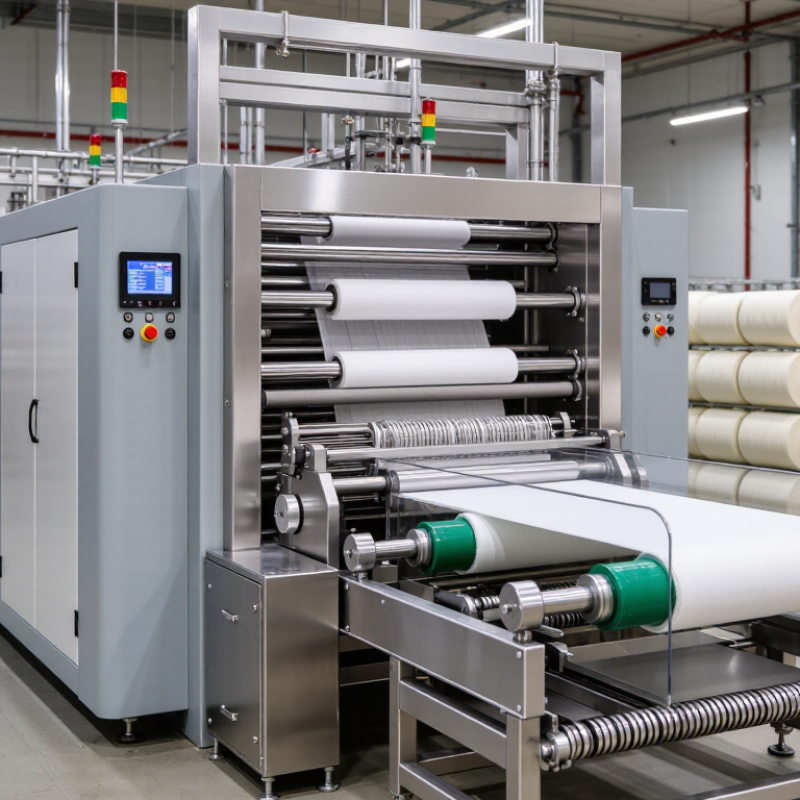
A bath towel making machine is industrial equipment used to produce terry towels from yarn.
It is not one machine. In many factories, the process includes yarn preparation, terry weaving, fabric inspection, cutting, and hemming.
The terry loom creates raised loops that absorb water. Loop height, density, and yarn tension affect softness, weight, and drying speed.
Loop height, density, and yarn tension affect softness, weight, and drying speed.
A complete production line may include electronic controls, tension systems, edge cutters, sewing units, and inspection tables.
Operators monitor thread breaks, uneven loops, fabric width, and skipped stitches during production.
Small defects can become visible after washing. Details matter.
A machine with higher speed is not always the better choice. Energy use, spare-part access, operator training, and cleaning requirements also influence long-term value.
For global buyers in 2026, machine selection should match towel size, monthly output, yarn type, and available factory space.
Technical documents should state working width, power consumption, production speed, and maintenance intervals clearly. Safety guards and emergency-stop systems require careful checking.
A common mistake is comparing only purchase prices. That assumption fails when installation, training, and downtime are added later.
Buyers should request sample production with their own yarn and examine the towel after washing. The result may reveal problems that specifications hide.
Bath towel production begins with yarn inspection. Operators check cotton strength, moisture, contamination, and twist before warping. The yarn then passes through sizing, which reduces breakage during weaving. A terry loom forms ground fabric and raised loops together. Loop height must remain consistent. Otherwise, one towel may feel dense while another feels flat.
The International Textile Machinery Federation reported about 123,000 shuttleless looms shipped globally in 2023. This figure shows strong investment in modern weaving capacity, although not every loom suits terry production.
Buyers should verify reed width, loop-forming control, speed, and fabric tension. Machine brochures often look perfect. Factory conditions are not.
After weaving, grey fabric enters pretreatment, bleaching, or dyeing. Water temperature and chemical concentration affect absorbency and colorfastness. Textile Exchange’s Materials Market Report 2024 estimated global fiber production at 124 million tonnes in 2023. That scale increases pressure to reduce waste and improve fiber traceability.
Towel fabric is then dried, softened, and sometimes sheared. Cutting and sewing create the final dimensions, hems, and labels. Quality teams test weight, shrinkage, absorbency, shade variation, and seam strength. A practical line still needs manual inspection. Machines miss some defects.
2026 Best Bath Towel Making Machine for Global Buyers?
Different buyers need different towel-making systems. A small hotel supplier may prefer a compact rapier terry loom. It offers flexible designs and easier maintenance. A large exporter may choose a high-speed air-jet terry loom. It supports higher output but requires stable electricity and compressed air. Custom towel producers can add a jacquard system for logos and textured patterns. However, pattern changes may increase setup time and production waste.
Market demand also affects machine selection. Grand View Research valued the global home textiles market at about USD 129.3 billion in 2023. It projects continued growth through 2030. Textile Exchange reported 124 million tonnes of global fiber production in 2023. These figures suggest expanding demand, but demand is not equal everywhere. Buyers in humid regions may prioritize quick-drying towel structures. Hospitality suppliers may need durable, standardized products. Online sellers often value smaller batches and faster style changes. A perfect machine does not exist. I would test local yarn, water quality, and operator skill before purchasing.
Tips: Ask for a real production trial using your intended cotton yarn. Measure grams per square meter, loop stability, energy use, and defect rates. Compare these results with the supplier’s published figures. For limited budgets, a reliable loom and separate cutting-and-sewing equipment may outperform an expensive automated line. Remember maintenance access. A machine that stops for three days can erase its apparent efficiency advantage.
| Machine Type | Main Function | Typical Working Range | Best-Suited Towel Products | Key Advantages | Main Considerations | Best Buyer Profile |
|---|---|---|---|---|---|---|
| Terry Towel Rapier Loom | Weaves ground yarn and pile yarn into terry fabric by using rapier carriers to insert the weft. | Common working widths are approximately 1.9–3.4 meters; speed depends on width, pile height, yarn, and fabric construction. | Bath towels, hand towels, face towels, bath sheets, hotel towels, and patterned terry fabrics. | Flexible for different yarns, towel sizes, pile heights, and design changes; suitable for small and medium production batches. | Generally has more mechanical complexity than an air-jet loom and requires regular maintenance of the rapier and weft-insertion system. | Custom Towel Producers Small to Medium Factories |
| Terry Towel Air-Jet Loom | Uses compressed air to insert the weft yarn while forming terry loops through controlled pile movement. | Often available in working widths of approximately 1.9–3.4 meters; production speed is usually selected according to fabric style and yarn quality. | Standard bath towels, large-volume hotel towels, institutional towels, and basic terry fabric. | High production potential, smooth weft insertion, and strong suitability for long runs of standardized towel designs. | Requires a stable compressed-air system; air consumption, compressor capacity, and factory energy cost must be evaluated. | Large Export Factories High-Volume Standard Towel Producers |
| Jacquard Terry Loom | Creates woven towel patterns by individually controlling selected warp yarns through a jacquard mechanism. | Working widths commonly cover approximately 1.9–3.4 meters; the practical speed depends heavily on pattern complexity and fabric density. | Logo towels, decorative bath towels, premium spa towels, hospitality towels, and personalized designs. | Produces detailed woven motifs, borders, lettering, and repeated patterns without relying only on printing or embroidery. | Higher equipment cost, more complex pattern preparation, and potentially lower output than a plain terry setup. | Premium Textile Manufacturers Private-Label and Hospitality Suppliers |
| Dobby Terry Loom | Controls selected warp shafts to create simpler geometric structures, borders, and textured towel patterns. | Commonly configured in widths of approximately 1.9–3.4 meters, depending on the towel specification and loom configuration. | Striped towels, bordered towels, waffle-style structures, textured bath towels, and medium-complexity designs. | More economical than a full jacquard solution for structured patterns; useful for repeatable decorative effects. | Pattern capability is more limited than jacquard technology, especially for detailed lettering and complex images. | Mid-Market Towel Mills Design-Focused Regional Producers |
| Automatic Towel Hemming Machine | Cuts towel fabric into specified lengths and forms side or end hems using automated sewing operations. | Production capacity varies by towel dimensions, folding method, sewing configuration, and operator workflow; many systems support multiple towel sizes. | Bath towels, hand towels, kitchen towels, beach towels, and pre-woven terry fabric rolls. | Improves edge consistency, reduces manual handling, and supports repeatable finishing for cut-length towel products. | It does not produce terry fabric; it must be matched with suitable cutting, folding, sewing, and material-handling equipment. | Cut-and-Sew Workshops Garment and Home-Textile Factories |
| Towel Shearing or Pile-Cutting Machine | Trims or levels selected pile surfaces to improve appearance, softness, pattern definition, or fabric uniformity. | Configuration is selected according to fabric width, pile height, towel construction, and required finishing accuracy. | Velour towels, printed-look towels, sheared terry towels, premium bath towels, and specialty surface designs. | Creates a smoother face and can enhance contrast between cut and uncut pile areas. | Requires careful blade adjustment and fabric control; excessive cutting can reduce pile coverage and towel absorbency. | Premium Finishing Plants Specialty Towel Producers |
| Towel Dyeing and Finishing Range | Performs preparation, dyeing, washing, softening, extraction, drying, and other finishing steps for terry fabric. | Capacity is normally specified by batch weight or continuous fabric throughput rather than loom width; process settings depend on fiber and color requirements. | Reactive-dyed cotton towels, colored hotel towels, organic-fiber towels, and finished terry fabric. | Supports color consistency, softness, absorbency control, and the required appearance after laundering. | Water, steam, heat, wastewater treatment, chemical management, and environmental compliance can significantly affect operating cost. | Integrated Textile Mills Export-Oriented Manufacturers |
| Towel Folding, Stacking, and Packaging Line | Folds, counts, stacks, labels, and packages finished towels for retail, hospitality, or institutional distribution. | Throughput depends on towel size, fabric thickness, folding format, packaging type, and the required degree of automation. | Retail bath-towel sets, hotel towel packs, promotional towels, and standardized institutional orders. | Reduces repetitive manual work, improves package uniformity, and supports consistent presentation for export shipments. | Requires stable towel dimensions and a clearly defined packaging specification; highly customized packs may need additional manual steps. | Export Distributors Contract Packaging Centers |
| Sample and Small-Batch Terry Loom | Produces development samples, short runs, and limited quantities before full-scale production. | Usually selected with a narrower working width and flexible setup rather than maximum production speed. | New towel collections, buyer samples, customized promotional towels, and limited-edition designs. | Lower commitment for product development and faster testing of yarns, colors, pile heights, and structures. | Unit cost and labor cost may be higher than on a high-volume production line. | Start-Ups Sampling Houses Small Custom Brands |
The best bath towel making machine in 2026 must deliver stable quality, not only high speed. Buyers should examine towel width, fabric weight, loop height, and edge accuracy during a real production trial. A clear control panel helps operators adjust settings without guesswork. It also reduces training time.
Servo-driven yarn control can maintain steady tension across long production runs. This matters when towels need soft, even loops. Automatic fault detection should identify broken yarn, abnormal vibration, and temperature changes quickly. Remote production data is useful, but it cannot replace skilled inspection. Good machines still need practical operators.
Energy use deserves close attention. Efficient motors, heat recovery, and standby modes can reduce daily operating costs. Stainless steel contact parts support cleaner production and easier maintenance. Tool-free access to key components saves valuable minutes during servicing. Safety guards, emergency stops, and documented testing should be visible and easy to verify. Confirm applicable local requirements before purchase.
A dependable machine should also provide repeatable output after weeks of use. Ask for sample towels from different settings, not one perfect piece. Check wash shrinkage and color consistency after testing. No machine is perfect. Some advanced systems may be difficult to repair without trained technicians. That weakness is easy to overlook during a showroom visit. Global buyers should compare service response, spare-part availability, and training quality beside the machine’s specifications.
What Features Define the Best Bath Towel Making Machine in 2026?
Selecting a bath towel making machine starts with the towel, not the machine catalog. Check fabric weight, loop height, width, and daily production targets. A machine for 500 GSM towels may perform poorly with lighter hotel towels. Ask for production samples using your actual yarn and towel specifications. This practical test reveals tension problems early.
Leave space around the machine for yarn loading, inspection, and repairs. Measure doorways, ceiling height, and floor strength before shipment. Confirm voltage, phase, air pressure, and water requirements with a qualified local technician. Electrical work must follow local codes.
I once underestimated service clearance, and a simple sensor replacement became unnecessarily difficult. That mistake still influences my installation plans.
During commissioning, record speed, temperature, vibration, and rejection rates. Train operators to notice loose loops, uneven edges, and unusual noise. Maintenance should include daily lint removal and weekly checks on needles, belts, lubrication points, and safety guards. Keep spare wear parts in a labeled cabinet, not in random boxes. Review the manual with the maintenance team, because assumptions cause avoidable damage. Machines also need clean power and stable operating conditions. A neglected air filter can quietly reduce performance. Perfect maintenance schedules rarely survive busy production weeks, so assign clear responsibilities and keep short inspection records.